How much do YouTube ads cost? No fixed price is published for YouTube ads. Costs come from auctions and the bidding strategy chosen, so the same video can cost different amounts across locations and times. For a local business, the reliable figure is the cost in its own account after a small test.
Third-party benchmarks exist, but they disagree because they cover different years, formats and advertisers. This guide explains where the uncertainty comes from, how to structure a first test, and how to turn costs into a cost per booking using labelled assumptions. For a parallel view of search pricing, see the
Google Ads pricing breakdown.
Why Is There No Single YouTube Ad Price?
Google's Display documentation describes automated bidding that works by letting the system "optimize for conversions or conversion value in each and every auction." That wording explains the core issue: price is set per auction, not on a rate card.
The bid, the audience, the creative quality and the competition for each impression all affect what is paid. Benchmark averages therefore hide a lot. A broad audience in a large metro area can cost a very different amount from a narrow audience in a small town.
Format also changes billing and the results to expect. Treat any single published number as a starting reference, not a quote for a specific business.
→
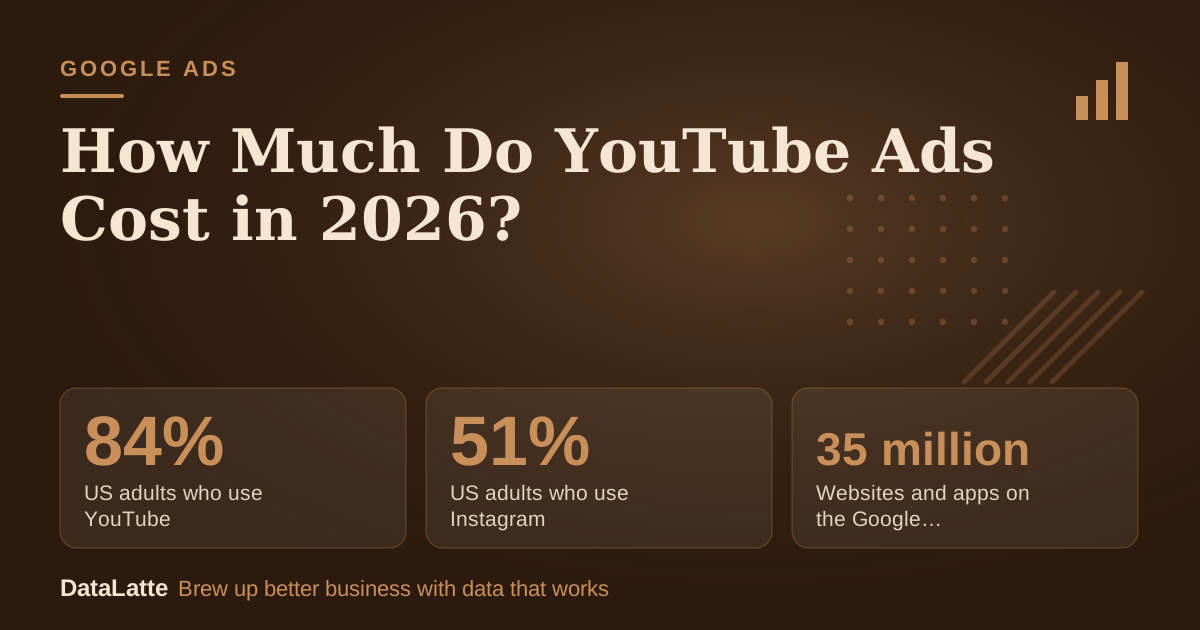
US adults who use YouTube
Pew, survey Jan-June 2026 (primary)
↑
US adults who use Instagram
Pew, survey Jan-June 2026 (primary)
→
Websites and apps on the Google Display Network
Google Ads Help, primary
→
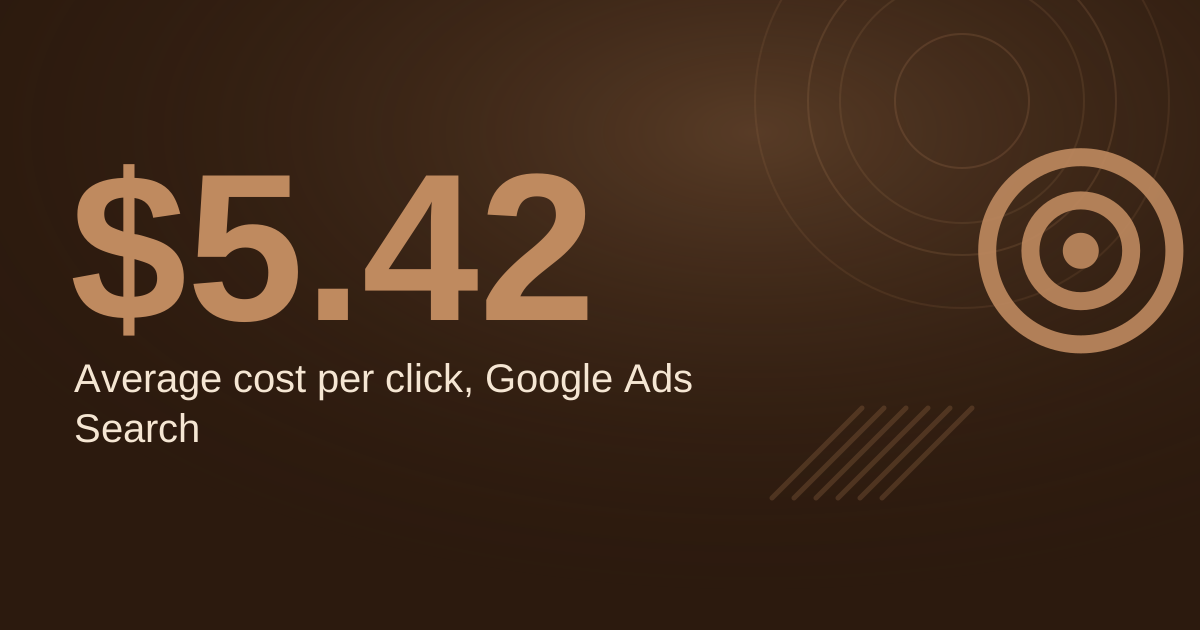
Average search cost per click, all industries
WordStream benchmark, secondary, undated update
See Sources at the end of the article. Cards marked Assumption are examples, not results.
How Many People Could a Local Video Reach?
Pew's 2026 fact sheet, based on a survey of 5,511 US adults conducted January 30 to June 18, 2026, shows YouTube at 84% and Facebook at 70%. Instagram rose to 51%, up from 50% in 2025 (
Pew Research Center). The overall margin of error is plus or minus 1.8 percentage points.
Platform reach is not the same as ad response. These figures show how many adults use a platform, not how many will watch an ad, live near a shop or book a job. They do show that YouTube has a large audience to draw from when targeting is narrowed to a radius.
Google's Display documentation states that Display campaigns can reach people across 35 million websites and apps, plus Google-owned properties such as YouTube and Gmail (
Google Ads Help). That breadth is a reason to check geographic targeting closely. Very small local areas may not generate enough impressions for a useful test.
WordStream's industry benchmark, a secondary source that is undated in the version reviewed, reports an average search cost per click of $2.69 across all industries and $0.63 on the Display Network. Its average search click-through rate is 3.17%, and its Display average is 0.46%.
The same source lists Consumer Services at $6.40 per click on search, which is relevant to trade and home services. These figures measure clicks, not views, so they do not provide a YouTube cost per view or per impression. They indicate how competitive local services can be on paid platforms. Current costs should be checked in the advertiser's own Google Ads account before a budget is set.
How Should a Local Business Structure a First Test?
Meta's documentation on A/B testing says each version should be shown to a separate segment so nobody sees both, and the same budget should be used for both versions. Meta also warns against informal testing, such as switching ad sets on and off by hand (
Meta Business Help Center).
Meta's guidance covers its own platform, but the logic applies to any paid test. Informal switching can overlap audiences and make results unreliable.
- Change one variable only, such as the video or the audience, not both.
- Give each version the same daily budget so the comparison is fair.
- Avoid switching campaigns on and off manually, which can overlap audiences.
- Set a target cost per booking before launch, based on what a new customer is worth.
- Run the test long enough to collect bookings, not just views, before judging it.
What Does a $300 Test Calculate?
The example below uses assumptions throughout, not published rates. Each input should be replaced with figures from a live campaign.
| Step | Value |
|---|
| Monthly budget (assumption) | $300 |
| Cost per view (assumption) | $0.05 |
| Paid views | 6,000 |
| View-to-booking rate (assumption) | 0.2% |
| Bookings | 12 |
| Cost per booking | $25 |
At these assumed inputs, the test buys 6,000 views and produces 12 bookings, or $25 per booking. Whether that pays off depends on what a new customer is worth after costs. If a booking is worth clearly more than $25 in gross margin, the test may be worth repeating.
Now change one input. If the booking rate is 0.05% (assumption), the same budget yields 3 bookings at $100 each. The campaign has not changed, but the economics have. A first test should therefore measure bookings, not just views, and the view-to-booking rate matters as much as the cost per view.
Should You Start With YouTube or Search?
The two channels do different jobs. Search captures people already looking for a service, while YouTube builds awareness among people who may not be searching yet. Most local businesses get faster value from search, so starting there and adding video once a baseline cost per booking is known is the more common path.
Some trades have a third option. Google's Local Service Ads are a separate product, and whether they suit a given business is a different question. The guide to
when Local Service Ads are worth it for local businesses covers that decision before video is considered. For broader programmatic costs, including display and video inventory, see the
programmatic advertising cost benchmarks.
FAQ
Can I run YouTube ads with a small budget?
Yes, but reach will be limited. At the assumed $0.05 cost per view in the example above, a $200 budget buys about 4,000 views. That is enough to test a creative and offer, but not enough to dominate a local market.
Should I run YouTube ads or Google Search ads first?
For most local businesses, search comes first because it captures people already looking for the service. YouTube can be added once there is a baseline cost per booking from search.
How long does a YouTube test take?
Delivery data usually appears within a day or two. Several weeks are needed so the campaign has time to gather enough bookings to judge cost per booking.
Can I target people near a business?
Yes, targeting by location or radius is available. Very small areas may not deliver enough impressions, so the reach estimate should be checked before committing a budget.
Is professional video required?
Not necessarily. A clear, well-lit phone video with good audio and a straightforward message can work for local services. The creative should be tested first, with spend increased once the message is shown to produce bookings.
Sources
For help with a YouTube or search setup, see the
Google Ads service.
Free for local businesses
Want this applied to your business?
I'll review your Google presence, local SEO, and ad accounts — and send you a specific action plan within 48 hours. No pitch, no pressure.