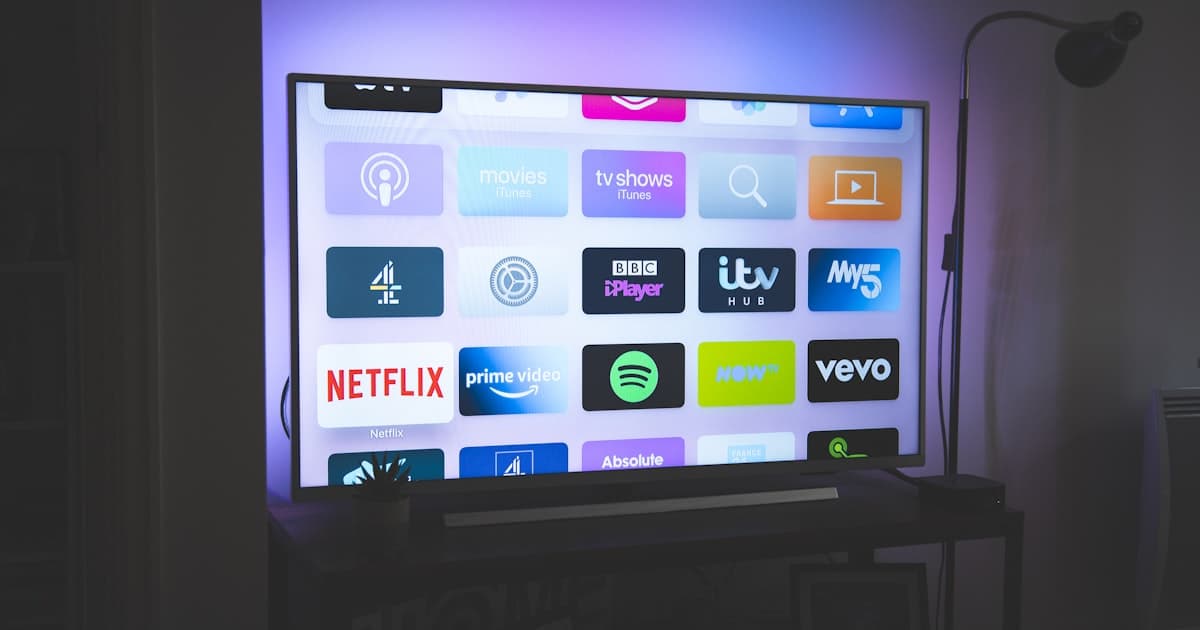
If you're a local business owner considering CTV advertising, here's a reality check: most people overestimate their budget and underestimate the complexity. CTV advertising isn't just about dropping a few dollars and hoping for the best. It's a nuanced channel with costs that vary wildly depending on targeting, ad type, and platform.
Let's cut through the noise and look at real CTV advertising cost data from 2026, including how much you can expect to pay per 1,000 impressions (CPM) and what you can achieve for your business - all in practical, actionable terms.
$25–$45
Typical CPM range
per 1,000 impressions
92%↑
Completion rate
vs 70% for desktop video
$500
Min. monthly budget
for local campaigns
3×↑
Avg. recall lift
vs traditional TV
What is CTV Advertising?
Before we get into pricing, let's define the basics.
CTV (Connected TV) refers to smart TVs, streaming devices (like Roku, Firestick, Apple TV), and gaming consoles that connect to the internet to stream content. Unlike traditional TV, CTV allows for digital ad delivery, real-time analytics, and audience targeting.
If you're confused between CTV and OTT, check out this breakdown. But the short version is: CTV is the screen, and OTT (Over-The-Top) is the content delivered over the internet, often without a cable provider.
Pro Tip
Want expert help? DataLatte's Google Ads management service is built specifically for local small businesses.
Real CTV Advertising Cost in 2026
Let's get to the numbers. Based on the latest data from 2026, here's what you can expect for CTV advertising cost:
Ad Type
Average CPM (Cost per 1,000 impressions)
Notes
Pre-roll (video ad before content)
$30-$45
Most common format for CTV
Mid-roll (video ad during content)
$25-$35
Less common, depends on content
Post-roll (video ad after content)
$15-$25
Lower engagement but cheaper
Static banner (desktop CTV apps)
$8-$12
Not ideal for most local businesses
Interactive overlay
$20-$30
Adds engagement, but may not convert well for small businesses
Average CPM by Ad Type (2026)
Pre-roll (before content)most commonBest
$37
Mid-roll (during content)
$30
Interactive overlay
$25
Post-roll (after content)
$20
Static bannerlowest engagement
$10
Mid-point of ranges. Source: industry benchmarks 2026.
Targeting Adds to the Cost
The more specific your targeting, the more you'll pay. Targeting options include:
Geofencing: Ads shown to people within a 2-5 mile radius of your business. Costs +10-15% more.
Time-of-day targeting: Useful for coffee shops or salons with peak hours. Costs +5-10%.
Device-specific targeting: Ads shown only to people watching on Firestick or Roku. Costs +5-10%.
Demographic targeting: Age, gender, income, etc. Costs +5-50% depending on niche.
For example: A local salon targeting women aged 25-44 within a 3-mile radius in a major metro area might see CPMs in the $40-$60 range.
Pro Tip
Geofencing within 1–2 miles of your location + time-of-day targeting is the highest-ROI combination for most local businesses. You pay ~15% more but reach 3× more relevant viewers.
What Affects CTV Ad Pricing?
CTV advertising cost isn't just about the platform or format - it's also about your goals, audience, and how you buy.
1. Ad Placement
Pre-roll ads typically get the most attention, but they're also the most expensive. If your goal is to drive in-store visits, a short, punchy pre-roll ad is best. But if you're on a tight budget, consider post-roll or mid-roll - just be prepared for lower engagement.
2. Buying Model
There are two main ways to buy CTV ads:
Direct deals: You pay a fixed rate for guaranteed ad slots. More predictable, but less flexible.
Programmatic buying: Uses real-time bidding (RTB) to buy ad space. More efficient targeting, but requires optimization.
3. Device and Platform
CPM varies by the streaming service or platform. Here's a rough idea:
Platform
Average CPM
Hulu
$30-$40
Amazon Fire TV
$35-$45
Apple TV+
$40-$50
Roku
$25-$35
YouTube TV
$28-$38
Roku tends to be the most budget-friendly option for small businesses, while Apple TV+ is the most premium and expensive.
Average CPM by Streaming Platform (2026)
Apple TV+
$45
Amazon Fire TV
$40
Hulu
$35
YouTube TV
$33
Rokubest value for localBest
$30
Mid-point of typical ranges. Prices vary by audience targeting and seasonality.
How Much Should You Spend on CTV Ads?
Let's talk budgets.
If you're a local business with a monthly marketing budget of $1,500-$3,000, here's a realistic breakdown:
$500-$1,000/month for CTV ads
$300-$600/month for Google Ads
$200-$400/month for Meta Ads
$200-$400/month for email marketing or automation
$200-$400/month for SEO and GBP
You don't need to spend a fortune to see results. In fact, many small businesses see a strong ROI with as little as $500/month in CTV ads, especially if they focus on geofencing + local targeting.
DataLatte Take
For a $1,500–$3,000/month marketing budget: put 30–40% into CTV for brand awareness, 20–30% into Google Ads for high-intent search, and the rest into SEO and social. This mix consistently outperforms single-channel spending.
Example: A Coffee Shop's CTV Ad Spend
Let's say a coffee shop in Austin, Texas, spends $600/month on CTV ads with these goals:
Target people within a 3-mile radius
Run 15-second pre-roll ads
Run ads 5 days a week during morning commute hours (7-9 AM)
Using data from 2026, this results in:
CPM: ~$38
Reach: ~35,000 unique viewers/month
CTR (Click-Through Rate): 0.8%-1.2%
Cost per click: $30-$45
Cost per conversion (e.g. store visit or order): $50-$70
If the coffee shop gets 10 in-store visits from the campaign, and each visit generates $15 in revenue, that's $150 in revenue for ~$350 in spend. Not bad.
Coffee Shop CTV Campaign — Viewer Journey
ReachUnique viewers/month
35,000
EngageAd completions (92%)
32,200
ClickClicks to website (1%)
~320
IntentMap/directions searches
~80
ConvertIn-store visits
~10
Based on $600/month spend with 3-mile geofencing, morning time-of-day targeting.
How to Optimize CTV Ad Spend for Local Businesses
Optimizing your CTV ad spend isn't just about slashing costs - it's about getting more value for every dollar.
Here's how:
1. Use Geofencing Like a Pro
If your business is location-dependent (coffee shops, salons, fitness studios), geofencing is your best friend. You can even create multi-ring geofences:
Inner ring: 0.5 miles (high intent)
Middle ring: 1.5 miles (moderate intent)
Outer ring: 3 miles (awareness)
This helps you maximize reach without bleeding your budget.
2. A/B Test Your Creative
Don't just throw one ad up and hope. Test different visuals, calls to action, and lengths. For example:
15-second vs. 30-second
"Visit us today" vs. "Buy a coffee + pastry combo"
Daytime vs. evening messaging
Even small changes can boost CTR by 20-40%.
3. Track Conversions
Use tools like:
Google Analytics + Google Ads conversion tracking
Pixel tracking (Google Tag Manager or Meta Pixel)
QR codes or UTM links in your ads
If you can't prove a return, you can't justify the spend. Period.
Frequently Asked Questions
Q: Can I run CTV ads with a $500 budget, or is that too small?
It’s tight but doable if you’re smart. At a $35 CPM, $500 gets you about 14,000 impressions. That’s not enough for broad awareness, but it’s enough for retargeting people who already visited your website. I’d recommend starting with retargeting via Google Ads or Amazon DSP. A coffee shop in Chicago spent $500 retargeting website visitors and got 22 promo code redemptions. Cost per redemption: $22. Revenue from those redemptions: $440. Not a winner yet, but 10 of those people became regulars. That’s the long game.
Q: How do I even know if a CTV viewer actually came to my store?
You need a tracking mechanism. A unique promo code. A QR code that leads to a landing page you control. A phone number with a tracking extension. If you’re using a booking platform like Booksy or Square Appointments, create a specific service or discount (“New Client Special — Mention CTV”). Then ask every new customer how they heard about you. It’s low-tech but it works. I once had a client in NYC who used three different promo codes for three different platforms. The CTV code was used 18 times in a month. The TV code? Zero.
Q: Is CTV worth it for a hair salon or pet groomer? Yes, really?
Yes, if your targeting is tight. A pet groomer in Austin with 3,000 existing customers in their Mailchimp list can create a lookalike of those clients and target within 5 miles. Their CPM will be higher — maybe $45 — because the audience is small. But their conversion rate will be higher too. I’ve seen pet groomers get a 4:1 return on CTV when they target correctly. The key is: do not try to reach everyone. Reach the 5,000 people most likely to book.
Q: What’s the minimum commitment with a DSP? Can I try it for one month?
Most DSPs (The Trade Desk, Amazon, Yahoo) don’t require a minimum commitment anymore. You can set a $500 budget and run for 30 days. The minimum spend is usually $500-$1,000 per month. Some smaller platforms like MNTN have no minimum. The risk is low. The risk is not trying it and missing out on your competitors reaching your customers.
Q: Should I use the same creative as my Facebook/Instagram ads?
No. A 15-second vertical video for Instagram Stories is not a CTV ad. CTV is horizontal, full-screen, and viewed on a big screen with a remote in hand. Your Facebook ad probably has text overlays that are too small and a call to action that assumes a tap. On CTV, someone has to remember your brand name or promo code or visit your website later. Make the brand name larger than you think it needs to be. Say the URL aloud. Keep the text to a minimum. And for the love of god, do not include a “Swipe Up” visual.
Q: What platforms actually work for local businesses?
For a small business budget ($500-$2,000/month), I’d start with Amazon DSP (access to Fire TV and good location targeting) or MNTN (no minimum, easy setup). Google Ads also now offers CTV inventory through their Display & Video 360 platform, but the minimum is usually higher. Yelp offers CTV too, and their data can be useful for local businesses. Avoid programmatic platforms that require a $5,000 minimum or a managed service fee. Those are for agencies, not for you.
Closing
Here’s what I learned from a decade of buying TV and CTV at agencies: the most dangerous number in advertising is the one you want to hear. A $22 CPM sounds great until you realize your frequency is 8 and your cost per booking is $80. A 95% completion rate sounds great until you realize the person who watched the whole ad still can’t remember your business name five minutes later. CTV works. But it works slowly, incrementally, and only if you track the right things and fix the wrong ones. I’ve seen a $1,200 campaign from a coffee shop in Seattle generate $3,800 in attributed revenue. I’ve also seen a $10,000 campaign from a chain in Philadelphia generate exactly nothing because they used the wrong creative and the wrong targeting. The difference wasn’t luck. It was testing, measuring, and refusing to pretend a CPM was the same as a customer.
If you want to skip the expensive lessons I had to learn the hard way, book a free consultation. I’ll tell you exactly what I’d do with your business and your budget. No fluff. No agency spin. Just the stuff that actually works.
Free for local businesses
Want this applied to your business?
I'll review your Google presence, local SEO, and ad accounts — and send you a specific action plan within 48 hours. No pitch, no pressure.
Local marketing strategist with 10+ years at global agencies — OMD, Dentsu, GroupM, and BBDO. Now helping small businesses get the same data-driven edge. Based in Europe, working with clients in the US, UK, Australia, and beyond.