CTV Advertising in Singapore: Small Business Guide 2026
June 30, 2026·Nataliia Rumiantsewa· 7 min read All posts
Connected TV (CTV) advertising places video ads on streaming screens within a defined area or audience. For a Singapore small business, the practical approach is a small, measured test before any larger commitment. The sources behind this guide do not publish Singapore CTV prices, household reach, or platform-level CPMs, so those figures are left out. Businesses should request rate cards directly from each vendor, check the current advertising code for their category, and judge the channel with their own test data.
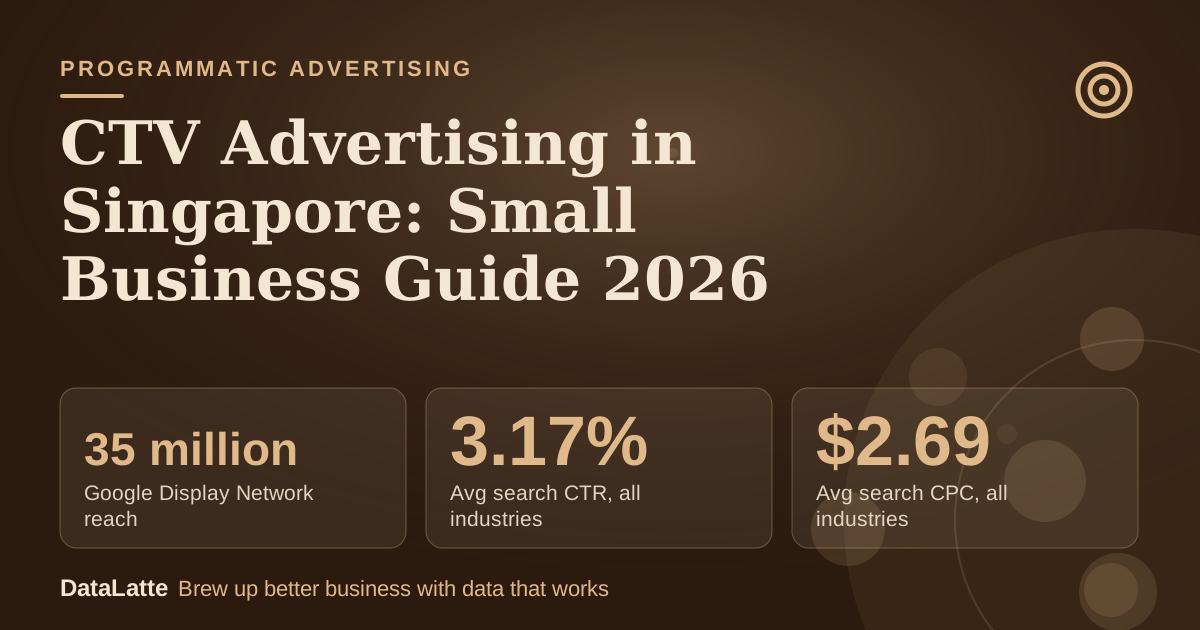
35 million→
Google Display Network reach
Websites and apps, plus YouTube and Gmail (Google, primary)
3.17%→
Avg search CTR, all industries
WordStream benchmark (secondary)
$2.69↑
Avg search CPC, all industries
WordStream benchmark (secondary)
$0.63→
Avg display CPC, all industries
WordStream benchmark (secondary)
See Sources at the end of the article. Cards marked Assumption are examples, not results.
What does CTV advertising cost a small business?
Google's published benchmarks do not measure CTV, so no CTV price can be taken from them. The closest sourced numbers are cost-per-click figures for search and display. WordStream reports an average search CPC of $2.69 and a display CPC of $0.63 across industries, and notes that these costs rose only slightly over prior years (WordStream, secondary).
Those figures measure clicks, not streaming impressions. CTV is usually bought on cost per thousand impressions (CPM), so a click-based benchmark does not translate directly into a CTV budget. Each vendor should provide its CPM, minimum spend, and audience-targeting fees in writing before options are compared.
Until those written quotes arrive, the only defensible figures are the sourced click benchmarks above. Any CTV price quoted without a vendor source should be treated as unverified.
How does a display network differ from streaming TV?
Google's Display campaign documentation describes reach across 35 million websites and apps, plus Google-owned properties such as YouTube and Gmail (Google Ads Help, primary). That page covers Google's display inventory. It does not describe CTV inventory or streaming-app placements in Singapore.
This distinction matters for planning. Display placements on the web and in apps are a different buying environment from a full-screen streaming ad, with different formats and different measurement. A Google display test should be treated as a separate channel from a CTV test, with results tracked in separate reports.
Businesses weighing CTV against other formats can read the native advertising guide for small businesses, which explains how native placements differ in format and measurement from video inventory.
Which Singapore CTV platforms should you check first?
An earlier version of this article named several streaming services and gave CPM ranges for each. Those ranges are not supported by the sources used here, so they have been removed. Platform availability, ad formats, and rates change over time, and the only reliable source is the vendor itself.
A practical shortlist is three to four platforms that reach the target area. Request a written proposal from each, then compare them on audience geography, ad length, minimum commitment, and reporting. Brand recognition alone is a weak reason to choose a platform, because a well-known service may not reach the specific neighbourhoods a local business serves.
Ask whether the platform can target by postal district or area rather than by country alone. A single-area test is easier to measure and cheaper to stop if results are weak.
What compliance checks apply before launch?
Singapore advertising is governed by a self-regulatory code. The earlier version of this article referred to rules on racial and religious sensitivity and on health and financial claims. The sources used here do not confirm the current wording of those rules, so businesses should read the current code on the regulator's website before finalising creative.
The platform's ad review team also applies its own standards and may reject creative that a regulator would allow. Asking the review team in advance what it will reject can prevent a delayed launch.
Price claims in creative should match the prices actually charged. Claims about health outcomes, results, or financial returns should be checked by a second person before submission, since these are the categories most likely to draw objections.
How should you budget a first CTV test?
The worked example below uses assumption-labelled inputs. Replace them with real vendor figures before deciding anything.
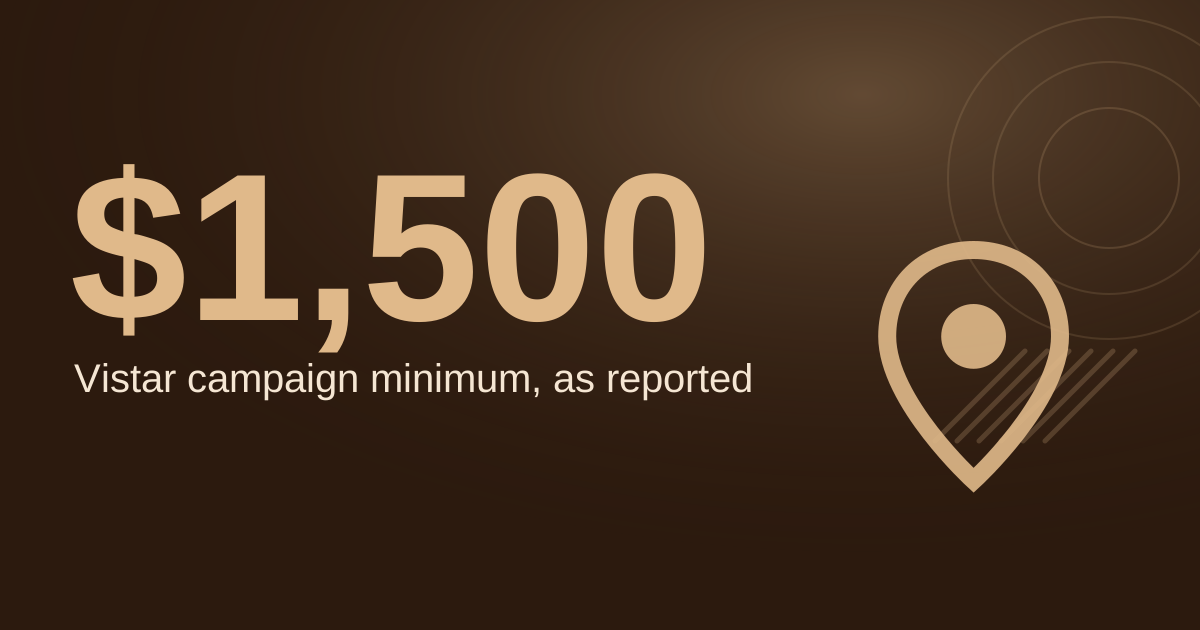
Test budget (assumption): $1,500 for six weeks.
Weekly budget (assumption): $1,500 ÷ 6 = $250.
Reference display CPC (WordStream, secondary): $0.63. This is a click benchmark, not a CTV cost. It shows how many clicks the same money would buy on display: $1,500 ÷ $0.63 ≈ 2,381 clicks.
CTV CPM (vendor quote needed, not sourced): impressions = ($1,500 ÷ CPM) × 1,000. If a vendor quoted a CPM of $10 (assumption), the same budget would buy about 150,000 impressions.
Use the impression math, not the click math, to judge a CTV proposal. The test is worth running only if the vendor's CPM and minimum spend fit inside the budget with room left for measurement. If the minimum spend exceeds the test budget, the vendor is unsuitable for a first test regardless of its rates.
Run the test in one area with one ad version. Once the cost per thousand impressions is known, and it is clear whether store visits or calls rose during the test, the business can decide whether to scale. Keep the same currency across all figures; the example uses US dollars to match the source benchmarks, and the business should convert at its own exchange rate.
What should you ask a CTV vendor before you sign?
Use this checklist in every vendor conversation, and record the answers in writing.
Question
Why it matters
Acceptable answer
What is the CPM for my target area?
Sets impression volume
A written rate per area
What is the minimum spend and term?
Affects test feasibility
A test option under your budget
Which ad lengths and formats are accepted?
Affects creative costs
Named specifications
How are audiences defined?
Controls targeting accuracy
Geography and interest rules stated
What reporting is included?
Lets you judge results
Impressions, reach, and frequency
Who reviews creative against the advertising code?
Avoids rejected ads
A named review step
A vendor that cannot answer the first two questions in writing should not be shortlisted. Verbal promises about reach are not enough to plan a budget.
FAQ
Is CTV advertising worth testing for a small business in Singapore?
It can be, if the test is small and measured. The sources here do not give Singapore CTV results, so the channel should be judged by the business's own test data. Setting a clear goal, such as store visits or calls, before launch makes the result easier to read.
How much should a first CTV test cost?
No Singapore minimum is sourced here. Use the worked example in this guide and fit it to the vendor's minimum spend. Choose a test size the business can afford to lose while it learns.
Do I need to check advertising rules before launch?
Yes. Read the current code from the regulator, and ask the platform's review team what it rejects. Older summaries, including earlier versions of this article, may no longer match current rules.
How is CTV different from Google Ads?
Google Ads search campaigns reach people who type queries. Google's display documentation covers websites, apps, YouTube, and Gmail (Google Ads Help, primary). CTV places video on streaming screens and is usually bought on impressions. Each channel needs its own measurement plan.
Local marketing strategist with 10+ years at global agencies — OMD, Dentsu, GroupM, and BBDO. Now helping small businesses get the same data-driven edge. Based in Europe, working with clients in the US, UK, Australia, and beyond.