A solo pet groomer can test Google Ads for 30 days on a small budget, but only if tracking, booking capacity and lead quality are set up first. At a $600 monthly budget and an assumed $6.40 average click, the account buys about 94 clicks. Whether those clicks fill slots depends on how many enquiries arrive, how many turn into bookings and whether the calendar has room. The plan below covers the setup, the tracking, a tight first campaign, a 30-day schedule and a break-even check.
What Do the Published Benchmarks Say About Grooming Ads?
Grooming has no clean benchmark. WordStream publishes figures by industry, and its closest category to a grooming business is Consumer Services.
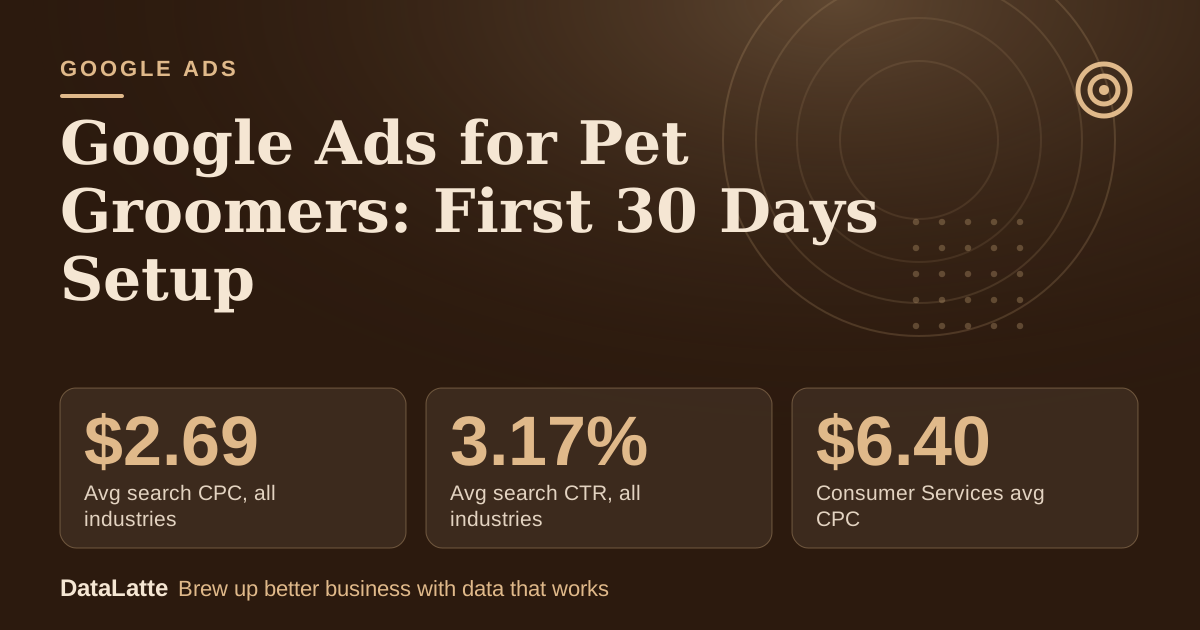
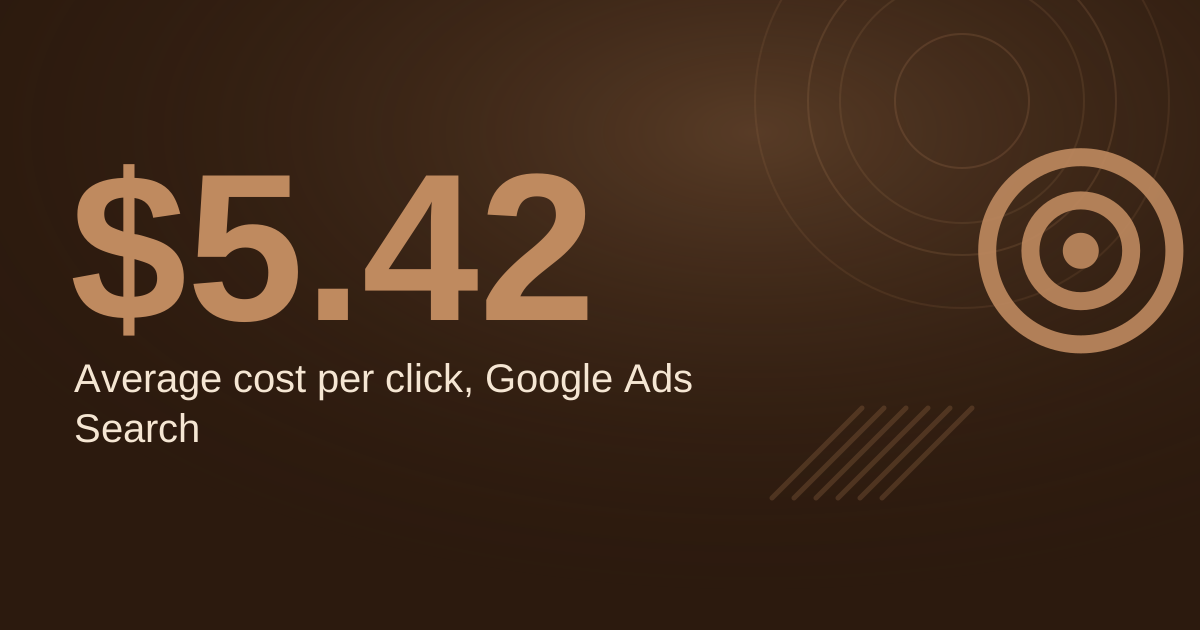
WordStream's Google Ads benchmarks list an average search cost per click of $6.40 for Consumer Services and an average search click-through rate of 2.41%. Across all industries the same page gives $2.69 per click and 3.17% CTR for search.
→
Avg search CPC, all industries
WordStream benchmark
→
Avg search CTR, all industries
WordStream benchmark
→
Consumer Services avg CPC
WordStream, proxy for grooming
→
Consumer Services avg search CTR
WordStream, proxy for grooming
See Sources at the end of the article. Cards marked Assumption are examples, not results.
Two cautions apply. The version of the page reviewed carries older publication dates, so check the current figures before relying on them. Consumer Services also mixes many service types, so treat it as a rough guide to cost, not a grooming forecast. For full keyword lists and category detail, see the
complete Google Ads guide for dog groomers.
What Should You Fix Before Spending Anything?
Start with capacity. Count the open appointments you want to fill next month. If you want 8 and roughly half of enquiries typically book (use your own number, not a benchmark), you need about 16 enquiries. Work backward from that to a budget, not forward from a budget to hope.
Next, set up three conversion actions: calls from the ad, calls from the website and your booking form or confirmation page. Choose a minimum call length that reflects a real enquiry. Forty-five to sixty seconds is a reasonable starting point, and it is a suggestion, not a platform rule.
Then build one landing page for one offer. Put the service and town in the headline, add one booking button, a tappable phone number, real photos, your rating, prices as ranges and a plain list of breeds or services you do not take. That last item screens out poor-fit callers before they ring.
Finally, make a lead log. One row per enquiry with the date, the source (call or form), the service asked about, the town and an outcome: booked, quote only, out of area, not a fit, or no answer. You will read this in week 4.
How Should the First Campaign Be Built on a Small Budget?
Keep it to one campaign and one location. Pull the postcodes or zip codes of your last 50 clients and draw a radius that covers most of them. Mobile groomers should draw the radius around the area they will realistically drive, not the whole region.
Use exact and phrase match only in month 1.
Google's own guidance on automated campaigns points to Search campaigns when you want control over keywords, which suits a small test. Leave broad match out until you have enough conversion data to judge it.
Use three ad groups: core grooming terms with your town, specialty terms such as doodle or senior dog grooming, and brand. Add negatives from day one for words like school, course, jobs, DIY, supplies, clippers, free and how to. The
keyword guide for pet groomers has candidate lists for each ad group.
Match the ad schedule to when you can answer the phone. If you cannot take calls while a dog is on the table, send people to the booking form at those hours instead.
What Does the Math Look Like at $600 a Month?
The table uses assumptions throughout: the $600 budget, the $6.40 click price (borrowed from WordStream's Consumer Services figure), the conversion rates, the groom price and the visit count. Replace each one with your own numbers before deciding anything.
| Tough | Base | Strong |
|---|
| Monthly budget (assumption) | $600 | $600 | $600 |
| Average CPC (assumption, from WordStream Consumer Services) | $6.40 | $6.40 | $6.40 |
| Clicks | 94 | 94 | 94 |
| Click to enquiry rate (assumption) | 5% | 10% | 15% |
| Enquiries | 4.7 | 9.4 | 14.1 |
| Cost per enquiry | $128 | $64 | $43 |
| Enquiry to booked rate (assumption) | 35% | 50% | 60% |
| New clients | 1.6 | 4.7 | 8.5 |
| Ad cost per new client | $365 | $128 | $71 |
| Average groom price (assumption) | $85 | $85 | $85 |
| Visits per client in year one (assumption) | 3 | 3 | 3 |
| First-year revenue per client | $255 | $255 | $255 |
| Ad cost as share of first-year revenue | 143% | 50% | 28% |
Revenue is not profit. Suppose running the table, including your time, supplies and rent, takes an assumed 60% of revenue. Then a $255 client leaves about $102. In the Tough column the first year does not cover the ad cost. In Base it does, and the repeat visits are where the margin comes from. The Strong column books more clients than many solo groomers have room for, so the right move there may be a smaller budget.
The cheapest lever is the booking rate, not the click. At the same enquiry volume, moving from 35% to 60% booked cuts the cost per client by about 42%. That means answering fast, returning missed calls the same day and having online booking that works on a phone.
What Is Your Break-Even Click Price?
The break-even check is simple: maximum cost per click equals the contribution per new client, multiplied by the enquiry rate, multiplied by the booking rate. Using the assumed $102 contribution per client, a 10% enquiry rate and a 50% booking rate gives $102 x 0.10 x 0.50 = $5.10. Above that price, the average click loses money. Recalculate with your own margin, because a higher-priced service or a better repeat rate raises the ceiling.
How Do You Run the 30-Day Plan?
Days 1 to 7 are for launch. Turn the ads on, then test each conversion action with a real call and a real form submission. Do not judge results yet.
Days 8 to 14 are for cleaning the traffic. Read the search terms report, add negatives and pause any keyword that has spent money without producing an enquiry.
Days 15 to 21 are for fixing leaks. If clicks arrive but enquiries do not, rewrite the page or the ad. Keep the lead log current.
Days 22 to 30 are for the decision. Compare cost per booked client against your break-even figure, then scale, hold or stop. Judging on day 5 is a common mistake, because a handful of enquiries can swing a small account either way.
What Should Week 4 Tell You?
Sort the lead log by outcome and look for patterns. Many out-of-area enquiries mean the radius is too wide. Many not-a-fit enquiries mean the breed or service needs a negative keyword and a clearer line on the page. Many no-answers point to hours or the ad schedule. Many quote-only enquiries suggest the page should show price ranges earlier.
Each pattern has one fix, and changing several things at once makes results hard to read. Change one thing, wait a week and check the log again.
FAQ
How much should a solo groomer spend on Google Ads in the first month?
There is no official figure. The $600 used here is an assumption. Choose a budget from your slot target and your break-even click price, not from an industry average.
For a first month on a small budget, a Search campaign gives you the search terms report and control over which keywords you pay for.
Google's Display campaign help page suggests Performance Max or Search as the options for other automated campaign types. Read the
Performance Max guide for local business once you have steady tracked bookings to compare against.
Should I use Google Local Services Ads instead?
Local Services Ads work on a different model and have their own rules and costs. Compare the two before committing, using the
Local Services Ads complete guide and the
worth-it analysis.
Why am I getting calls but no bookings?
Check the lead log. The usual causes are out-of-area callers, price shoppers, breeds you do not take and missed calls. Each has a fix: radius, price ranges on the page, negatives and a tighter ad schedule.
How long until I know if it works?
Enquiries can arrive within days, but judge after about 30 days and 100 or more clicks. The 30-day mark is a rule of thumb, not a Google figure.
Sources
- WordStream: Google Ads Benchmarks for YOUR Industry (vendor benchmark data; Consumer Services and all-industry search CPC and CTR; check the current edition)
- Google Ads Help: About Display ads and the Google Display Network (primary; guidance on automated campaign types and Smart bidding)
Want the first 30 days set up and tracked properly? See the
Google Ads service from DataLatte.