Google Ads for Pet Groomers in Miami, FL: 2026 Guide
July 1, 2026·Nataliia Rumiantsewa· 6 min read All posts
Google Ads can put a Miami pet groomer in front of people already searching for grooming nearby. The approach that works is narrow: target high-intent terms such as "dog groomer near me," limit ads to a realistic radius around your location, time budget increases to quieter months, and measure every click against a booking. Published case studies show large growth in impressions and clicks, but they come from single businesses in past years. Use them as directional evidence and test your own numbers before committing to a budget.
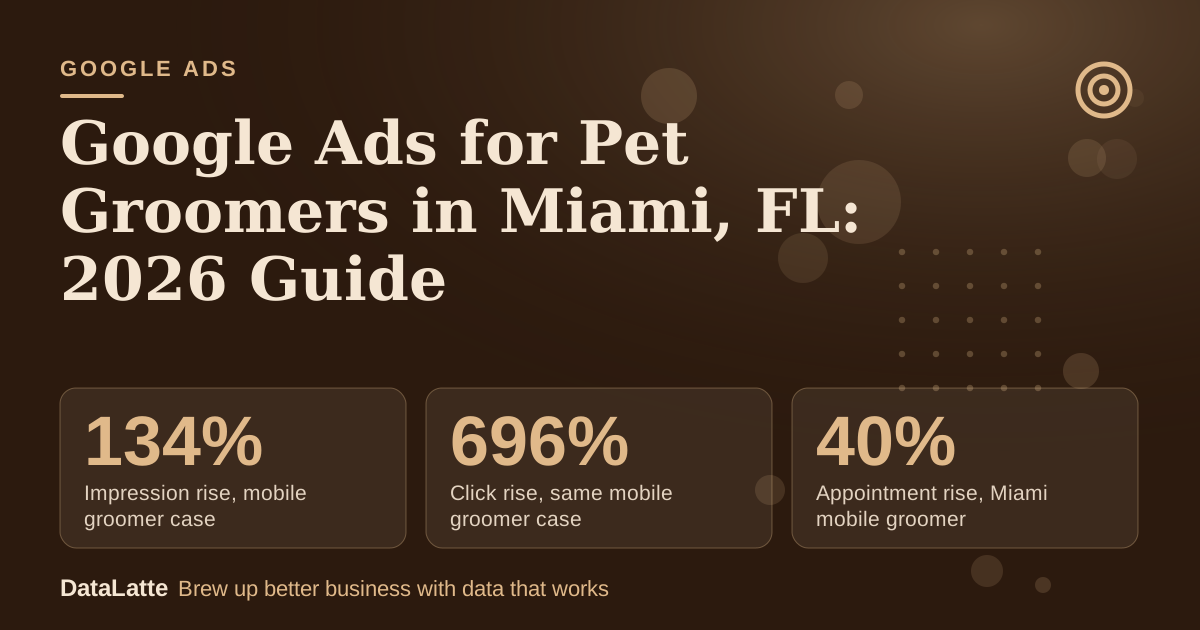
134%↑
Impression rise, mobile groomer case
Vendor case study, 2023 vs prior 6 months
696%↑
Click rise, same mobile groomer case
Vendor case study, 2023 vs prior 6 months
40%↑
Appointment rise, Miami mobile groomer
Facebook Ads, over three months
10–15 mi→
Suggested targeting radius
Starting test, not a benchmark
See Sources at the end of the article. Cards marked Assumption are examples, not results.
What Results Have Pet Groomers Reported From Online Ads?
A Marketing 360 pet groomer case study describes a mobile pet groomer that advertised on Facebook and Google. Compared with the previous six-month period, the business reported a 134% increase in impressions and a 696% increase in clicks. The case was published on June 13, 2023, so the figures reflect that period and that one business.
A Barklead guide to Facebook Ads for groomers cites a mobile grooming business in Miami that increased appointments by 40% in three months. That example ran on Facebook, not Google, so it shows that Miami groomers can grow bookings with paid social. It does not show what Google Ads will produce for your shop.
Which Keywords Should a Miami Pet Groomer Target First?
Start with terms that show someone is ready to book nearby. Service-plus-location phrases such as "dog groomer near me" and "pet grooming Miami" are the core of most campaigns. Add species-specific terms only if you groom that species, because an ad for cats will not convert a dog owner.
Keyword
Likely searcher intent
Where to start
dog groomer near me
Ready to book nearby
Core campaign
pet grooming Miami
Comparing local options
Core campaign
cat grooming near me
Ready to book, cats only
Core if you groom cats
mobile pet groomer Miami
Wants at-home service
Separate test if you travel
dog grooming near me
Similar to dog groomer
Test against the core term
Use exact match on your top converting terms first. Phrase match can cover neighbourhood and service combinations once you have data. Broad match is best reserved for discovery after the tighter campaigns are profitable. If you are also weighing Local Services Ads, the guide to Google Local Services Ads for pet groomers explains how that format differs from standard search ads.
How Wide Should the Targeting Radius Be?
Barklead suggests targeting users within a 10–15 mile radius of the groomer's location. Treat that as a starting test, not a rule. A fixed salon in a dense part of Miami may need a smaller radius than a mobile groomer who drives to clients' homes, and the right setting depends on how far your customers actually travel.
Run two radius settings for a few weeks and compare cost per booking. Keep the one that produces cheaper bookings, even if it reaches fewer people. Radius settings for a Miami shop should also match your service area on your Google Business Profile, so the two do not contradict each other.
When Should a Pet Groomer Increase Ad Spend?
AdWave, citing Groomer to Groomer, notes that November and December are traditionally a very busy time for groomers, sometimes too busy. When your calendar is full, extra ad clicks can turn into waitlists rather than revenue.
Plan budget increases for quieter months and lower spend when bookings are already maxed out. Check your own booking history to find your slow weeks, since those are the periods where additional clicks are most likely to fill open slots.
What Does a Worked Budget Example Look Like?
The example below uses assumptions, not benchmarks. Replace them with your own figures once you have run a test.
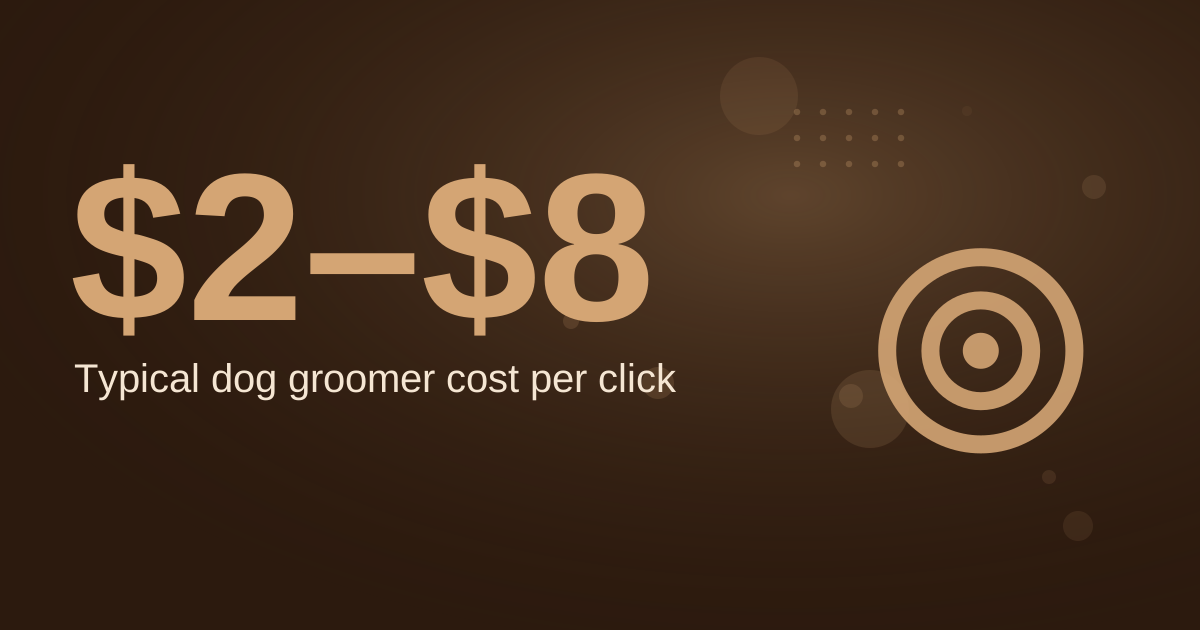
Average cost per click: $5.00 (assumption)
Click-to-booking rate: 5% (assumption)
Value of a first booking: $80 (assumption)
Monthly budget
Clicks at $5.00
Bookings at 5%
First-visit revenue at $80
$500
100
5
$400
$1,000
200
10
$800
$2,000
400
20
$1,600
At these assumptions, a $1,000 month brings in $800 of first-visit revenue, which is less than the spend. To recover $1,000 from first visits alone, you need 13 bookings ($1,000 divided by $80, rounded up). At 5%, that means 260 clicks, or $1,300 of spend at $5.00 per click.
The gap shows why repeat visits matter. Assuming clients rebook every few weeks (assumption), the same campaign recovers its cost across several visits rather than in one. Measure how many visits a typical new client makes before judging the campaign.
Pro Tip
Start with your highest-intent terms and one radius setting. A smaller, well-tracked campaign gives you cleaner data on cost per booking than a broad campaign spread across the whole metro area.
Which Negative Keywords Cut Wasted Spend?
Add negative keywords early so budget does not go to searches that rarely become bookings. Common exclusions for a pet groomer include:
Job-related terms such as "jobs," "hiring," "career," and "salary"
DIY and training terms such as "how to," "course," "training," and "certification"
Supply and resale terms such as "wholesale," "supplier," and "franchise"
Cities outside your service area, so clicks stay within your radius
Review the search terms report every week during the first month. Each irrelevant query you find should go on the negative list.
Which Conversions Should You Track?
Set up conversion tracking before increasing spend, or the cost-per-booking figures will be guesses. Track these four actions:
Phone calls from ads, using a tracked call number
Completed booking forms on your website
Direction requests from your Google Business Profile
Clicks on "book now" or contact buttons, as a weaker signal of interest
How much should a pet groomer in Miami spend on Google Ads?
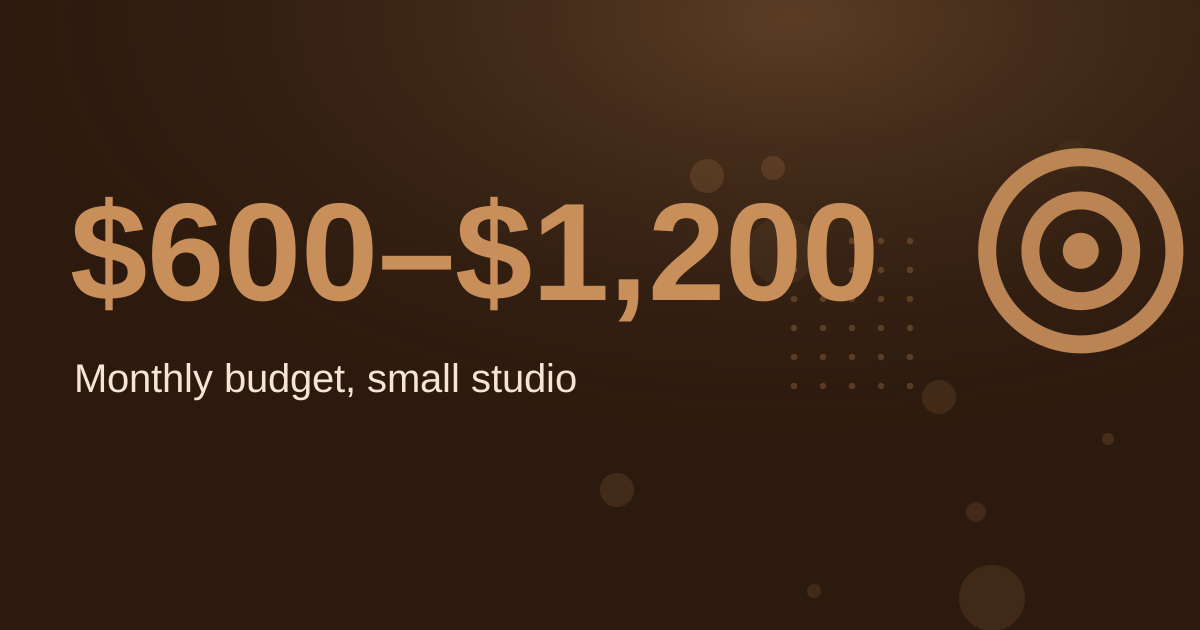
The sources here do not set a standard budget. The worked example above shows how monthly spend translates into clicks and bookings at assumed rates. Your own cost per click and booking value determine the right number, so run a test period and calculate from your results.
Is Google Ads better than Facebook Ads for pet groomers?
The sources do not prove that one channel wins. The Marketing 360 case used both Facebook and Google, and the Miami example used Facebook. Run each channel with a separate budget and compare cost per booking. The Amazon Ads vs Google Ads comparison for local business can help you think through channel trade-offs.
How long does it take to see results from Google Ads?
The sources here do not give a standard timeline. Allow enough weeks to collect meaningful booking data before judging the campaign, and check Google's live Ads Help pages for current guidance on how long campaigns need to settle.
What radius should a Miami pet groomer target?
Barklead suggests 10 to 15 miles as a starting point. Compare that against a smaller setting, and keep whichever produces cheaper bookings. Fixed-location shops and mobile groomers will often need different radii.
Local marketing strategist with 10+ years at global agencies — OMD, Dentsu, GroupM, and BBDO. Now helping small businesses get the same data-driven edge. Based in Europe, working with clients in the US, UK, Australia, and beyond.