Google Ads can put a restaurant in front of people who are searching for somewhere to eat right now. For most single-location restaurants, the practical starting point is a Search campaign plus a Performance Max campaign, a small daily budget that is treated as a test rather than a guaranteed result, and conversion tracking set up before the first click. A UK agency that runs restaurant accounts recommends running both campaign types to start, then shifting spend toward whichever produces reservations or calls (
A Guide to Google Ads for Restaurant Owners in 2025, secondary). The rest of this guide covers campaign choice, budgeting, Quality Score, and a payback check you can run on your own numbers.
→
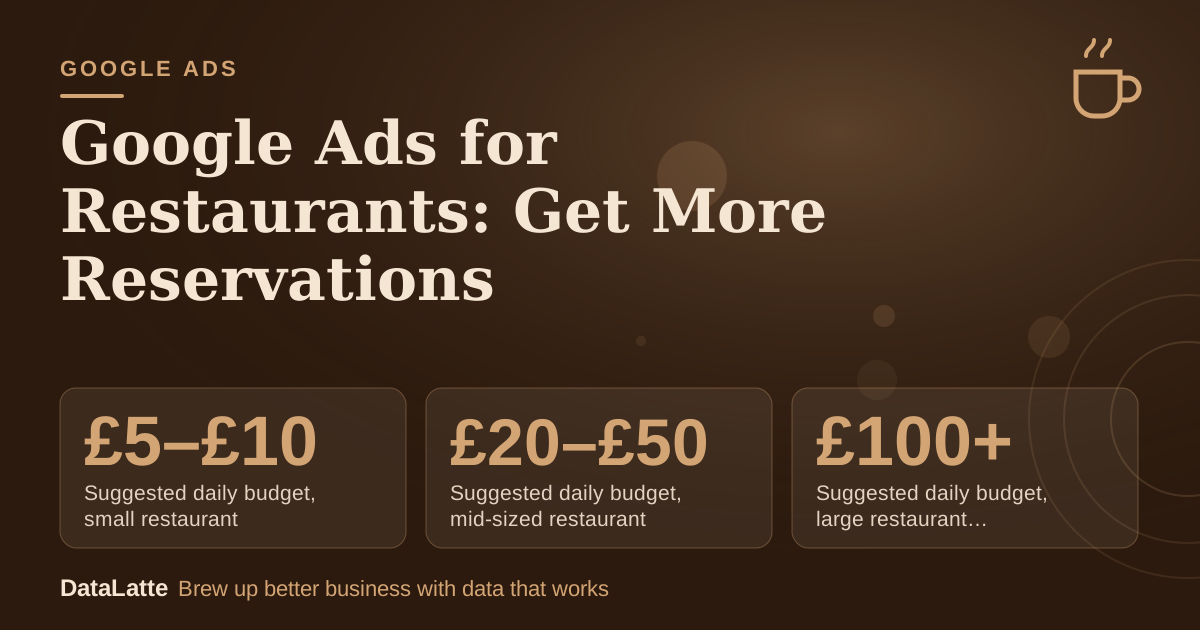
Suggested daily budget, small restaurant
UK agency guide, secondary
↑
Suggested daily budget, mid-sized restaurant
UK agency guide, secondary, competitive areas
↑
Suggested daily budget, large restaurant or chain
UK agency guide, secondary, aggressive marketing
→
Days of exact-search history behind Quality Score
Google Ads Help, primary
See Sources at the end of the article. Cards marked Assumption are examples, not results.
Which Google Ads campaign type suits a restaurant?
Search ads are text ads that appear at the top of Google results when someone types a query such as "steak dinner near me" or "late-night tacos." They suit restaurants because the customer has already decided to eat out and is comparing options. The UK agency describes Search as best for attracting people looking for a specific cuisine or location (
secondary).
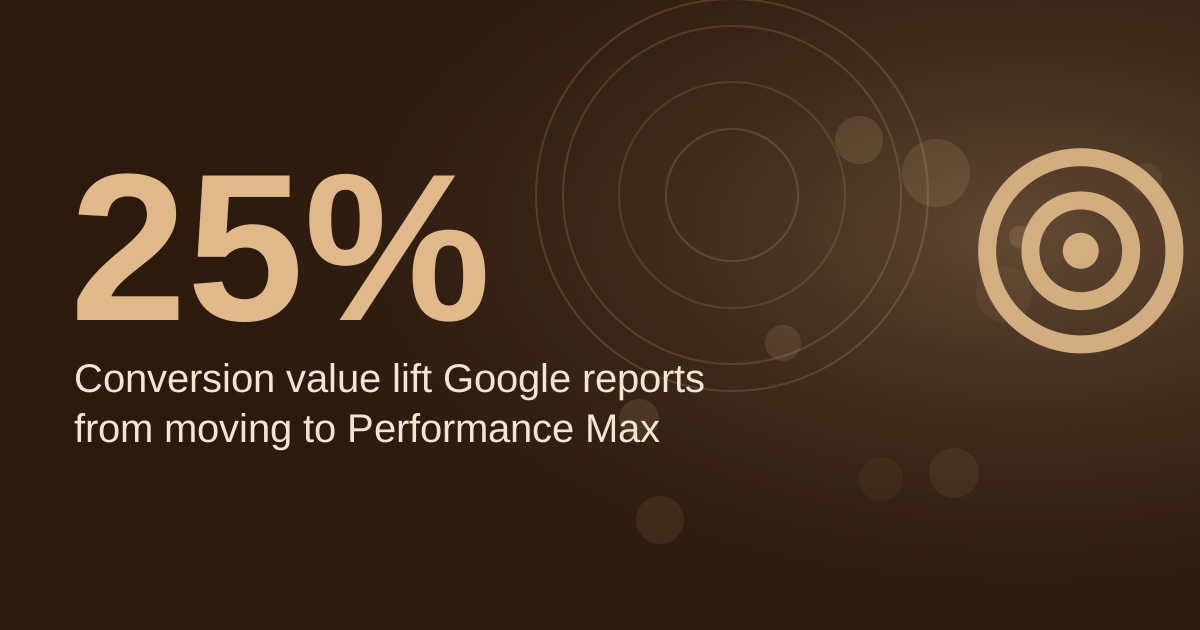
Performance Max is a campaign type that serves ads across Google Search, Maps, YouTube and Gmail. Google describes its AI-powered campaigns as analysing signals from Search, Maps and YouTube to predict who is ready to act (
Google Ads, primary). The table below sets out the trade-offs for a typical restaurant.
| Factor | Search ads | Performance Max |
|---|
| Where the ad appears | Top of Google Search results for the queries you target | Search, Maps, YouTube and Gmail, chosen by the system |
| Control over triggers | High: you choose keywords and add negative keywords | Lower: the algorithm decides placements and audiences |
| Typical restaurant use | "Best steakhouse in London," "vegan café in Bristol" | Wider reach for a seasonal menu or new opening |
| Data needed to judge | Search terms report and Quality Score per keyword | Conversion data over several weeks before results settle |
| Main risk | Paying for irrelevant searches such as "cheap sushi deals" | Spend drifting to placements that do not book tables |
Because Performance Max depends on the algorithm learning, it gives less direct control over which queries trigger your ad. For guidance on how it works for local businesses, see
Performance Max for local business.
How should a restaurant set its first budget?
Google Ads charges on a pay-per-click basis, so you pay when someone clicks. The UK agency guide suggests starting small: £5–£10 a day for small restaurants, £20–£50 a day for mid-sized restaurants in competitive areas, and £100 or more a day for large groups (
secondary). The guide describes these ranges as very rough, so treat them as a starting test rather than a target.
A budget only works as a test if it is large enough to generate clicks and bookings you can measure. Very low budgets may produce too little data to judge anything, so the aim is a figure you can hold steady for several weeks. Review the account after the first month and adjust, instead of changing the budget daily based on one slow evening.
What does Quality Score tell you about your keywords?
Quality Score is a diagnostic from 1 to 10, shown at the keyword level. A higher score means your ad and landing page are more relevant to someone searching that keyword than other advertisers' ads are (
Google Ads Help, primary). It combines three components: expected click-through rate, ad relevance, and landing page experience. Each is rated Above average, Average or Below average, based on advertisers whose ads showed for the same search over the last 90 days.
Google is clear that the score has limits. It is not a key performance indicator, it should not be optimised or averaged with the rest of your data, and it is not an input in the ad auction. Use it to spot a weak ad group or landing page, then check the result against reservations. A keyword with a high score and no bookings points to a tracking or offer problem, not a keyword problem.
For a restaurant, a Below average landing page rating often means the ad promises a table but sends people to a generic homepage. Point the ad to a page that names the cuisine, shows the menu and has a booking button.
How do you check whether the ads pay back?
The example below uses assumed inputs for illustration. Replace each one with your own figures before drawing conclusions.
- Daily budget: £10 (assumption, within the UK agency's small-restaurant range).
- Spend over 30 days: £300 (assumption, £10 × 30).
- Average cost per click: £1.20 (assumption), giving about 250 clicks.
- Booking conversion rate: 4% (assumption), giving 10 reservations.
- Cost per reservation: £300 ÷ 10 = £30.
- Average spend per reservation: £45 (assumption), giving £450 in revenue.
- Food margin: 35% (assumption), giving £157.50 gross profit.
On these numbers the campaign loses money, because £157.50 of gross profit does not cover £300 of spend. To break even on the same 250 clicks, you need about 20 reservations (£300 ÷ 35% ÷ £45 ≈ 19, rounded up), which is an 8% conversion rate. You could reach the same result with a higher average spend per booking or a lower cost per click. Tracking and landing page changes usually move these numbers more than the budget does, so change one input at a time and recalculate.
What should a restaurant track and fix first?
Start with conversion tracking. Record reservations, calls and online orders as conversions, so the account reports results you can act on. Next, add negative keywords so the ad does not show for irrelevant searches. A high-end sushi restaurant might exclude "cheap sushi deals," as the agency guide suggests (
secondary).
Work through the list in order:
- Confirm conversion tracking records a test booking.
- Check the landing page is mobile-friendly and has a booking button above the fold.
- Add negative keywords from the search terms report each week.
- Split ads by dish or offer, and test two headlines per ad group.
- Review Quality Score components for keywords rated Average or Below average.
- Compare cost per reservation against the payback calculation before increasing budget.
For restaurants that also rely on Google Maps, keep the Business Profile accurate. See
Google Business Profile for restaurants for the listing side of the funnel. If delivery platforms take a large share of your orders, check
DoorDash vs Uber Eats restaurant fees before deciding how much of your margin you can spend on clicks.
FAQ
How much should a restaurant spend on Google Ads?
The UK agency guide suggests £5–£10 a day for small restaurants, £20–£50 a day for mid-sized restaurants in competitive areas, and £100 or more a day for large groups. These are rough starting points. Choose an amount you can hold steady for at least four weeks, then compare cost per reservation against your margin.
Run both to start, as the agency recommends, then move budget toward whichever produces reservations or calls at a lower cost. Search gives more control over the queries that trigger your ad. Performance Max gives wider reach across Search, Maps, YouTube and Gmail with less manual work.
Is a Quality Score of 10 good enough?
Quality Score is a diagnostic, not a target. Google says it is not a key performance indicator and is not an input in the ad auction. Use it to find weak components, then judge the campaign by reservations and cost per reservation.
How long does it take to see results?
Google's help material does not give a fixed timeline for restaurants. Treat the first 30 days as a test period and check whether the account has enough clicks to measure bookings. If conversions stay near zero after tracking is confirmed, change the offer or landing page before adding budget.
Sources
If the account is already running and results are unclear, a free review can show where spend is going.
Book a free audit, or see how
Google Ads management is set up for restaurants.
Free for local businesses
Want this applied to your business?
I'll review your Google presence, local SEO, and ad accounts — and send you a specific action plan within 48 hours. No pitch, no pressure.