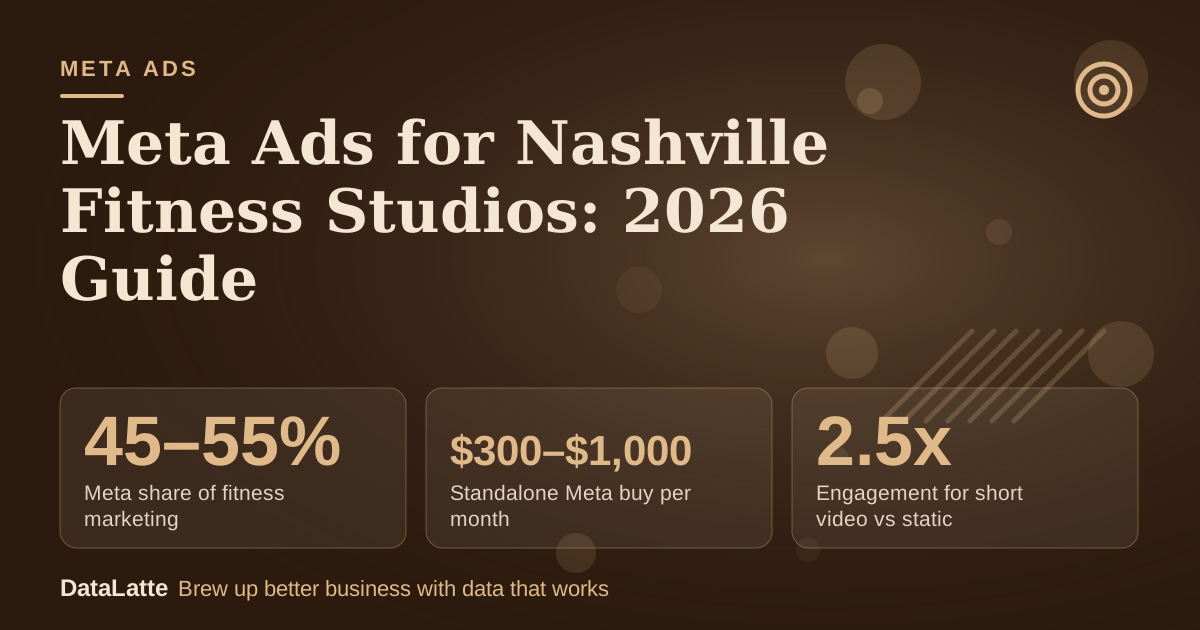
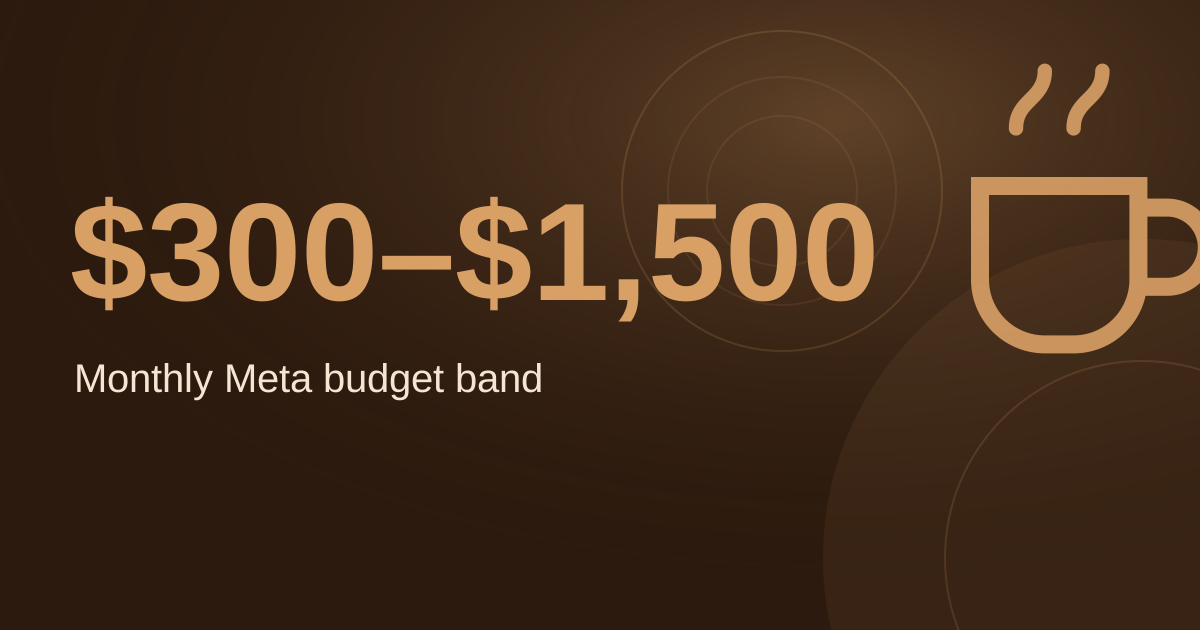
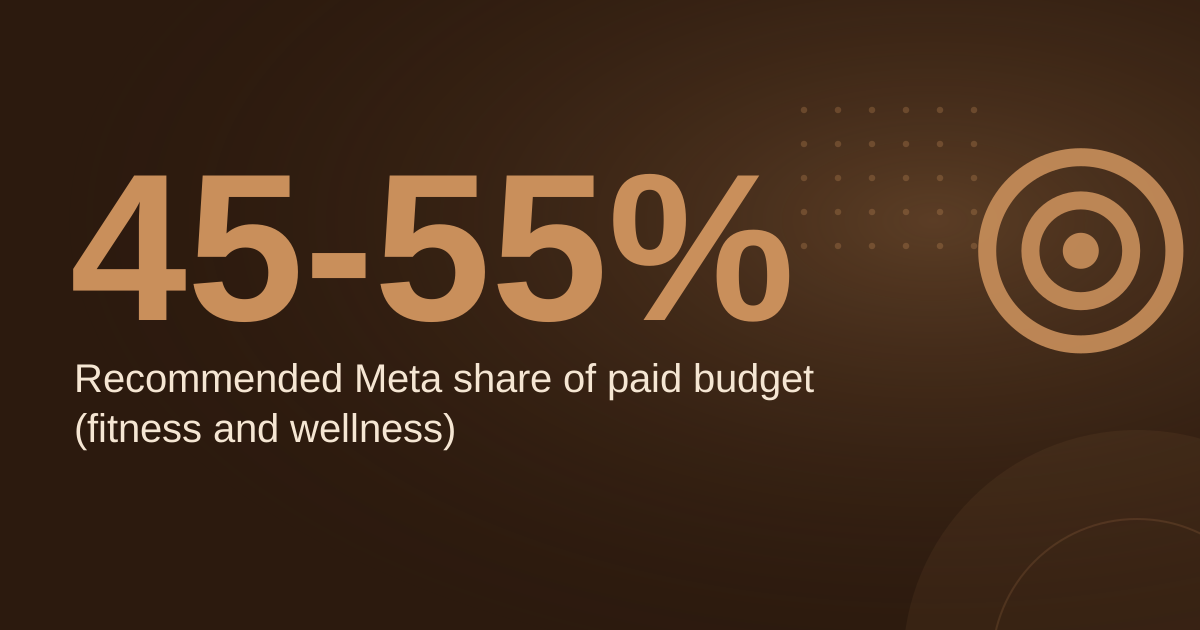
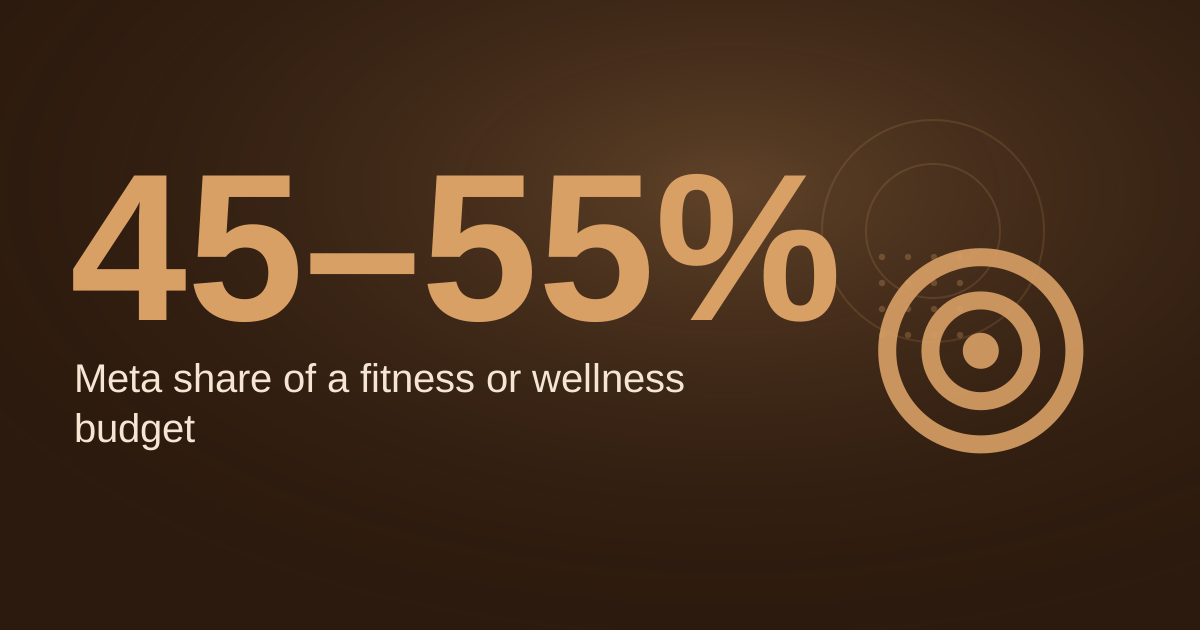
Meta ads, meaning Facebook and Instagram campaigns run through Meta Ads Manager, can give a Nashville fitness studio a direct route to new members. Results depend on budget, format and targeting. Vendor guidance puts a standalone Meta buy at about $300 to $1,000 per month, and Adwave suggests 45 to 55 percent of a fitness or wellness budget for Meta. This guide covers budgets, formats, targeting, a worked example and tracking for studios in Nashville, TN in 2026. Check local delivery estimates inside Ads Manager before you set a budget.
→
Meta share of fitness marketing
Adwave fitness split (secondary)
→
Standalone Meta buy per month
Adwave vendor table (secondary)
↑
Engagement for short video vs static
Meta 2025 report via Adwave (secondary)
→
Short videos per week
Mariana Tek pace (secondary)
See Sources at the end of the article. Cards marked Assumption are examples, not results.
Adwave's channel table lists a standalone Meta (Facebook and Instagram) buy at often $300 to $1,000 per month (
Adwave, secondary). Treat that as a planning band rather than a guarantee, since it is a vendor estimate and not a figure from Meta.
For boutique studios, marketing budgets are usually set as a share of revenue.
Mariana Tek notes that many boutique studios budget between 5 and 10 percent of monthly revenue for marketing (secondary). The next decision is how much of that pot goes to Meta. Adwave's fitness and wellness guidance recommends 45 to 55 percent for Meta, with 30 to 40 percent for connected TV and the balance on local platforms (
Adwave, secondary). A studio that does not use TV can reallocate that share.
Set a figure you can hold for several weeks. A budget that changes daily gives the platform little to learn from, and it makes results hard to read.
Short-form video should lead. Meta's 2025 Creative Best Practices report, as cited by
Adwave (secondary), says short-form video generates 2.5 times more engagement than static images on Facebook and Instagram. Mariana Tek describes three to five short-form videos per week as a realistic, sustainable pace for most studios (
Mariana Tek, secondary). Build a filming routine around class footage, coach introductions and member moments.
Meta Ads Manager lets one campaign run on Instagram, Facebook or both (
Adwave, secondary). Test a Reels-style vertical video against a Facebook feed version before you commit to one. For placement detail, see
Instagram stories ads for fitness studios, and for organic posts that support paid, see
fitness studio Instagram marketing strategy.
Static images still work for a single, clear offer such as a first-class page or a timetable graphic. Shoot real footage at your studio rather than relying on generic stock imagery.
Who Should You Target in Nashville?
Start with the people who can realistically reach your door. Set the radius around the studio using the zip codes your current members live in, rather than copying a radius from a generic guide. Set age ranges from your own member data, because the right range differs by class type.
Meta lets advertisers identify detailed customer profiles and set a budget for each ad (
The Restaurant HQ, secondary). Use that to keep separate ad sets for a trial offer and a membership push, so each has its own budget and results. Meta's apps also reach an average of 3.56 billion daily active people, per
Adwave (secondary), which is why audience size is rarely the constraint; relevance is.
Build a custom audience from current and past members for re-engagement. A lookalike audience built from your member list should be tested against a plain local audience so you can see which performs better in your area. To see what nearby competitors run, search the Meta Ad Library.
Sprites counts 746 static ads from 81 gyms and studios in the library as of 2026 (secondary).
The example below uses assumptions, not Nashville benchmarks. Replace each input with your own numbers after a two-week test.
Inputs (all assumption):
- Monthly studio revenue: $10,000
- Marketing budget: 10% of revenue, which is $1,000 and the top of the 5 to 10 percent range
- Meta share: 50% (midpoint of the 45 to 55 percent split), which is $500
- Cost per click: $2.00, within the $1 to $3 per click range Adwave lists (Adwave, secondary)
- Click-to-booking rate: 5%
- First-month revenue per new member: $60
Calculation:
- Clicks: $500 ÷ $2.00 = 250 clicks
- Bookings: 250 × 5% = 12.5, rounded down to 12 bookings
- Cost per booking: $500 ÷ 12 ≈ $41.67
- First-month revenue: 12 × $60 = $720
- Return on spend: $720 ÷ $500 = 1.44x
A 1.44x first-month return is thin. Retention drives the result: the same bookings that stay for six months change the picture entirely. Track how many new members still attend after 60 and 90 days before you judge the campaign.
Confirm three things before spending. The Meta Pixel should be installed on the website and firing on the booking confirmation page. A lead or booking event should be configured for form submissions. UTM parameters on every ad URL let Google Analytics record Meta-sourced visits alongside other channels.
Instagram and Facebook can carry a Book Now button on the profile (
Appointy, secondary). Make sure that button and every ad link go to a live booking page, not a homepage. Meta's help centre has current pixel and event setup steps, and those change, so check them rather than relying on older guides.
Follow up fast. Mariana Tek advises following up with trial or pop-up contacts within 24 hours using an automated welcome sequence, because interest fades quickly (secondary). Set that sequence up using the steps in
marketing automation for fitness studios.
Three errors come up often. The first is asking cold audiences to commit to a full membership before they have visited. A trial or single-class offer is a lower-risk first step. The second is targeting broad fitness interests instead of the specific classes you teach. The
Facebook ads for gyms and fitness studios guide covers class-specific angles in more depth.
The third is planning a seasonal push too late. Build creative and set the budget before the window you want to target opens, so the campaign is live and has time to gather data.
FAQ
Adwave's channel table puts a standalone Meta buy at often $300 to $1,000 per month (secondary). Start with a figure you can keep for several weeks, then adjust based on bookings rather than impressions alone.
Adwave's fitness and wellness guidance suggests 45 to 55 percent for Meta, with 30 to 40 percent for connected TV and the rest on local platforms (secondary). Studios that do not use connected TV can move that share into Meta or local channels.
Can one campaign run on both Instagram and Facebook?
Yes. Meta Ads Manager lets one campaign run on Instagram, Facebook or both (
Adwave, secondary). Meta Ads Manager covers Facebook, Instagram and Messenger (
Turrboo, secondary).
How often should a studio post short-form video for ads?
Mariana Tek describes three to five short-form videos per week as a realistic, sustainable pace for most studios (secondary). A steady schedule works better than posting in bursts.
Sources
Ready to see which campaigns are wasting budget on your account?
Book a free audit and get a Meta setup review for your studio.
Free for local businesses
Want this applied to your business?
I'll review your Google presence, local SEO, and ad accounts — and send you a specific action plan within 48 hours. No pitch, no pressure.