CTV Advertising in St. Louis, MO: Local Guide 2026
July 6, 2026·Nataliia Rumiantsewa· 7 min read All posts
Connected TV (CTV) advertising lets St. Louis, MO businesses show short video ads to households watching streaming services such as Hulu, Peacock and Tubi. The main lever for a local business is geography: households can be targeted by ZIP code, so ads reach the neighbourhoods where customers live. Pricing, minimums and audience data vary by platform and change over time. This guide explains how to structure a short test, which checks to run before committing a budget, and how to measure results. Figures not found in a published source are labelled as assumptions.
Does CTV advertising suit a St. Louis local business?
CTV fits businesses that depend on repeat visits from nearby households, such as salons, fitness studios, cafés and restaurants. Unlike search ads, CTV does not capture someone who is already looking for a service. It builds familiarity so that a business name is recognised when the need arises. That makes it a slower channel that usually works best alongside search.
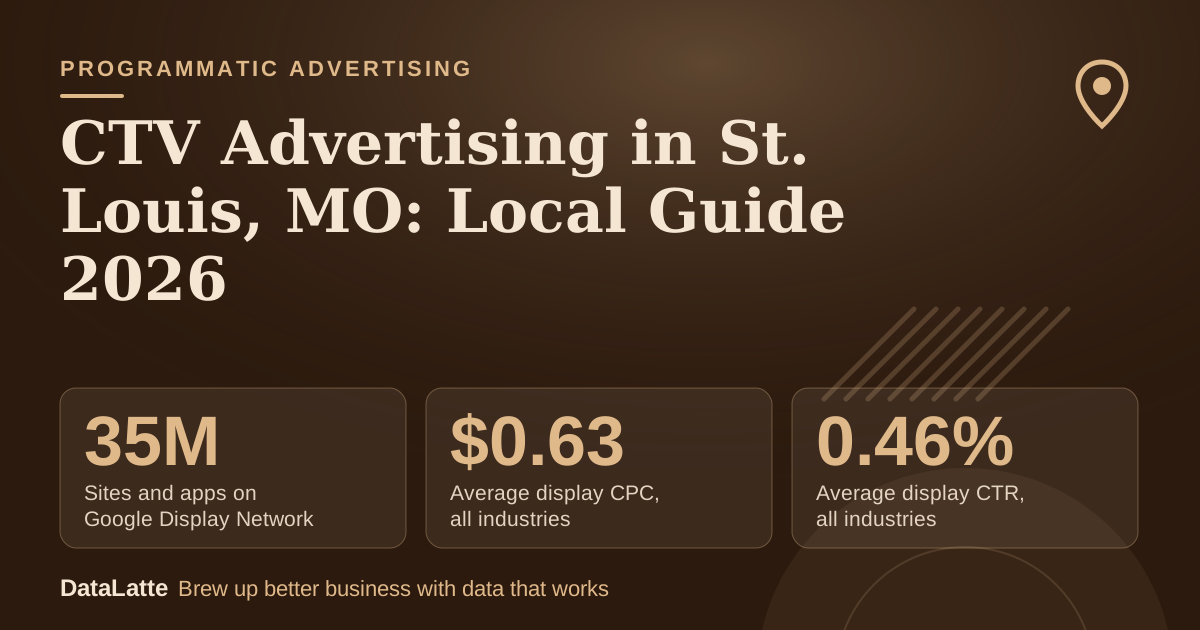
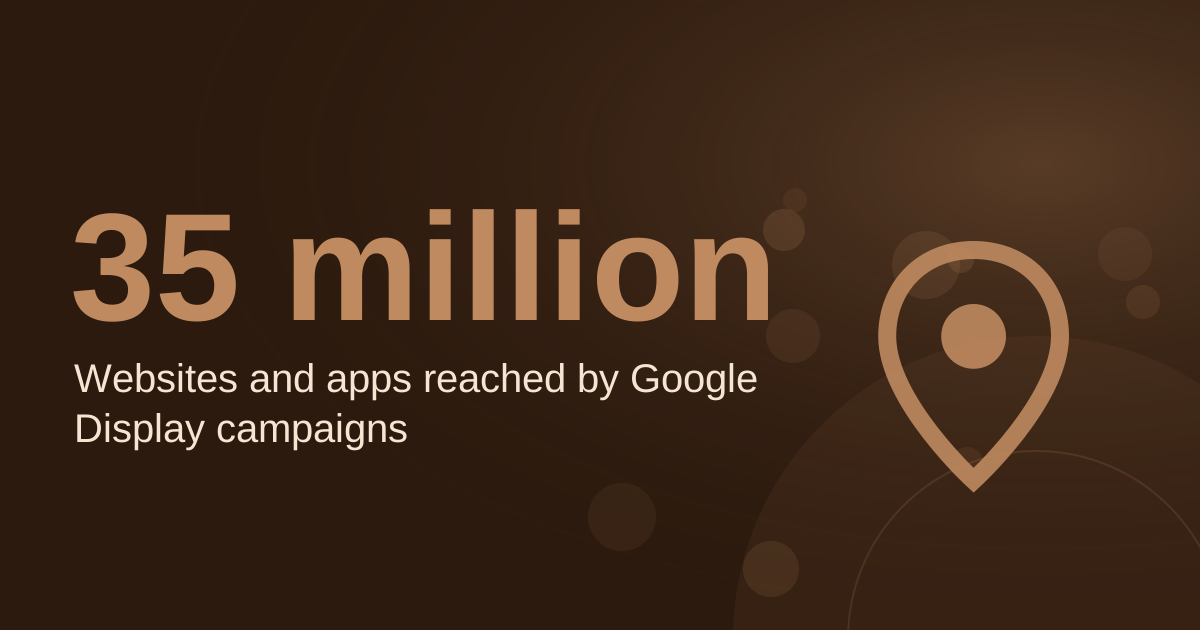
Google's support documentation describes the reach of its display inventory. Google states that Display campaigns can reach people across 35 million websites and apps, and on Google-owned properties such as YouTube and Gmail. CTV is a separate inventory type with its own rules, so that figure does not describe CTV reach. It does show that automated display buying is designed to find audiences beyond search results.
For a business with one location, the practical question is whether the target ZIP codes hold enough households to justify a test. The reach estimate shown inside the platform's ad manager answers that question more reliably than any general statistic, so check it before launch.
Which streaming platforms should a local business test first?
A single platform is usually the better starting point. One campaign on one service makes it easier to tell whether the creative and targeting are working. Hulu, Peacock, Tubi, Amazon Prime Video and Paramount+ with Pluto TV are the platforms commonly named for local buyers in the St. Louis area. Each has a different audience profile, sports coverage and ad format.
Peacock may suit a business that wants to reach sports viewers, while a free ad-supported service such as Tubi may suit a broader, price-sensitive audience. Current minimums, rate cards and audience data should be confirmed directly in each platform's ad manager, because the sources used for this guide do not cover them.
Some businesses prefer a programmatic buying tool that reaches several platforms from one dashboard. Compare minimum spends and any fees before choosing one. On a small budget, a platform minimum can make up a large share of the total spend, which leaves less money for the ads themselves.
How should ZIP-code targeting and frequency be set?
ZIP-code targeting is the most useful control for a St. Louis business. Enter a business address and choose a radius, or select specific ZIP codes where existing customers live. Starting narrow makes results easier to read. A small, well-matched audience gives a clearer signal than a large one where most households will never visit.
Frequency matters because a viewer who sees the same ad many times in a week may stop noticing it. A frequency cap limits how often each household sees the ad in a set period. The right cap depends on creative length and budget, so any number chosen should be treated as an assumption to test. Reviewing the reach and frequency report after two weeks gives a basis for adjusting it.
Demographic filters should be added only when they match a real customer profile. A family-focused salon might filter for households with children, while a late-evening fitness studio might test a younger adult audience. Each added filter shrinks the audience, so change one setting at a time and record what changed.
What does a 4-week CTV test budget look like?
A short test allows creative and targeting to be checked before a longer commitment. The worked example below uses only assumption-labelled inputs. Replace them with the rate card and minimums from the chosen platform before relying on the result.
The inputs are a monthly budget of $600, an average CPM (cost per 1,000 impressions) of $25, and a target frequency of 4 ad views per household per month. All three are assumptions. Using these inputs, the budget buys 24,000 impressions, calculated as $600 ÷ $25 × 1,000, and those impressions reach about 6,000 households, calculated as 24,000 ÷ 4.
Step
Input or result
Basis
Monthly budget
$600
Assumption
CPM
$25
Assumption, check rate card
Impressions
24,000
Calculated
Frequency per household
4
Assumption
Households reached
6,000
Calculated
If the real CPM is higher, the same budget reaches fewer households. Running the calculation with the actual CPM before setting the monthly budget avoids surprises. A tight budget may produce clearer results from a longer test at a lower total spend than from a short burst.
What do the benchmarks say about display costs?
Benchmark data sets expectations about cost, although it is not specific to CTV. WordStream's Google Ads benchmark reports an average cost per click of $2.69 for search and $0.63 for display across all industries. Its average display click-through rate is 0.46%. These averages describe Google's display network, not streaming TV. WordStream is a vendor publication and the data is dated, so the figures are context rather than a forecast.
The numbers still help when comparing channels. Display clicks are inexpensive, but click-through rates are low, so a display campaign needs a goal beyond clicks. CTV is judged on reach and recall rather than clicks. Use the benchmarks to check that search and display costs sit in a plausible range before adding a TV budget.
35M→
Sites and apps on Google Display Network
Primary: Google support page
$0.63→
Average display CPC, all industries
Secondary: WordStream benchmark
0.46%→
Average display CTR, all industries
Secondary: WordStream benchmark
$2.69→
Average search CPC, all industries
Secondary: WordStream benchmark
See Sources at the end of the article. Cards marked Assumption are examples, not results.
What checklist should come before launch?
Working through these steps in order before the first impression is served prevents common errors. Skipping one usually shows up later as wasted spend or a report that cannot be read.
Write down the one action wanted from a viewer, such as a phone call, a visit or a booking, and make the ad point to it.
Pick ZIP codes from the current customer list rather than from a map of the whole metro area.
Confirm the platform's minimum spend, rate card and creative specifications in its ad manager.
Build a 15-second cut with a clear brand mark, one benefit and one call to action that includes a phone number or address.
Set a frequency cap and fixed start and end dates for a four-week test.
Record a baseline for Google Business Profile searches, branded search clicks and website visits for the four weeks before launch.
Add a "how did you hear about us" question to the intake or checkout process.
For a wider view of how local channels fit together, the Bing Ads guide for local businesses covers another search option that can run alongside a TV test.
How do you measure CTV results without clicks?
CTV rarely produces a direct click, so results are judged by changes in behaviour around the business. Compare the baseline against the test period. Look at branded searches for the business name in Google Business Profile and Google Ads, direct visits to the website, and the share of new customers who say they heard about the business from a TV ad. Allow at least 60 to 90 days before judging the full effect, because brand recall builds slowly.
Keep the test controlled. Change creative or targeting only after a clear read on the current version. If a search campaign runs at the same time, note any changes to it so that a search shift is not credited to CTV. Search performance can move for reasons unrelated to TV, so check both Google and Bing sources before drawing conclusions. The Amazon Ads guide for local businesses explains another channel where purchase-intent data is the main measure.
For readers comparing CTV across other US cities, the Minneapolis CTV guide and the Detroit CTV guide set out similar test structures with different local considerations.
FAQ
How much does CTV advertising cost for a St. Louis business?
Costs depend on the platform, the minimum spend, the CPM and the targeting chosen. This guide does not publish platform rates because the sources used here do not cover them. Use the worked example with the actual CPM from the chosen platform's rate card.
Is CTV better than Google Ads for a local business?
They serve different purposes. Google Ads captures people already searching for a service. CTV builds familiarity with households near the business. Many local businesses use search as the main lead source and CTV as a supporting brand channel.
How long should a CTV test run?
A four-week test is enough to check creative and audience response, but not to measure brand effects fully. Plan for 60 to 90 days to judge recall and changes in branded search.
Can a business target only its own neighbourhoods?
Yes, through ZIP-code targeting. Choose the ZIP codes where existing customers live and check the estimated household count in the platform before launch.
BDM Home (U.S. Bureau of Labor Statistics, primary; reviewed, no CTV figures used)
DataLatte helps small businesses plan local search and brand campaigns. A review of the current search setup before adding a TV budget is available through a free audit or the Google Ads services page.
Free for local businesses
Want this applied to your business?
I'll review your Google presence, local SEO, and ad accounts — and send you a specific action plan within 48 hours. No pitch, no pressure.
Local marketing strategist with 10+ years at global agencies — OMD, Dentsu, GroupM, and BBDO. Now helping small businesses get the same data-driven edge. Based in Europe, working with clients in the US, UK, Australia, and beyond.