Google Ads works best for an Austin coffee shop when you target a tight radius around your location, bid on "coffee shop near me" and neighborhood-specific searches, and judge campaigns by calls and direction requests rather than clicks. Austin has many independent cafes and national chains, so broad campaigns spread budget thin. Start with a small test, measure what the ads produce, and scale only when the cost per visit fits your margins. Google's Keyword Planner gives suggested bid estimates, but your real cost depends on your neighborhood and competitors.
Which keywords should an Austin coffee shop bid on?
Search intent matters more than raw volume. A search for "coffee shop near me" usually comes from someone who is ready to go somewhere soon, while broad terms attract people who are only browsing.
Salesforce UK gives examples of long-tail phrases built on a location, such as "best coffee shop in [city]", and the same pattern works with Austin neighborhood names.
| Keyword idea | Intent | Suggested use |
|---|
| coffee shop near me | Very high | Core keyword, phrase or exact match |
| best coffee Austin | High | Core, backed by strong reviews |
| cafe near me | High | Core |
| [neighborhood] coffee shop, for example "South Congress coffee shop" | High | One ad group per neighborhood |
| specialty coffee Austin | Medium | Test |
| coffee shop open now or open late | Medium | Test, paired with ad scheduling |
| work-friendly cafe with wifi Austin | Medium | Test, if it fits your shop |
Confirm volumes and costs in Keyword Planner before committing.
Google's Keyword Planner page explains that it returns suggested bid estimates for each keyword. Once you have a working list, compare it with the
best Google Ads keywords for coffee shops.
How tight should your Austin targeting be?
Use specific neighborhoods, city names or zip codes in your keywords and ad groups.
Max Conversion recommends this kind of geo-targeting, using the example "CoolSculpting in Beverly Hills", which translates directly to phrases like "espresso in East Austin". The same vendor's advice applies here: a tight geographic focus keeps the ad relevant to the people who can actually walk or drive to you.
Set a radius around your address rather than targeting the whole metro. Austin is large, and a shop in Hyde Park and a shop in Mueller serve different crowds.
seoplus+ notes that a localized phrase such as "coffee shop downtown Phoenix" is likely to have less competition than a generic term, which can mean a lower cost per click.
How much should an Austin coffee shop spend to test?
Cost per click depends on the neighborhood, the time of day and how many competitors bid on the same terms. No single average applies to every Austin shop, so run a small test first and calculate your own numbers. The table below summarises the figures that the sources support, along with one example budget that is clearly marked as an assumption.
→
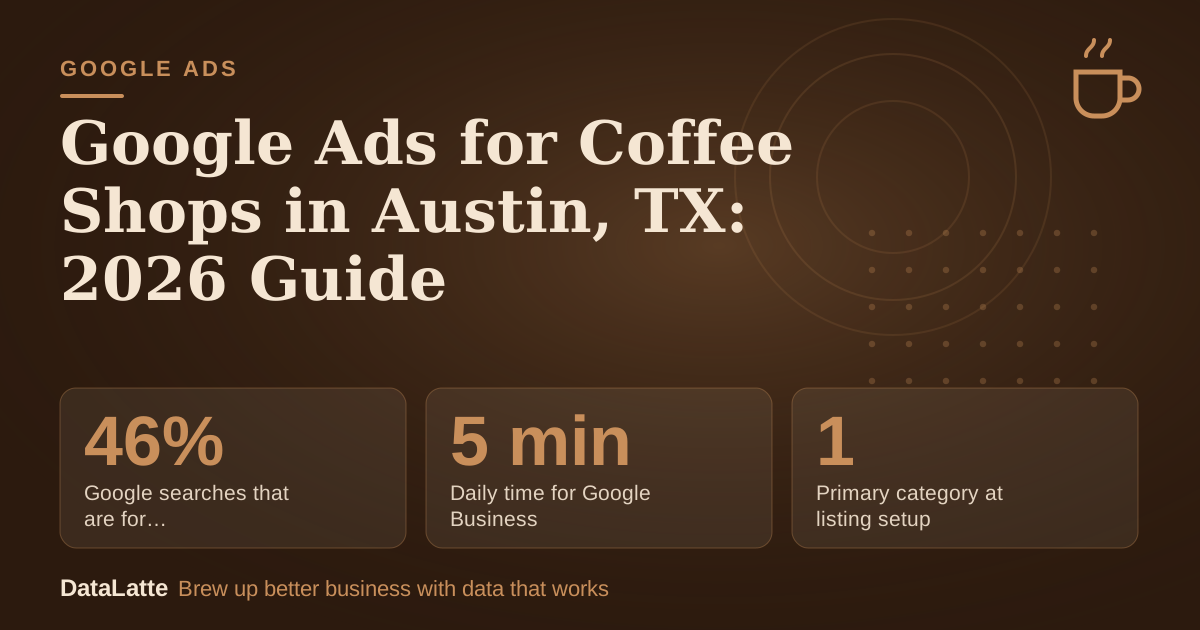
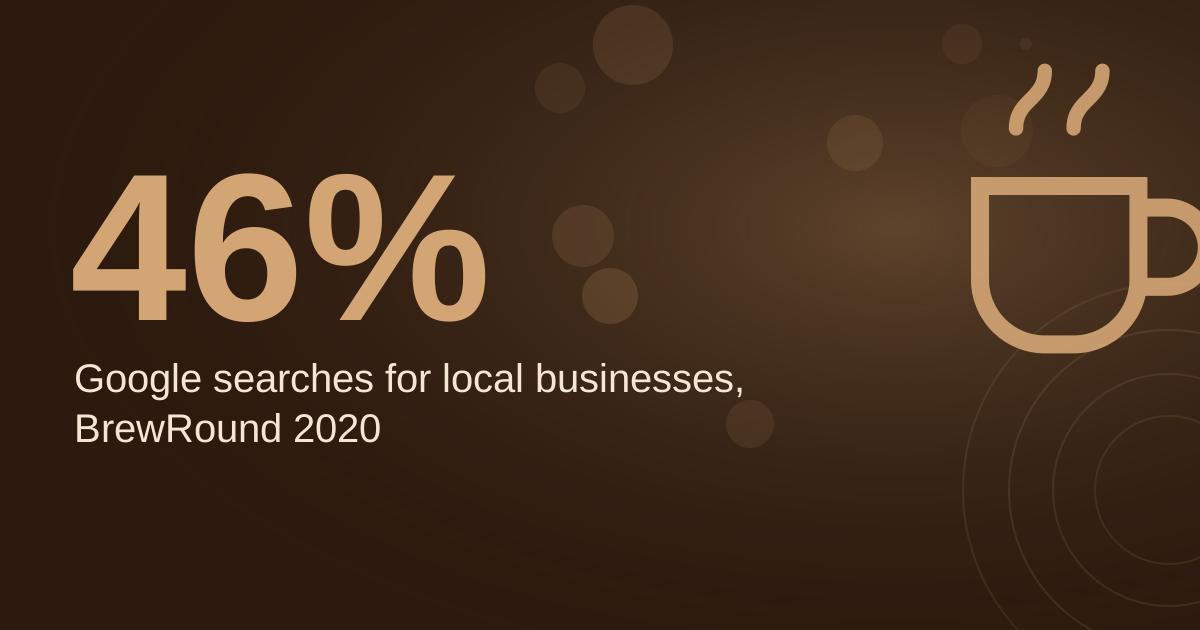
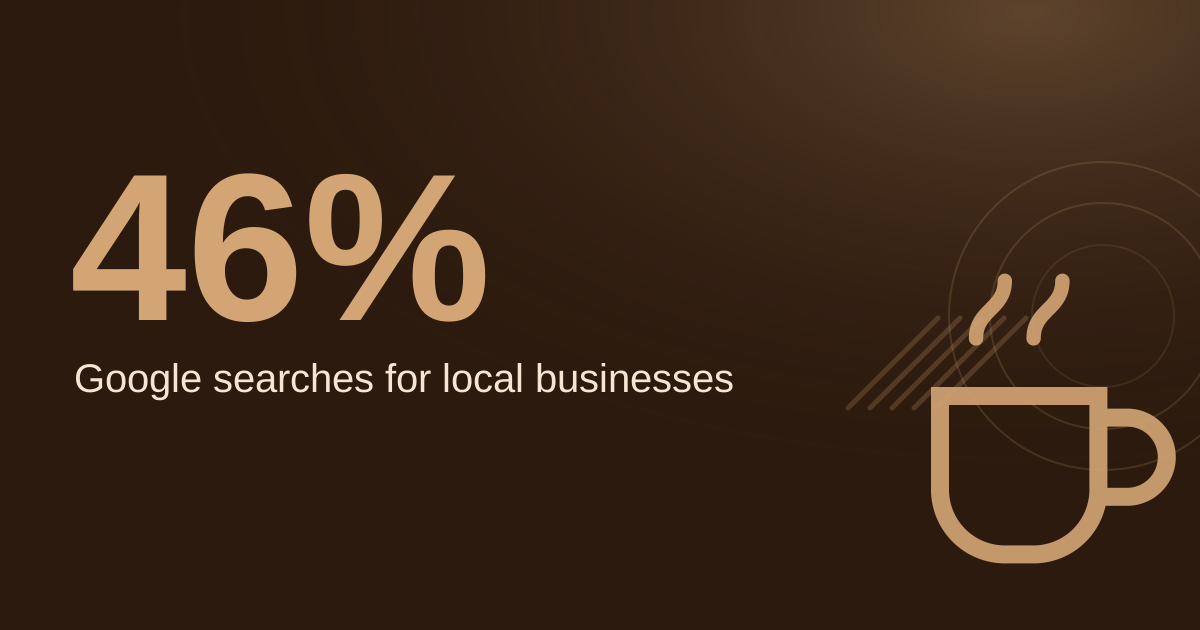
Google searches that are for local businesses
BrewRound, 2020 figure, secondary
→
Daily time for Google Business
Bellwether Coffee, secondary
→
Primary category at listing setup
BrewRound, 2020, secondary
Assumption→
Example monthly test budget
Assumption, not a benchmark
See Sources at the end of the article. Cards marked Assumption are examples, not results.
Work through the test with these inputs. Every input marked assumption should be replaced with your own data after the first few weeks.
- Monthly test budget: $400 (assumption)
- Average cost per click: $2.00 (assumption), so $400 divided by $2.00 gives 200 clicks
- Share of clicks that become a call or direction request: 5% (assumption), so 200 clicks give 10 requests
- Cost per request: $400 divided by 10, which is $40
- Share of requests that become a visit: 50% (assumption), so 5 visits
- Gross profit per first visit: $8 (assumption), so $40 gross profit from first visits
At these assumed inputs, the test loses money on first visits alone. That is the point of the exercise. It shows which number needs to move: conversion rate, cost per click, ticket size or repeat visits. Rerun the calculation with real figures before deciding whether to scale.
Should you fix your Business Profile before running ads?
Yes, because people who click your ad often check your listing first.
Per Diem recommends choosing the "Coffee shop" category or a related term rather than a broad one like "Restaurant".
BrewRound notes that you can select only one category at setup and add more later, so start with the most specific one.
Answer common questions in the Q&A section before customers ask them. Per Diem suggests covering whether you offer free Wi-Fi, dairy-free options or dogs on the patio. Google also lets users message businesses through their listings, so check that messages reach someone who can reply quickly. A fuller walkthrough is in the
Google Business Profile optimization guide for coffee shops.
Plan for verification time. Per Diem says Google usually mails a postcard with a code to the business address before the listing goes live, although some businesses can verify by phone or email. BrewRound describes the same mailed-code process. Check Google's live help page for current options, and do not launch ads until the listing is verified.
Which match types and negative keywords keep spend efficient?
Start with exact and phrase match on your top keywords and neighborhood combinations, because that gives you control over what triggers your ad.
Max Conversion warns that broad match can trigger ads for loosely related or irrelevant searches, leading to poor traffic quality and wasted budget unless it is tightly managed. Move to broad match only after you have conversion data and a solid negative list.
Add negative keywords for searches that rarely turn into visits. Useful examples include "jobs", "hiring", "salary", "training", "wholesale", "supplier", "franchise", "how to" and "beans" if you do not sell retail bags. Also exclude cities outside your service area. Review the Search Terms report weekly during the first month, because new negatives matter most early on.
What should you track beyond clicks?
Clicks show interest, but calls and direction requests show intent to visit. Set up conversion tracking for calls from ads using a Google forwarding number, calls and clicks from your website, direction requests from ads and your Business Profile, and online orders if you take them. Without these, a campaign can look busy while producing no visits.
Keep a simple weekly sheet with spend, clicks, calls, directions and cost per conversion. Use it to decide which keywords to keep, which neighborhoods to shift budget toward and which ads to pause. If customers often ask the same questions through calls or messages, the
AI customer service approach for local coffee shops describes how to handle repeat questions without adding staff hours.
What ad copy and landing page work for Austin shoppers?
Write for someone a few blocks away. Name the neighborhood, state what is different about your shop and include a clear action. Examples include "Specialty Coffee in South Congress. Open Early. Oat Milk and Cold Brew." or "East Austin Coffee Shop. Local Roasts, Fresh Pastries. Walk In or Order Ahead." Only mention features you actually offer, since a mismatch produces disappointed visitors and bad reviews.
Write at least two ad variations per ad group and replace the weaker one after you have enough data to compare them. Send clicks to a mobile-friendly page with hours, address, a map, the menu and a tap-to-call button near the top. Shops that already run wider marketing can compare ad messages with the
coffee shop marketing strategies for 2026 to keep the message consistent across channels.
Should you hire help for Austin Google Ads?
Managing a tight Austin campaign takes regular search-term reviews, negative keyword updates and conversion checks, which many owners find hard to keep up with during busy hours. An outside team can set up the structure and handle the weekly work. You can review the
Google Ads management service to see how that support is organised before you commit a budget.
FAQ
How much should a coffee shop in Austin spend on Google Ads?
There is no single figure that fits every shop. Start with a test budget you can afford to lose for several weeks, measure cost per call or direction request, and scale only if the cost fits your gross profit per visit. Competition varies a lot between neighborhoods, so one shop's numbers rarely transfer to another.
Is Google Ads worth it for coffee shops in Austin?
It can be, especially for capturing "near me" searches from people who are ready to visit. The result depends on tight targeting, negative keywords and tracking calls and directions. If your Business Profile is weak or unverified, fix that before spending on ads.
How long before a coffee shop sees results from Google Ads?
Clicks and calls can appear within days of launch. Judging performance usually takes several weeks of search-term review and ad testing. Campaigns that use smart bidding need enough conversions before the automated bidding settles, so expect a longer learning period.
What is the biggest mistake coffee shops make with Google Ads?
Targeting the whole metro instead of a tight radius is common, and skipping negative keywords and conversion tracking makes it worse. Without call and direction tracking, the account cannot show which spend produced visits.
Should an Austin coffee shop run ads alongside local SEO?
Ideally yes. Ads give immediate visibility while local SEO and a well-kept Business Profile build visibility over time. Both rely on the same listing details, so consistent hours, categories and photos help each channel.
Sources
Free for local businesses
Want this applied to your business?
I'll review your Google presence, local SEO, and ad accounts — and send you a specific action plan within 48 hours. No pitch, no pressure.