Google Ads can put a Milwaukee coffee shop in front of people already searching for coffee nearby. The campaigns that pay off tie every keyword to local intent, such as "coffee shop near me," and measure calls, direction requests and bookings from the start. Budget decisions should rest on your own margins rather than industry averages, so the worked example below uses assumed inputs you should replace. The sections that follow cover keywords, break-even cost, negative keywords and tracking.
→
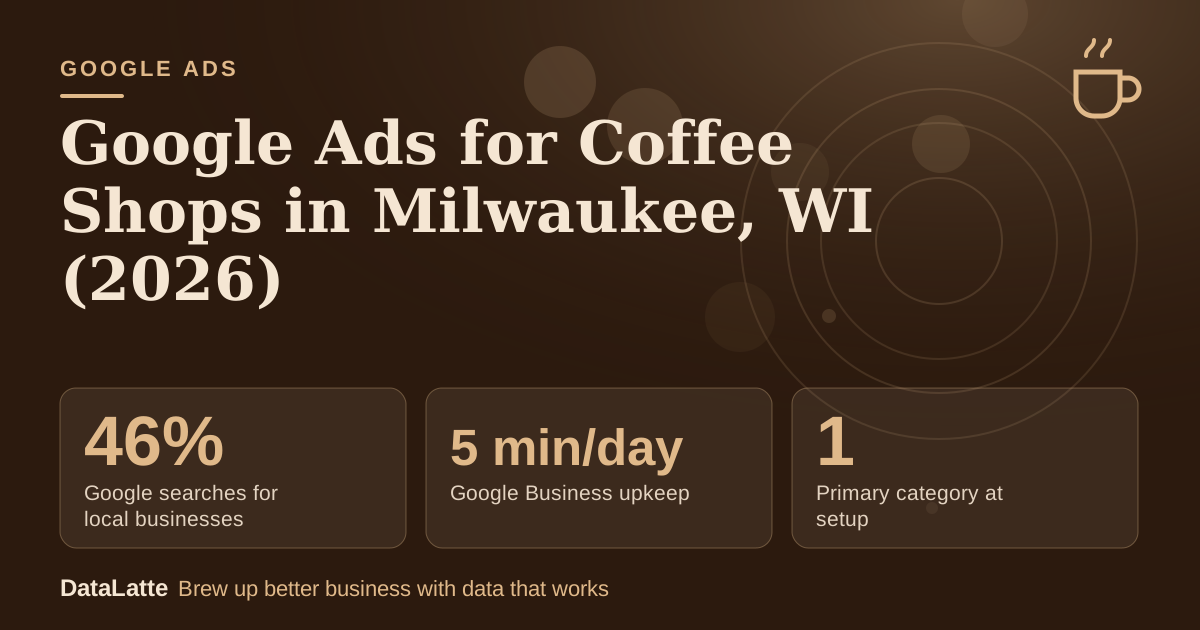
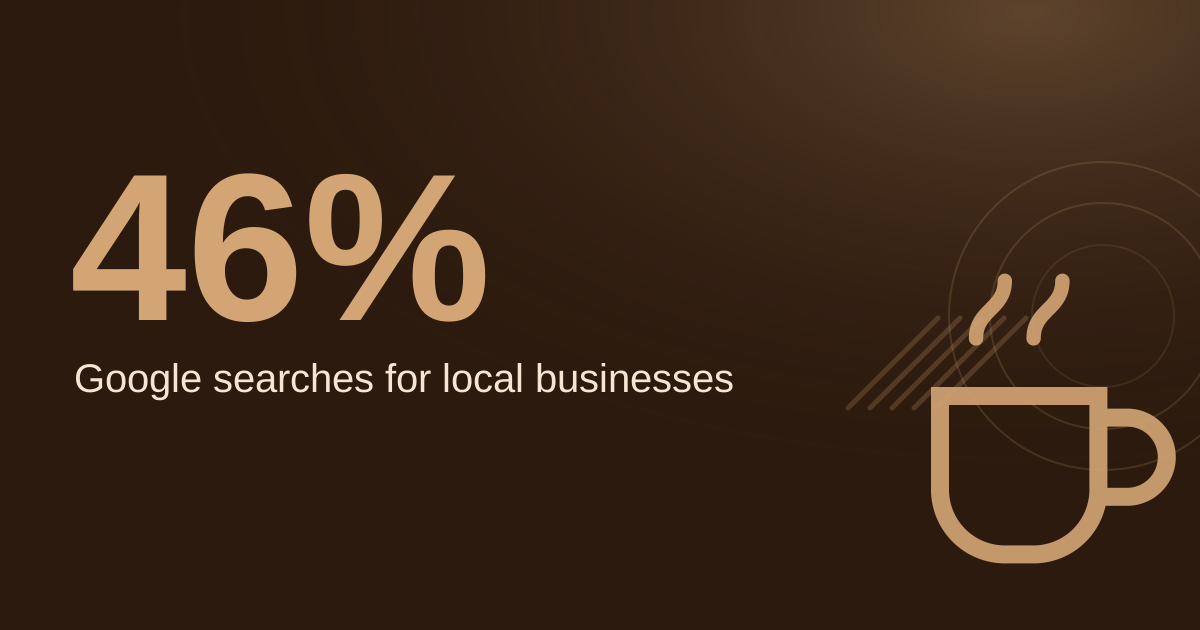
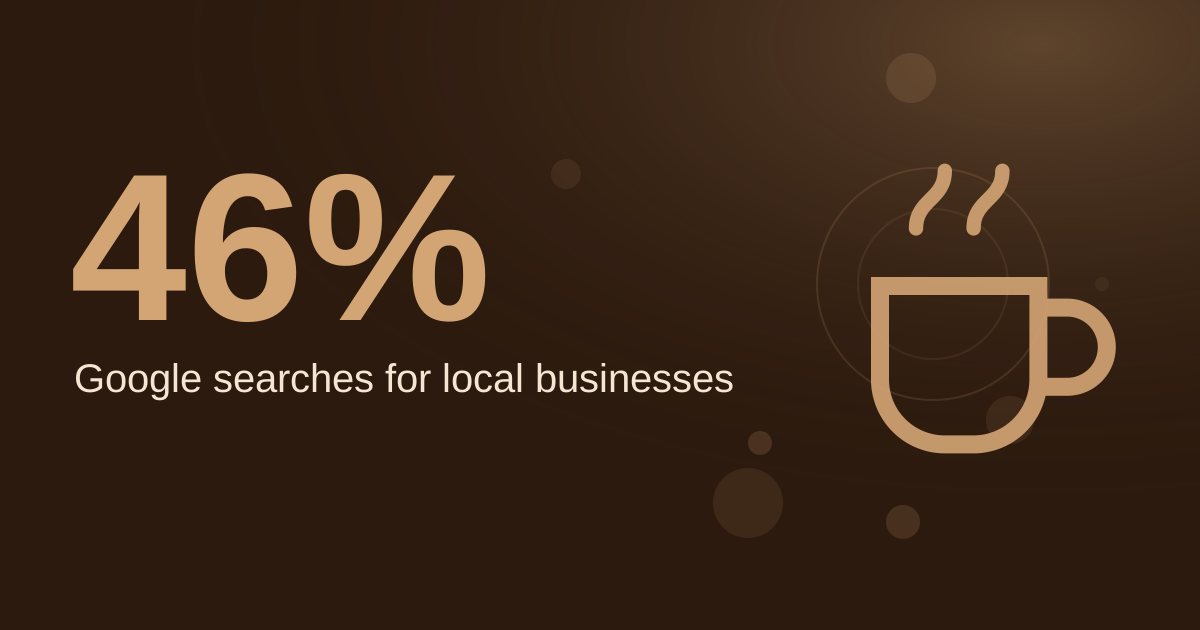
Google searches for local businesses
BrewRound, 2020, no source cited (secondary)
→
Google Business upkeep
Bellwether Coffee, Google Business row (secondary)
→
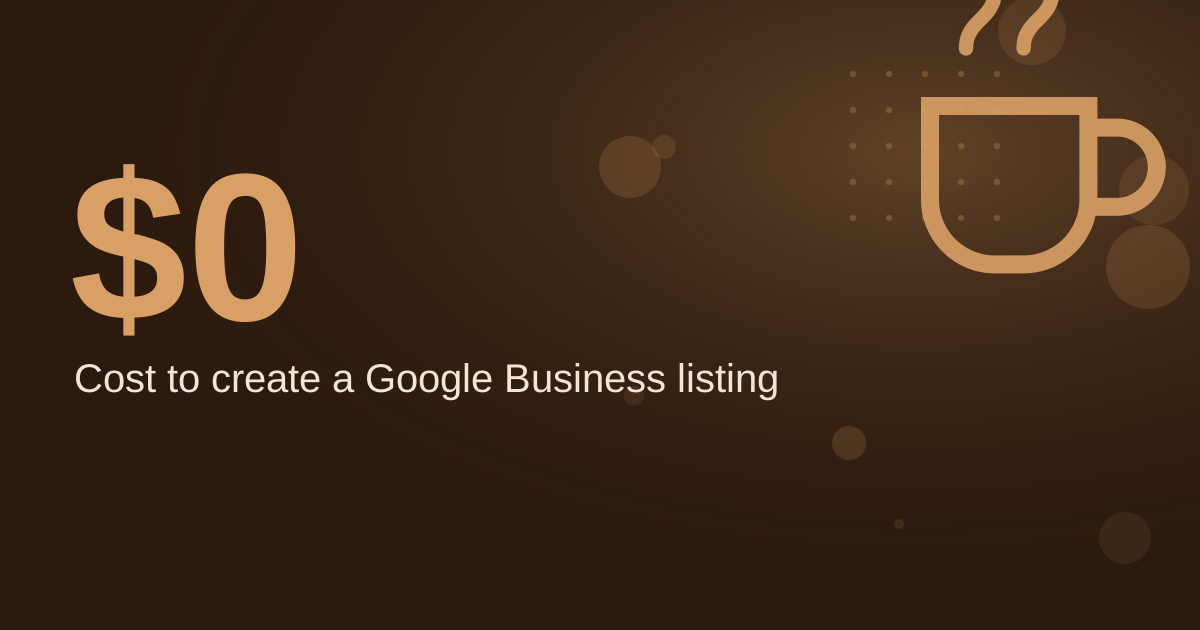
Cost to create a listing
BrewRound, 2020 (secondary)
→
Primary category at setup
More categories can be added later (BrewRound, secondary)
See Sources at the end of the article. Cards marked Assumption are examples, not results.
Why does local search matter for a Milwaukee coffee shop?
A BrewRound guide states that 46% of all Google searches are for local businesses. The page cites no source and dates from 2020, so treat the figure as a rough signal rather than a current benchmark (
BrewRound, secondary).
The practical point is simpler. Someone searching for a coffee shop nearby is usually choosing where to go now. Google Ads reaches that person at the moment they search, while a complete Google Business Profile supports the same decision in map results. Both work best when they point to the same details: hours, address, and menu.
Which keywords should a Milwaukee coffee shop target first?
Seoplus, a Google Ads agency, notes that a localized phrase such as "coffee shop downtown Phoenix" is likely to have less competition than a generic term like "coffee shop," which can lead to a lower cost per click (
seoplus+, secondary). The same logic applies in Milwaukee: add the city or neighborhood to the phrase rather than bidding on the broadest term.
| Keyword | Why it fits a coffee shop |
|---|
| coffee shop near me | Searcher is close to deciding and choosing between nearby options |
| best coffee Milwaukee | Comparison intent; rewards a strong review profile |
| café near me | Catches searchers who use "café" instead of "coffee shop" |
| specialty coffee Milwaukee | Narrower and usually cheaper to test |
| coffee shop open now | Time-sensitive; only works if your hours are current |
Check search volume and average cost for each term in Google Ads Keyword Planner before committing budget. Start with the two or three terms that match what you actually sell.
How much should a coffee shop spend on Google Ads in Milwaukee?
The sources used for this guide do not provide a reliable Milwaukee cost-per-click figure, so the example below uses assumed inputs. Replace each one with numbers from your own account or from Keyword Planner before drawing conclusions.
- Monthly budget: $1,000 (assumption)
- Average cost per click: $2.50 (assumption), which gives 400 clicks
- Click-to-customer conversion rate: 4% (assumption), which gives 16 new customers
- Visits per new customer over 90 days: 4 (assumption)
- Average spend per visit: $6 (assumption)
- Gross margin on sales: 60% (assumption)
Revenue per new customer is 4 visits × $6 = $24. Gross profit per customer is $24 × 60% = $14.40. Cost per new customer is $1,000 ÷ 16 = $62.50. On these inputs, the campaign loses money within the 90-day window.
The break-even cost per click is the number that matters. Maximum cost per click = gross profit per customer × conversion rate = $14.40 × 4% = about $0.58. Any real cost per click above that needs a higher conversion rate, more visits per customer, or a higher-margin product such as beans or subscriptions.
Run the same calculation with your own figures before raising spend. If your break-even cost per click is lower than the cost per click in your account, tighten keywords and location targeting before adding budget.
Which negative keywords and match types protect the budget?
Negative keywords stop your ads from showing for searches that rarely turn into visits. For most coffee shops, add these categories to the negative list from day one:
- Job-related terms such as "jobs," "hiring," "career," and "salary"
- DIY or training terms such as "how to," "course," and "training"
- Wholesale or supplier terms such as "wholesale" and "supplier"
- Locations outside your realistic travel radius
Match types decide how closely a search must fit your keyword. Exact match gives the most control and suits your best-converting terms. Phrase match suits neighborhood and service combinations. Broad match on generic terms like "coffee shop" should wait until exact and phrase campaigns show results, because it can attract many irrelevant searches. For a fuller keyword list, see
best Google ad keywords for coffee shops.
How should the Google Business Profile support the ads?
Ads send people to a listing, so the listing needs to answer their questions. Per Diem recommends answering common questions in the Q&A section before anyone asks them, such as whether you offer free Wi-Fi, dairy-free options, or dog-friendly seating (
Per Diem, secondary).
Choose "Coffee shop" or a related term as the category rather than something broad like "Restaurant," as Per Diem advises. BrewRound notes that only one category can be selected at setup, though more can be added later (
BrewRound, secondary).
Google verifies a business before the listing goes live. It usually mails a postcard with a code to the business address, and the profile does not appear in results until verification is complete. Plan for that delay before launching ads that point to the listing. Google also lets users message businesses directly through their listings, so check that messages are answered.
Per Diem reports that Think Coffee, an independent brand, has thousands of app downloads after placing its app download link in its Google profile (
Per Diem, secondary). Bellwether Coffee estimates Google Business needs about 5 minutes per day of attention from a coffee shop (
Bellwether Coffee, secondary). For a full checklist, see
coffee shop Google Business Profile optimization.
What should a coffee shop track to judge the campaign?
Conversion tracking tells you which clicks turn into customers. Set up these four actions in Google Ads before the first click:
- Calls from ads, using a tracking number
- Contact or booking form completions on your website
- Direction requests from your Google Business Profile
- Clicks on "order" or "book" buttons as a secondary signal
Count only the conversions you can tie to a real visit or sale. Compare the cost per tracked conversion with your break-even figure from the worked example. If you collect email addresses or phone numbers from these leads, a simple follow-up sequence can help turn first visits into repeat ones; examples are in
coffee shop email marketing examples.
How long should a Milwaukee coffee shop test before deciding?
Set the test window before launch and keep it fixed. A short window can mislead, because the first few days mostly show how the account is learning rather than how customers behave. Decide in advance how many tracked conversions you need before changing keywords, budget or bids.
New shops have a different starting point. If you are still building awareness, a campaign tied to an opening can carry the early traffic; see
coffee shop grand opening marketing. For broader automation of follow-up and reporting, see
marketing automation for local coffee shops.
FAQ
Is there a minimum budget for Google Ads for a Milwaukee coffee shop?
The sources used here do not set a minimum. Start with a budget where your break-even cost per click is above the average cost per click you see in Keyword Planner. If it is not, the campaign will struggle regardless of budget size.
Does Google Ads replace a Google Business Profile?
No. The ads send clicks to your website, while the Google Business Profile supports map results, reviews, messages and directions. Each one helps the other, so keep hours, categories and answers consistent across both.
Should a coffee shop bid on the term "coffee shop"?
Not at the start. A generic term is usually more competitive, and broad match can attract irrelevant searches. Add your city or neighborhood to the phrase and keep broad match off until exact and phrase campaigns show results.
What is the fastest way to check whether a campaign is worth running?
Compare the cost per tracked conversion with your break-even cost per customer. Use the formula in the worked example, replace the assumptions with your own margins and visit data, and review the numbers after your fixed test window.
Sources
Free for local businesses
Want this applied to your business?
I'll review your Google presence, local SEO, and ad accounts — and send you a specific action plan within 48 hours. No pitch, no pressure.