A florist should start with a small local Search campaign aimed at people ready to order, such as "flower delivery" plus a town name. Valentine's Day and Mother's Day are the two peaks to plan around. The National Retail Federation forecast $3.1 billion on flowers for Valentine's Day 2026 and $3.2 billion for Mother's Day. Google does not publish a florist cost per click, so the budget figures in this guide are labelled assumptions. Replace them with your own account data after the first month.
→
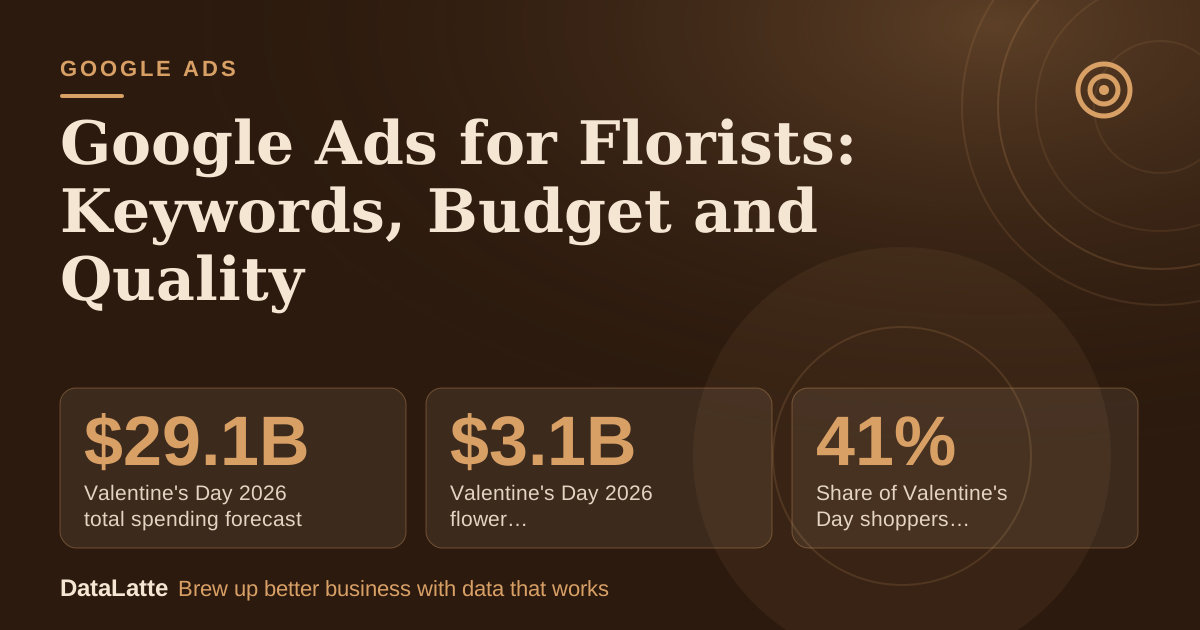
Valentine's Day 2026 total spending forecast
NRF, January 2026 survey of 7,791 US adults
↑
Valentine's Day 2026 flower spending forecast
NRF, January 2026 survey
→
Share of Valentine's Day shoppers planning to buy flowers
NRF, January 2026 survey
↑
Share of Mother's Day shoppers planning to buy flowers
NRF, April 2026 survey of 7,877 US adults
See Sources at the end of the article. Cards marked Assumption are examples, not results.
How Much Should a Florist Spend on Google Ads?
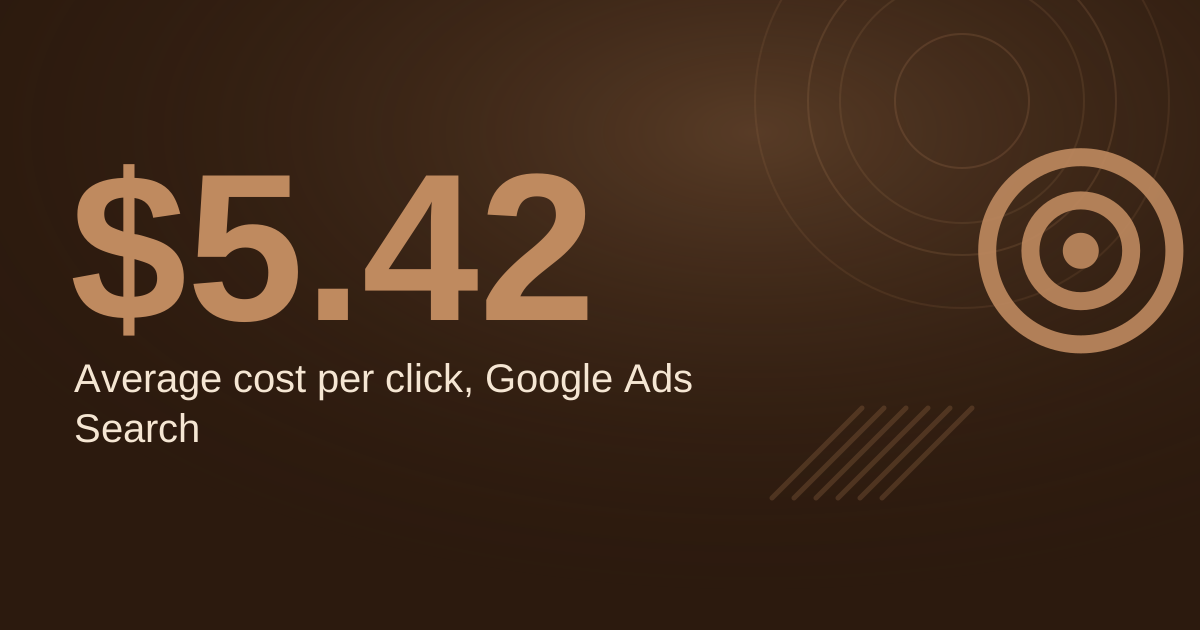
No primary source gives a florist-specific cost per click, so no spend level can be called standard. The practical approach is a fixed test budget for one month, sized to an amount you can lose without harm. Google's help pages explain how daily budgets pace spending, but they do not recommend an amount for a flower shop.
Set the budget before choosing keywords, then work out how many clicks it buys at the cost you observe. A florist who spends a test budget on two or three tight keyword groups learns more than one who spreads the same money across broad terms. The first month exists to measure cost per click, conversion rate and order value. Only after those three numbers are known does a higher budget make sense.
How Big Are the Valentine's Day and Mother's Day Peaks?
NRF's January 2026 survey projected $29.1 billion in Valentine's Day spending, including $3.1 billion on flowers, with 41% of shoppers planning to buy flowers. Its April 2026 survey projected about $38 billion for Mother's Day, with $3.2 billion on flowers and about 75% of shoppers planning to buy them.
These are US survey forecasts, not sales data for any individual shop. They show when demand concentrates, which is the reason to schedule ad spend around those dates rather than running the same budget all year.
| Valentine's Day 2026 | Mother's Day 2026 |
|---|
| Total forecast spending | $29.1 billion | About $38 billion |
| Flowers forecast | $3.1 billion | $3.2 billion |
| Share planning to buy flowers | 41% | About 75% |
| Survey size | 7,791 adults | 7,877 adults |
Which Keywords Should a Florist Start With?
Start with searches from people who want flowers delivered or collected. The Calabasas Blooms guide names "flower delivery", "wedding bouquets" and "same-day flower shop" as relevant florist terms. BoostFloral suggests "flower delivery in [your city]" and "same-day flower delivery" as more specific phrases with less competition (
Calabasas Blooms, secondary;
BoostFloral, secondary).
Wedding clients usually plan further ahead than gift buyers, so keep them in a separate ad group with its own budget. The
wedding venue Google Ads guide covers how long-lead enquiries behave. The
florist keyword guide lists more terms grouped by intent.
What Does Quality Score Mean for a Florist's Ads?
Quality Score is a diagnostic from 1 to 10 that Google assigns to each keyword. It combines three components: expected click-through rate, ad relevance and landing page experience. Each is rated "Above average," "Average" or "Below average" against advertisers whose ads showed for the same exact search over the last 90 days (
Google Ads Help).
Google states that Quality Score is not an input in the ad auction. It is a diagnostic, so it shows where to improve rather than what to bid. For a florist, the landing page is often the fix. If an ad promotes rose bouquets, the page the click lands on should show rose bouquets first. A dash in the Quality Score column means there are not enough exact searches yet, so broaden match types to gather data.
How Do You Keep Ads Local?
Location targeting is the main lever for a shop that delivers within a fixed area. BoostFloral advises focusing ads on your delivery area so they reach people who can actually use the service, and it recommends location extensions to show the shop address (
BoostFloral, secondary).
Keep the target area no larger than the zone you deliver to. A wider area produces clicks from customers you cannot serve, which raises cost without adding orders. Review the location report monthly and exclude suburbs or postcodes that produce clicks but no calls or form fills.
How Should You Plan the Seasonal Peak?
Plan the peak as a separate campaign that starts a few weeks before the date and stops once order deadlines pass. BoostFloral recommends planning ahead for Valentine's Day, Mother's Day and Christmas, and running ads for local events that raise demand (
BoostFloral, secondary).
Pair the campaign with a steady flow of recent reviews, since the store listing your ads send people to is where reviews show. The
Google review management guide explains how to automate review requests without sending repeated messages to the same customer.
What Does a $300 Test Month Return?
Every input below is an assumption for illustration, not a benchmark from a source. Replace each one with your own numbers.
| Input | Value (assumption) |
|---|
| Monthly test budget | $300 |
| Cost per click | $2.50 |
| Clicks (budget divided by cost per click) | 120 |
| Conversion rate (call or order form) | 5% |
| Conversions | 6 |
| Cost per conversion ($300 divided by 6) | $50 |
| Share of conversions that become paid orders | 50% |
| Paid orders | 3 |
| Average order value | $70 |
| Revenue | $210 |
On these inputs the test returns $210 on $300 of spend, so it loses $90 in month one. The result improves if conversion rate is higher, orders are larger or customers return. The calculation shows which figures to measure first: conversion rate and the share of enquiries that become paid orders. Raise the budget only after both are known.
What Should You Check in the First Month?
- Confirm the delivery area and set location targeting to match it.
- Build two or three ad groups around "flower delivery" and "same-day flowers" plus your town.
- Point each ad group at a landing page that shows the matching product type first.
- Check the Quality Score for each keyword and fix any component rated "Below average."
- Log every call and form enquiry by source, and ask walk-in customers how they heard of you.
- At month end, compare cost per conversion with order value before changing the budget.
FAQ
How much should a florist spend on Google Ads?
No primary source publishes a florist budget. Start with a fixed test amount, such as the $300 example above, and measure cost per click and conversion rate before increasing spend.
What is a good Quality Score for florist keywords?
Quality Score runs from 1 to 10 and is a diagnostic, not a bid input. Focus on the components rated "Below average" rather than chasing a single number.
Should I run Google Ads all year or only at holidays?
The sources used here do not compare seasonal and year-round results for florists. A small always-on campaign plus a planned peak campaign lets you compare both with your own data.
Can I bid on competitor names?
This guide does not cover trademark rules. Check the current Google Advertising Policies page on trademarks before bidding on a competitor's name.
Ready to set up a florist account properly? See the
Google Ads service or request a
free audit of your current campaigns.
Sources
- NRF: Valentine's Day spending expected to reach new records (primary; January 2026 survey, flower spending and share planning flowers)
- NRF: Mother's Day spending expected to hit record $38 billion (primary; April 2026 survey, flower spending and share planning flowers)
- Google Ads Help: About Quality Score for Search campaigns (primary; scale, components and 90-day basis)
- BoostFloral: Google Ads Tips for Florists (secondary; keywords, local targeting, seasonal planning)
- Calabasas Blooms: Mastering Google Ads for Florists (secondary; keyword examples and campaign types)
Free for local businesses
Want this applied to your business?
I'll review your Google presence, local SEO, and ad accounts — and send you a specific action plan within 48 hours. No pitch, no pressure.