A sports club should run a small, local Google Search campaign for trial sessions and membership enquiries. Set location to "Presence" so people who are not nearby do not see the ads, fit the radius to how far members actually drive, and switch off Search partners and AI Max before the first click. Count calls and form submissions as conversions. Google's Quality Score is a diagnostic, not a bidding input, so judge the campaign on leads and new members instead.
This guide is for local clubs, leagues and classes in the US, UK, Australia and Canada. Each figure has a source at the end, and the worked budget is labelled as an assumption throughout.
→
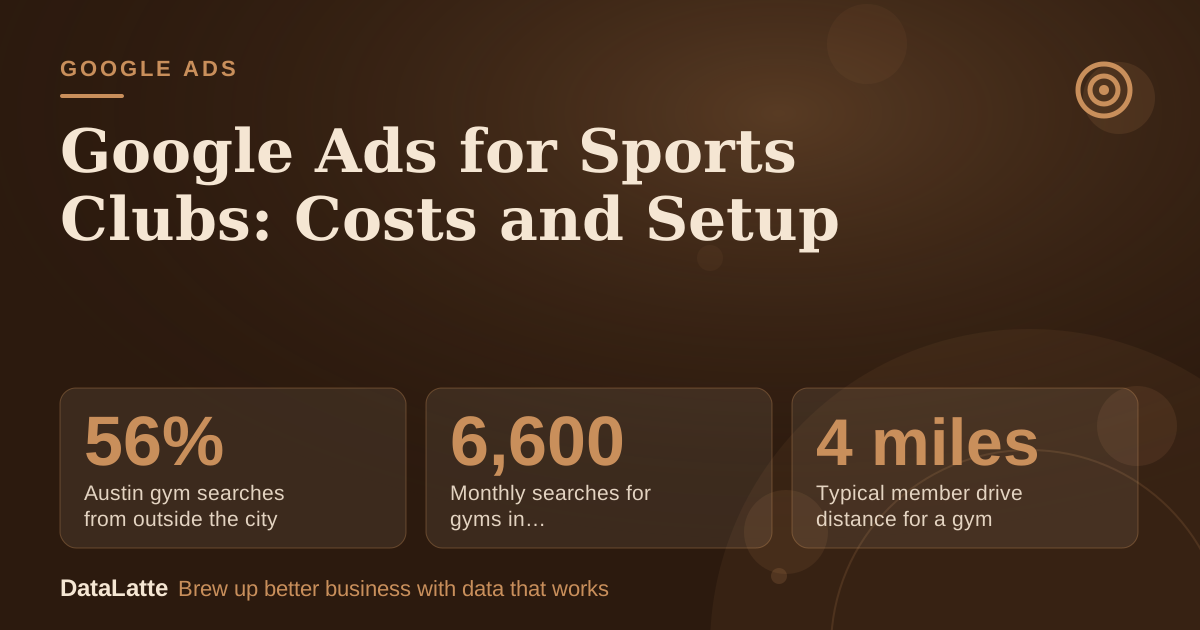
Austin gym searches from outside the city
Derived from BrandRocket Keyword Planner figures (secondary)
→
Monthly searches for gyms in Austin nationally
BrandRocket Keyword Planner figure, rounded (secondary)
→
Typical member drive distance for a gym
BrandRocket gym guidance (secondary)
→
Look-back window for Quality Score
Google Ads Help (primary)
See Sources at the end of the article. Cards marked Assumption are examples, not results.
Where Should a Sports Club Target Its Ads?
Google's default location setting reaches two groups: people who are in the target area, and people who have shown interest in it from somewhere else. In Google Ads this is labelled "Presence or interest". For a fitness business the second group can be large.
BrandRocket's gym example uses Austin, where about 6,600 monthly searches for "gyms in austin tx" come from across the US, and only about 2,900 come from inside the market. That works out to roughly 56% of searches coming from outside the city.
Keyword Planner rounds its volumes into ranges, so read these figures as a shape rather than an exact share. The pattern still matters: a club can pay for clicks from people who will never attend. A sports club is not a gym, so test the setting against your own data.
Choose "Presence" if you only want people physically in the area. Then compare lead quality from both settings over the same month before deciding which to keep.
How Far Will Members Travel?
BrandRocket's gym guidance says members drive about four miles, and it recommends fitting the radius to the kind of facility you run. That is a gym figure, not a sports-club figure. A junior football club that draws players from a whole town needs a different radius from a single-court padel venue.
Start with the drive times your members actually use. Ask the next ten joiners how far they travelled, then set the radius to cover most of those answers. A radius that is too small can leave a campaign with very few impressions, so check the impression count in the first week before judging the result.
Which Settings Should You Switch Off at Launch?
The same BrandRocket guidance warns that Search partners and AI Max arrive switched on in new campaigns. Search partners show ads on sites outside Google Search. AI Max can match searchers to pages you did not choose. Its gym example is a searcher sent to a day-camp page, which is the wrong offer for a membership ad.
Turn both off before the first click, then review the settings once you have a month of data. Keep one ad group per program, such as junior training, adult classes or trial sessions, so each ad and landing page matches the search it receives. The full setup steps are in
how to set up Google Ads for a small business step by step.
What Does Quality Score Tell a Sports Club?
Google's help page describes Quality Score as a score from 1 to 10, shown at keyword level. It is built from three components: expected click-through rate, ad relevance and landing page experience. Each is rated "Above average", "Average" or "Below average" against advertisers whose ads showed for the same exact search over the last 90 days.
Google's Quality Score guide also states that it is not a key performance indicator and not an input in the ad auction.
Use it as a diagnostic. A low landing page rating usually means the trial page does not match the promise in the ad. Fix the page, then return to the lead numbers, which are what matter for the club.
What Does the Budget Return? A Worked Example
Every input below is an assumption for illustration. Replace them with your own first-month figures before deciding on a budget.
| Input | Value | Basis |
|---|
| Monthly budget | $400 | Assumption |
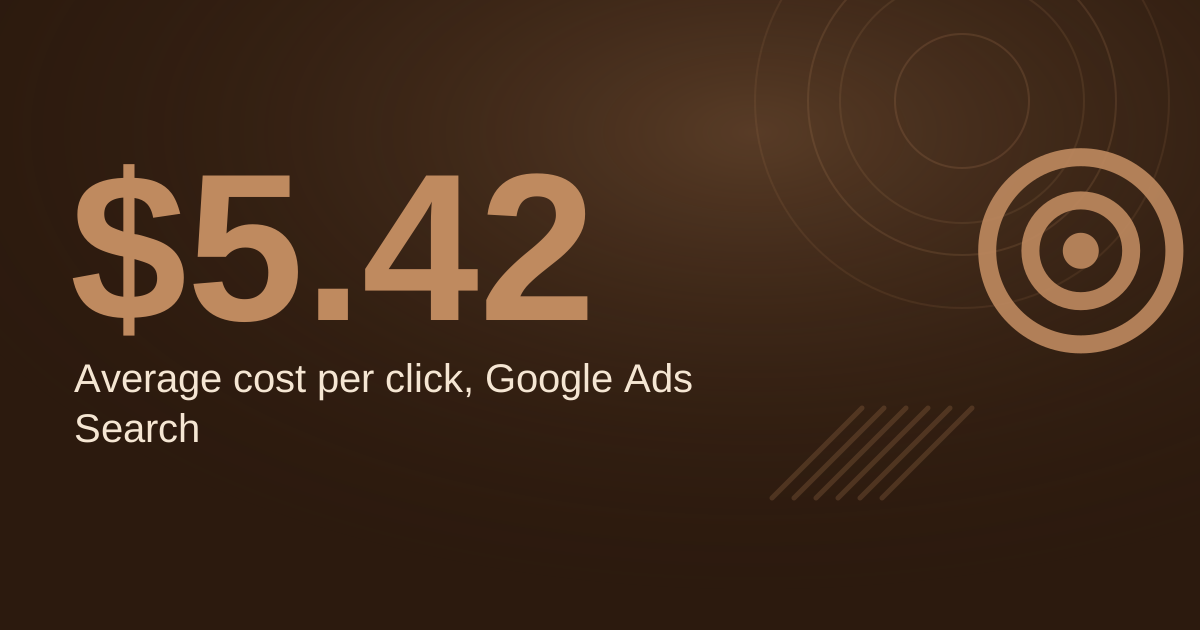
| Cost per click | $2.50 | Assumption |
| Clicks | 160 | $400 / $2.50 |
| Conversion rate (trial booking, call or form) | 8% | Assumption |
| Leads | 12.8 | 160 x 8% |
| Cost per lead | $31.25 | $400 / 12.8 |
| Lead becomes member | 25% | Assumption |
| Members won | 3.2 | 12.8 x 25% |
| Cost per new member | $125 | $400 / 3.2 |
| Membership value | $320 | Assumption: $40 a month for 8 months |
| Revenue from new members | $1,024 | 3.2 x $320 |
Under these assumptions the campaign returns about $2.56 for every $1 spent in the first membership period, before costs such as coaching time and kit. If only 10% of leads join, members fall to 1.28, cost per member rises to $312.50 and revenue of $409.60 barely covers the $400 spend. The follow-up call decides whether the ads pay. A
marketing automation setup can help a club contact every lead within a day.
How Do You Count Sign-Ups Properly?
A click is not a member. BrandRocket's gym guidance warns that without auto-tagging and call reporting, joins from ads go uncounted. Set up three things before launch:
- Call tracking, so a phone enquiry is recorded as a conversion.
- A booking or enquiry form with a conversion tag on the confirmation page.
- Auto-tagging enabled, so Google Ads and your analytics tool read the same click.
Then ask every new member how they found the club and compare the answer with the reports. For the basics of measuring the trial page, see
Google Analytics 4 for small business. A small club does not need a complex tracking stack, only a count that matches its membership list.
Which Keywords Should a Sports Club Bid On?
Bid on searches from people who want to join or try something soon. That usually means the sport, plus words such as "classes", "lessons", "club" or "trial", plus the town name. Keep the list short at launch and group it by program, so each ad says what the searcher asked for.
Review the search terms report each week. Add irrelevant searches, such as job or equipment queries if you do not sell kit, as negative keywords. A club that wants help running this on an ongoing basis can read
what to expect from Google Ads management for a small business before handing over the account.
FAQ
How much should a sports club spend on Google Ads?
There is no standard figure. Use the worked example above as a template: set a monthly budget, measure the real cost per click and cost per lead for a month, then decide whether to increase it.
Should I use "Presence" or "Presence or interest" for a club?
Start with "Presence" if you only want people in your area. Compare lead quality against "Presence or interest" for the same month before you choose.
It shows where an ad or landing page may not match the search. Use it to find problems, but judge the campaign by bookings and new members.
Can I advertise a free trial session?
Yes. Put the trial in the headline, send people to a page where they can book it, and count the booking as the conversion.
Sources
Want a club ad account set up and tracked properly? See the
Google Ads service or
book a free audit.
Free for local businesses
Want this applied to your business?
I'll review your Google presence, local SEO, and ad accounts — and send you a specific action plan within 48 hours. No pitch, no pressure.