Instagram Reels ads let a local business show a short vertical video to people living near its location. To run one well, set a targeting radius, test one variable at a time, split the budget evenly between versions, and count bookings rather than views. Meta recommends A/B testing over informal on-and-off testing, because informal tests produce overlapping audiences and unreliable results. Reels ads can work on small budgets, but only with a clear offer and tracking in place.
→
US adults who use YouTube
Pew Research Center, 2026 survey
↓
US adults who use Facebook
Same survey, down from 71% in 2025
↑
US adults who use Instagram
Same survey, up from 50% in 2025
→
US adults who use TikTok
Same survey, 2026
See Sources at the end of the article. Cards marked Assumption are examples, not results.
How Many US Adults Does Instagram Reach?
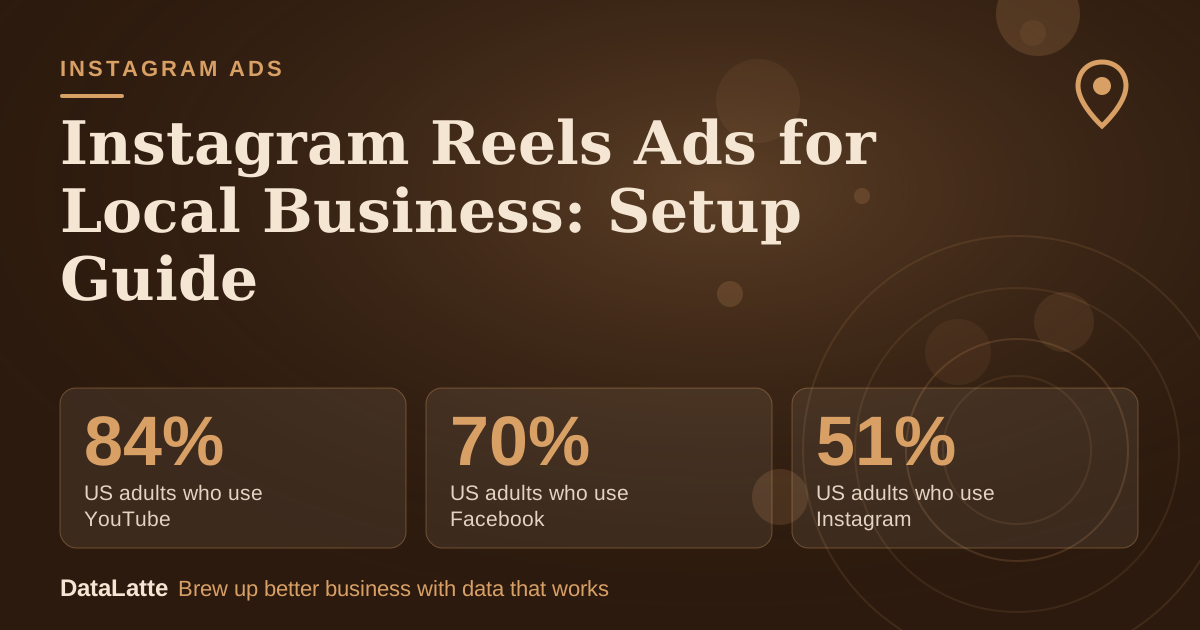
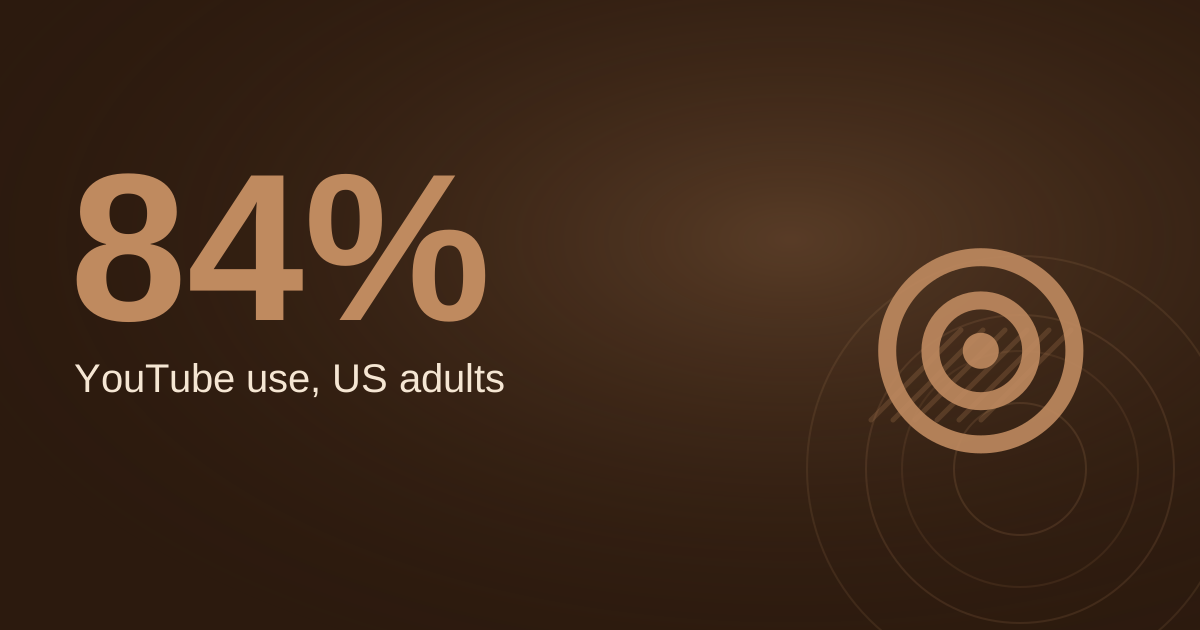
Pew Research Center's 2026 survey of 5,511 US adults found that 51% say they use Instagram, while 70% use Facebook and 84% use YouTube (
Pew Research Center). The survey's overall margin of error is plus or minus 1.8 percentage points, so the figure is a national estimate, not a count of people near any one shop.
That national share matters less than local density. Roughly half of US adults use Instagram, which means an unrestricted ad will reach many people outside your service area. A radius limit is what turns a broad platform into a local channel. Pew's figures explain why Instagram is worth testing, but they do not predict results for any one town.
Instagram is not the only option for local paid social. The
comparison of Google Ads and Facebook ads for local businesses covers when each platform fits a budget and offer.
How Should You Set Up a Reels Ad Test?
Start with one hypothesis and one offer. Meta's guidance is to choose a hypothesis before picking a variable, such as an audience strategy that will outperform another, and then test that single change (
Meta). A salon might test a "book this week" offer against a "new client discount" offer, using the same video.
Use the same budget for both versions. When you duplicate an ad set, the budget copies over, and Meta says the same budget for both versions keeps the comparison fair (
Meta). Do not switch ads on and off by hand to compare them. Meta notes that manual switching can create overlapping audiences and unreliable results.
Keep the video short. For top-of-funnel awareness, a 10 to 15 second clip is a common starting length (a working assumption, not a Meta requirement). Show the service, state one offer, and end with a single call to action such as "Book now" or "Call today."
What Does a Worked Budget Look Like?
The table below uses a simple two-version test. Every input is an assumption, so replace the numbers with your own data after your first run.
| Input | Value | Note |
|---|
| Monthly ad budget | $300 | Assumption |
| Test length | 14 days | Assumption |
| Total test spend | $140 | $300 × 14 ÷ 30 |
| Spend per version | $70 | Even split, per Meta guidance |
| Version A bookings | 3 | Assumption |
| Version B bookings | 1 | Assumption |
| Cost per booking, A | $23.33 | $70 ÷ 3 |
| Cost per booking, B | $70.00 | $70 ÷ 1 |
| Average booking value | $60 | Assumption |
| Version A revenue | $180 | 3 × $60 |
Version A produced bookings at about a third of the cost of Version B in this example. With only four bookings, the result is a signal to test again, not proof. Run the winning version longer before scaling the budget.
Per-booking cost is the number that matters for a local business. A view count or engagement rate can rise while bookings stay flat.
How Do You Track Bookings From Reels Ads?
Give each ad its own tracking path. Use UTM parameters on the link so analytics show which ad drove a visit, and use a unique offer code for each version. A code such as "SPRING10" on one ad and "BOOK5" on the other lets staff record the source at checkout.
For offline sales, ask every new customer where they heard about you and record the answer. A short form or a question on your booking system is enough. Customers often forget which ad they saw, so a code is more reliable than memory.
Check results after the test period, not on day two. Meta's A/B testing tool reports cost per result and cost per conversion lift, so compare those figures rather than likes or shares (
Meta).
How Should Reels Ads Fit With Google?
Reels ads capture people while they scroll. Google Ads captures people who are already searching. Many local businesses use both, with Instagram building awareness and Google catching searches for the service.
Google's Display campaigns use AI for targeting and creative selection across more than 35 million websites and apps, plus YouTube and Gmail (
Google Ads Help). That reach is broader than Instagram alone, so a Display test can complement a Reels test. Keep the offers consistent across both channels so a customer who sees one ad and then searches sees the same message.
For Google-side setup, the
Local Services Ads guide explains when lead-based placements suit a service business. For drafting ad copy quickly, the
ChatGPT prompts for local marketing article offers templates that can be adapted.
Which Mistakes Waste a Small Reels Budget?
The most common mistake is changing the offer while keeping the same video. Each offer needs its own ad set so the account shows which message drives bookings.
The second mistake is judging an ad on views. A video that reaches many people outside the radius looks successful but produces no revenue. Keep the radius tight, and measure cost per booking.
The third mistake is stopping too early or running too long. Set a test length before starting, such as 14 days, and review the data at the end. If one version costs far more per booking than the other, pause it and move the budget to the stronger version.
Some businesses also find it useful to automate reporting. The
AI tools that can replace a marketing assistant article looks at which routine tasks software can handle, including summarising campaign reports.
FAQ
Is $300 a month enough for Instagram Reels ads?
It can be enough for a single service with a tight radius and one clear offer. The worked example above uses $300 per month as an assumption. Expect a small sample size, so run tests for at least two weeks before drawing conclusions.
How big should my radius be?
A 10 to 20 mile radius is a common starting assumption for local shops, while mobile services may need a wider area. The radius should match where customers will actually travel to you. Test a narrower radius first, then widen it only if bookings from the first area are steady.
Do I need a large Instagram following?
Not for paid ads. Reels ads are paid distribution, so the ad reaches people in the targeting whether or not they follow the account. An organic following can still help with trust, but it is not a requirement for an ad to run.
How often should I change the Reel?
Change the creative when results fall for two or more weeks, or when the offer changes. Keep the same video while testing a single variable, so any difference can be attributed to that change.
Sources
Ready to test Reels ads without guessing?
Book a free audit to have the targeting radius, offer and tracking setup reviewed before more budget is spent.
Free for local businesses
Want this applied to your business?
I'll review your Google presence, local SEO, and ad accounts — and send you a specific action plan within 48 hours. No pitch, no pressure.