A pet groomer in Omaha, NE earns a Google Maps spot mainly by making its Google Business Profile accurate, complete and active, then supporting it with consistent citations and a steady flow of reviews. Google's local pack shows the
top three business listings in local search results, and those listings are
pulled directly from Business Profile data. This guide sets out a 2026 checklist, a worked review calculation, and the metrics worth tracking. It does not rely on Omaha market-size figures, so check the live results for your own service searches before deciding where to start.
→
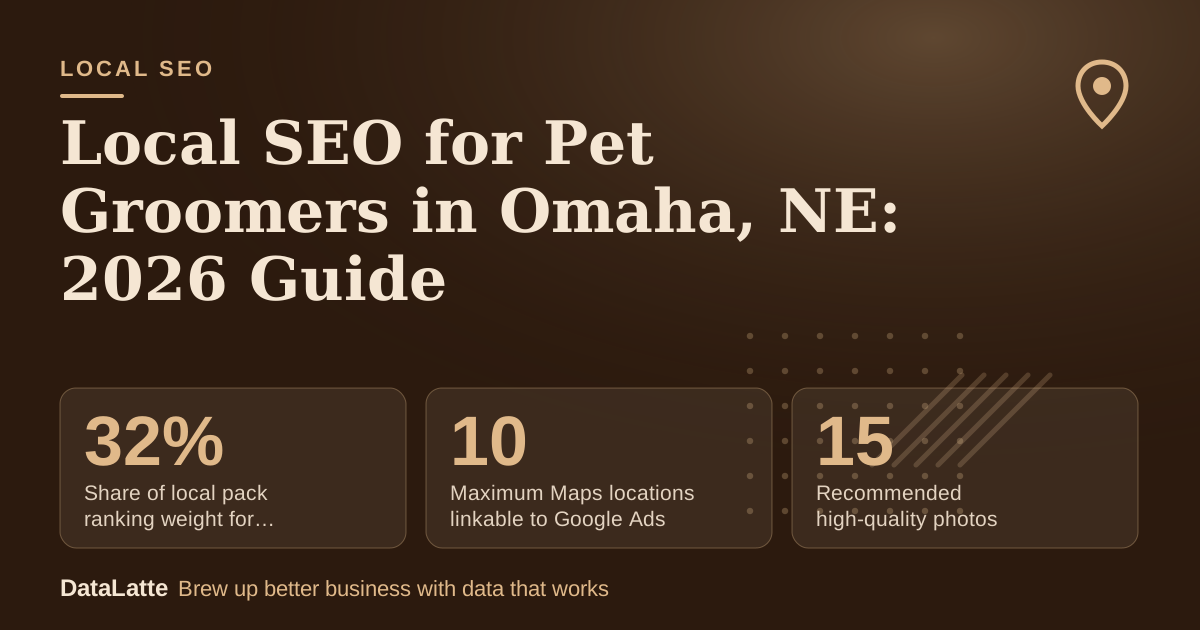
Share of local pack ranking weight for GBP (2025)
Adwave citing a 2025 benchmark (secondary)
→
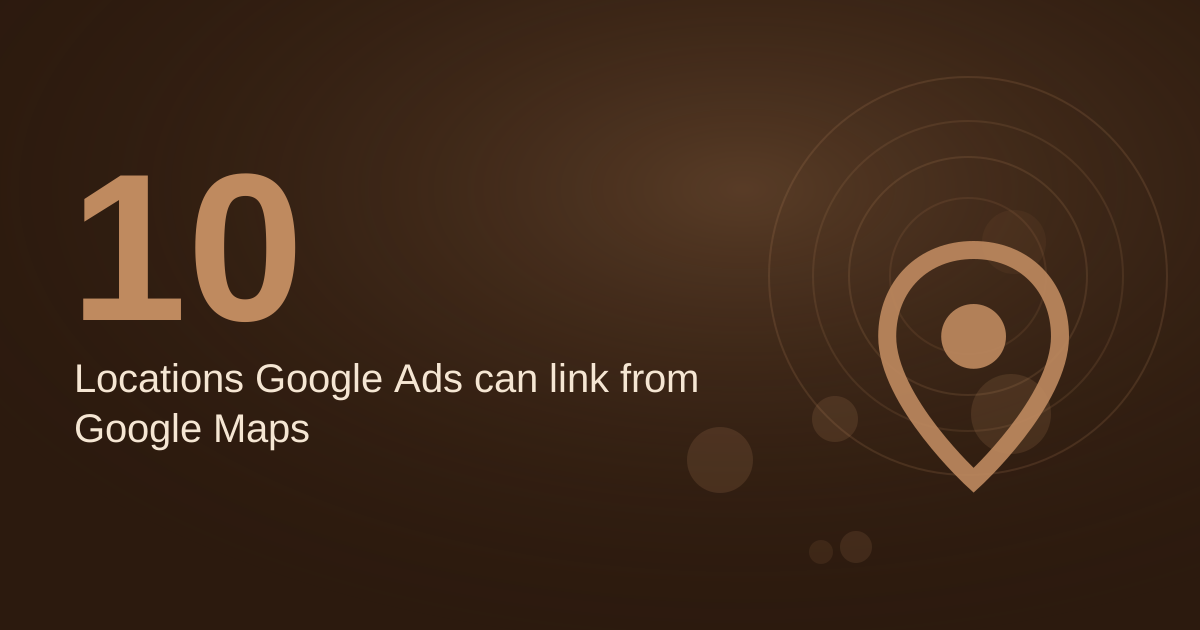
Maximum Maps locations linkable to Google Ads
Google Ads Help, fallback option (primary)
↑
Recommended high-quality photos
Adwave recommendation (secondary)
↑
Reviews in a third-party local pack analysis
Blogging Wizard analysis of 2 million pages (secondary)
See Sources at the end of the article. Cards marked Assumption are examples, not results.
Why does your Business Profile decide map pack eligibility?
The map pack draws its listings from profile data, so the profile is the first thing to fix.
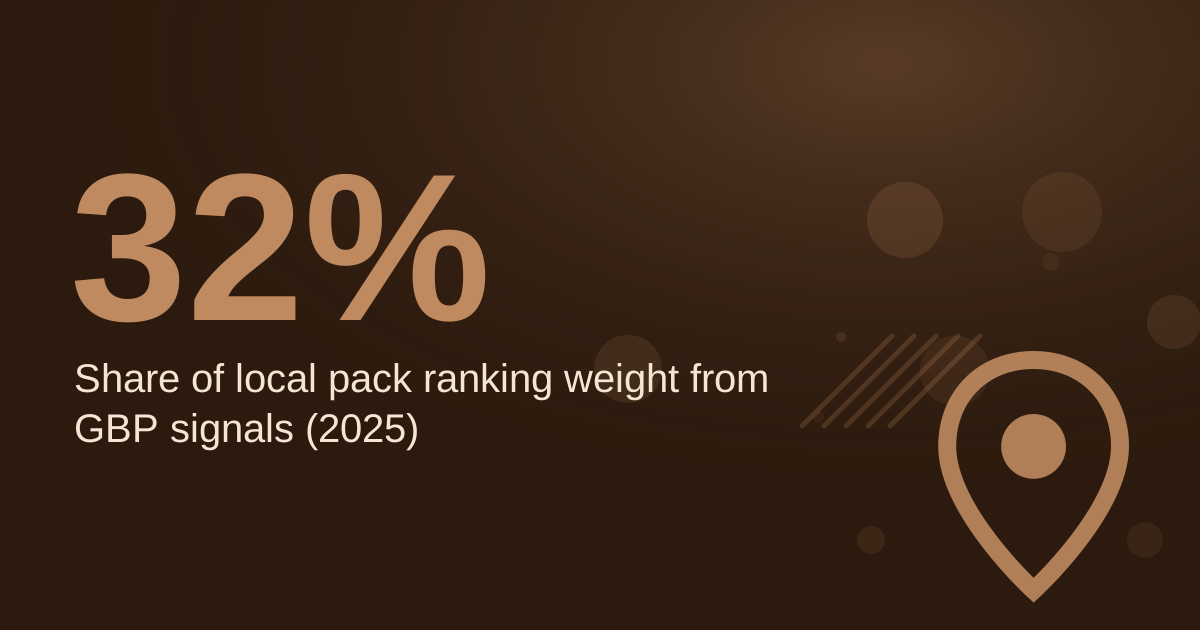
Adwave reports that Google Business Profile signals were reported to represent 32% of local pack ranking weight in 2025, citing a 2025 multi-location benchmark. A
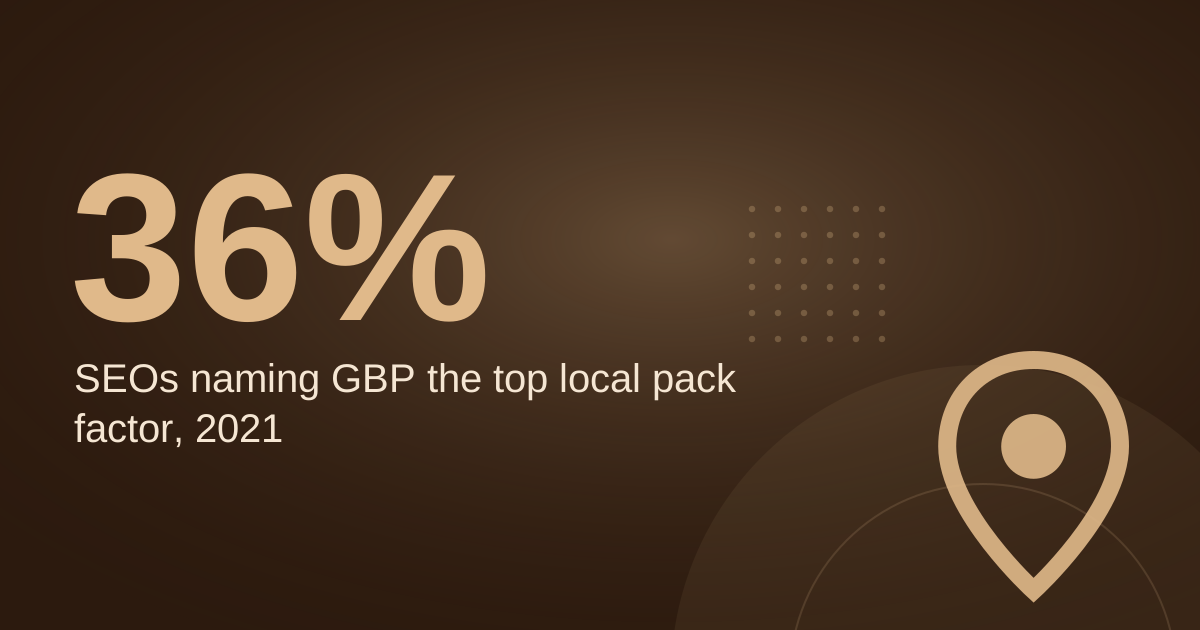
BrightLocal survey cited by Ahrefs found that 36% of SEOs ranked the profile as the most important local pack factor in 2021, up from 23% in 2013.
These are directional figures from SEO surveys and vendor benchmarks, not guarantees for one grooming salon. They do point the same way: the profile is the lever most within your control.
Adwave also states that analysis of millions of profiles shows the primary category is the number one ranking factor for the Local Pack, but it does not name the analysis. Treat that as an unverified claim and test it against the businesses that already rank for your searches.
Which Business Profile fields should a pet groomer fix first?
Start with the primary category. Adwave recommends
reviewing the top three to five businesses in local map results for your service search to see which category they use. Match your primary category to the service that brings in most of your bookings, then add secondary categories only where they genuinely describe what you offer.
Next, the description. The
profile description allows 750 characters. Use them to name your grooming services, the neighbourhoods you serve, and what sets your grooming apart, such as breed experience or a calm-handling approach. Write it for a pet owner reading on a phone, not for a keyword count.
Accuracy comes before everything else. Adwave advises making
hours, phone number and address 100 percent accurate. A mismatch between the profile and your website creates doubt for Google and for the customer.
How many photos and posts does a profile need?
Adwave recommends
at least 15 high-quality photos, and says a robust gallery gets far more clicks and calls. Another Adwave guide sets a lower minimum of
10 high-quality photos. Use the higher figure as the target and build toward it with clean, well-lit shots of finished grooms and your workspace.
Posts need a publishing rule that Google will show. Google's help page states that a post is
public on Search and Maps only when its status is Live, and Pending or Not approved posts do not appear. Adwave advises
at least one new post a week to keep the profile fresh. Check the status after each post, because a rejected post looks like no post at all to a customer.
How many reviews do you need, and how fast?
Google states that reviews
show next to your Business Profile in Maps and Search. A
third-party analysis of 2 million profile pages found that businesses with over 200 reviews are significantly more likely to appear in the local pack. One landscaping guide claims that businesses with over 50 reviews and a 4.7+ average dominate top spots, but it cites no data, so treat that number as unverified.
The review gap is easier to plan with a simple calculation. The inputs below are assumptions, not measured figures from your business.
Worked example (all inputs are assumptions):
Current reviews: 40. Target: 200, the threshold from the analysis above. Review pace if requests work: 3 new reviews per week. Gap: 200 minus 40 equals 160 reviews. Time at 3 per week: 160 divided by 3 is about 54 weeks, roughly 12.5 months. At 6 per week, the same gap takes about 27 weeks, roughly 6 months.
The calculation shows that pace matters more than a single busy week. A short follow-up message sent after each appointment is the simplest way to move the pace from 3 toward 6.
Which citations must match your profile exactly?
Citations are listings of your name, address and phone number on other sites. Adwave states that NAP must be
exactly the same on your website, your Business Profile, and major directories such as Yelp, Apple Maps and Bing Places. The matching has to go down to punctuation. One guide notes that a profile must match
right down to the comma and whether you use "St." or "Street".
Before adding new listings, correct the ones you already have. A phone number formatted two ways across sites counts as a mismatch, so fix the existing citations first. One landscaping case reported an
18 percent jump in local pack appearances after cleaning up NAP data, though that is a single anecdote from a secondary source.
If you work from home or travel to clients, the profile lets you
hide your physical street address. That designates you a Service Area Business. Your website contact page should still show the same details you list on the profile, and a
Google Maps embed on that page helps customers confirm the location.
Does Apple Maps matter for a pet groomer?
Apple Business Connect is a second directory worth claiming. Adwave says it gives access to
over 1.5 billion affluent iOS users across Maps, Siri and Wallet, though the page does not attribute that figure. The same page gives an 88 percent versus 12 percent split between Google Maps and Apple Maps use, also without a named source, so treat it as an unverified comparison rather than a planning figure.
Apple's dashboard reports Profile Views, defined as
the total count of how many people saw your business card in Apple Maps. Claim the listing, keep it consistent with your other citations, and check Profile Views each month. If the number stays flat, the listing needs attention; if it rises, the listing is working.
Can paid search cover the gap while the map pack builds?
Yes, and it uses the same profile data. Google's help page says location assets used in Google Ads are
sourced directly from Google Maps and Google Business Profile, and successful corrections made there flow into linked Google Ads accounts. When Business Profile options do not work, you can
select up to 10 locations from Google Maps to link, but those locations must be yours.
A
Marketing 360 case study describes a mobile pet groomer that advertised on Facebook and Google, with the channel choice guided by its results. Compare channels with your own booking data before committing budget. The
Google Ads and Facebook Ads comparison for local businesses walks through that choice.
Which local metrics should you track each month?
Set a baseline before you change anything. Note the current value of each measure, make the profile fixes above, then compare the same month the following year or the same window after changes. Score the results against your own baseline, not against another groomer's rankings.
FAQ
How long before a pet groomer's profile starts showing in the map pack?
Adwave's guide says a business
often starts ranking for its own name a few weeks after verification. That is the vendor's own estimate. Wider map pack movement depends on competition and review pace, so track your own measures rather than relying on a fixed timeline.
Does a Google Business Profile cost anything?
No. Google's Canadian business page describes the profile as
free to set up, and the same free profile is used across Search and Maps. Paid advertising is a separate choice.
Do Google's AI answers use business profile content?
According to a summary of Google's AI answering feature, responses are
sourced from business profile data, website content and reviews. That makes the profile, the website and review text all worth keeping accurate. The
AI optimisation guide for Business Profiles covers the practical steps.
Should a mobile groomer show its home address?
No. A business that serves customers at their location can
hide its street address and be designated a Service Area Business. Set the service area to the places you actually travel to, and keep the same details on your website and citations.
For a review of your current listings against this checklist,
book a free audit, or see the
local SEO service page for how DataLatte handles profile, review and citation work for small businesses.
Sources
- Local SEO Audit Checklist, Adwave (secondary)
- Create and manage posts on your Business Profile, Google Business Profile Help (primary)
- Google Business Profile Q&A, Adwave (secondary)
- Yelp vs Google Business Profile, Keepers Digital (secondary)
- Google Business Profile messaging, Adwave (secondary)
- Google Maps marketing, Adwave (secondary)
- Google Business Profile categories, Adwave (secondary)
- Voice search optimisation for local businesses, Adwave (secondary)
- Apple Business Connect, Adwave (secondary)
- About location assets, Google Ads Help (primary)
- Get listed on Google, Google Business Profile Canada (primary)
- Tips to get more reviews, Google Business Profile Help (primary)
- Multi-location local SEO audit, Adwave (secondary)
- How to get more Google reviews, Adwave (secondary)
- Local search intent, Adwave (secondary)
- Local SEO: The Complete Guide, Ahrefs (secondary)
- How to market a lawn care business, Adwave (secondary)
- Local SEO for small business: a beginner's guide to the map pack, Adwave (secondary)
- AI Google Business Profile ranking for landscapers, Accountability Now (secondary)
- Pet groomer marketing case study, Marketing 360 (secondary)
Free for local businesses
Want this applied to your business?
I'll review your Google presence, local SEO, and ad accounts — and send you a specific action plan within 48 hours. No pitch, no pressure.