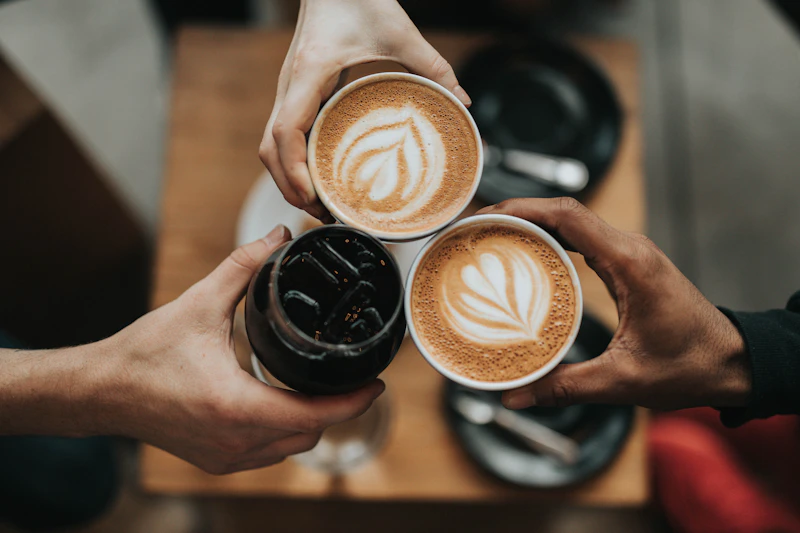
Meta ads for a coffee shop are cheap per click and only pay back when aimed at slow hours. LocaliQ's benchmarks put the average Facebook traffic-ad click for Restaurants & Food at $0.45, so $300 buys roughly 667 clicks. The 8am rush does not need an ad; the 2pm lull does.
This guide shows how to find slow hours, write an offer that only works then, and check whether extra visits pay for the ad.
It is written for café owners in the US, UK, Australia and Canada. Benchmarks are US-based; use your own prices in pounds or other dollars. For account setup (objectives, tracking, placements), use the
complete Meta setup guide for coffee shops, then return here to decide when and for whom to run ads.
How Much Do Facebook and Instagram Ads Cost for a Coffee Shop?
LocaliQ's
Facebook advertising benchmarks (last updated September 23, 2026) list these figures for traffic campaigns, which optimise for clicks to a link:
$0.45↓
Restaurants & Food CPC
LocaliQ 2026
2.68%↑
Restaurants & Food CTR
LocaliQ 2026
$0.60↓
All-industry CPC
Down from $0.70
1.93%↑
All-industry CTR
Up from 1.71%
Estimates for illustration; actual numbers vary.
The page gives prior-year comparisons only for all industries, not for Restaurants & Food, and publishes no sample size. Treat $0.45 as a starting estimate for a click. A click is not a coffee.
Pew Research's
2025 social media report (5,022 US adults, Feb. 5 to June 18, 2025) found 71% of US adults use Facebook and 50% use Instagram. Instagram is strongest among the young: eight in ten adults aged 18 to 29 use it, against 19% of those 65 and older. Facebook is most common among 30 to 49 year olds at 80%.
In practice, if slow-hour customers are students and young workers, lean on Instagram. If they are parents or people in their 30s and 40s, Facebook reaches more of them. Automatic placements can run one ad on both, but the creative should suit whoever fills your gap. These are US figures; check audience estimates in Ads Manager for other countries.
Why Do Coffee Shop Ads Need a Specific Offer?
The National Coffee Association's
Spring 2026 data trends release (survey of 1,850 US adults, January 5 to 20, 2026) reports that 66% of adults drank coffee in the past day. Among past-day drinkers, 82% had coffee prepared at home and 28% had it prepared away from home. The two figures overlap because some drinkers did both.
The takeaway: most coffee is made at home, so your ad competes with the kettle more than with the café next door. "Visit us!" gives nobody a reason to leave the house. "2 to 5pm: any pastry free with a large drink" does. NCA's page notes newer data exists, so check its latest release.
How Do You Find Your Slow Hours?
Do this before spending anything. Pull sales by hour from your till for the last four to eight weeks and average each day. You want the hours where staff stand around and seats are empty. Write down:
- Your two or three weakest blocks (check your own data; do not assume).
- How many extra drinks per hour you could serve without adding staff.
- Your average spend per visit and your margin on it.
The last number decides how much an extra visit is worth. If you do not know your margin, the
local marketing budget guide covers the basics.
What Offer Fills Each Gap?
An offer for a slow hour has three parts: a reason to come, a time window and a limit.
| Gap | Offer idea | Who it suits |
|---|
| Weekday 2 to 5pm | Free pastry with any large drink | Remote workers, parents, students |
| Weekday 9 to 11am | Bring a colleague, second coffee half price | Office workers on a break |
| Sunday evening | Free refill on filter coffee after 4pm | Students, people planning the week |
| Early morning in winter | Free upgrade to a large before 8am | Commuters, shift workers |
Put the time window in the headline and on the landing page. Nobody can use a 2 to 5pm offer at 8am, so the wording does part of the scheduling. Keep the offer cheap relative to a visit and say who can claim it.
Daily or Lifetime Budget for a Café Test?
Meta's
budget documentation defines a daily budget as the average amount you are willing to spend each day, and says up to 25% more may be spent on some days (a $10 budget could reach $12.50). A lifetime budget is the amount you will spend over the entire run.
Hour-by-hour scheduling options depend on the budget type and may differ by account, and Meta's own Help Center page could not be fetched for this article. Check what Ads Manager offers for your budget type. For most single cafés, a simpler plan works: one daily budget, an offer limited by its own wording and a weekly look at the numbers.
What Creative Fits Each Part of the Day?
Shoot three 8 to 12 second vertical clips on a phone, one per gap:
- Afternoon. Natural light, the pastry case, someone settling in with a laptop. On-screen text in the first three seconds: "2 to 5pm: free pastry with a large drink".
- Meeting break. Two cups on a table, handed over. "Bring a colleague. Second coffee half price, 9 to 11am."
- Weekend. Sunday-evening quiet, a filter coffee being poured.
Use real staff and your real space, and add your street name, since the ad is for people within walking distance. Avoid claims like "best coffee in town" unless a published source backs them. For more ideas on timing around the calendar, plan four to six short pushes tied to your own slow weeks, not one always-on campaign.
How Do You Measure Against a Baseline?
A redemption is not a new sale, because some people would have come anyway. A rough test without a pixel:
- Record average sales for the gap hours over four weeks before the ads.
- Run the offer for four weeks.
- Compare gap-hour sales and redemptions. The increase over baseline is your best estimate of extra visits.
Log redemptions by phrase, QR code or loyalty stamp. Cost per redemption is the headline metric; clicks are diagnostic. This is not a controlled experiment, and a weather-hit week can distort it.
What Does $300 Return? A Worked Example
Every row is an assumption for illustration, except that the Strong column uses LocaliQ's $0.45 Restaurants & Food click. Replace the numbers with your own after four weeks.
| Tough | Base | Strong |
|---|
| Monthly budget | $300 | $300 | $300 |
| Cost per click | $0.90 (assumption) | $0.60 (LocaliQ all-industry) | $0.45 (LocaliQ) |
| Clicks | 333 | 500 | 667 |
| Click to redemption | 1.5% (assumption) | 3% (assumption) | 5% (assumption) |
| Redemptions | 5 | 15 | 33 |
| Share who would not have come anyway | 60% (assumption) | 70% (assumption) | 80% (assumption) |
| Extra customers | 3 | 10.5 | 27 |
| Free item cost per redemption | $1.20 (assumption) | $1.20 | $1.20 |
| Margin per visit ($8 basket at 65%) | $5.20 | $5.20 | $5.20 |
| Margin from first extra visit | $16 | $55 | $139 |
| Net after first visit | -$290 | -$263 | -$201 |
| Visits per extra customer to break even | 19.6 | 5.8 | 2.5 |
The first visit rarely pays for the ad, so café ads work only if customers return. Base needs about six visits per extra customer, which is plausible for someone who adopts your café for the afternoon. Tough needs about twenty, which is not. Margins are revenue minus cost of goods, before wages and rent.
- Break-even click price = (margin per visit x expected visits - free item cost) x click-to-redemption rate x share who would not have come anyway. Base over six visits: ($5.20 x 6 - $1.20) x 0.03 x 0.70 = $0.63. Paying more per click loses money on average.
- Repeat visits are the lever. A loyalty card and an email address on visit one change the answer more than shaving 10 cents off a click. See email marketing for coffee shops.
If your 2 to 5pm block is busy three weeks in a row, retire the offer. Paying to fill seats that would fill anyway turns a profitable test into a loss.
Do This Today
- Export sales by hour for the last four weeks and circle your two weakest blocks.
- Work out average spend, margin and free-item cost, then compute break-even visits.
- Write one offer for one gap with the time window in the headline and a one-page landing page with address and one button.
- Shoot one 10-second vertical clip and launch at a small daily budget with a unique phrase staff can tally.
- Next week, compare gap-hour sales with your baseline, and weigh Meta against search using the Google Ads guide for coffee shops.
FAQ
Q: How much do Facebook and Instagram ads cost for a coffee shop?
A: LocaliQ lists $0.45 per click for Restaurants & Food traffic campaigns and $0.60 across all industries. At $0.45, $300 buys about 667 clicks; your own price depends on radius and season.
Q: Should I advertise during my busiest hours?
A: Usually not. If the shop is full, an ad adds cost without sales. Aim spend at hours with empty seats.
Q: Facebook or Instagram?
A: Pew's 2025 survey found Instagram use at about 80% among US adults 18 to 29 and Facebook use at 80% among those 30 to 49. Start with automatic placements, then check the breakdown.
Q: Do I need the Meta pixel?
A: Not for a first offer test. A unique phrase, QR code or loyalty stamp is enough. A pixel matters once you take online orders.
Q: How long before I know if it works?
A: Four weeks is a rule of thumb, long enough to compare against a baseline and see repeat visits.
Sources
Want a tracked Meta test built for your café? See our
Meta Ads service, the
coffee shop marketing page, or
contact DataLatte.
Free for local businesses
Want this applied to your business?
I'll review your Google presence, local SEO, and ad accounts — and send you a specific action plan within 48 hours. No pitch, no pressure.