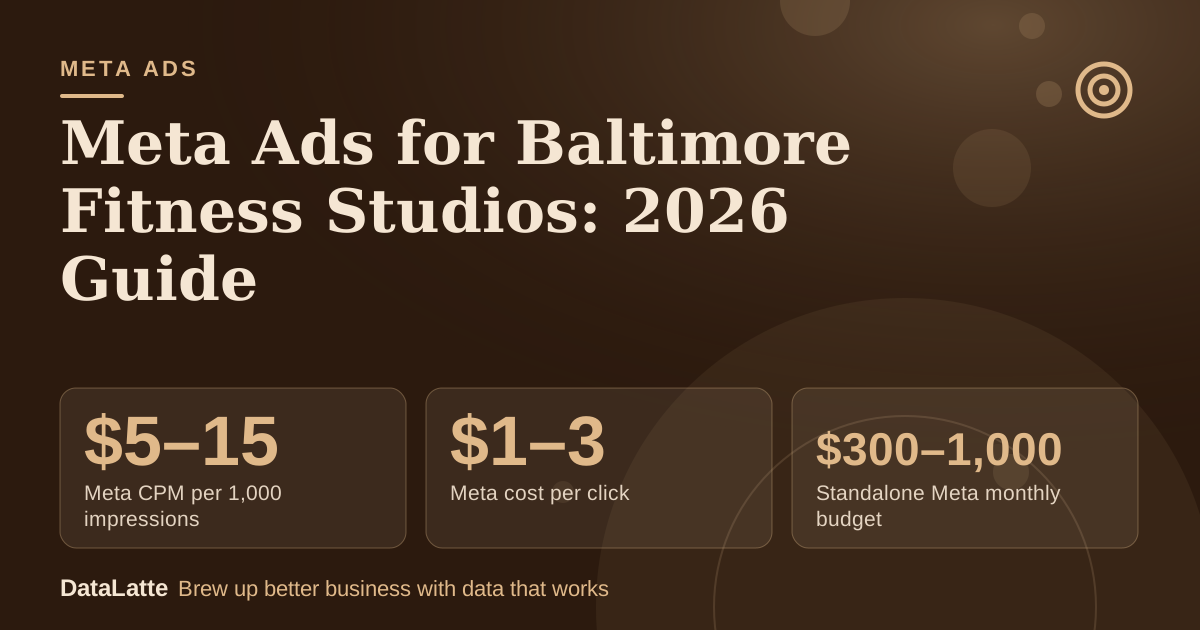
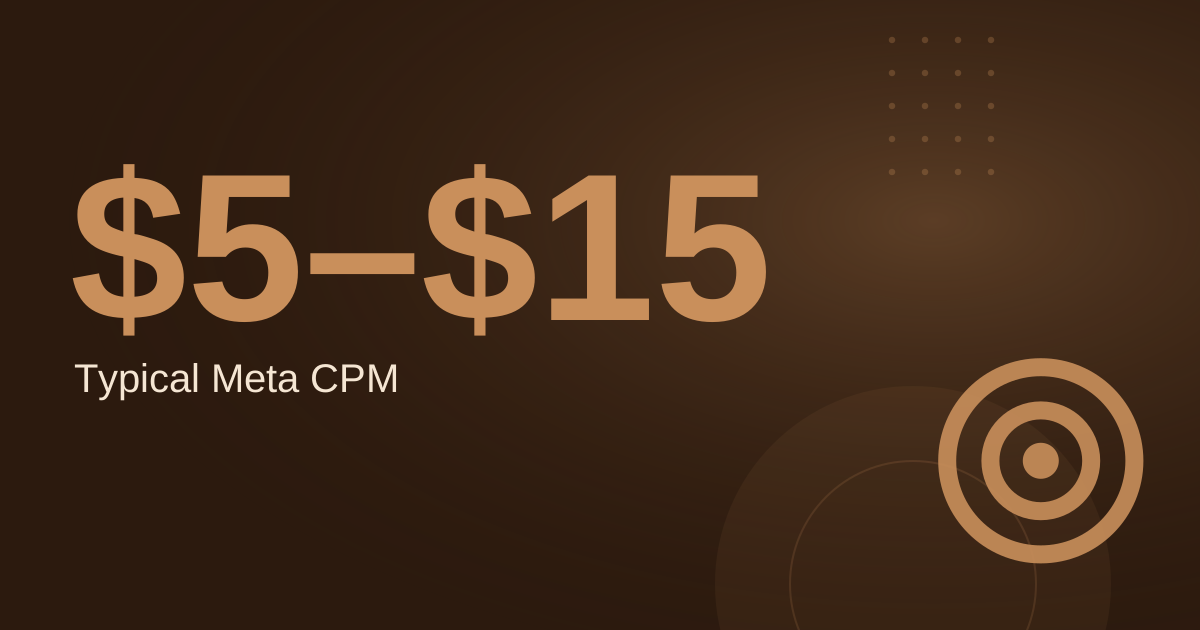
Meta ads on Facebook and Instagram can fill a Baltimore fitness studio or gym when budget, creative and tracking are set up together. Published vendor benchmarks put a standalone Meta buy at $300–$1,000 per month, with cost per thousand impressions around $5–$15 and cost per click around $1–$3. These are national ranges, not Baltimore price lists, so use them as a starting point and replace them with your own Ads Manager results after the first few weeks.
→
Meta CPM per 1,000 impressions
National vendor range, not Baltimore-specific
→
Meta cost per click
National vendor range
→
Standalone Meta monthly budget
Per month, vendor channel table
↑
Video vs static engagement
Meta 2025 report as cited by Adwave
See Sources at the end of the article. Cards marked Assumption are examples, not results.
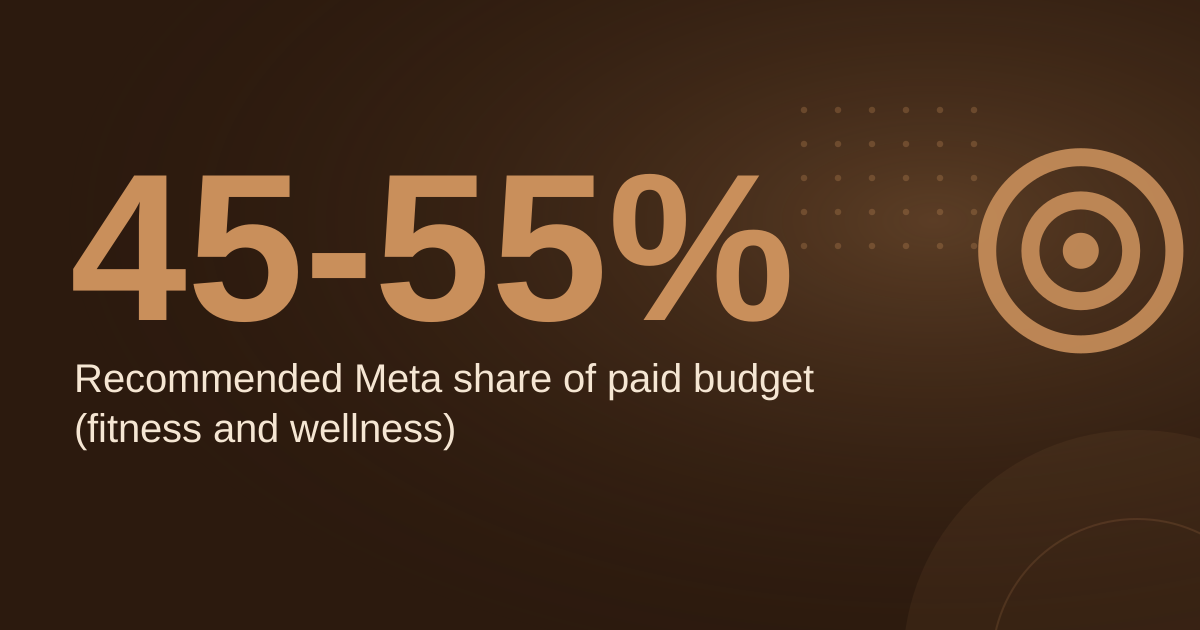
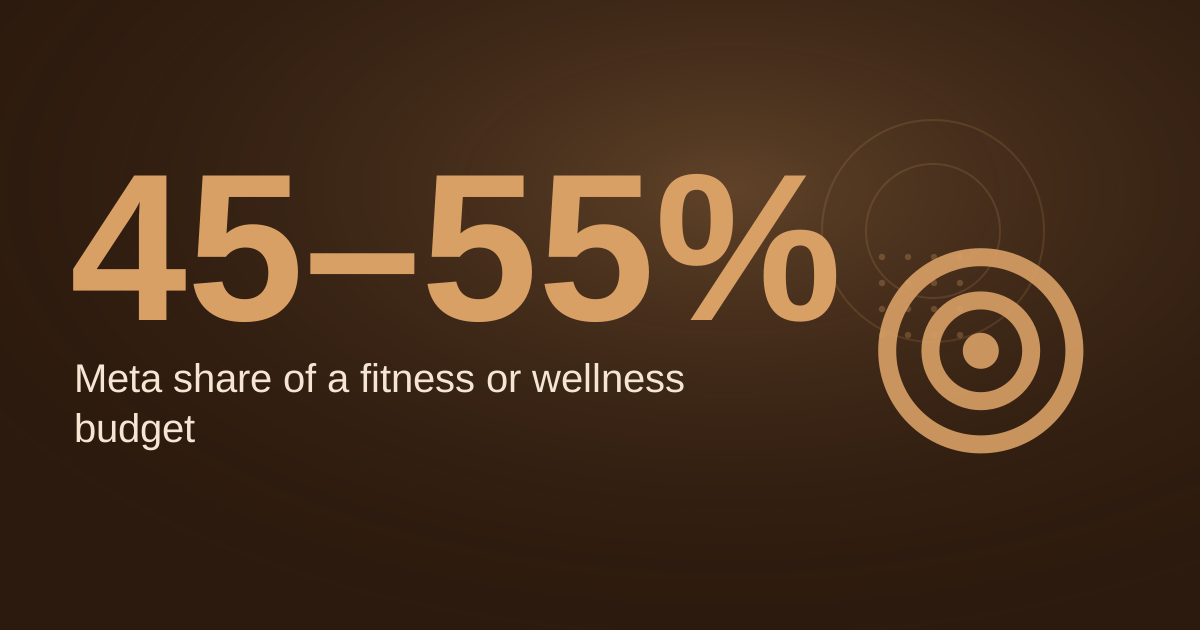
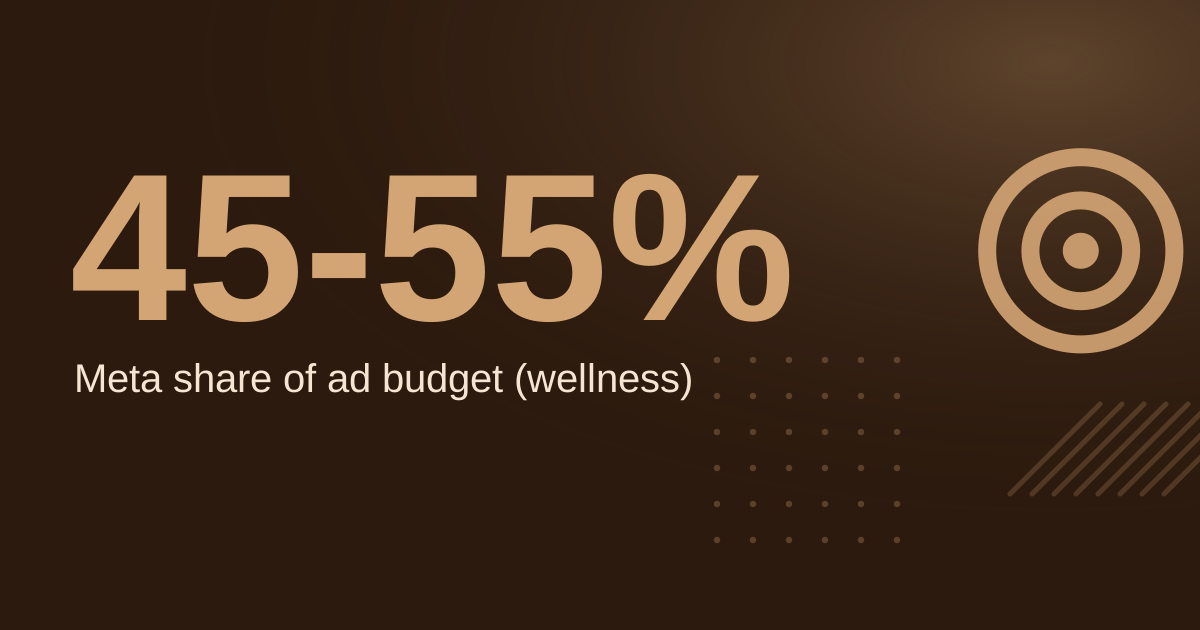
A standalone Meta buy often costs $300–$1,000 per month in one vendor's channel table. For fitness and wellness businesses, the same vendor recommends 45–55% of total advertising budget on Meta, 30–40% on connected TV and the balance on local platforms. That split is a planning suggestion, not a rule, and it assumes you already run more than one channel.
Mariana Tek says many boutique studios budget between 5 and 10 percent of monthly revenue for marketing. Start from that total, then apply the Meta share to decide how much goes into ads. If Meta is your only paid channel, consistent monthly spend usually matters more than hitting an exact split.
How Many Clicks and Bookings Can Each Budget Buy?
Here is a worked example. The studio's monthly revenue of $40,000 is an assumption. At 5–10% of revenue, total marketing is $2,000–$4,000. At 45–55% Meta, that leaves $900–$2,200 per month for Meta ads. The table below applies the national CPM and CPC ranges to three budgets.
| Monthly Meta budget | Impressions at CPM $5–15 | Clicks at CPC $1–3 | Bookings (assumed 3% of clicks) |
|---|
| $300 | 20,000–60,000 | 100–300 | 3–9 |
| $600 | 40,000–120,000 | 200–600 | 6–18 |
| $1,000 | 66,667–200,000 | 333–1,000 | 10–30 |
The 3% booking rate is an assumption, not a sourced figure. Replace it with your own booking data once a few weeks of results are in. Real results will fall somewhere inside each range, and the gap between the low and high end usually comes down to creative quality and offer strength.
Video comes first. Meta's 2025 Creative Best Practices report, as cited by Adwave, says short-form video generates 2.5 times more engagement than static images on Facebook and Instagram. Build clips from real classes, coaches and the studio floor rather than stock footage. Mariana Tek suggests posting short-form video three to five times a week at a steady cadence, not in bursts. The
Reels guide for fitness studios covers how to produce that footage.
Static images still compete for attention. Sprites counts 746 static gym and studio ads from 81 businesses in Meta's Ad Library, with 705 running at the time of its snapshot. That crowded feed is a reason to test video against your best static image rather than assume either one wins. For class schedules and short offers, the
Stories ads guide covers placement and format.
How Should You Target Local Members?
Start with your own data. Current members show you who books and stays, so build custom audiences from past clients and, once you have enough records, a lookalike audience from your best customers. Set the location radius to the area your members actually come from, which you can check in booking records rather than guess.
Meta's apps reach an average of 3.56 billion daily active people, so a wide audience is easy to buy and rarely the bottleneck. Narrowing by location and behaviour usually improves booking quality more than adding interests. Meta Ads Manager runs ads across Instagram and Facebook from one place, and one campaign can run on either platform or both.
Local search works alongside paid reach. The
local SEO guide for Baltimore fitness studios covers the organic side, and the
complete Facebook ads guide for gyms walks through campaign setup step by step.
What Should the Offer and Copy Say?
A free first class or trial is the offer most studios test first, because it lowers the commitment for someone who has never visited. Example copy, which is an illustration rather than a benchmark: "Your first class is free. Pick a time that works for you this week." Keep every claim something the studio can deliver on the day.
Instagram and Facebook let you add a Book Now button to your profile, according to Appointy. Point the ad, the profile and the schedule to the same booking page so a click from an ad leads to a single clear action. The
Instagram marketing strategy for studios covers how to structure the profile around that button.
How Fast Should You Follow Up on New Leads?
Speed matters as much as the ad. Mariana Tek advises following up within 24 hours with an automated welcome sequence, because interest fades fast after a pop-up ends. Paid leads behave the same way: a booking form that gets no reply is a lost trial. The
marketing automation guide for fitness studios explains how to set up that sequence without adding staff hours.
What Tracking Should Be in Place Before Spending?
Set up three things before the first dollar goes out. Install the Meta Pixel on the booking confirmation and contact pages. Configure a conversion event for a submitted booking form. Add UTM parameters to every ad URL so your analytics reports Meta traffic separately.
Without these, impressions and clicks can look like progress while bookings stay flat. Judge each ad by trials booked and members joined, not by reach. Treat the first few weeks as a learning period, then cut the weakest creative and shift budget toward the ads that produce booked trials.
FAQ
Vendor tables place a standalone Meta buy at $300–$1,000 per month, and many boutique studios budget 5–10% of revenue for all marketing. Start inside those ranges, then adjust based on how many trials each dollar produces.
The benchmarks used here are national. Your cost per click and CPM will depend on your own auction results, so check Ads Manager delivery and cost data after a few weeks and use those numbers for planning.
Should a studio run Reels or Stories ads first?
Meta's 2025 report, as cited by Adwave, says short-form video generates 2.5 times more engagement than static images. Test video first, then use Stories for schedules and time-limited offers.
How often should a studio post organic video alongside ads?
Mariana Tek suggests three to five short-form videos a week as a realistic, sustainable pace for most studios. Consistency over several weeks tends to matter more than a single burst.
Sources
Want a second opinion on your budget split and tracking setup?
Book a free audit, or see how
local SEO services can support paid campaigns for a Baltimore studio.
Free for local businesses
Want this applied to your business?
I'll review your Google presence, local SEO, and ad accounts — and send you a specific action plan within 48 hours. No pitch, no pressure.