Meta ads on Facebook and Instagram can fill a San Diego fitness studio when the budget, creative and tracking are set up correctly. Adwave's guidance for fitness and wellness businesses puts
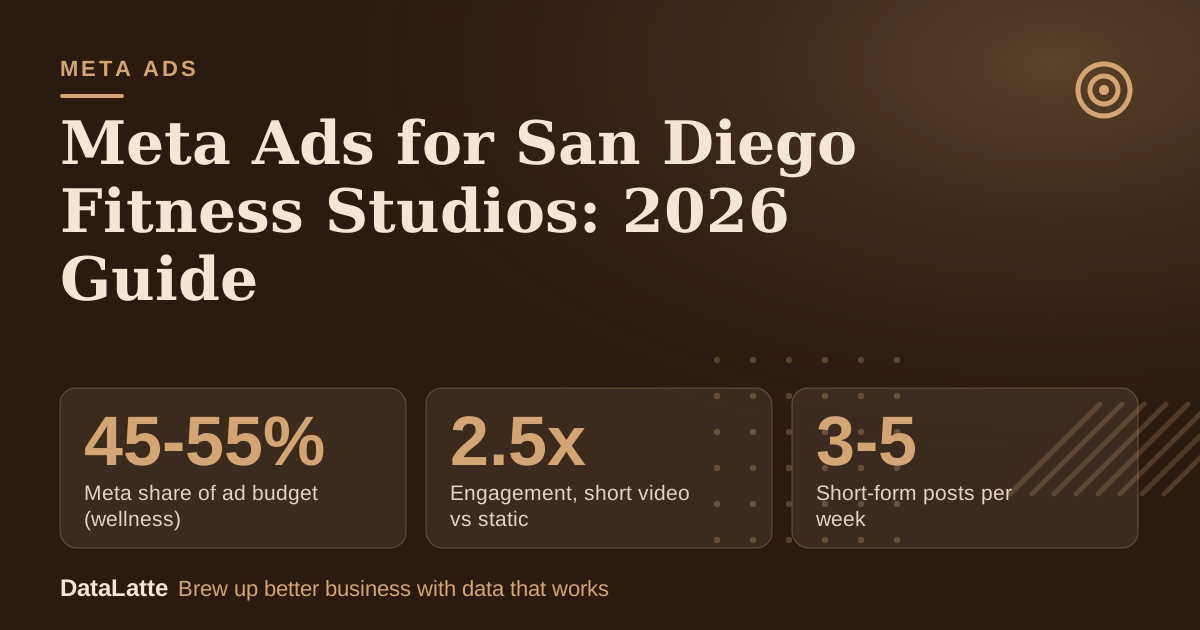
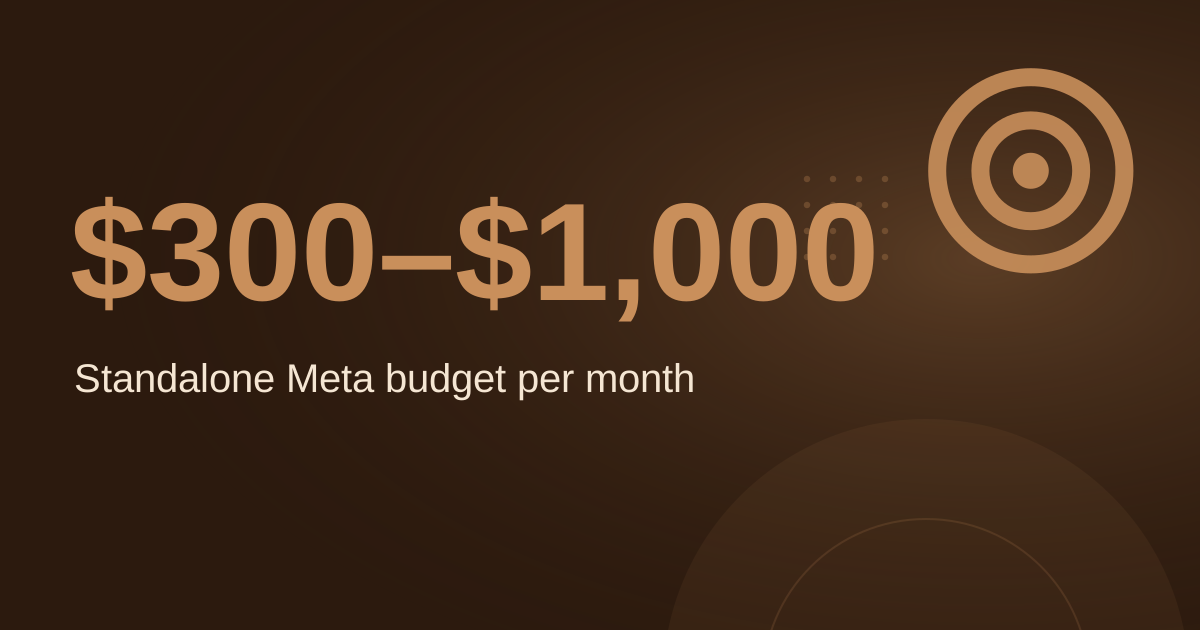
45-55% of total ad spend on Meta, and a standalone Meta buy often runs
$300 to $1,000 per month. Short-form video is the format to start with, and bookings need tracking before the first dollar is spent. The sections below cover budget, formats, targeting, tracking and a worked example you can adapt.
→
Meta share of ad budget (wellness)
Adwave split for fitness and wellness
→
Engagement, short video vs static
Meta 2025 report, cited by vendor
→
Short-form posts per week
Mariana Tek pace for most studios
→
Revenue spent on marketing
Typical boutique studio range
See Sources at the end of the article. Cards marked Assumption are examples, not results.
Most budget guidance starts from total marketing spend rather than from a fixed ad figure.
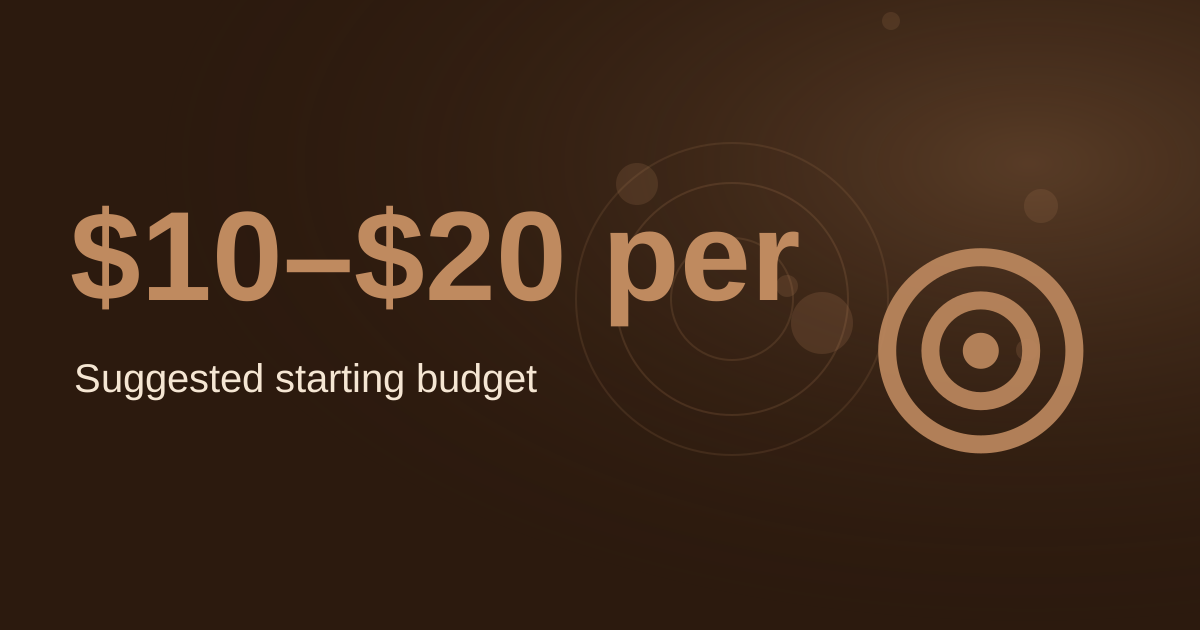
Mariana Tek notes that many boutique studios budget between 5 and 10 percent of monthly revenue for marketing. If Meta takes roughly half of that, the Adwave split implies a Meta line that sits in the low hundreds to low thousands per month, depending on studio revenue.
Adwave's single-location planning bands are useful as a cross-check. Its restaurant guide estimates
$500 to $2,000 per month for most single-location businesses, and its dental guide gives the same band for
single-location practices. These are not fitness-specific figures, so treat them as planning ranges rather than promises.
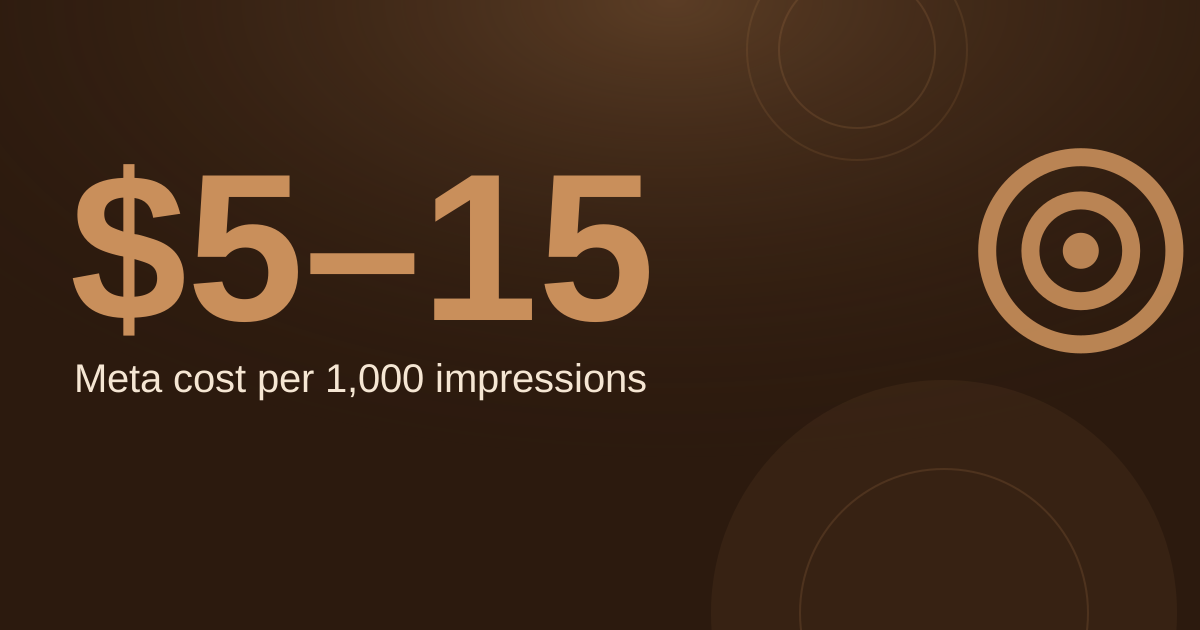
The sources here do not give a San Diego CPM. Meta's general planning band is
$5 to $15 per thousand impressions and $1 to $3 per click. Check the live CPM and CPC in your own Ads Manager for the first two weeks and adjust from there.
Short-form video is the strongest starting format. Adwave cites Meta's 2025 Creative Best Practices report, which says
short-form video generates 2.5 times more engagement than static images on Facebook and Instagram. That figure comes through a vendor page, so treat it as directional and test it against your own results.
Video does not have to be polished. Footage of real classes, instructors and members tends to be more credible than studio-owned stock imagery. For a deeper look at short-form creative, see
fitness studio marketing with Instagram Reels and
Instagram Stories ads for fitness studios.
Consistency matters as much as any single ad. Mariana Tek advises posting
three to five times a week rather than in bursts, and calls that pace realistic and sustainable for most studios. A steady schedule also gives the ad algorithm fresh creative to test.
How Should You Target San Diego Fitness Audiences?
Start with one campaign per offer rather than one campaign for the whole studio. A free trial, an intro pack and a membership sign-up need different audiences and different expectations. Keep the geography tight enough that people can realistically reach the studio, and widen only after the first results come in.
Meta's tools let you narrow by location, interests and behaviour.
Meta Ads Manager can run ads across Instagram and Facebook from one place, and
Facebook, Instagram and Messenger are all covered by the same system. Instagram ads also run through Meta Ads Manager because Instagram is owned by Meta, so one campaign can serve both platforms.
Custom audiences built from past members and website visitors are usually the most efficient starting point, because they match people who already know the studio. For a wider look at audience setup, see
Facebook ads for gyms and fitness studios.
Tracking has to be in place before the first campaign goes live. Without it, you will optimise for clicks and impressions instead of trials and members. Work through this checklist in order:
- Install the Meta Pixel on the website and confirm it fires on the booking page and the thank-you page.
- Create a booking or lead event that fires when someone submits a trial or intro form.
- Add a Book Now button to the Instagram and Facebook profiles, since both platforms allow it. Appointy describes this as a direct route from profile to booking.
- Add UTM parameters to every ad URL so Google Analytics can separate Meta traffic from other sources.
- Set a fixed review date, two weeks after launch, to compare cost per trial and cost per member.
Meta's free
Blueprint certification covers Facebook and Instagram advertising and is useful for staff who will manage the account. It is a secondary source, so check the current course list on Meta's own site.
What Does a Worked Budget Look Like for One Studio?
The example below uses assumption-labelled inputs. Replace them with your own numbers before using the output for planning.
Inputs (all assumptions):
- Monthly studio revenue: $30,000
- Marketing budget at 5 to 10 percent: $1,500 to $3,000 (from the Mariana Tek range)
- Meta share of that budget: $1,000 per month (assumption, inside the $300 to $1,000 standalone band)
- Cost per click: $2.00 (assumption, inside the $1 to $3 Meta band)
- Click-to-trial rate: 5% (assumption)
- Trial-to-member rate: 20% (assumption)
- Average member payment: $150 per month (assumption)
- Average months retained: 6 (assumption)
Calculation:
- Clicks: $1,000 ÷ $2.00 = 500 clicks
- Trials: 500 × 5% = 25 trials
- New members: 25 × 20% = 5 members
- Cost per trial: $1,000 ÷ 25 = $40
- Cost per member: $1,000 ÷ 5 = $200
- Lifetime revenue per member: $150 × 6 = $900
- Revenue from five members: $900 × 5 = $4,500 against $1,000 spend
The numbers show why retention matters more than the first month. A studio that keeps members for three months instead of six halves the lifetime value per member and shrinks the return on the same spend.
How Quickly Should Leads Get a Response?
Speed to response matters for cold traffic. Mariana Tek advises studios to
follow up within 24 hours with an automated welcome sequence, because interest fades fast after a pop-up or trial offer ends.
Automation removes the manual step that often slips. A welcome email or text sent within minutes of a trial sign-up keeps the studio in front of the person while they still remember booking. For setup options, see
marketing automation for fitness studios and
marketing automation for local fitness studios.
Keep the first message specific. Name the class the person booked, give the studio address and state the next step. Avoid generic greetings that could come from any gym.
Meta ads create demand from people who are scrolling, while search captures people who are already looking for a class. Many San Diego studios run both, with Meta handling awareness and trials and search covering intent-based queries. For local search setup, see
Google Ads for fitness studios in San Diego.
Split the budget based on what the tracking shows, not on a fixed rule. Start Meta at a level you can measure, then move spend toward whichever channel delivers the lower cost per member over several weeks.
FAQ
Adwave lists a standalone Meta buy at
$300 to $1,000 per month, and its single-location planning bands run from
$500 to $2,000. Pick a figure that fits your marketing share, which many boutique studios set at 5 to 10 percent of revenue, then measure cost per trial before raising it.
Start with short-form video. Adwave cites Meta's 2025 report for
2.5 times more engagement than static images. Post three to five times a week so the algorithm has fresh creative to test.
Yes. Install the Meta Pixel, create a booking event and add UTM parameters before launch. Without these, you cannot tell which ads produce trials or members, and you will end up judging performance on impressions and clicks alone.
How fast should a new lead hear back from the studio?
Within 24 hours.
Mariana Tek advises following up with an automated welcome sequence, because interest drops quickly after a trial offer ends.
Sources
Ready to see where your Meta spend is going?
Book a free audit and get a clear view of trials, cost per member and next steps for your San Diego studio.
Free for local businesses
Want this applied to your business?
I'll review your Google presence, local SEO, and ad accounts — and send you a specific action plan within 48 hours. No pitch, no pressure.