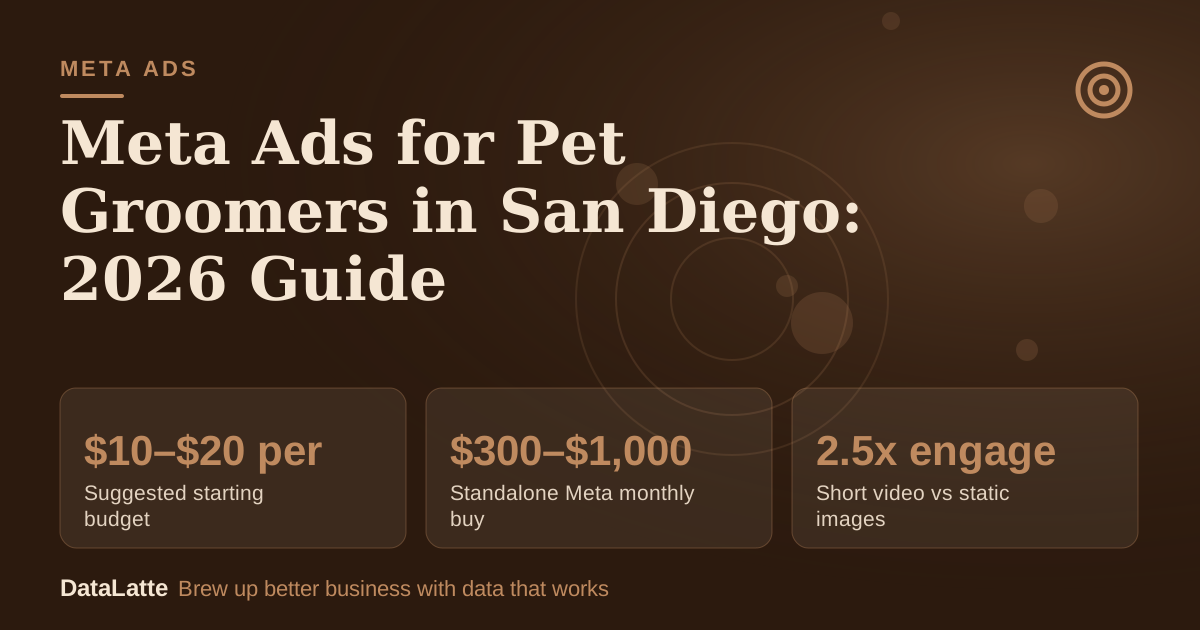
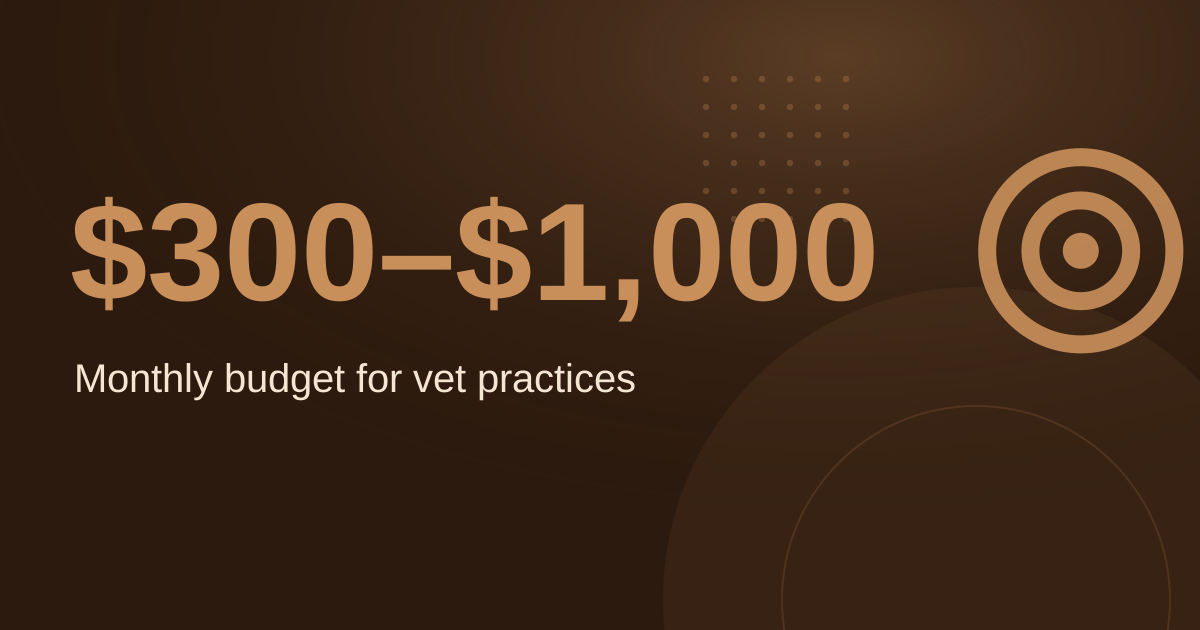
Meta ads on Facebook and Instagram can bring bookings to a San Diego pet groomer when the budget, audience and offer are chosen deliberately. Meta Ads Manager runs both platforms from one system, so one campaign can serve Instagram, Facebook, or both. A common starting point is $10-$20 per day, aimed at dog and cat owners aged 25-60 within a 10-15 mile radius. Adwave puts a standalone Meta buy at $300-$1,000 per month, and short video tends to outperform static images. The figures below are national benchmarks, so confirm local costs in your own Ads Manager before committing budget.
→
Suggested starting budget
Barklead guide, per day
→
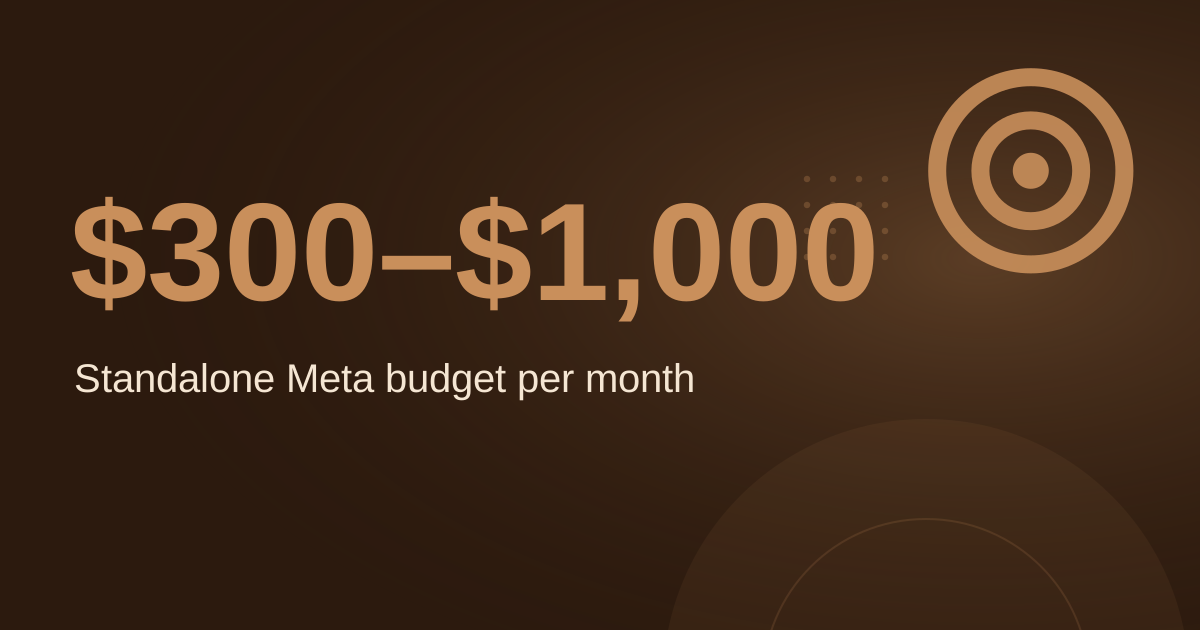
Standalone Meta monthly buy
Adwave channel guidance
↑
Short video vs static images
Meta 2025 report via Adwave
→
Daily active people across Meta apps
Adwave, Meta apps
See Sources at the end of the article. Cards marked Assumption are examples, not results.
Adwave's channel guidance puts a standalone Meta (Facebook plus Instagram) buy at $300-$1,000 per month, as
Adwave's channel comparison notes. Its veterinary guide uses the same band, saying
most veterinary practices can run effective campaigns for $300 to $1,000 per month. Those are the closest comparable service businesses in the sources.
For unit costs, Adwave's small business guide lists typical Meta costs at
$5-15 per thousand impressions and $1-3 per click. These are national typicals. Local auctions can price differently, so check the delivery estimates Ads Manager shows while you build the ad set.
A daily start is easier to test. Barklead's guide for groomers recommends
a modest budget of $10-$20 per day, then increasing spend once high-performing ads are identified. At 30 days, that range works out to $300-$600 per month.
Who Should You Target in San Diego?
Barklead's groomer guide suggests
targeting users within a 10-15 mile radius and
pet owners aged 25-60, likely to have disposable income. Treat these as a starting audience, not a final one. Widen or narrow the radius based on where your current clients actually live, and compare results by ZIP area in your booking records.
Past clients are often the most useful audience to upload. Meta lets advertisers identify detailed customer profiles and set a budget for each ad, as
The Restaurant HQ explains for Instagram and Facebook. Pair a custom audience of existing clients with a separate prospecting ad, so you can see which group is responding.
Adwave, citing
Meta's 2025 Creative Best Practices report, says short-form video generates 2.5 times more engagement than static images on Facebook and Instagram. For a groomer, a short clip of a freshly groomed dog filmed at your shop is a sensible first test. The
Reels approach used for fitness studios translates well to grooming, since both rely on quick, real-life footage.
Barklead's sample ad copy offers
10% off a customer's first grooming session. A first-visit offer gives people a concrete reason to book now. Change one variable at a time, either the creative or the offer, so you know which change moved results. For choosing between placements, the
Instagram and Facebook ads comparison covers the tradeoffs.
Work through these steps before spending:
- Open Meta Ads Manager, which Adobe describes as a centralized point to run ads across Instagram and Facebook.
- Choose an objective that matches a booking. Meta paid campaigns can be set with goals such as traffic or reservations across Facebook, Instagram, or both, as The Fork Manager explains for restaurants. For groomers, a traffic goal to your booking page is the usual choice.
- Apply the age range and radius from the targeting section.
- Place the campaign on Instagram and Facebook together, then review which placement delivers bookings.
- Set a daily budget you can hold for several weeks. Adwave lists 1-4 weeks to results for Meta in its channel table, so judging a campaign after two days will mislead you.
- Confirm tracking is working before launch.
Meta Blueprint offers
free Facebook and Instagram advertising courses with certification, which is useful if you plan to manage campaigns yourself.
What Does a Worked Budget Look Like?
The example below uses assumptions, not sourced figures. Inputs are labelled, and the outputs show how the math changes with booking rate.
Assumptions: daily budget of $20 (top of the Barklead range), so $600 per month over 30 days. Cost per click of $2.00, inside the $1-3 range above. Average first-visit ticket of $80. Booking rates of 2% and 4% from click to booked appointment.
| Scenario (assumption) | Monthly spend | Clicks | Bookings | First-visit revenue |
|---|
| Conservative: 2% booking rate | $600 | 300 | 6 | $480 |
| Stronger: 4% booking rate | $600 | 300 | 12 | $960 |
At a 2% booking rate, first visits alone do not cover the $600 spend. At 4%, first-visit revenue is about 1.6 times spend. Grooming is a repeat service, so the value is larger than the first visit. If each booked client returns three times in six months (assumption), the 4% scenario produces 12 bookings times 3 visits times $80, or $2,880. Use your own booking rate and ticket size in place of these inputs.
How Should You Track and Measure Results?
Measure cost per booking, not impressions or reach. Before launch, check three things. The Meta Pixel should be installed and firing on the booking confirmation page. A Lead event should fire when someone submits a booking form. UTM parameters should be on every ad URL so your analytics can separate Meta traffic from other sources.
Without these, you will see engagement but not bookings. Review results after the 1-4 week window, then decide whether to scale, change the creative, or pause the ad set.
Should a Pet Groomer Run Google Ads Too?
Meta reaches people while they browse. Search reaches people who already want a groomer. One mobile pet groomer in a
Marketing 360 case study advertised on both Facebook and Google to choose the right channels. If you are weighing search alongside social, the
Google Ads service page outlines how that setup works.
FAQ
Adwave lists a standalone Meta buy at $300-$1,000 per month. Barklead's suggested start of $10-$20 per day equals $300-$600 over 30 days. Start where you can hold the budget long enough to read results.
Adwave's channel table lists 1-4 weeks to results for Meta. Plan for at least that window before judging a campaign, and check cost per booking rather than early clicks.
Should I run ads on Instagram, Facebook, or both?
Meta Ads Manager can run one campaign on Instagram, Facebook, or both, as
Adwave explains for local businesses. Start with both in one campaign, then compare placements once you have booking data.
Meta Blueprint offers free courses on Facebook and Instagram advertising, with certification on completion. Use it to learn the Ads Manager setup before you hire help or raise spend.
Next Steps
Before increasing your budget, review your current Meta setup, audience and tracking.
Request a free audit to check where the campaign loses bookings. For more on organic posting alongside paid ads, see the
pet groomer's guide to Instagram marketing.
Sources
Free for local businesses
Want this applied to your business?
I'll review your Google presence, local SEO, and ad accounts — and send you a specific action plan within 48 hours. No pitch, no pressure.