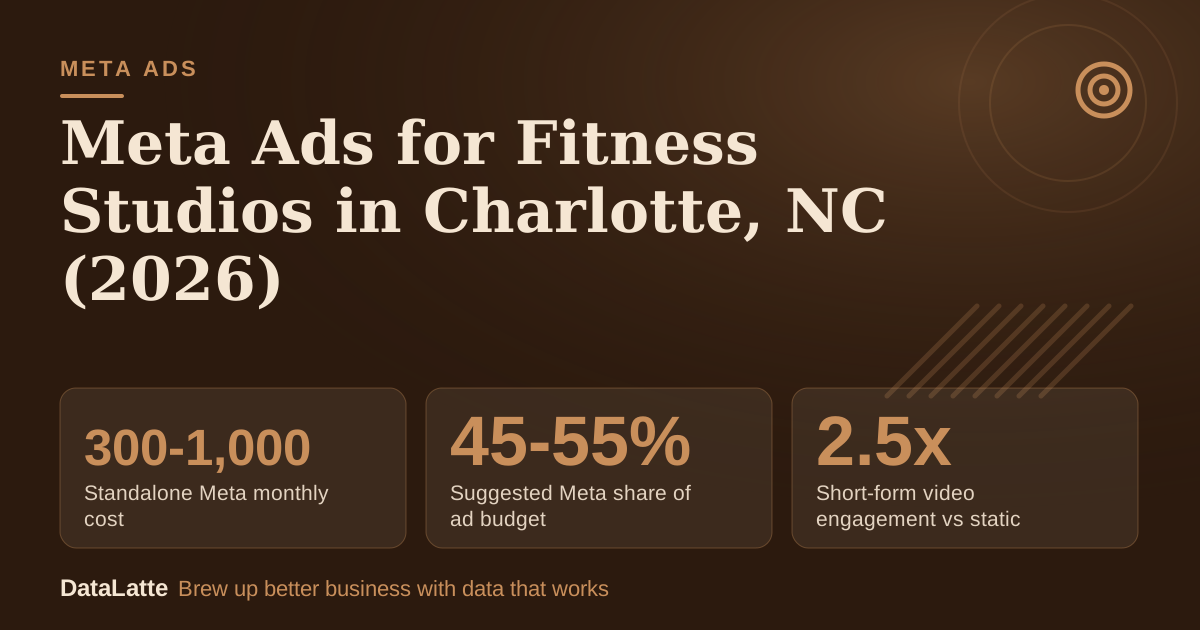
Meta ads on Facebook and Instagram can bring steady trial bookings to a Charlotte, NC fitness studio when the budget is sized realistically, the creative is short video, and the goal is a booking rather than reach. Vendor benchmarks place a standalone Meta buy at
roughly $300 to $1,000 per month. The ranges below are national planning figures, not Charlotte-specific data, so replace them with your own Ads Manager results after the first month.
→
Standalone Meta monthly cost
Vendor table, per month
→
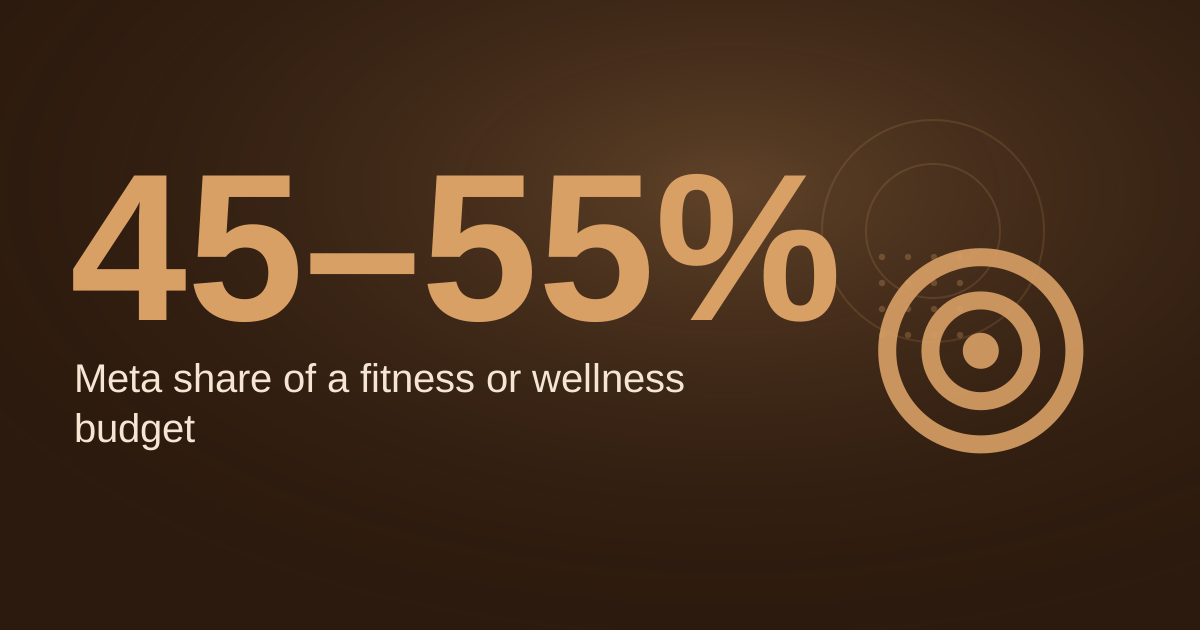
Suggested Meta share of ad budget
Vendor split for fitness and wellness
↑
Short-form video engagement vs static
Meta 2025 report, as cited by vendor
→
Boutique studio marketing share of revenue
Typical range per Mariana Tek
See Sources at the end of the article. Cards marked Assumption are examples, not results.
A standalone Meta buy for a local service business typically starts around
$300 to $1,000 per month, according to the vendor's own channel table. Below that range, a campaign tends to reach too few people to show whether the offer works. Above it, the extra spend only pays off if the booking page, pricing, and follow-up are already converting.
Marketing budgets for boutique studios are often set as a percentage of revenue.
Mariana Tek notes that many boutique studios budget between 5 and 10 percent of monthly revenue for marketing. A studio with $20,000 in monthly revenue (assumption) would therefore plan roughly $1,000 to $2,000 for all marketing, which then has to cover Meta, email, and listings. A Meta budget of $500 to $800 per month fits inside that envelope for many studios.
Start with the lower end, run a single offer for four to six weeks, and only increase spend once you can see cost per booking.
Adwave's comparison of connected TV and social ads recommends a
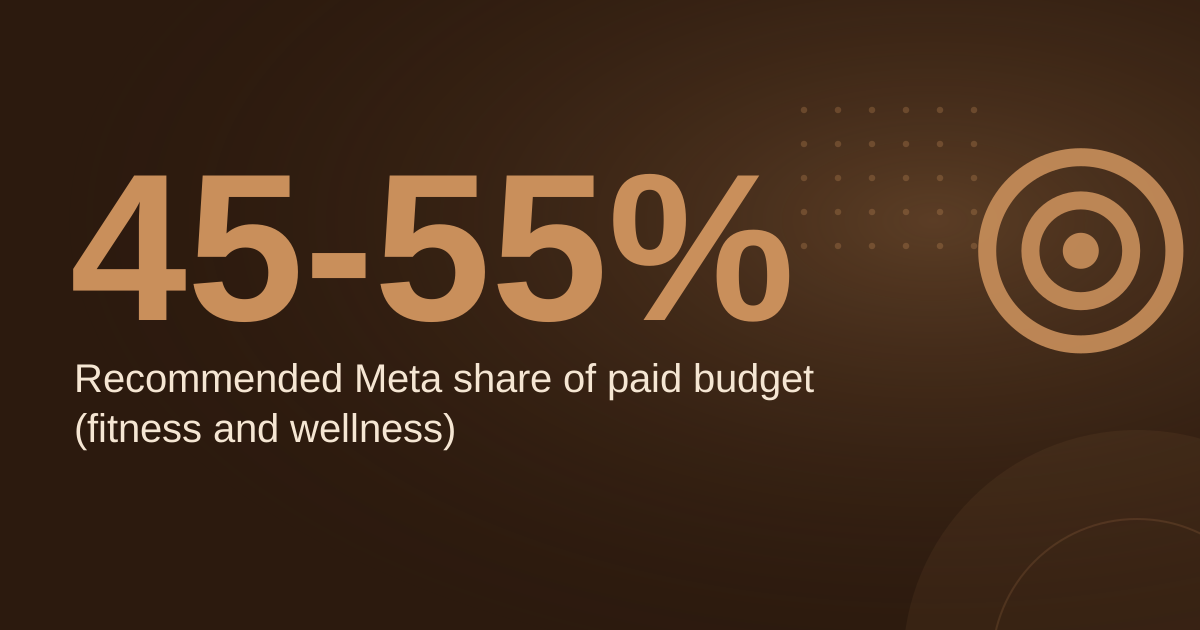
45-55% Meta budget split for fitness studios and wellness businesses, with 30-40% on connected TV and the balance on local platforms. That split assumes the studio has a broader budget spread across channels, which many single-location studios do not.
Adwave's fitness app guide takes a different view for a more mature brand. In its established brand stage,
Meta and Instagram receive 20% of budget. That figure comes from a fitness app rather than a studio, so treat it as a reference point for a brand that already has demand, not as a rule for a new studio.
For a single-location studio, the practical question is simpler: if Meta is the only paid channel, it should carry the whole paid budget until it proves it can fill trial classes. If a second channel such as Google Search is added,
a Google Ads service can capture people already looking for a class, while Meta creates demand among people who are not yet searching.
Short-form video is the strongest format to test first.
Meta's 2025 Creative Best Practices report, as cited by Adwave, says short-form video generates 2.5 times more engagement than static images on Facebook and Instagram. That is a platform-wide finding, not a studio-specific result, so confirm it with your own click-through and booking data.
Posting rhythm matters as much as the ad itself.
Mariana Tek advises studios to post at a steady cadence of three to five short-form videos per week, since bursts of posting are harder to sustain. For a deeper look at short video for studios, see
fitness studio marketing with Instagram Reels.
Use the objective that matches the offer. Restaurants can
set up Meta campaigns aimed at traffic or reservations across Facebook, Instagram, or both, and the same logic applies to studios: a free trial class should point to a traffic or lead objective, with the booking page as the destination. Instagram and Facebook also let you
add a Book Now button to your profile, which shortens the path from ad to booking.
How Should You Set Up Targeting and Tracking?
Instagram ads run through the same system as Facebook ads.
Because Instagram is owned by Meta, one campaign can run on Instagram, Facebook, or both through Meta Ads Manager. Set up one campaign with placements you can compare, rather than separate accounts for each platform.
Meta's ad platform also runs on Messenger and the Audience Network, according to
Bons and Frazer. For a local studio, Audience Network placements are rarely worth the spend, so review placement reports and exclude them if they consume budget without bookings.
Before launch, check three things:
- The Meta Pixel fires on the booking confirmation page, not just the homepage.
- A Lead or Schedule event is set up for the trial booking form.
- Every ad link carries UTM parameters so the bookings can be traced in your analytics.
Meta also offers free training.
Meta Blueprint covers Facebook and Instagram advertising and offers certification at no cost, which can help a studio owner or staff member understand the account before handing it to an agency.
What Does a Worked Budget Example Look Like?
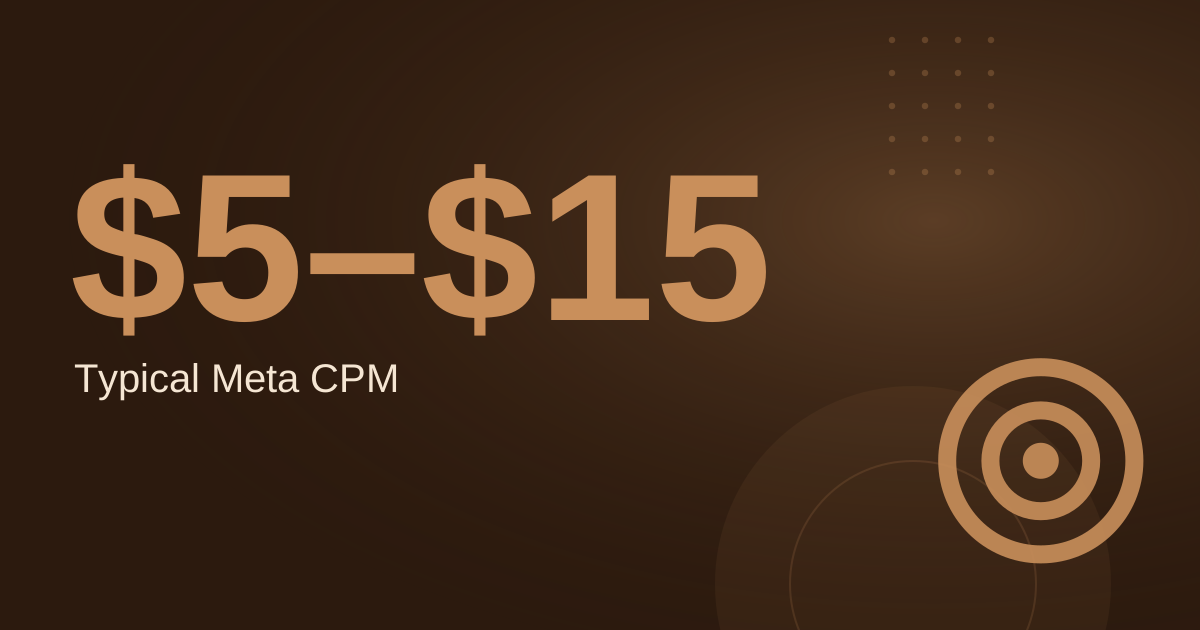
The table below uses a $500 monthly budget and assumption-based inputs, so you can replace them with your own numbers. The CPM and CPC inputs sit inside the national ranges that
Adwave gives for Meta, at $5 to $15 per thousand impressions and $1 to $3 per click.
| Input or result | Value | Basis |
|---|
| Monthly Meta budget | $500 | Assumption, inside the $300-$1,000 range |
| CPM | $10 | Assumption, inside the $5-$15 range |
| Impressions | 50,000 | $500 ÷ $10 × 1,000 |
| CPC | $2.00 | Assumption, inside the $1-$3 range |
| Clicks | 250 | $500 ÷ $2.00 |
| Trial bookings from clicks | 10 | Assumption: 4% of clicks book |
| Cost per trial booking | $50 | $500 ÷ 10 |
If only three of those ten trials become members (assumption), the cost per new member is roughly $167. Whether that is profitable depends on your membership price and retention, which should be checked against your own numbers before you scale.
The calculation shows why the booking rate matters more than the CPM. Doubling the click-to-booking rate from 4% to 8% (assumption) halves the cost per trial to $25 at the same budget.
What Happens After a Lead Books a Trial?
Paid leads cool quickly.
Mariana Tek advises studios to follow up within 24 hours with an automated welcome sequence, since interest fades fast after a pop-up ends. The same principle applies to Meta trials: a booking that receives no reminder before the class is a wasted click.
Build a simple sequence before the first ad goes live. A confirmation message, a reminder the day before the class, and a follow-up within a day after the trial covers most of what the studio needs. For a fuller setup, see
marketing automation for fitness studios.
Local search also influences whether people trust a studio enough to book. If your Google Business Profile and local pages are weak, paid clicks may not convert.
Local SEO for fitness studios in Charlotte, NC covers the local listing work that supports paid campaigns.
FAQ
Vendor tables place a standalone Meta buy at about $300 to $1,000 per month for local service businesses. Start at the lower end, run one offer for four to six weeks, and increase spend only after you see cost per booking.
Is video better than images for studio ads?
A 2025 Meta report, as cited by Adwave, says short-form video generates 2.5 times more engagement than static images. Test video first, but check the result against your own booking numbers.
Should I run ads on Instagram and Facebook together?
Yes, in one campaign if possible. Instagram ads run through Meta Ads Manager, so you can compare placements inside one account and cut the ones that do not produce bookings.
Can I use national benchmarks for a Charlotte campaign?
Use them as starting points only. The ranges above are national, so confirm your local CPM and cost per click in Ads Manager after the first two weeks, and adjust your budget to what your own market returns.
Sources
Ready to see what Meta ads could look like for your studio?
Book a free audit and we will check your booking funnel, tracking, and budget against these benchmarks.
Free for local businesses
Want this applied to your business?
I'll review your Google presence, local SEO, and ad accounts — and send you a specific action plan within 48 hours. No pitch, no pressure.