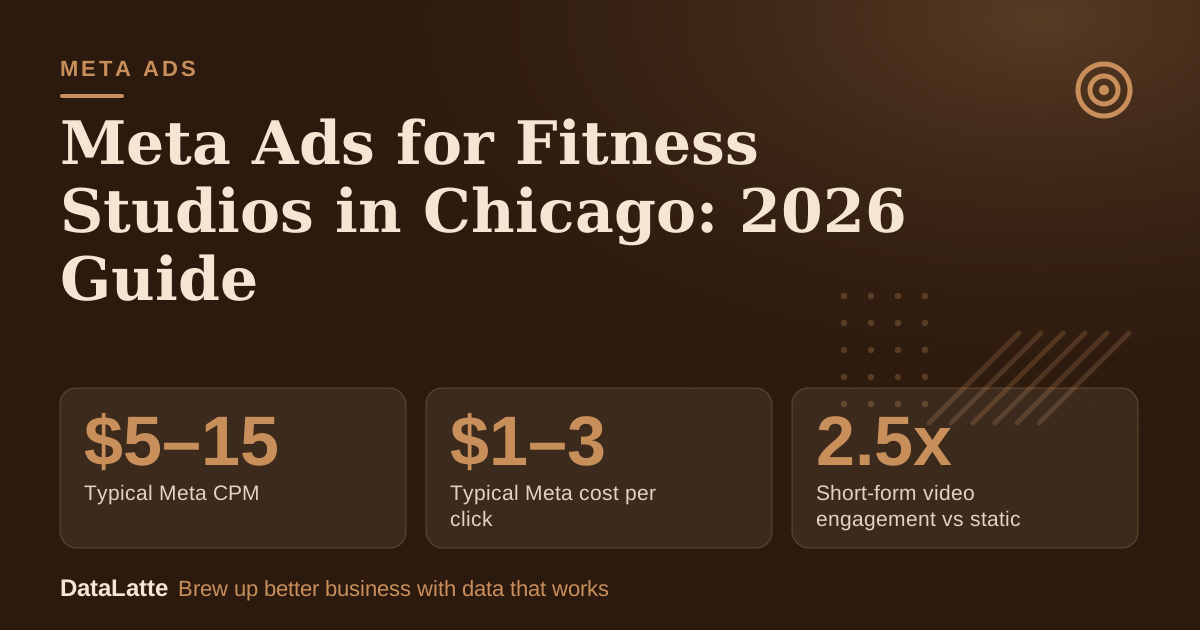
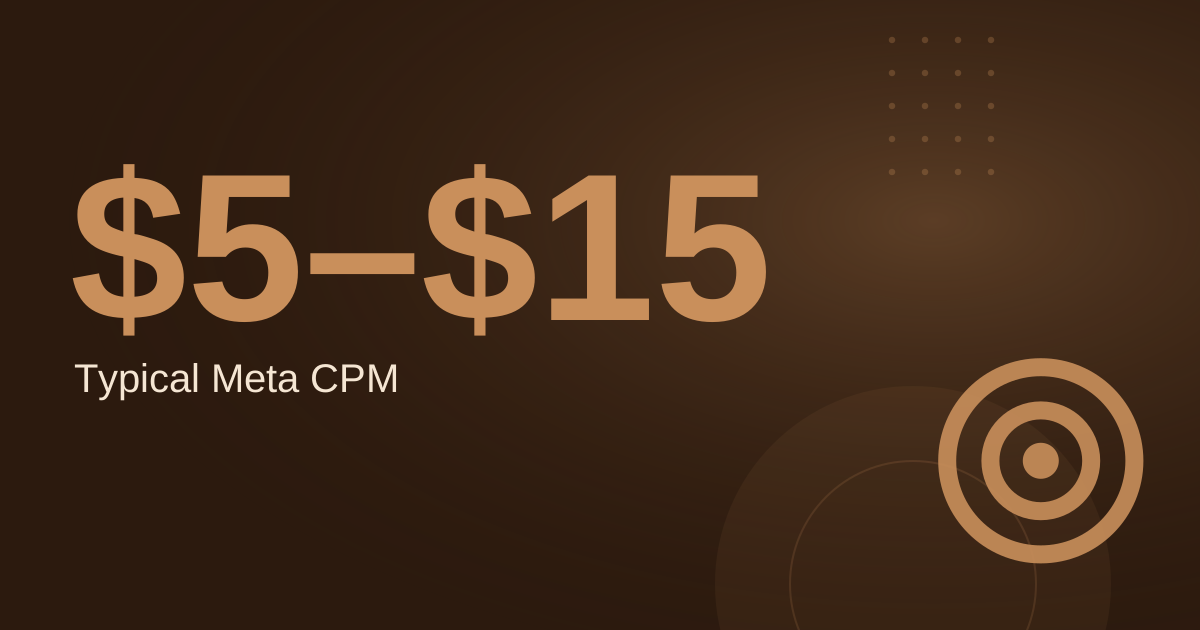
Meta Ads on Facebook and Instagram can bring new members to a fitness studio in Chicago, IL, but only when budget, targeting and creative are planned together. Vendor benchmarks put typical Meta costs at $5–15 per 1,000 impressions and $1–3 per click, and Adwave places Meta at $300–1,500+ per month for local campaigns. This guide covers how to plan that spend, pick formats, target nearby adults and track bookings in 2026, with a worked budget example you can adapt.
→
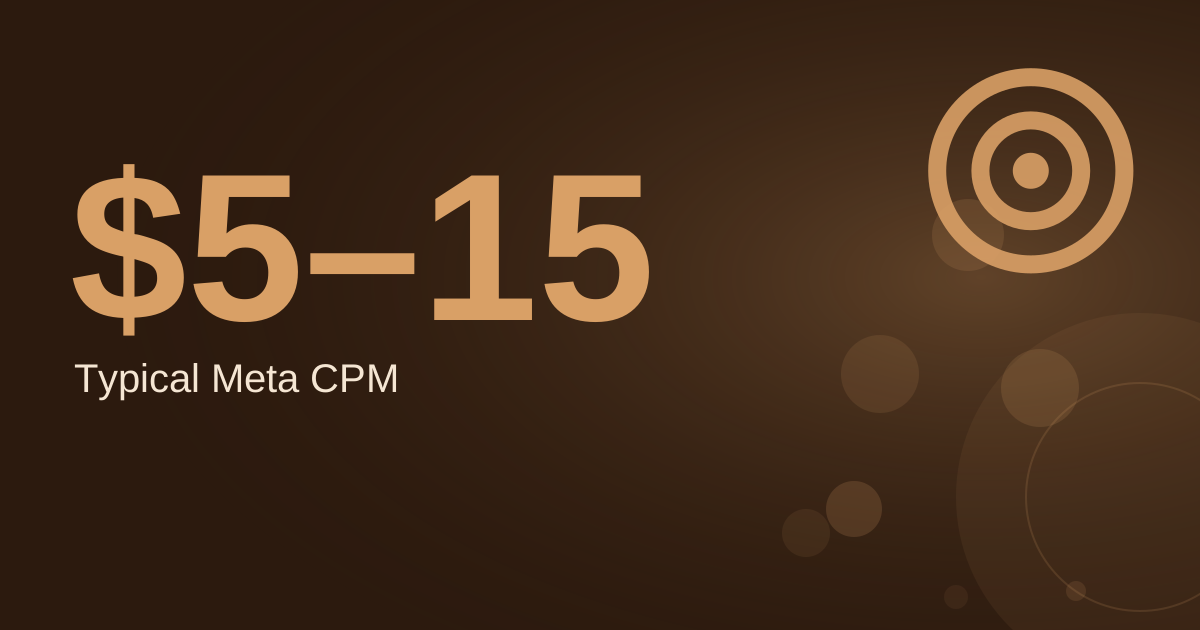
Typical Meta CPM
Adwave general benchmark
→
Typical Meta cost per click
Adwave general benchmark
↑
Short-form video engagement vs static
Meta 2025 report, cited by Adwave
→
Recommended posts per week
Mariana Tek advice
See Sources at the end of the article. Cards marked Assumption are examples, not results.
Adwave's guidance for fitness and wellness businesses suggests a 45–55% Meta share of the advertising budget, with 30–40% on connected TV and the balance on local platforms (
Adwave). That split is a vendor recommendation, not a rule. A studio with no connected TV spend would use it only as a starting point for how Meta fits into a wider mix.
Mariana Tek reports that many boutique studios budget between 5 and 10 percent of monthly revenue for marketing overall (
Mariana Tek). Meta is one slice of that total, so check your revenue first and then decide what share goes to paid social.
For a Meta-only test, the vendor range to plan around is $300–1,500+ per month (
Adwave). Start near the lower end while you learn which trial offers and creative bring bookings. The
complete Facebook ads guide for gyms and fitness studios covers budget pacing in more detail.
CPM is the price for 1,000 impressions, and cost per click is what you pay for each click. Adwave's benchmark gives $5–15 per thousand impressions and $1–3 per click for Meta (
Adwave). These figures are general across industries, not Chicago-specific, so use them as planning inputs and replace them with your own Ads Manager data after the first two weeks.
Reach is not the constraint. Adwave states that Meta's apps reach an average of 3.56 billion daily active people (
Adwave). A large audience still needs a clear offer and a booking path, because impressions alone do not fill classes. Judge each campaign by the cost per booking it produces.
Adwave cites Meta's 2025 Creative Best Practices report, which says short-form video generates 2.5 times more engagement than static images on Facebook and Instagram (
Adwave). For a studio, that points to class footage, coach introductions and short trial-offer clips ahead of still photos. Test Reels and Stories first, then compare with feed video.
Consistency matters as well. Mariana Tek advises posting short-form video three to five times a week at a steady cadence rather than in bursts (
Mariana Tek). Paid ads work better when the organic feed already shows active classes. The
Reels approach for fitness studios and
Instagram Stories ads for fitness studios explain how to build that rhythm.
Instagram ads run through the same Meta Ads Manager as Facebook ads, and one campaign can run on Instagram, Facebook or both (
Adwave). Start with one campaign on both placements, then split them only if the results differ clearly.
How should you target people near your studio?
Meta Ads Manager covers Facebook, Instagram and Messenger for campaigns (
Turrboo). Choose placements that match your offer instead of switching on every option. Bons and Frazer also describes Meta's platform as running across the Audience Network, so you can test whether that placement brings real bookings or just spend (
Bons and Frazer).
Set your local radius and age range around the classes you actually sell. A studio known for early-morning strength work will need a different radius from one selling evening yoga. Run two audiences side by side: people near the studio, and a custom audience built from past members for win-back or referral offers.
Keep the creative specific to your neighborhood, class and trial offer. Generic national language gives Ads Manager nothing to match against local searches. Name the class, the coach and the first-visit offer in the first line of the ad.
Worked example: what does $1,000 a month buy?
Inputs, with assumptions labelled:
- Monthly budget: $1,000 (assumption, inside the $300–1,500+ range)
- CPM: $5 to $15 (Adwave benchmark)
- Cost per click: $1 to $3 (Adwave benchmark)
- Click-to-booking rate: 5% (assumption, replace with your own tracked rate)
Impressions equal budget divided by CPM, times 1,000. Clicks equal budget divided by cost per click. Bookings equal clicks times 5%. Cost per booking equals budget divided by bookings.
| Scenario | CPM | Cost per click | Impressions | Clicks | Bookings (5% assumed) | Cost per booking |
|---|
| Low-cost | $5 | $1 | 200,000 | 1,000 | 50 | $20 |
| High-cost | $15 | $3 | 66,667 | 333 | 17 | $60 |
The gap between the two rows is three times the cost per booking. If a new member is worth less than your cost per booking, the campaign loses money, so compare the result with your own client value before raising the budget. Swap in the rates from your first Ads Manager report, since these figures are general benchmarks and not Chicago data.
How do you track bookings and follow up?
Instagram and Facebook let businesses add a Book Now button to their profile (
Appointy). Link that button to your trial booking page, and make sure the same page is the destination for your ads so the path is consistent.
Before spending, confirm that the Meta Pixel fires on the booking confirmation page, that a Lead event fires when a form is submitted, and that UTM parameters are on every ad URL. Without these, Ads Manager cannot tie spend to bookings.
Speed of follow-up also affects results. Mariana Tek advises studios to follow up with pop-up contacts within 24 hours using an automated welcome sequence, since interest fades fast (
Mariana Tek). The
marketing automation guide for fitness studios shows how to set that up.
What mistakes should Chicago studios avoid?
- Asking cold audiences for a full membership before they have visited the studio. A free trial or first class suits cold traffic better.
- Targeting broad "fitness" interests instead of the specific class format you sell.
- Judging campaigns by impressions or reach rather than bookings.
- Running one ad for months without refreshing the creative. Adwave notes that Meta campaigns take weeks to optimize, so give a new ad time before deciding it failed (Adwave).
For a Chicago plan that covers local search alongside social, read the
Chicago fitness studio marketing guide and the
Google Ads guide for Chicago fitness studios. To review your current Meta setup,
book a free audit.
FAQ
Adwave's range for Meta is $300–1,500+ per month, so $300 sits at the low end. It can run a focused test on one trial offer, but expect fewer bookings and a longer learning period. Check your cost per booking after several weeks before deciding whether to add budget.
Adwave describes Meta advertising as taking weeks to optimize, while still offering good targeting (
Adwave). Plan for a learning period and avoid changing the audience or creative every few days, since that resets the optimization.
Should a studio run Facebook or Instagram ads?
Both run through Meta Ads Manager, and one campaign can run on Instagram, Facebook or both (
Adwave). Start with both placements in one campaign, then compare results and split only if one placement clearly outperforms the other.
Vendor benchmarks are general and change over time. Check Meta's own platform help pages for current rules, and use your Ads Manager results for the cost per click and cost per booking that matter for your studio.
Sources
Free for local businesses
Want this applied to your business?
I'll review your Google presence, local SEO, and ad accounts — and send you a specific action plan within 48 hours. No pitch, no pressure.