For most local businesses in the US, TikTok is the larger audience to test first, but neither platform is a sure winner. Pew Research's 2026 survey of US adults found 37% use TikTok and 26% use Snapchat. Reach alone does not decide the choice. The better platform is the one that produces the cheaper booking, sale or call in the advertiser's own account, measured over a fair test with a fixed budget. This guide covers who each platform reaches, how to run a clean 30-day test, and where the available sources stop.
The guide is written for owners of cafés, salons, groomers and studios in the US, UK, Australia and Canada. Where a figure comes from a source, it is linked. Where it is an example, it is labelled as an assumption.
→
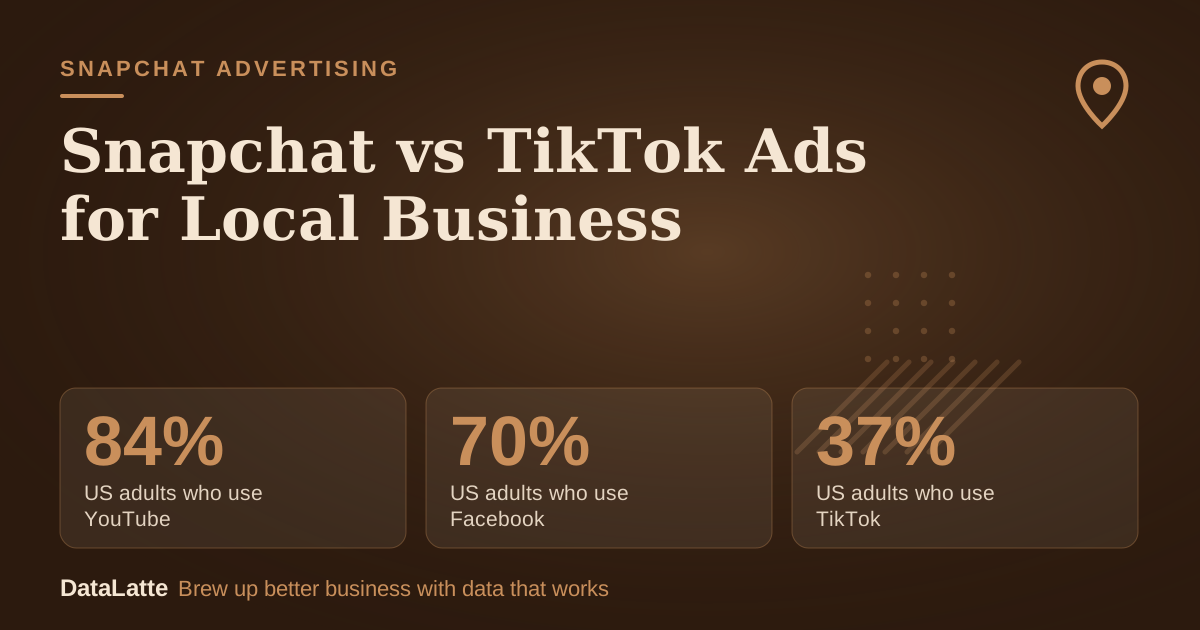
US adults who use YouTube
Pew 2026, 84% in 2025
↓
US adults who use Facebook
Pew 2026, 71% in 2025
→
US adults who use TikTok
Pew 2026, 37% in 2025
↑
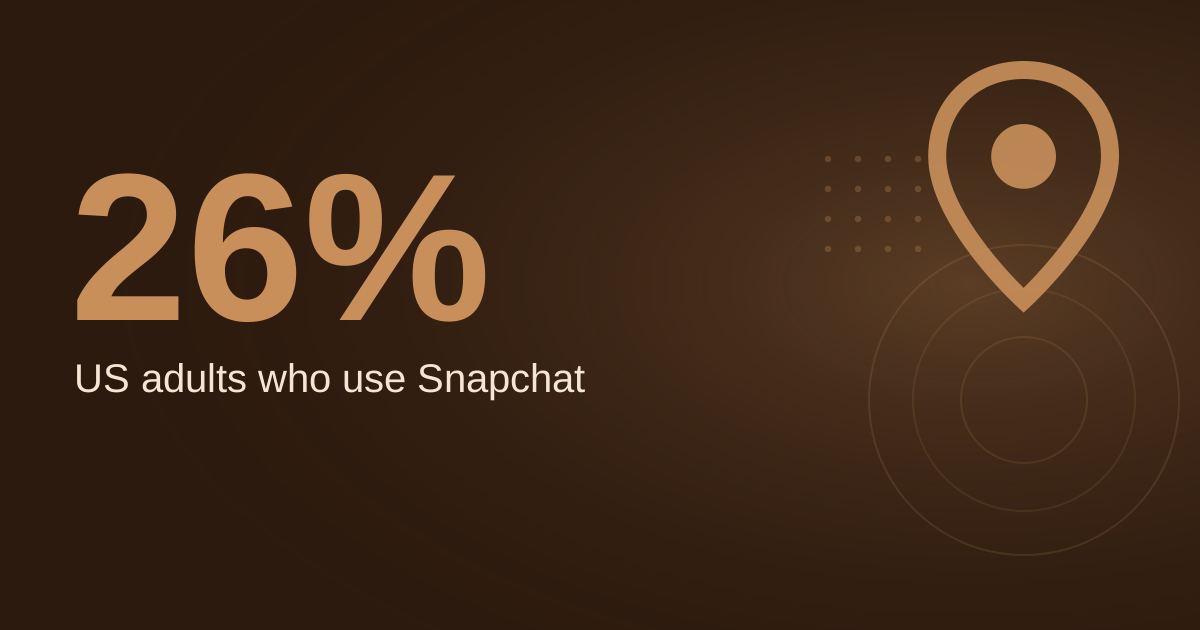
US adults who use Snapchat
Pew 2026, 25% in 2025
See Sources at the end of the article. Cards marked Assumption are examples, not results.
Pew's 2026 fact sheet measures the share of all US adults who say they ever use each platform. TikTok sits at 37%, unchanged from 2025. Snapchat rose from 25% to 26%. Facebook slipped from 71% to 70%, and Instagram is at 51% (
Pew Research Center, Americans' Use of Social Media in 2026).
These are national averages across all adults, not local figures for any one postcode. A café near a university and a groomer in a suburb will see very different mixes of age and habit. The national numbers are useful for choosing which platform to test first. Each platform should then be judged on the results it produces locally.
Meta's guidance on A/B testing offers a useful rule that applies to any platform. Each version should be shown to a separate segment of the audience so nobody sees both, and both should run on the same budget for a fair comparison (
Meta, About A/B testing for Meta Ads). Meta also warns that informal testing, such as switching ad sets on and off by hand, can create overlapping audiences and unreliable results.
The same discipline applies across platforms. Choose one offer, one landing page and one measure, such as cost per booking. Give each platform the same weekly cap. Changing the offer halfway through makes the comparison meaningless, so the offer should stay fixed for the full test window.
Pew's data puts YouTube's reach at 84%, followed by Facebook at 70% and Instagram at 51%. TikTok and Snapchat sit lower, at 37% and 26%. For a business that depends on adults who book locally, a platform with fewer users can still be the better buy if its users are the right ones. Reach is a starting filter, not a verdict.
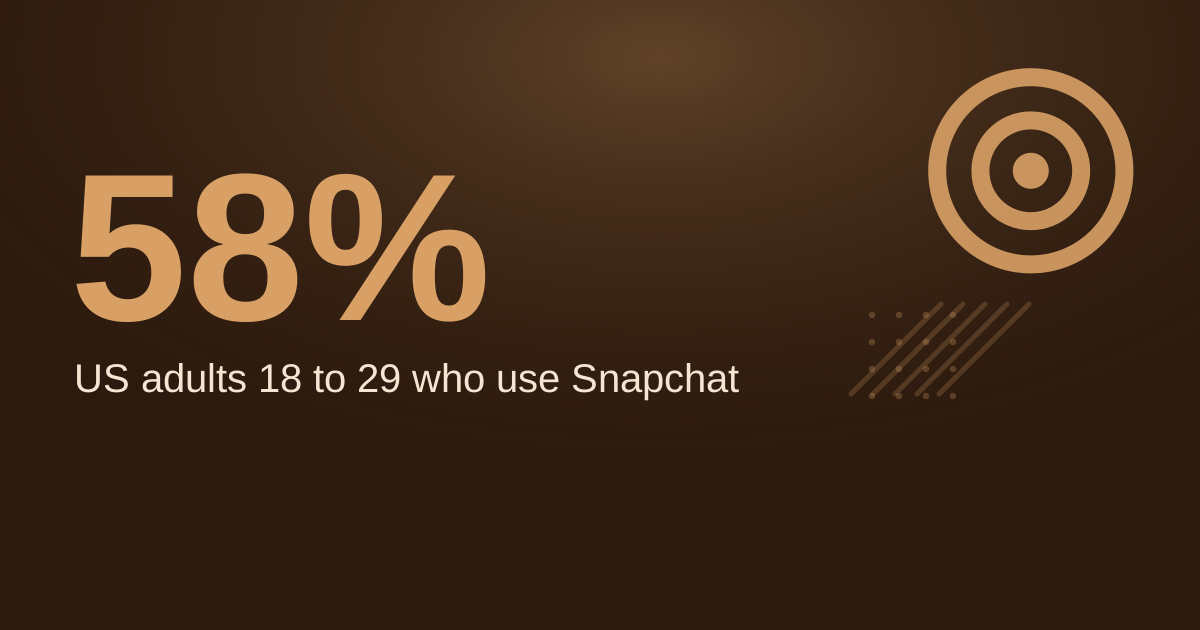
Pew's fact sheet does not break these shares down by local area or by the booking behaviour of a specific trade. Any claim about the age profile of a platform's users should be checked in the ad account itself, where the platform reports its own audience data.
What Does a 30-Day Test Need to Earn?
The numbers below are assumptions, not platform benchmarks. Suppose a salon spends $600 over 30 days on one platform, and each new booking leaves $35 in margin.
| Item | Value | Basis |
|---|
| Budget for 30 days | $600 | Assumption |
| Margin per booking | $35 | Assumption |
| Bookings to break even | 18 | $600 divided by $35, rounded up |
| Cost per booking at 18 bookings | about $33.33 | $600 divided by 18 |
If the ads send 300 clicks in that month, the salon needs about 6% of clicks to book in order to reach 18 bookings. At 1,000 clicks, the break-even rate falls to 1.8%. The business should measure its own click-to-booking rate on a free channel first, then compare each platform against that figure.
Match the platform to who books, not to who is trendy. The rules below are judgements built from the audience data above, not test results.
- Start with TikTok if customers are mostly adults who watch short video and the offer can be shown in about 15 seconds.
- Start with Snapchat if customers skew younger and can be reached near a campus or venue, then check results against margin.
- Start with Facebook or Google if customers are older or search for the service directly. The Google Local Service Ads guide covers the search side.
- Parents booking for teenagers often respond to clear prices and class times. Test the offer before testing the platform.
For a side-by-side view of two social options, see
TikTok ads vs Facebook ads for local business.
What Is Missing From This Comparison?
The source pages gathered for this rewrite did not include current budget minimums or pricing pages for either platform. Figures such as daily minimums, starter credits and location targeting rules change over time, so they are left out here rather than quoted from memory. The advertiser should check each platform's current help pages in Ads Manager before setting a budget.
The Pew figures come from a 2026 survey of US adults. They do not cover the UK, Australia or Canada, so readers in those countries should check local usage data before drawing the same conclusions.
How Do You Run the Test Step by Step?
Use this checklist to keep the test honest.
- Write one offer with a fixed price, such as a 45-minute cut for a set fee.
- Build one landing page with a booking button and a phone number.
- Set the same weekly cap on each platform, for example $150 per week.
- Track each booking to its source, using a unique link or a question at checkout.
- Run one platform for 30 days, then the other, or run both at once with separate audiences.
- Compare cost per booking against margin, and do not scale until both hold for two weeks.
Once bookings arrive, a reminder by text or email can protect the revenue the ads paid for. The guide on
SMS vs email marketing for local business explains which channel suits reminders and repeat visits.
FAQ
Is TikTok bigger than Snapchat in the US?
Yes. On Pew's 2026 measure, 37% of US adults say they use TikTok and 26% say they use Snapchat. These are shares of all adults, not of any one area's customers.
Can I decide between the two from reach alone?
No. Reach shows where to start testing. The winner is the platform with the lower cost per booking in the business's own account, compared against its margin.
How long should a test run?
Each platform should run for at least 30 days on a fixed budget, so results cover several weeks of bookings rather than a few days of spikes.
Not at the start. Running one platform for 30 days on a capped budget gives a clean result. Running both at once makes it hard to tell which platform produced each booking.
Sources
Checked on 2026-11-10.
To have a test set up and tracked properly from the start,
book a free audit. The audit reviews the offer, landing page and tracking before any budget is committed.
Free for local businesses
Want this applied to your business?
I'll review your Google presence, local SEO, and ad accounts — and send you a specific action plan within 48 hours. No pitch, no pressure.