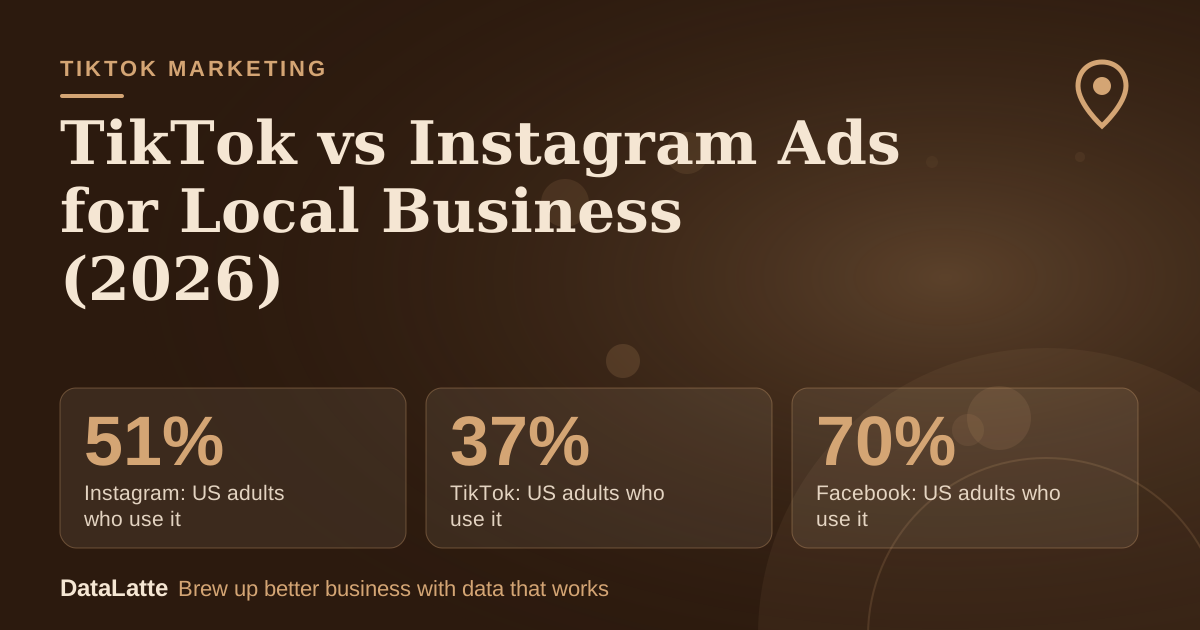
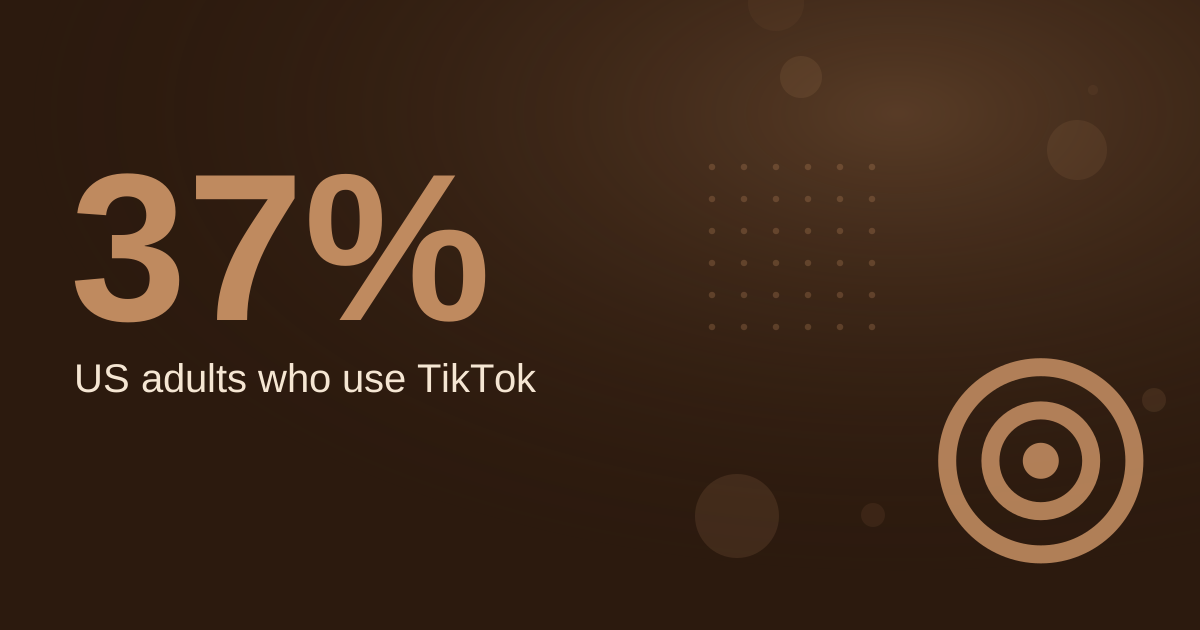
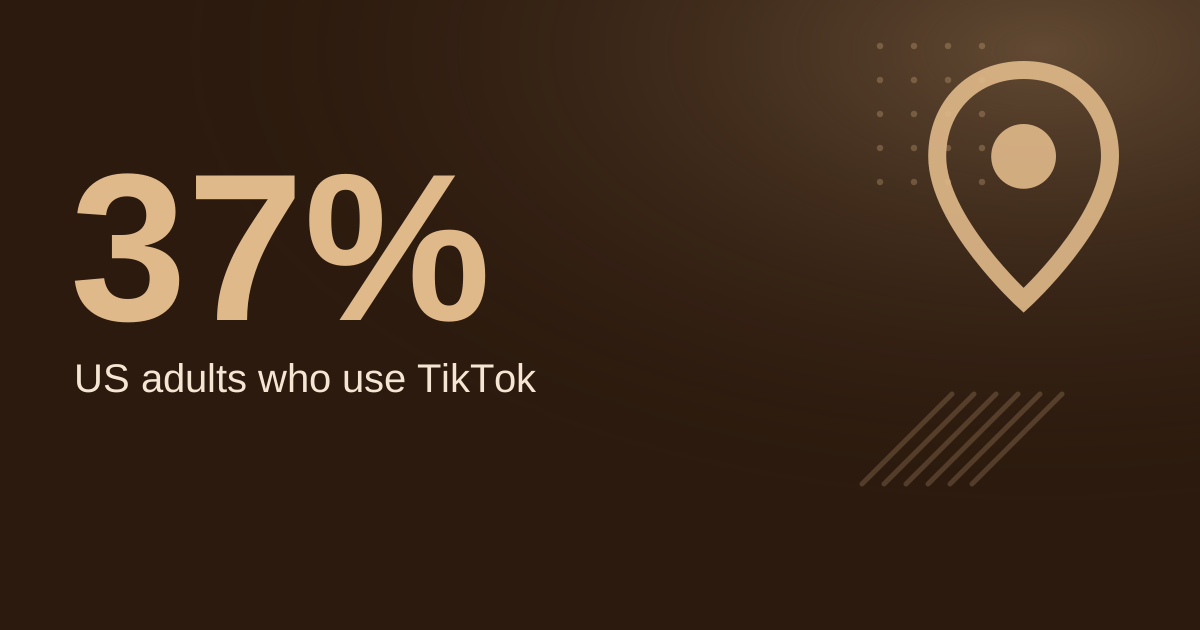
For most local businesses in the US, Instagram is the easier first paid social test. Pew Research Center's 2026 survey found 51% of U.S. adults say they use Instagram and 37% say they use TikTok. Reach is only part of the decision. TikTok asks for regular short video, and Meta recommends structured A/B tests with equal budgets rather than switching ads on and off. The sections below compare audiences, test design and a worked monthly budget with assumption-labelled inputs.
↑
Instagram: US adults who use it
Pew Research, June 2026 survey
→
TikTok: US adults who use it
Pew Research, June 2026 survey
↓
Facebook: US adults who use it
Pew Research, June 2026 survey
→
Nextdoor: US adults who use it
Pew Research, June 2026 survey
See Sources at the end of the article. Cards marked Assumption are examples, not results.
Pew's 2026 fact sheet is based on a survey of 5,511 U.S. adults, conducted January 30 to June 18, 2026, with an overall margin of error of plus or minus 1.8 percentage points. Instagram rose from 50% in 2025 to 51% in 2026. TikTok held at 37%. Facebook slipped from 71% to 70%, and YouTube remains the most widely used platform at 84%.
These are "ever use" figures for all adults, not for any one city or age group. They show where a broad audience already spends time, not whether customers in a given postcode will see your ad. For a local business, the better signal is your own customer list: which platform your past bookings and repeat customers actually use. A short survey of recent customers, asking which apps they open daily, can answer that question in a week.
Pew's figures also show Nextdoor at 18%, a platform built around neighbourhoods. If most customers live within a few kilometres, that smaller share may still be the more relevant audience. If you post across several channels, the
Hootsuite vs Sprout Social comparison for small businesses covers scheduling tools that can manage both.
Meta's help centre states that A/B testing is recommended for measuring changes or comparing two strategies, and that informal testing by turning ad sets or campaigns on and off manually is not recommended. The stated reason is that informal tests can lead to overlapping audiences and unreliable results. A proper test keeps audiences evenly split and statistically comparable.
Meta also advises using the same budget for both versions so the comparison is fair. Results are measured on a cost-per-result basis. Those rules apply within Meta's own tools, so they only cover Instagram. TikTok has its own testing options, which should be checked in its ads manager before a test starts.
A practical sequence for a local business:
- Pick one offer, such as a booking, enquiry or call.
- Set a single hypothesis, for example that a radius around the shop beats a wider city target.
- Give each platform the same monthly amount.
- Run both for the same number of weeks.
- Compare cost per booking, not views or likes.
- Keep the winner and retest one variable at a time.
What Does a Monthly Test Cost? A Worked Example
The inputs below are assumptions, not published benchmarks. Replace them with your own figures before making a decision.
Assumptions: total test budget of $600 per month, split equally at $300 per platform; average booking value of $120; cost per booking of $30 on Instagram and $45 on TikTok, both based on an assumed local salon result, not a sourced figure.
| Platform | Budget (assumption) | Cost per booking (assumption) | Bookings (calculated) | Booking value (assumption) | Revenue (calculated) | Return on spend |
|---|
| Instagram | $300 | $30 | 10.0 | $120 | $1,200 | 4.0x |
| TikTok | $300 | $45 | 6.7 | $120 | $800 | 2.7x |
On these inputs, Instagram returns more per dollar. The result changes completely if your real cost per booking is different, so the table is a template for the calculation, not a forecast. The arithmetic is simple: bookings equal budget divided by cost per booking, and return equals revenue divided by budget.
The worked example also shows why a fair split matters. Without equal budgets, a bigger spend on one platform makes the comparison meaningless. Record the actual spend and bookings each week so the final numbers can be checked against the plan.
When Does TikTok Fit a Local Business?
TikTok suits a business that can shoot short video often and whose customers already use the app. Pew's 37% figure shows it reaches a large share of adults, but not a majority. Only test it if there is capacity to keep new clips coming during the test period, because a test with three videos in four weeks tells you little about the platform.
If your business is in Australia, the
local marketing guide for Australian small businesses sets out region-specific context for choosing channels. Businesses that take bookings through messaging may also need to check how that channel fits with paid social, such as in the
WhatsApp and Meta marketing guide for Brazil.
Google Display is a further option outside social platforms. Google's help page says Display campaigns reach people across 35 million websites and apps, as well as Google-owned properties such as YouTube and Gmail. It is a different buying model, so compare it against the social test on cost per booking.
FAQ
Is TikTok or Instagram better for local business ads?
Neither platform is proven better across all local businesses. Instagram reaches 51% of US adults and TikTok 37%, according to Pew's 2026 survey. Choose based on where your customers spend time and how much video you can produce.
Use the same budget for each, run both for the same period, and compare cost per booking. Meta advises against switching ads on and off manually, because overlapping audiences make the result unreliable.
Reach tells you how many adults use a platform, not whether they will book with you. Cost per booking, measured in your own tracking, is the number that decides which platform keeps its budget.
Can I test Google Display alongside social ads?
Yes. Google's help page describes Display campaigns reaching 35 million websites and apps, plus YouTube and Gmail. Run it on the same offer and compare cost per booking with the social results.
Sources
Want a paid social test planned and tracked against cost per booking?
Book a free audit and DataLatte's team will map the budget for your offer.
Free for local businesses
Want this applied to your business?
I'll review your Google presence, local SEO, and ad accounts — and send you a specific action plan within 48 hours. No pitch, no pressure.