AI Agents for Local Business: How They Work
Part of the guide: AI & Marketing Automation
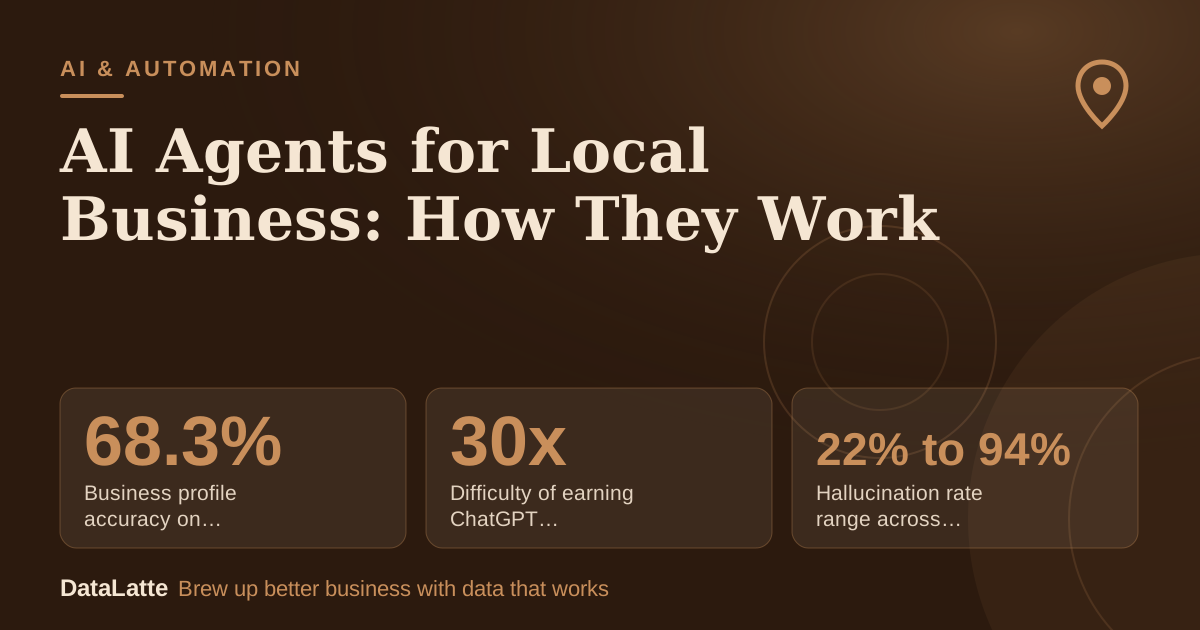
Business profile accuracy on AI platforms like ChatGPT
SOCi 2026 Local Visibility Index (primary, vendor research)
Difficulty of earning ChatGPT recommendations versus ranking highly on Google
SOCi 2026 Local Visibility Index (primary, vendor research)
Hallucination rate range across 26 frontier models tested
Stanford AI Index, cited by Hightouch (secondary)
Faster campaign development reported by teams using AI agents
MindStudio (secondary, vendor blog)
See Sources at the end of the article. Cards marked Assumption are examples, not results.
What Is the Difference Between a Workflow and an Agent?
| Workflow | Agent | |
|---|---|---|
| Who decides the steps | The rules you write | The model, within limits you set |
| Good for | Fixed tasks, such as a reminder before an appointment | Open-ended requests where steps cannot be predicted |
| Main risk | Breaks on unusual input | Errors that compound across steps, higher cost and delay |
| Testing effort | Low, every path can be checked | High, many possible paths must be tested |
What Can an AI Agent Do for a Local Business?
- Answering common questions about opening hours, services and directions
- Offering open appointment slots and adding a booking to a calendar
- Drafting replies to Google reviews for a staff member to approve
- Qualifying enquiries and passing serious ones to a person
Where Do AI Agents Fail?
What Does an Agent Save? A Worked Example
| Input | Value (assumption) |
|---|---|
| Enquiries per month | 1,000 |
| Share the agent handles without a person | 60% |
| Minutes a person spends per enquiry | 2 |
| Staff cost per hour | $20 |
| Vendor cost per handled enquiry | $0.05 |
- Enquiries handled by the agent: 1,000 × 60% = 600
- Staff minutes saved: 600 × 2 = 1,200 minutes, or 20 hours
- Staff cost saved: 20 hours × $20 = $400
- Vendor cost: 600 × $0.05 = $30
- Net monthly saving: $400 − $30 = $370
How Should a Local Business Set Up Guardrails?
- Pick one task with clear rules, such as opening hours or booking requests.
- Give the agent read access to the information it needs, and write access only to approved places.
- Load brand voice and approved claims before the agent writes anything customers will see.
- Log every action the agent takes, and review a sample each week for the first month.
- Set a hard stop, such as a maximum number of attempts before the conversation passes to a person.
- Keep refunds, complaints and anything involving money with a human.
Are Agents Worth It for Marketing Work?
FAQ
Is an AI agent the same as a chatbot?
How much does an AI agent cost?
Do I need a developer to set one up?
Can an AI agent handle complaints?
How do I know if the agent is working?
Sources
- Hightouch: How to evaluate AI agents for marketing campaign automation (secondary, cites McKinsey and Stanford AI Index)
- SOCi: AI Agents for Multi-Location Marketing: 5 Tasks You Can Fully Automate Today (primary for SOCi 2026 Local Visibility Index figures)
- MindStudio: 10 AI Agents Every Marketing Team Needs in 2026 (secondary, vendor blog with unsourced statistics)
Free for local businesses
Want this applied to your business?
I'll review your Google presence, local SEO, and ad accounts — and send you a specific action plan within 48 hours. No pitch, no pressure.
Want hands-on help?
See how DataLatte handles AI Agents & Automation for local businesses.

Local marketing strategist with 10+ years at global agencies — OMD, Dentsu, GroupM, and BBDO. Now helping small businesses get the same data-driven edge. Based in Europe, working with clients in the US, UK, Australia, and beyond.
Related articles
AI Agent vs Chatbot: Differences for Local Business
10 min read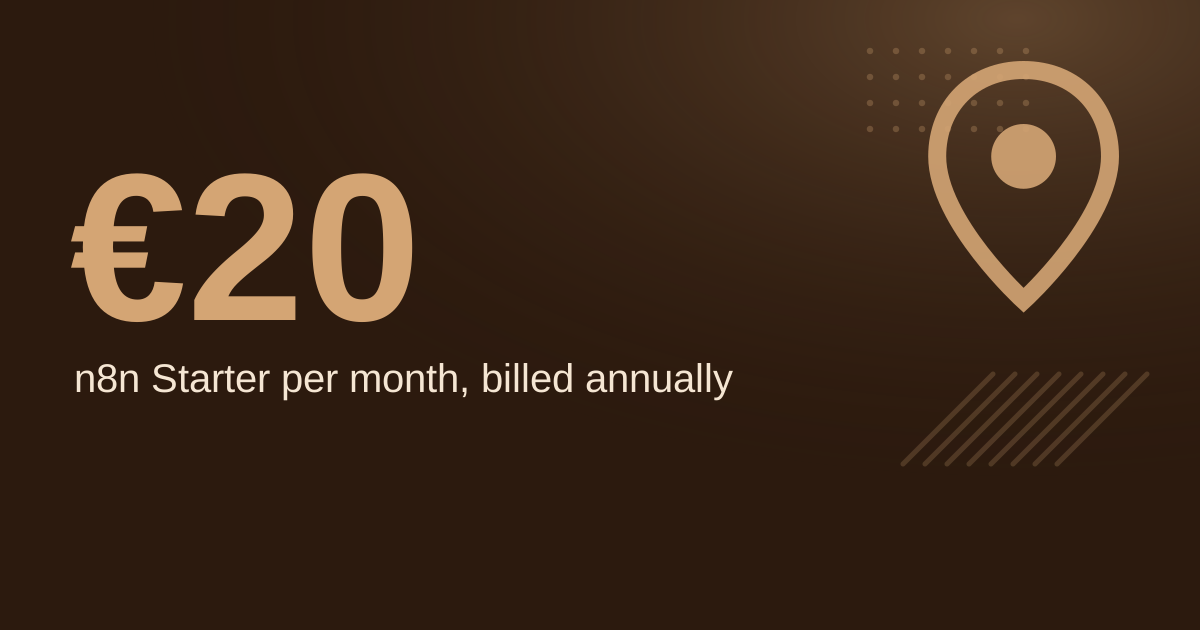
n8n Cost for Local Business: Plans and 5 Automations
7 min read
n8n AI Agent Workflow for Local Business Lead Follow-Up
9 min read
Make.com AI Agent Workflow for Local Business
9 min readWant this applied to your business?
Let's review your current marketing setup together — free, no obligations.
Get Your Free Marketing Audit