An AI chatbot can answer a fitness studio's routine questions about class times, prices, parking and cancellation rules at any hour, and offer a trial slot when nobody is at the desk. Its value is capture: a visitor who asks at 9 pm and gets a clear answer is more likely to book than one who waits until morning. A bot cannot create demand, and a wrong answer can lose a lead, so every chatbot needs a clear handoff to a person.
→
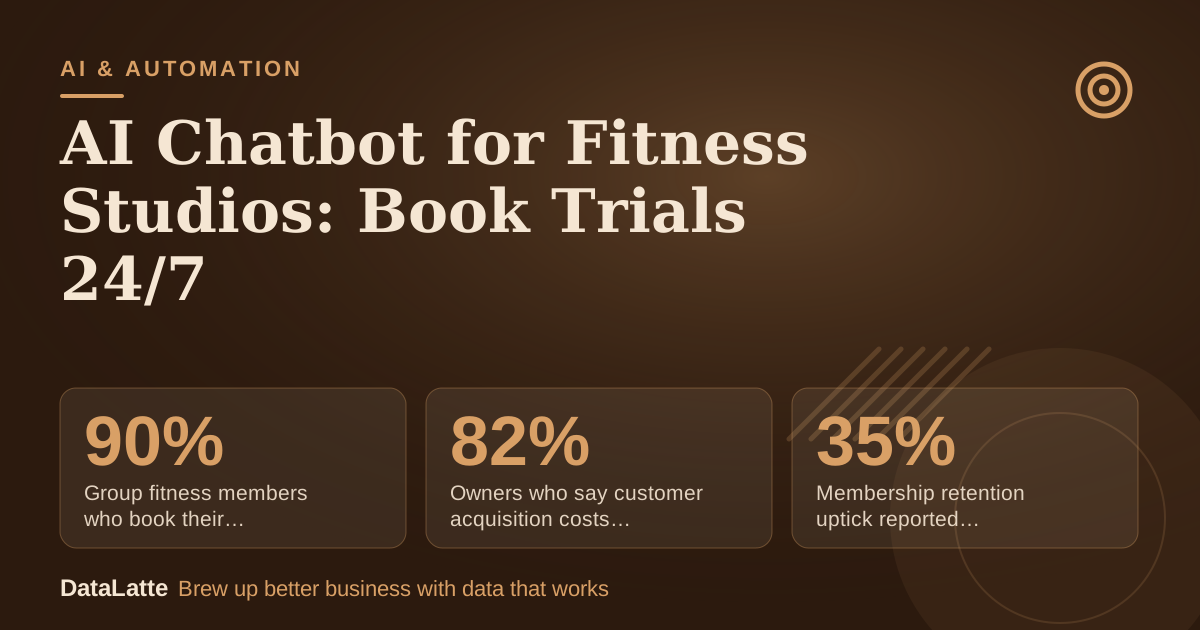
Group fitness members who book their own classes through the studio's branded app
Mariana Tek (secondary)
↑
Owners who say customer acquisition costs rose this year
Wellhub survey via Health & Fitness Association, as of 2026 (secondary)
↑
Membership retention uptick reported by FitNation after using engagement tools
Gleantap vendor report (secondary)
→
Monthly revenue many boutique studios budget for marketing
Mariana Tek (secondary)
See Sources at the end of the article. Cards marked Assumption are examples, not results.
What Should a Studio Chatbot Handle?
Keep the bot on repeat, low-risk questions: opening hours, class timetable, membership options, intro offers, location and cancellation rules. These are the questions front-desk staff answer most often, and they are easy to write down once and reuse.
The bot can also collect a name and phone number, offer trial slots and pass the chat to a person. Anything involving injuries, medical conditions, complaints or billing should go to staff straight away. A bot that guesses on these topics creates risk for both the studio and the member.
Members already expect self-service.
Mariana Tek reports that over 90 percent of group fitness members book their own classes through the studio's branded app. A visitor who asks a question online will often want to act on the answer at once, so a fast, self-service path matters.
Why Does Reply Speed Decide Trial Bookings?
Interest fades quickly. Mariana Tek advises studios to follow up within 24 hours with an automated welcome sequence, since interest fades fast after a pop-up ends (
Mariana Tek, secondary). A chatbot is the first step in that sequence. It answers while interest is high and captures the contact details a follow-up needs.
Appointy notes that Instagram and Facebook let businesses add a Book Now button to their profile, so a chat can point visitors to a booking path without a phone call (secondary). Connect the chat to the same calendar your front desk uses. Otherwise the bot will create bookings that staff cannot see.
Which Channels Should the Chatbot Cover?
Start with the channel where prospects already write. A website chat widget suits visitors who browse your site. Instagram and Facebook messages suit people who find you through social posts. Choose one primary channel for the first 60 days so you can measure the bookings it produces.
If paid social sends you the traffic, the chat flow should match the ad's promise. The guide to
Facebook ads with AI for fitness studios covers that link. The
AI marketing tools for fitness studios roundup lists other options in this category.
Adding WhatsApp later means checking that platform's current messaging rules and rates on its live pricing page. Those rates vary by market and message category, so do not rely on a figure from an older article.
Mariana Tek says many boutique studios budget between 5 and 10 percent of monthly revenue for marketing (secondary). A chatbot should fit inside that total rather than sit on top of it. Confirm the vendor's current price at signup, because list prices change and may depend on the billing period.
One
secondary guide puts paid chatbot subscriptions at about $20 a month, while the free local tools Ollama and LM Studio cost nothing. Software price is rarely the main cost, though. The Wellhub survey reported by the
Health & Fitness Association found that 82% of owners say their customer acquisition costs have increased this year, as of 2026 (secondary). Every booking that starts in a reply is therefore worth tracking.
What Does a Chatbot Need to Pay Off?
The figures below are illustrative. Every input is an assumption to replace with your own numbers.
| Input | Value |
|---|
| Chat enquiries per month (assumption) | 40 |
| Share who book a trial after a fast reply (assumption) | 10% |
| Trials booked through chat | 4 |
| Share of trials who join (assumption) | 25% |
| New members from chat per month | 1 |
| Value of one member over 3 months (assumption) | $150 |
| Chatbot tool cost per month (assumption, check live pricing) | $25 |
| Monthly value from chat | $150 |
| Net monthly result | $125 |
If enquiries fall to 10 a month at the same rates, the chat produces 0.25 members, worth $37.50, against the same $25 tool cost. The net result drops to $12.50, so the margin is thin. Track bookings that began in chat for 60 days before deciding whether to keep the plan.
How Do You Set Up a Safe Trial Flow?
A short, fixed flow is safer than an open-ended one. Use these steps:
- Greet the visitor and ask whether they want classes, prices or a trial.
- Answer from a short list of approved replies written by the studio.
- Offer two or three trial slots and take a name and phone number.
- Send the details to the front desk or booking system, then confirm by text.
- Hand the chat to a person on request, after any complaint, and for any health question.
Keep health details out of the chat entirely. The bot should not give exercise or injury advice. If your studio runs on booking software, the guide on
using Mindbody for fitness studio marketing shows how that data can support these steps.
How Do Chat Leads Become Long-Term Members?
A trial is a start, not a membership. Retention is where the revenue is.
Vertical Impression cites Accelo's research that increasing customer retention by just 5% can boost profits by 25–95% (secondary). The same guide suggests triggering a re-engagement message when members have missed 2 or more weeks of visits.
The timing matters.
Winback Engine treats gyms and fitness studios with 2–4 visits per week as lapsed after 30–60 days of inactivity (secondary). Set the reminder to fire inside that window, not after it.
Gleantap reports that FitNation, an expanding fitness chain, achieved a 35% uptick in membership retention rates by using customer engagement tools. That is a vendor claim, so treat it as directional. For renewal timing, see
New Year membership marketing for fitness studios.
FAQ
How much does a fitness studio chatbot cost?
Prices vary by vendor and plan, and some charge by conversation or by seat. Check the live pricing page at signup. One secondary guide puts paid AI chatbot subscriptions at about $20 a month.
Can a chatbot replace the front desk?
No. It answers routine questions and captures contact details. Complaints, billing issues and health questions need a person.
Can visitors book a trial from Instagram or Facebook?
Instagram and Facebook let businesses add a Book Now button to their profile, according to Appointy. Whether a chatbot can take the booking itself depends on the tool and its connection to your calendar.
How fast should a chatbot lead get a follow-up?
Mariana Tek advises following up within 24 hours with an automated welcome sequence, because interest fades quickly after a pop-up or first contact.
Should a chatbot answer health questions?
No. Route any health or injury question to a qualified person and keep health details out of the chat.
Want help mapping the chat flow to your booking system?
Book a free audit to review your current setup.
Sources
Free for local businesses
Want this applied to your business?
I'll review your Google presence, local SEO, and ad accounts — and send you a specific action plan within 48 hours. No pitch, no pressure.