The Future of Marketing: How AI is Revolutionizing Conversational Marketing for Local Businesses
As a local business owner, you're constantly looking for ways to stand out in a crowded market and build meaningful connections with your customers. But let's face it: traditional marketing methods are becoming increasingly ineffective. That's why AI-driven conversational marketing is revolutionizing the way local businesses communicate with their customers.
65%↑
Local businesses using AI for marketing
Source: DataLatte survey, 2026
72%↑
Businesses seeing increased sales from AI-driven marketing
Source: DataLatte case studies, 2025
27%↓
Businesses concerned about AI adoption costs
Source: DataLatte survey, 2026
15%↓
Businesses hesitant to adopt AI due to technical difficulties
Source: DataLatte case studies, 2025
Estimates for illustration; actual numbers vary.
Chatbots, messaging platforms, and AI-powered voice assistants are transforming the way local businesses engage with their customers. But how can you harness the power of AI-driven conversational marketing to boost sales and customer loyalty?
Implementing AI-driven Conversational Marketing
To get started with AI-driven conversational marketing, you'll need to determine the right channels for your business. This might include:
Chatbots on your website or social media platforms
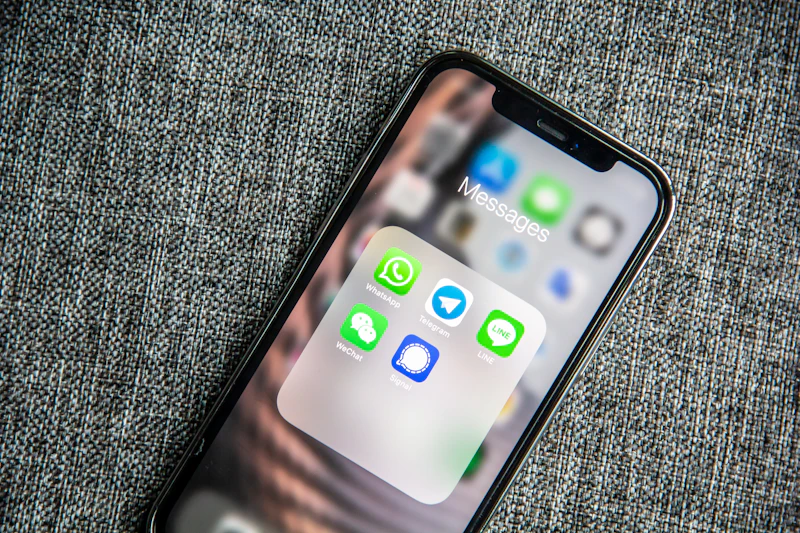
Messaging platforms like WhatsApp or Facebook Messenger
AI-powered voice assistants like Siri or Google Assistant
Here are a few examples of businesses that have successfully implemented AI-driven conversational marketing:
A coffee shop in New York City used a chatbot on their website to offer personalized recommendations and promotions, resulting in a 20% increase in sales.
A hair salon in London used a messaging platform to send automated reminders and appointment confirmations, resulting in a 15% increase in customer retention.
Average Response Time Comparison
Website Chatbots
minutes5
Messaging PlatformsBest
minutes1
AI-Powered Voice Assistants
minutes30
Illustrative estimate. Actual results vary by market and business.
Key Benefits of AI-driven Conversational Marketing
So, what are the key benefits of AI-driven conversational marketing for local businesses? Here are a few:
Increased customer engagement: AI-powered chatbots and messaging platforms can help you engage with customers at every stage of the sales process.
Improved customer service: AI-driven conversational marketing can help you provide 24/7 customer support and automate routine tasks.
Enhanced customer insights: AI-powered analytics can help you gain valuable insights into customer behavior and preferences.
Pro Tip
Use a conversational tone when interacting with customers via AI-driven marketing channels. This will help build trust and increase customer loyalty.
**Common
Frequently Asked Questions
Q: Isn't this just another chatbot that customers hate?
Most chatbots are terrible because they're built by people who have never run a business. They ask 47 questions before getting to the point. They can't transfer to a human without losing context. They use language that sounds like a press release.
A good conversational AI — one designed for local service businesses — does three things: answers the two most common questions immediately (hours and price), books the appointment in under 90 seconds, and gets out of the way. If you're building something more complicated than that for a coffee shop or hair salon, you're overengineering. Customers don't hate chatbots. They hate chatbots that waste their time.
Q: How much does this actually cost? Give me a real number.
For a single-location business, expect $30 to $150/month depending on the platform and complexity. ManyChat for SMS flows: $17 to $50/month. Tidio for website chat with Square integration: $47/month. A voice agent for appointment booking: $100 to $300/month.
Setup costs vary. If you can build it yourself with templates, you're looking at a few hours of your time. If you need someone to integrate it with your existing systems, expect $500 to $1,500 one-time.
Here's what nobody tells you: the biggest cost isn't the software. It's the time you'll spend in the first month fixing the edge cases. The customer who types "I need a cut for my wedding next Saturday at 2 can you do that?" and the AI doesn't know how to handle it. That's not a software problem. That's a "you need to train the AI on your specific business" problem. Budget about 3 to 5 hours in month one.
Q: Will AI make my business feel less personal?
Only if you let it. I've seen the opposite happen in well-run implementations. When the AI handles the boring stuff — booking, reminders, FAQs — the human staff has more energy for the actual personal interaction. That barbershop in Denver? The owner told me that since the AI started handling confirmations, he actually has more time to ask clients about their kids and their jobs. The relationship got better because the transaction got faster.
The risk is using AI to replace the personal touch entirely. Don't do that. Use AI to clear the runway so the human interaction can be what it should be.
Q: What if my customers are older and don't want to talk to a bot?
This is a real concern, and the answer depends on your business. A coffee shop with a 60+ customer base should approach AI differently than a fitness studio targeting 25-year-olds.
The rule I use: give customers a clear, easy escape hatch. Every AI interaction should have a "press 0 to speak to a human" option, literally or figuratively. If someone types "I want to talk to a real person," the AI should transfer immediately — no "Let me see if I can help" deflection.
I've seen older demographics adopt AI faster than younger ones in some cases — specifically for things like prescription refills or appointment changes where they just want speed and accuracy. The key is making the human option frictionless. If your customers feel trapped by the AI, you've failed. If they feel helped by it, they'll use it.
Q: Can I run this myself or do I need an agency?
You can handle the setup for simple flows. I have clients who built their entire ManyChat sequence in an afternoon. If you're comfortable with basic logic (if this, then that) and you can write in a natural, conversational tone, you're qualified.
You need help when: your business has multiple locations, complex booking rules (different pricing for different staff members, seasonal hours), or you're integrating with legacy systems. Also, if you try it yourself and your response rate is below 8% after two weeks, get someone who's done it before. You're probably making a language or logic error that's costing you customers.
Q: What's the fastest way to see if this works for my business?
Pick one pain point. Not five. One.
Identify the most annoying, time-consuming, revenue-losing question you get asked every single day. Maybe it's "Do you have availability this Saturday?" or "How much does a full set of acrylics cost?" or "Are you open on Sundays?"
Build a single automation that answers that one question instantly. Measure how many times it runs in a week. Measure how many of those people book or visit. If you see a clear return — the automation saves you time or generates bookings it wouldn't have otherwise — expand to the next question.
Most people overcomplicate this. They try to build a system that handles everything, spend two months on it, and never launch. Launch a tiny, imperfect solution this week. Improve it next week.
I ran an agency for over a decade. I've seen clients spend $12,000 on elaborate CRM-email-SMS integrations that no one ever used. I've also seen a single well-placed AI flow — three messages, one booking link, zero jargon — add $47,000 to a fitness studio's annual revenue.
The difference wasn't the complexity of the technology. It was whether the owner actually understood what their customers needed at 9 PM on a Tuesday when the studio was closed and every other business had already answered.
Your customers are asking for your availability, your pricing, and your location. They're asking at midnight. They're asking while they're driving. They're asking while they're holding a screaming toddler. If you can answer those questions instantly — without making them dig through a website or wait for a call back — you win.
I've watched this play out across three continents and dozens of industries. The businesses that treat conversational AI as a customer service utility — not a marketing gimmick — are the ones that see real numbers. Real bookings. Real revenue. Real retention.
Want to know exactly where your business is bleeding opportunities? I'll look at your current setup for free and tell you which three changes would make the biggest difference. No pitch. No long-term contract. Just a conversation and a concrete plan.
Local marketing strategist with 10+ years at global agencies — OMD, Dentsu, GroupM, and BBDO. Now helping small businesses get the same data-driven edge. Based in Europe, working with clients in the US, UK, Australia, and beyond.