CTV Advertising Colorado Springs CO: Local Guide 2026
July 6, 2026·Nataliia Rumiantsewa· 7 min read All posts
CTV advertising in Colorado Springs, CO means running short video ads on streaming services such as Hulu and Peacock, targeted to households by ZIP code. For a local business, the practical approach is a small four-week test, a budget built from vendor quotes, and results compared against a pre-campaign baseline. The sources used here are Google Ads search and display data, not CTV data, so a CTV buy should be tested rather than forecast from them. Every example figure below is labelled as an assumption unless a source is cited.
What Does CTV Cost in Colorado Springs?
The sources for this guide contain no CTV price data for Colorado Springs or any other market, so no CPM is quoted as a market rate. Platform and ad-tech quotes should replace any estimate. Until those quotes arrive, a planning CPM is an assumption, and the budget section below uses one.
Google's Display Network offers a reference point for online video and display reach, though it is not a CTV price list. Google states that Display campaigns can reach people across 35 million websites and apps, including YouTube and Gmail (Google Ads Help). A single-city business gains little from raw reach, so location controls matter more than the size of the network.
How Does CTV Differ from Google Ads for Local Businesses?
Search ads capture people who are already looking. CTV builds familiarity before that moment. WordStream's benchmark report, based on its own client accounts, puts the all-industry average search cost per click at $2.69 and the average display cost per click at $0.63 (WordStream, secondary). Those figures measure clicks, which a CTV ad does not produce.
The report is a vendor publication that its owner updates periodically, so check the current version before budgeting against it. For a CTV test, success should be judged on reach, recall and branded search rather than click cost. Businesses that already run search can compare CTV results against their Microsoft Advertising branded search data as well.
Which Streaming Platforms and Settings Should You Test?
Start with one platform that has a self-serve buying interface, and confirm its minimum spend in writing before committing. Adding several platforms at once makes results hard to read. Once one test shows a clear pattern, a second platform can be added with the same creative.
Set location to the actual service area, using a radius or a hand-picked list of ZIP codes where current customers live.
Choose one audience layer for the first test, such as age or household type, rather than stacking several filters.
Set frequency as an assumption to test, for example three to five exposures per household per week, and record what happens.
Schedule the ad in evening or weekend slots for the first flight, then compare a second daypart only after the first has data.
The worked example below uses three assumption-labelled inputs: a test budget, a planning CPM, and a flight length. The CPM is the figure most likely to change once real quotes arrive, so it should be replaced first. A useful habit is to write the three inputs in a spreadsheet beside each seller's quote, so that a change in one input is visible immediately.
Inputs (all assumptions): test budget $500, planning CPM $30, flight of four weeks.
For comparison only, the sourced all-industry search CPC of $2.69 would buy about 186 clicks with the same $500. Those clicks and CTV impressions are different units, so the comparison shows scale, not performance.
Scenario (assumption)
Budget
Planning CPM
Estimated impressions
Trial, 4 weeks
$500
$30
about 16,700
Core, 3 months at $750 per month
$2,250
$30
about 75,000
Seasonal burst, 6 weeks
$1,500
$30
about 50,000
Impressions are not households. One household may see the ad several times, and a planning model should account for that before reading reach as customers.
35 million→
Websites and apps in Google Display Network
Google, primary
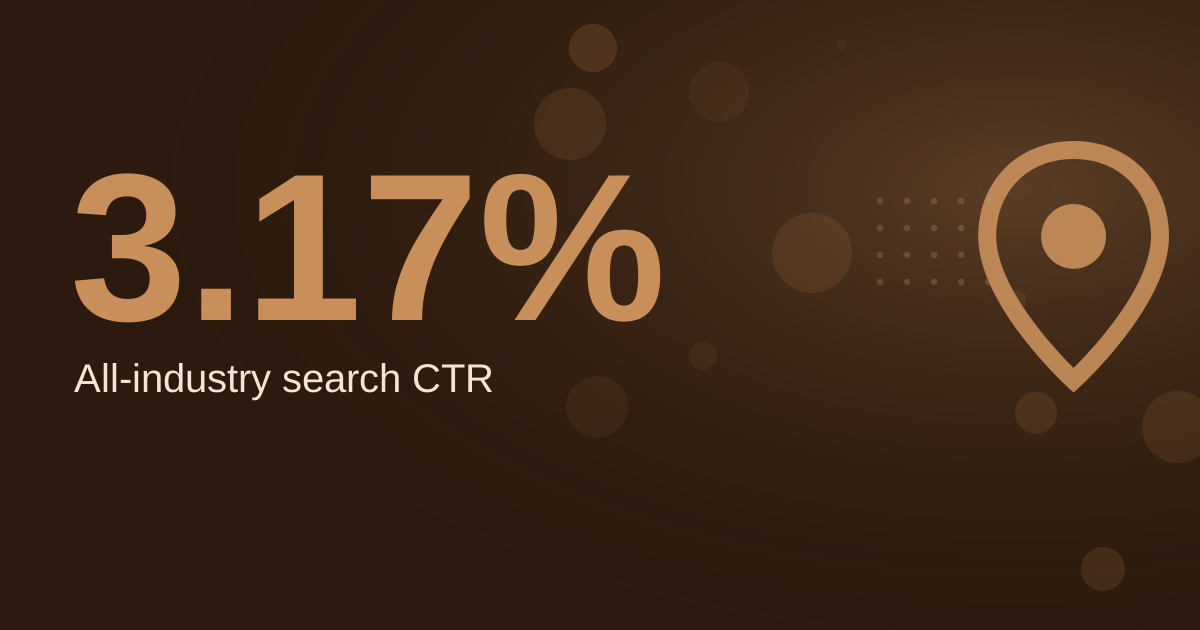
3.17%↑
All-industry search click-through rate
WordStream, secondary; search not CTV
$2.69↑
All-industry search cost per click
WordStream, secondary; search not CTV
$0.63→
All-industry display cost per click
WordStream, secondary; display not CTV
See Sources at the end of the article. Cards marked Assumption are examples, not results.
How Should You Measure CTV Results?
Measure CTV against a baseline taken in the four weeks before the flight starts. The useful signals are branded search volume, direct website visits, and the answer to "how did you hear about us?" Record all three weekly so that changes can be matched to flight dates.
Google Business Profile searches for the exact business name are also worth tracking, since a rise in those searches during a flight can signal brand recall. The sources here do not give a benchmark for how large that rise should be, so set a target as an assumption and revisit it after the first test.
Give a campaign at least several weeks before judging it. Brand familiarity builds slowly, and a four-week test shows direction, not final results.
What Is a Practical CTV Launch Checklist?
Get written minimum spend and CPM quotes from at least two sellers.
Build one 15-second creative as a planning assumption, and confirm the file specifications with the platform, since 1920×1080 landscape and a 15-second length are common settings rather than sourced requirements.
Put the brand name and location in the first two seconds, the offer in the middle, and a phone number or address at the end.
Set the ZIP-code radius, one audience layer, and a frequency cap as a starting assumption.
Log baseline metrics for four weeks before launch.
Review at week four, change one variable, and run the next flight.
Frequently Asked Questions
Is CTV advertising worth it for a small business in Colorado Springs?
The sources here do not show CTV returns for Colorado Springs or any local market, so worth depends on a specific test. A four-week trial at a set budget, measured against a baseline, is the lowest-risk way to decide.
How much money do I need to start a CTV test?
The worked example uses a $500 test budget as an assumption. Actual minimums depend on the platform, so confirm the figure with each seller before planning the budget.
Should CTV replace Google Ads?
No. Search ads capture existing demand, while CTV builds awareness. The sources compare them on different units, so CTV works best as a complement, with branded search serving as the link between the two.
Which metrics should I track first?
Start with branded search volume, direct website visits, and "how did you hear about us?" answers. Add a weekly log so each change can be matched to flight dates.
Local marketing strategist with 10+ years at global agencies — OMD, Dentsu, GroupM, and BBDO. Now helping small businesses get the same data-driven edge. Based in Europe, working with clients in the US, UK, Australia, and beyond.