CTV. OTT. Linear TV. FAST. AVOD. SVOD. The streaming advertising world is drowning in acronyms — and most explanations make them sound more complicated than they are.
Here's the plain-English version: CTV and OTT describe the same content from different angles. OTT is how the content is delivered. CTV is the device it's watched on. Understanding the distinction matters because buying CTV inventory and buying OTT inventory can be different processes with different targeting options and CPMs.
If you're a local business considering streaming TV advertising, this guide tells you exactly what you're actually buying.
OTT: The Delivery Method
OTT (Over-the-Top) refers to video content delivered over the internet, bypassing traditional cable or satellite infrastructure. The "over the top" refers to going over the top of the cable box.
Any streaming content — Netflix, Hulu, Peacock, YouTube, Tubi, Pluto TV — is OTT content. It doesn't matter what device you watch it on. Someone watching Hulu on their phone is watching OTT. Someone watching Hulu on their living room TV is also watching OTT. Same delivery method, different device.
OTT advertising means your ad is served within internet-delivered streaming content — as opposed to a traditional TV commercial break on a cable broadcast.
CTV: The Device
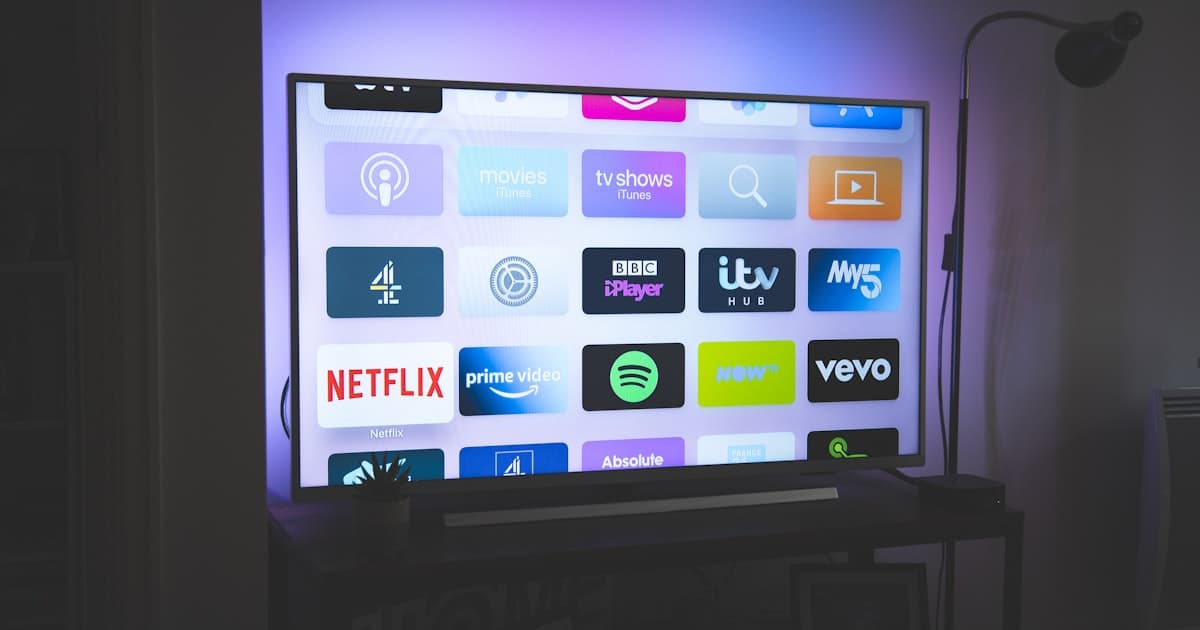
CTV (Connected TV) refers specifically to the television set connected to the internet — whether that's a smart TV with built-in streaming, a TV connected to a streaming stick (Roku, Fire TV, Chromecast), or a gaming console used for streaming.
CTV is a subset of OTT. All CTV viewing is OTT, but not all OTT viewing is CTV. When someone watches Peacock on their iPad, that's OTT but not CTV. When they watch Peacock on their 65-inch LG smart TV, that's both OTT and CTV.
Pro Tip
The distinction matters for advertisers because CTV ads appear on the living room TV screen — full-screen, lean-back, non-skippable in most cases. OTT on mobile or desktop has different viewing dynamics (smaller screen, more multitasking, sometimes skippable). CPMs for CTV placements are higher because the viewing environment commands more attention.
The Other Acronyms You'll Encounter
AVOD (Advertising-Based Video On Demand): Streaming services that are free to watch but supported by ads. Tubi, Pluto TV, Peacock's free tier, the Hulu with Ads plan. This is where advertisers buy inventory.
SVOD (Subscription Video On Demand): Streaming services paid by subscription with no ads — original Netflix model, Disney+ base tier, Apple TV+. No advertising inventory.
FAST (Free Ad-Supported Streaming Television): A specific type of AVOD featuring live linear channels (like traditional TV channels) delivered via streaming. Pluto TV's channel grid is FAST. Tubi's live channels are FAST.
Linear TV: Traditional broadcast or cable television. Scheduled programming, you watch what's on now. No on-demand. Still significant reach but declining as audiences shift to streaming.
$33.5B↑
US CTV ad market size 2026
2026 CTV ad spend
80%↑
US CTV ad market size 2026
Of CTV transactions are programmatic
2 hrs↑
US CTV ad market size 2026
Daily CTV viewing per US adult
91.5%↑
US CTV ad market size 2026
Of digital display now programmatic
Estimates for illustration; actual numbers vary.
CTV vs OTT: What You're Actually Buying When You Advertise
When an ad platform says "CTV advertising," they typically mean: your video ad delivered to a television screen, within streaming content, often non-skippable.
When they say "OTT advertising," they typically mean the broader category: your video ad delivered within internet-streamed content across all devices (TV, mobile, desktop, tablet).
In practice:
Buying CTV = targeting television screens specifically, higher CPM, maximum impact per impression
Buying OTT = buying across all streaming devices, lower average CPM, broader reach
Most platforms let you buy both under a single campaign and break out performance by device
For local businesses, the most common practical recommendation is to buy CTV when you want maximum brand impact and can afford the premium CPM. Buy OTT (across all devices) when you want to maximise reach within a budget.
CTV vs OTT: Key Advertising Differences
CTV (TV screen only)OTT (all devices)
Screen size impact
CTV (TV screen only)
95 ✓
OTT (all devices)
65
CPM range
CTV (TV screen only)
40
OTT (all devices)
75 ✓
Completion rate
CTV (TV screen only)
92 ✓
OTT (all devices)
78
Audience reach
CTV (TV screen only)
70
OTT (all devices)
90 ✓
Targeting precision
CTV (TV screen only)
72 ✓
OTT (all devices)
70
Min. budget
CTV (TV screen only)
45
OTT (all devices)
70 ✓
Illustrative estimate. Actual results vary by market and business.
The Streaming Landscape: Who's Who
Understanding which platforms fall into which category helps you buy more strategically:
Pure CTV platforms (TV-first):
Roku (device and operating system)
Amazon Fire TV
Apple TV
Samsung Smart TV (Tizen OS)
LG Smart TV (webOS)
Major AVOD streaming services (both CTV and OTT):
Hulu with Ads (Disney-owned)
Peacock (NBCUniversal)
Paramount+ Essential
Amazon Prime Video (ad-supported tier)
Max with Ads (Warner Bros. Discovery)
FAST platforms:
Tubi (Fox)
Pluto TV (Paramount)
The Roku Channel
Samsung TV Plus
Amazon Freevee
YouTube:
Straddles all categories — available on CTV, mobile, desktop; has both skippable and non-skippable formats; massive reach
How to Buy CTV and OTT Advertising
Programmatic DSPs: The Trade Desk, DV360, Amazon DSP, StackAdapt — access inventory across multiple streaming platforms simultaneously. Best for targeting flexibility and cross-platform reach measurement.
Platform-direct (self-serve): Roku's OneView, Hulu's Ad Manager, Amazon's self-serve streaming TV — buy directly from individual platforms. Simpler but limits you to one platform per campaign.
Agency with CTV specialisation: For local businesses without programmatic infrastructure, an agency handling CTV buys across platforms is often the most efficient route.
Minimum budgets:
Platform self-serve (Roku, Hulu): $500–1,000 per campaign
Programmatic via DSP: $2,000–5,000 per campaign
Managed service through agencies: $5,000–10,000+ per campaign
Don't let vendors sell you "OTT advertising" without clarifying the device mix. An "OTT campaign" that's 80% mobile and tablet is very different from one that's 80% CTV. The viewing experience, attention level, and CPM are all different. Always ask for the device breakdown in your reporting.
What the Measurement Looks Like
CTV/OTT measurement is more complex than social or search advertising because the path from ad exposure to purchase is longer and harder to track directly.
Standard metrics:
Impressions (how many times your ad was served)
Reach (unique households or devices)
Video completion rate (VCR) — typically 85–95% for non-skippable CTV
Frequency (average exposures per unique household)
Attribution metrics:
Website visits attributed to ad exposure (pixel-based or probabilistic matching)
Brand lift studies (survey-based measurement of awareness and consideration)
Store visit attribution (through location intelligence providers)
Second-screen behaviour (people searching your brand name on their phone while watching the TV ad)
The cleanest metric for local businesses: brand search lift — track Google searches for your business name during and after a CTV/OTT campaign flight. Meaningful lift is the most direct signal the campaign is working.
Frequently Asked Questions
Q: Can I run CTV ads if I only have $300 a month?
Yes, but you need to pick the right platform. YouTube CTV and Tubi accept lower minimums through self-serve or managed DSPs. Avoid Hulu at that budget. Focus on one zip code or one neighborhood. Track everything with a unique URL or promo code. You'll get smaller reach but higher relevance.
Q: Do CTV ads work for service businesses like plumbers or electricians?
They can, but the creative needs to match. Don't show a generic "we fix pipes" ad. Show a specific problem — a flooded basement — and a specific solution. A plumber in Denver ran CTV ads on Tubi with a "free inspection" offer. He tracked calls through a unique phone number. $600 in spend generated 18 phone calls, 7 of which turned into jobs averaging $450 each. $3,150 in revenue. It works if you treat it like direct response, not brand awareness.
Q: Will my ads run on Netflix or Disney+?
No. Netflix and Disney+ are subscription-based (SVOD) and do not serve ads on their base tiers. Netflix recently launched an ad-supported tier, but access is currently limited to large advertisers with six-figure commitments. This may change as the platforms open up, but for 2024, you cannot buy ads on Netflix or Disney+ as a small business.
Q: How is this different from running a Facebook video ad?
Facebook video ads run in the Facebook app on a phone. CTV ads run on a television screen. The viewing context is completely different. Someone on Facebook is scrolling and can tap to skip in 2 seconds. Someone on CTV is leaning back watching a show. CTV ads are unskippable for 15–30 seconds in many placements. The cost is higher but the attention is higher. Both can work, but they serve different parts of the funnel. Facebook is better for remarketing and retargeting. CTV is better for reaching new households.
Q: Can I target by zip code or do I have to buy the whole city?
Zip code targeting is available on most DSPs, but the platform matters. Tubi and Pluto TV offer zip-level targeting through programmatic partners. YouTube CTV offers radius targeting around a location. Hulu offers DMA-level targeting but some partners can overlay zip code restrictions. If your DSP says you can only target the entire metro area, find a different partner.
Q: Is CTV advertising just TV advertising on a different screen?
No. Traditional TV buys are done by daypart and network. You buy a 30-second spot at 6:30 PM on the local news. CTV is programmatic — you buy specific households based on data. Traditional TV cannot target "households that searched for pet grooming last week." CTV can. Traditional TV cannot stop showing ads after someone visits your website. CTV can (through frequency caps and retargeting). They're fundamentally different buying mechanisms that happen to use the same screen.
Here's what I've learned from watching small business owners test streaming ads over the last few years: the ones who succeed treat it like a direct mail campaign, not a TV commercial. They set a budget they can afford to lose, track everything to a single offer, and cut anything that doesn't produce a measurable result within 60 days. The ones who fail are the ones who run 30-second brand ads across the entire city and hope for the best.
I've made that mistake myself. I once bought CTV inventory across all of Warsaw for a client and watched $2,000 vanish into a zip code that didn't even have our target demographic. I ordered a second coffee I did not need that morning. No regrets — it taught me that geography is the most important lever in a small business CTV campaign, and most agencies skip right past it.
If you want to test streaming ads without burning money on things that don't matter, I'll walk you through exactly what to set up first. Book a free consultation
Free for local businesses
Want this applied to your business?
I'll review your Google presence, local SEO, and ad accounts — and send you a specific action plan within 48 hours. No pitch, no pressure.
Local marketing strategist with 10+ years at global agencies — OMD, Dentsu, GroupM, and BBDO. Now helping small businesses get the same data-driven edge. Based in Europe, working with clients in the US, UK, Australia, and beyond.