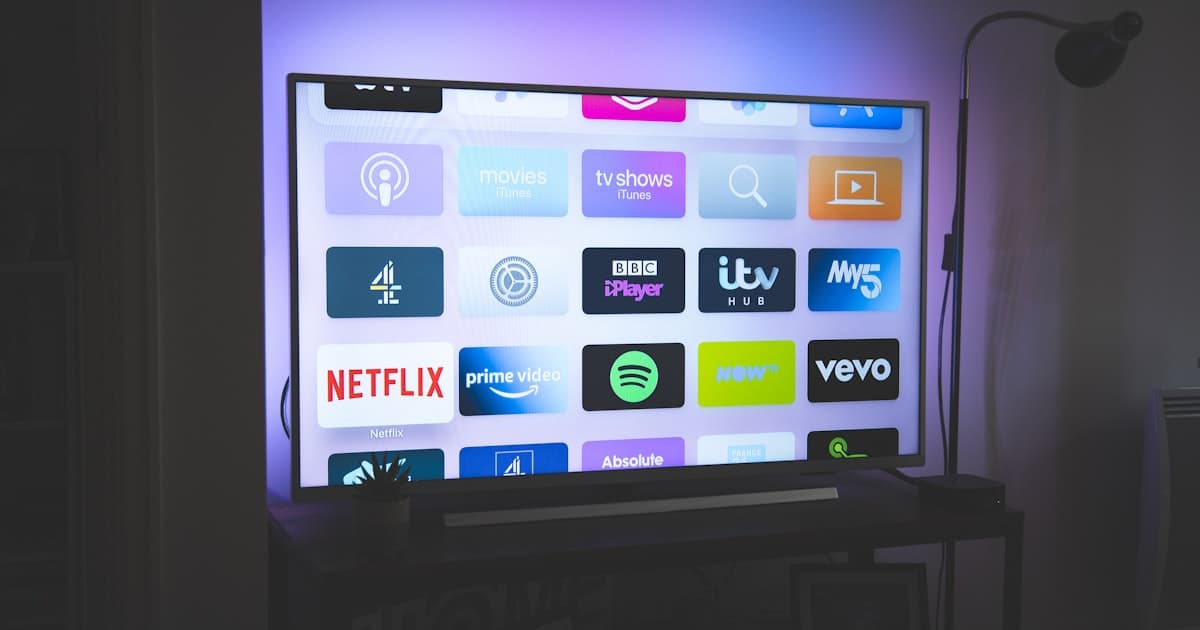
Television advertising used to require a minimum of $15,000–$50,000 just to enter the room. A 30-second local TV spot, production included, was a big-budget line item that small businesses couldn't justify.
Roku changed the calculation. With 85 million active US households streaming on Roku devices and a self-serve ad platform with minimum campaigns as low as $500, streaming TV advertising is now genuinely accessible to local businesses.
The question is whether it actually works — and for which types of local businesses the CPM and brand exposure justify the investment over more measurable channels like Google Ads or Meta.
What Roku Is and Why It Matters
Roku is the leading streaming platform in the US by active users — not a streaming service itself, but the operating system and hardware on which millions of Americans watch Netflix, Hulu, YouTube, Disney+, and hundreds of free ad-supported channels.
When someone watches anything on their Roku device — whether it's a paid subscription service or a free channel — Roku can serve ads. The platform collects viewing data across all these streams, building detailed audience profiles based on what people actually watch (not just what they claim to be interested in).
In 2026, US adults average over 2 hours of CTV viewing daily. Roku captures a significant share of that time — and can serve your business's ad directly on the living room TV.
85M↑
Roku active US households
As of 2026
2+ hrs↑
Daily CTV time per US adult
Connected TV viewing only
$15–35→
Typical CPM on Roku
Cost per 1,000 impressions
$500→
OneView minimum campaign
Entry point for self-serve
Estimates for illustration; actual numbers vary.
Roku's Advertising Products
OneView (Self-Serve Platform)
OneView is Roku's self-serve DSP — the access point for small and mid-sized businesses. You create an account, upload your video ad, set targeting parameters, and launch. No agency required.
Through OneView you can target by:
Geography: City, zip code, DMA (designated market area)
Device type: Roku TVs, Roku streaming sticks, other connected devices
Contextual: Ads served near specific types of content
The minimum campaign budget on OneView is $500, though meaningful reach typically requires $1,500–3,000/month for a local market.
Managed Service
For businesses with larger budgets ($10,000+/month), Roku offers managed service with a dedicated account team, access to premium inventory, and more advanced audience capabilities.
Roku Home Screen Ads
Ads that appear on Roku's home screen — the interface people see before selecting an app. High-visibility placement but limited to Roku's managed service.
What Type of Video Ad You Need
Every Roku ad is a video. There is no static image format. This is the primary barrier for local businesses — you need a 15 or 30-second video before you can start.
The good news: production quality requirements for streaming TV are lower than you might think. The bad news: you genuinely need a video. Static images don't work in the pre-roll and mid-roll placements Roku uses.
What works:
15-second ads perform best for brand awareness — short enough to hold attention, long enough to communicate
30-second ads work better for direct response with a specific offer
Authentic, local-feeling content often outperforms overly polished productions for small businesses
Close-up shots of your product or space with a clear verbal call-to-action
Budget-friendly production options:
Smartphone video with good lighting and an external microphone: $0–$200
Freelance video editor on Fiverr or Upwork to polish raw footage: $50–$300
Local videographer for a half-day shoot: $500–$1,500
Pro Tip
Roku ads are non-skippable in most placements. This is a significant advantage over YouTube (where 70% of users skip after 5 seconds). Your full 15 or 30 seconds reaches the viewer — which increases the value of a well-constructed script and clear CTA.
Which Local Businesses Get the Most from Roku Ads
Fitness studios and gyms: TV is an ideal format for showing the energy of your space. A 15-second clip of a class in action, with a "first class free" offer and your local address, can drive meaningful trial. Target health and fitness audiences within your geographic area.
Restaurants and cafés: Food looks incredible on TV. A 15-second sensory tour of your best dishes, ending with your address and "open until 10pm," works especially well for evening viewing when people are deciding where to eat.
Event venues and entertainment: Showing upcoming events with strong visuals builds awareness in a way that text-based digital ads can't match.
Home services (contractors, cleaners, landscapers): Streaming TV skews to homeowners with above-average household income — an ideal audience for home service businesses.
Less suitable: Pure e-commerce brands without a local presence get less value from geo-targeted TV; service businesses that rely on immediate response (plumbers needing emergency calls) may find Search Ads more efficient for direct ROI.
Roku Ads Performance Expectation by Business Type
Fitness & WellnessBest
85%
Restaurants & Cafés
82%
Home Services
75%
Beauty & Salon
70%
Retail & E-comm
60%
Service (Emergency)
35%
Estimated brand awareness lift potential (relative score, not absolute)
Setting Up a Roku Campaign: Step by Step
Step 1: Create your OneView account
Go to oneview.roku.com and register. The process is similar to Google Ads account creation.
Step 2: Upload your video creative
Accepted formats: MP4, MOV. Minimum resolution: 1920×1080 (1080p). Accepted lengths: 15 or 30 seconds. Have a 15-second and 30-second version if possible — they suit different placement types.
Step 3: Set geographic targeting
For local businesses, target by DMA (your city's designated market area) or by zip code radius. Don't run nationally — localise aggressively.
Step 4: Select audience segments
Layer audience targeting on top of geography. Roku's data includes viewing behaviour, app usage, and modelled purchase data. For a coffee shop, try "coffee drinkers" + "morning routine content viewers" + local DMA.
Step 5: Set budget and flight dates
Start with a $500–1,000 test over 2–4 weeks. Roku's dashboard shows impressions, reach (unique households), completion rate, and for connected campaigns, attributed website visits.
Roku ads are an awareness channel, not a direct response channel. Don't measure success by immediate conversions or sales. Measure brand search lift (are more people searching your name?), website traffic from organic and direct sources, and foot traffic if you can track it. Give campaigns 4–8 weeks before judging performance.
Cost Expectations and Realistic ROI
Roku's CPM for local targeting ranges $15–35 depending on targeting precision and inventory quality. A $1,000 monthly campaign reaches 28,000–65,000 unique households, each seeing your ad in a TV environment.
For comparison: a $1,000 Google Ads campaign might generate 600–900 clicks (direct response, easy to measure). A $1,000 Roku campaign generates 30,000+ brand impressions in the living room (upper-funnel awareness, harder to attribute directly).
These aren't competing — they serve different stages of the funnel. For businesses already running efficient Google and Meta Ads and looking to scale awareness, Roku fills an upper-funnel gap that digital-only channels can't serve.
Frequently Asked Questions
Q: Can I really start with only $500? Or is that just marketing fluff?
$500 is real. I've launched campaigns for that amount. You'll get roughly 15,000–20,000 impressions depending on your targeting and time of day. For a single-location coffee shop or salon, that's enough to cover a 3-mile radius for about 2–3 weeks. You won't get rich off $500, but you'll learn whether your creative works and whether your audience responds. If you can't afford $500 to test a channel, you shouldn't be testing new channels.
Q: How do I know if Roku is actually sending me customers versus people who would have found me anyway?
Track with a unique promo code. If someone walks in and says "I saw your ad on TV" — that's direct attribution. If they use a Roku-specific code — that's attribution. If they just show up and buy normally — you don't count it. This is the same problem every offline channel has. The only honest answer is: use promo codes, UTM links, and call tracking. Accept that measuring TV ads will never be as clean as measuring Google Ads. That doesn't mean TV ads don't work. It means you have to work harder to track them.
Q: Do I need to make a professional TV commercial? I don't have a video production budget.
No. I've seen ads shot on an iPhone 14 that outperformed professionally produced spots. The key is audio quality and lighting. Record yourself in your shop, talking to a customer, or demonstrating your product. Keep it under 30 seconds. Roku's platform accepts vertical and horizontal video. Spend $100 on a decent lavalier microphone and $50 on a ring light. Done. If you absolutely cannot produce video, use a photo slideshow with voiceover — Roku's creative tools support that.
Q: Will my Roku ad play on Netflix? I keep seeing ads on Netflix and I'm confused.
Roku can serve ads before and during content on its platform — including on Netflix, but only if the viewer is using a Roku device and Netflix's ad-supported plan. You cannot buy ads directly inside Netflix's ad system for less than tens of thousands per month. But if a viewer has Netflix's "Standard with Ads" plan and watches it on Roku, Roku can insert your ad into the ad breaks. This is a good thing — it means your small-budget ad can appear alongside premium content.
Q: What's the smallest reasonable geographic area I can target?
Roku lets you target individual ZIP codes. I've run campaigns targeting a single ZIP code — roughly 5,000–15,000 households depending on density. That's useful for a business that depends on a very specific neighborhood. A dry cleaner in NYC targeting just their 3-block radius ZIP code spent $400 and got 8 new regular customers in 30 days. The key is density: ZIP codes in dense urban areas work well. Rural ZIP codes with 500 households spread across 50 miles won't give you enough scale.
Q: Should I run Roku ads all year or just seasonally?
Seasonally. Roku ads build awareness but they also fatigue audiences. Run for 4–6 weeks, then pause for 6–8 weeks. The exception is if you have a constantly rotating offer — like a restaurant with weekly specials. But for most local businesses, 3–4 campaigns per year aligned with your busy seasons is the sweet spot. A hair salon in Chicago runs Roku campaigns in August (back-to-school), November (holiday party season), and February (Valentine's Day). Three campaigns, $1,500 total, covering their highest-revenue periods.
I've sat in too many agency meetings where someone presented a "streaming TV strategy" that was just a slide deck with no actual execution. Roku for local businesses is not complicated. Target your ZIP codes, keep your creative simple, track with a promo code, and pair it with Google Ads. That's it. You don't need a media agency. You don't need a production studio. You need a phone with a decent camera and $500 to test.
The businesses that make this work are the ones who treat it like a 6-week experiment, not a permanent channel. They run the test, look at the numbers honestly, and decide whether to continue based on actual attributed revenue — not impressions or view-through rates that make them feel good.
If you're thinking about trying Roku ads and want someone to look at your setup before you spend money, book a free consultation. I'll tell you whether it makes sense for your specific business, what budget to start with, and what creative will actually work. No fluff. Just the math.
If it doesn't make sense, I'll tell you that too. I've saved more clients money by telling them not to advertise than by running their campaigns.
Free for local businesses
Want this applied to your business?
I'll review your Google presence, local SEO, and ad accounts — and send you a specific action plan within 48 hours. No pitch, no pressure.
Local marketing strategist with 10+ years at global agencies — OMD, Dentsu, GroupM, and BBDO. Now helping small businesses get the same data-driven edge. Based in Europe, working with clients in the US, UK, Australia, and beyond.