In a sample of 84 Denver hair salons collected from Google Maps in October 2026, the average rating was 4.87 and the median salon had 203 reviews. Forty-six salons (about 55%) had 200 or more reviews, and only 2 had fewer than 50. A new salon should aim to sit close to that rating while building a steady stream of recent, detailed reviews. An established salon should compete on recency, detail and replies. The sections below cover the figures, the review channels that matter, and a 30-day plan.
How many Google reviews do Denver hair salons have?
The table below summarises the sample. The figures describe the listings that appeared in the Google Maps searches used for this benchmark, not an official count of every stylist, chair-renter or suite in the metro area.
| Metric | Denver hair salons (Oct 2026) |
|---|
| Salons analysed | 84 |
| Average Google rating | 4.87 |
| Median number of reviews | 203 |
| Salons with 200+ reviews | 46 (about 55%) |
| Salons with 50 to 199 reviews | 36 (about 43%) |
| Salons with fewer than 50 reviews | 2 (about 2%) |
The 50 to 199 row is what remains after subtracting the other two groups from 84 (84 minus 46 minus 2 equals 36). Many independent stylists work from shared suites or under another business name, so the real market is probably wider than any single search shows.
In a market where the average is 4.87, a 4.5 reads as a warning sign rather than a solid result. Benchmark against nearby salons in your category, not against every business on the map.
What do these numbers mean for a new hair salon?
A new salon faces a high rating bar. When most nearby salons average close to five stars, one or two lukewarm reviews on a small base stand out. Early on, each review carries more weight, so the quality of every appointment matters more than the total count.
The 200 mark is not a requirement. Over half of the salons in the sample have 200 or more reviews, but most of them built that total over years. A salon with 60 recent reviews that name specific services and stylists can still look credible to a new client.
Asking should be part of the appointment itself. The mirror reveal is the natural moment, when a client sees a finished cut or colour. Ask then, or send a text with the review link before the client leaves. Automated requests are one option, covered in the channel section below.
Reviews that name a stylist and a service, such as balayage, a men's cut or a curly cut, help future clients choose the right person. Encourage clients to describe what they had done, without scripting their words.
Finally, complete the profile. With fewer than 50 reviews, profile completeness is one of the few levers you fully control. Add service descriptions, a booking link, photos of finished work with client permission, accurate hours and the right category. The
AI for Google Business Profile optimization guide covers the fields in more detail.
What do these numbers mean for an established salon?
If you already sit above the median, you are in the majority group. A little over half of the analysed salons have 200 or more reviews, so total volume alone no longer sets you apart.
Look at your newest ten reviews. Are they recent? Do they mention services and stylists, or only "great salon"? If your review stream stalled a year ago, restart it with a steady, honest request process rather than a one-off push. A sudden spike can look unnatural, and Yelp's filtering can be triggered by spikes after a marketing campaign, so keep the pace even.
At a 4.87 market average, a handful of low reviews can pull a salon below the pack. Reply to criticism promptly and factually, and offer a fix where you can. Reply to every review, keep replies short, mention the service or stylist and sign with a real name.
If every review names one stylist, newer team members will struggle to fill their books. Encourage reviews that name each person on the team.
Which review channels should a salon focus on?
Google reviews are the core channel for a local salon because they appear next to your Business Profile in Maps and Search. The comparison below sets out the channels in this sample alongside their main rules.
| Channel | Typical cost | Incentive rule | What the sources show |
|---|
| Google reviews | Free | Do not offer a reward for a positive review | Reviews show next to the profile in Maps and Search |
| Yelp | Not stated in sources | Incentives in exchange for reviews are explicitly prohibited | Sudden spikes after a campaign can trigger filtering |
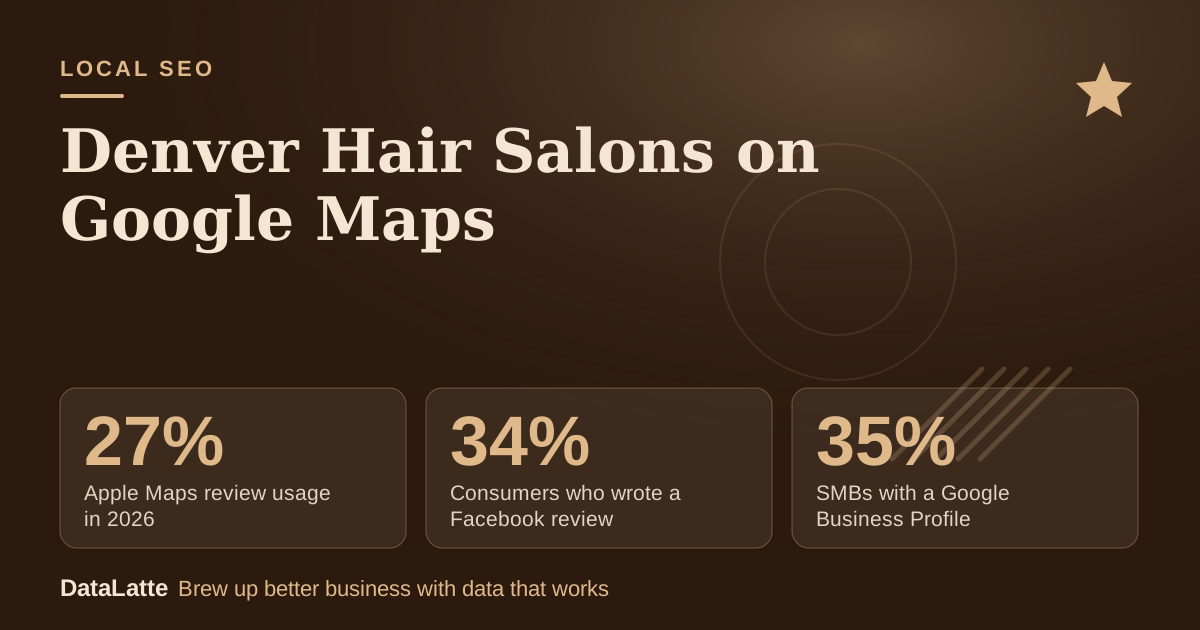
| Facebook | Not stated in sources | Not stated in sources | 34% of consumers in BrightLocal's survey wrote a review there |
| Apple Maps | Not stated in sources | Not stated in sources | Usage for reviews rose from 14% in 2025 to 27% in 2026 |
Google's own guidance confirms that businesses can ask customers for genuine reviews and share a direct review link. Booksy, a salon booking platform, says its software prompts clients to leave a review after each appointment. Check your booking or messaging tool's own help page for how to set that up.
Worked example (all inputs are assumptions): Suppose a salon completes 30 visits per week, sends a review link after each one, and 10% of clients leave a review. That gives 3 reviews per week, or about 13 per month across 4.3 weeks. At that pace, a salon starting at 60 reviews would reach about 150 after one year. The direct Google review link itself is free, so the main cost is staff time and any text messaging plan.
How do you ask for reviews without breaking the rules?
Ask every eligible client, not only the ones you expect to give five stars. Offering a discount, a free service or a contest in exchange for a review breaks Google's approach and Yelp's explicit rules. The salon guidance in the sample also advises against telling clients what to write.
Use one moment and stick to it. A simple sentence works: "If you loved the visit, a quick Google review helps the salon a lot." Send the link by text or email after the appointment, so the request is consistent. The
AI-powered email marketing guide for hair salons explains how to set up post-visit follow-ups.
Existing clients who already love the salon are often the best source of detailed reviews, because they have the most to say about their experience.
A 30-day review and Google Business Profile plan
Plan on about 30 to 45 minutes per week, plus a few seconds per client. Booksy's 30-day salon marketing roadmap starts with claiming the Google Business Profile, syncing it with booking and updating the service menu. The steps below follow that logic.
Week 1: verify ownership of the profile and confirm the name, address, phone and website match your signage and booking page. Choose the category that best describes the salon. List services with short, plain descriptions and add a booking link. Read your last 20 reviews and note what people praise.
Week 2: create your Google review link and a QR code for the station mirror. Pick the moment for the request, whether that is the mirror reveal, checkout or the post-visit text. Write a one-sentence request your team can say naturally. Reply to every review from the past 60 days.
Week 3: upload ten to fifteen photos of finished work, your space and your team, with client consent where faces are visible. Publish a Google post about a seasonal service or open slots. Google reviews each post, and it shows publicly on Search and Maps only once its status is Live. Check that your post is live before assuming clients can see it.
Week 4: count new reviews and note how many name a service or stylist. Make one change based on what worked, such as moving the QR code to a different station or automating the text request.
How do you handle an unfair Google review?
Reply politely and factually, without sharing private client details. You can report any review, but only those that violate Google's policies are eligible for removal. Google advises against reporting a review just because you disagree with it or dislike it. Review evaluation typically takes several days, so do not expect an instant result.
FAQ
How many Google reviews does a Denver hair salon need?
In the October 2026 sample, the median Denver salon had 203 reviews, and about 55% had 200 or more. That is the level you will be compared against. You do not need to match it on day one, but a steady stream of genuine, recent reviews is the goal.
What Google rating is good for a Denver hair salon?
The average across the 84 salons in the sample was 4.87. Staying close to that average keeps you in line with local expectations. A rating well below it may make you look weaker than competitors, especially with a smaller review count.
Will more reviews fill my appointment book?
More reviews help clients trust you, but they do not guarantee bookings. Availability, pricing, photos of your work, location and an easy booking process all influence who books. Treat reviews as one part of a complete profile.
Can stylists in a shared suite have their own profile?
That depends on your setup and Google's current guidelines for practitioners and shared locations. Check those guidelines before creating a second listing for the same address.
How was this Denver sample collected?
The benchmark uses Google Maps listings for hair salons in Denver, Colorado, collected in October 2026. The 84 listings are those returned by the search, not a count of every salon, stylist or suite in the city. Average rating is the mean of listed Google ratings, and median reviews is the middle review count. The 50 to 199 group and all percentages are calculated from those counts and rounded. Review counts change daily and results vary by search location, so treat these numbers as a snapshot of the sample on the collection date.
↑
Apple Maps review usage in 2026
BrightLocal survey, up from 14% in 2025
→
Consumers who wrote a Facebook review
BrightLocal 2026 survey
→
SMBs with a Google Business Profile
BrightLocal research
↑
Visit rate of engaged loyalty members
Booksy data, versus other clients
See Sources at the end of the article. Cards marked Assumption are examples, not results.
Next steps
Want to know where your salon stands against these numbers? A free audit compares your profile, review count and reply habits with the local set, and the
local SEO service covers the ongoing work.
Sources