Google Ads for Pet Groomers in Phoenix, AZ: 2026 Guide
July 1, 2026·Nataliia Rumiantsewa· 6 min read All posts
Google Ads can book more grooming appointments for a Phoenix pet groomer when the campaign targets "near me" searches, a tight service area and booking as the main conversion. Vendor benchmarks put dog groomer clicks at about $2 to $8, and most advertisers in the niche spend roughly $800 to $5,000 per month. The sections below turn those ranges into a budget, a keyword list and a tracking setup. The benchmarks are national vendor figures, so check live Google Ads data for your own service area.
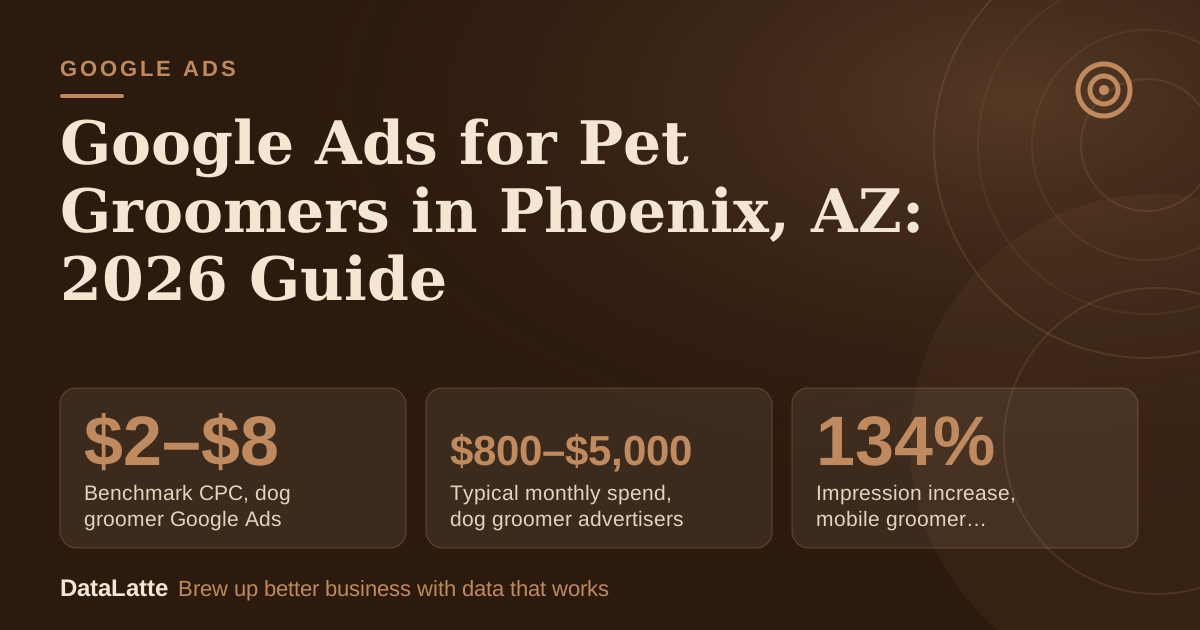
$2–$8→
Benchmark CPC, dog groomer Google Ads
Vendor benchmark (AdTurbo)
Assumption
$800–$5,000→
Typical monthly spend, dog groomer advertisers
Vendor estimate (AdTurbo)
134%↑
Impression increase, mobile groomer case study
Vs prior 6 months, 2023 case (Marketing 360)
500+→
Groomer negative keywords in vendor list
Vendor claim (GroomerGenie)
See Sources at the end of the article. Cards marked Assumption are examples, not results.
What does a pet groomer pay per click on Google Ads?
Cost per click sets the budget more than any other number. AdTurbo's dog groomer Google Ads page gives a benchmark of $2–$8 for dog groomer clicks and warns that a few wasted clicks add up fast. The same page says most dog groomer advertisers spend around $800–$5,000 per month. Both figures come from a vendor selling Google Ads management, so use them as a planning range rather than a promise.
Cost per click also depends on how specific the phrase is. seoplus+ states that a localized phrase such as "coffee shop downtown Phoenix" is likely to have less competition than a generic term like "coffee shop", which can lead to a lower cost per click. That example is from a different business type, so test the same pattern with your own keywords in Google Ads before relying on it.
Which keywords should a Phoenix pet groomer bid on?
AdTurbo lists "dog groomer near me", "dog grooming near me" and "puppy grooming near me" as keywords worth bidding on. These searches come from people who already want a grooming appointment and are choosing between nearby options, which is why they tend to sit closer to a booking than broad awareness terms. The table below groups them by job, with a city-based variant added as a test.
Keyword type
Example
Why it fits
"Near me" service
dog groomer near me
Matches a local searcher who wants to book now
Age-specific
puppy grooming near me
Reaches owners of young dogs who need a first appointment
Service plus city
dog grooming Phoenix
Adds local intent; test it against the near-me terms
The city-based row is a suggestion from this guide, not a sourced search volume figure. Keep it in a separate ad group so its cost per booking can be compared with the near-me terms.
How much online demand do mobile and fixed groomers see from ads?
A Marketing 360 case study describes a mobile pet groomer that advertised on Facebook and Google. Compared with the previous six months, the case reports a 134% increase in impressions and a 696% increase in clicks. It is one business, measured in 2023, and the results are vendor-reported, so treat them as an example of what a well-run campaign can show, not a forecast for your shop.
For the Facebook side of a mixed plan, Barklead's guide suggests targeting users within a 10–15 mile radius of the groomer. That is a starting point for Facebook, not a Google Ads rule. Google Ads radius settings should be tested against your actual travel-time limits. For the organic side of the same market, see local SEO for pet groomers in Phoenix, AZ.
Worked example: does a $1,000 month pay back?
The inputs below are assumptions, except that the CPC sits inside the $2–$8 benchmark range.
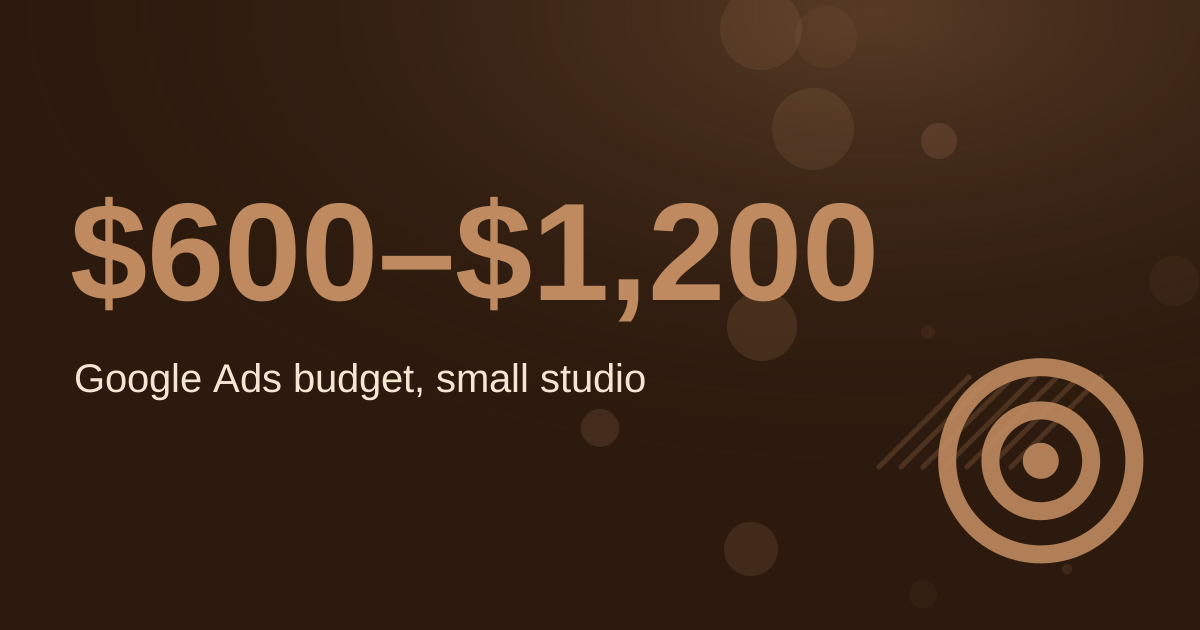
Monthly budget: $1,000 (assumption)
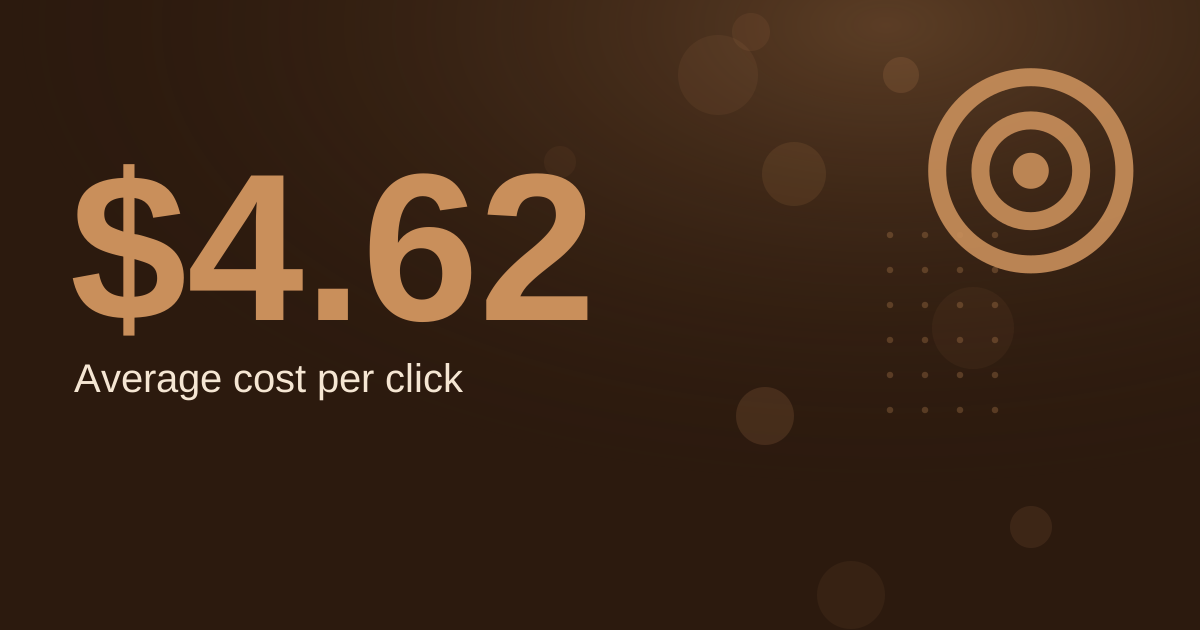
Average CPC: $5 (assumption, within the $2–$8 benchmark)
At $8 CPC the same budget gives 125 clicks, about 6.25 bookings, $750 in revenue and a return of 0.75. The gap between those two results comes entirely from cost per click, which is why keyword and negative list work matters before scaling. Revenue is not profit, so subtract product, labour and payment fees before judging the month.
How do you keep wasted clicks out of the budget?
Negative keywords stop ads from showing for searches that rarely turn into bookings. Start with job-related terms such as "jobs", "hiring" and "pet groomer salary", DIY and training terms such as "how to" and "course", and any city names outside your service area. GroomerGenie states that its proprietary list contains more than 500 groomer negatives. That is a vendor claim, and a shorter list built from your own search terms report is usually easier to maintain.
Review the search terms report weekly during the first two months. Add any irrelevant query as a negative and note which terms produce bookings. That record is more useful than a generic list because it reflects your own service area and prices.
Step checklist for launching a pet groomer campaign
Set a booked appointment as the primary conversion, as AdTurbo recommends for dog groomer campaigns.
Build the negative keyword list before the first ad goes live.
Group near-me terms and service-plus-city terms into separate ad groups.
Set the daily budget from the worked example, starting at the low end of the $800–$5,000 monthly range.
Review the search terms report every week for the first 60 days, and move winning terms to exact or phrase match.
Compare cost per booking, not cost per click, before changing budget.
Tracking bookings, not just clicks
Tracking is what tells you whether the budget is working. Measure booking form completions and phone calls from the ads, since a booked appointment is the conversion that pays for the campaign. Direction requests and contact page clicks can be tracked as secondary signals. For a simple reporting setup that pulls these numbers into one view, see AI-driven local SEO reports with Google Data Studio.
Demand is not flat through the year. AdWave notes that November and December are traditionally a very busy time for groomers, sometimes too busy. Plan the budget around that peak: if your calendar fills early, lower the daily budget or pause the ads rather than paying for bookings you cannot take. Check your own booking history for the same pattern before changing the budget.
Frequently Asked Questions
How much should a pet groomer in Phoenix spend on Google Ads?
Vendor data puts most dog groomer advertisers at $800–$5,000 a month. Start at the low end of that range, then scale based on cost per booking from your own tracking.
Is a $2–$8 cost per click realistic?
It is a vendor benchmark for dog groomer clicks. Your actual cost per click depends on keywords, service area and competition, so check live bids in Google Ads before setting the budget.
How long does it take to see bookings from Google Ads?
No reliable timeline is sourced here. Judge the campaign after it has produced enough clicks and conversions to compare cost per booking, and avoid changing settings every few days.
Should a pet groomer run Facebook ads as well as Google Ads?
A 2023 case study used both channels, and Barklead suggests a 10–15 mile Facebook radius as a starting point. Give each channel its own budget and tracking so you can see which one produces bookings.
Want help setting up Google Ads for your grooming business?
DataLatte builds and manages Google Ads campaigns for small local businesses. Explore Google Ads management or request a free audit of your current account.
Free for local businesses
Want this applied to your business?
I'll review your Google presence, local SEO, and ad accounts — and send you a specific action plan within 48 hours. No pitch, no pressure.
Local marketing strategist with 10+ years at global agencies — OMD, Dentsu, GroupM, and BBDO. Now helping small businesses get the same data-driven edge. Based in Europe, working with clients in the US, UK, Australia, and beyond.