Google Ads for Swim Schools: Fill Lessons (2026)
Part of the guide: Google Ads
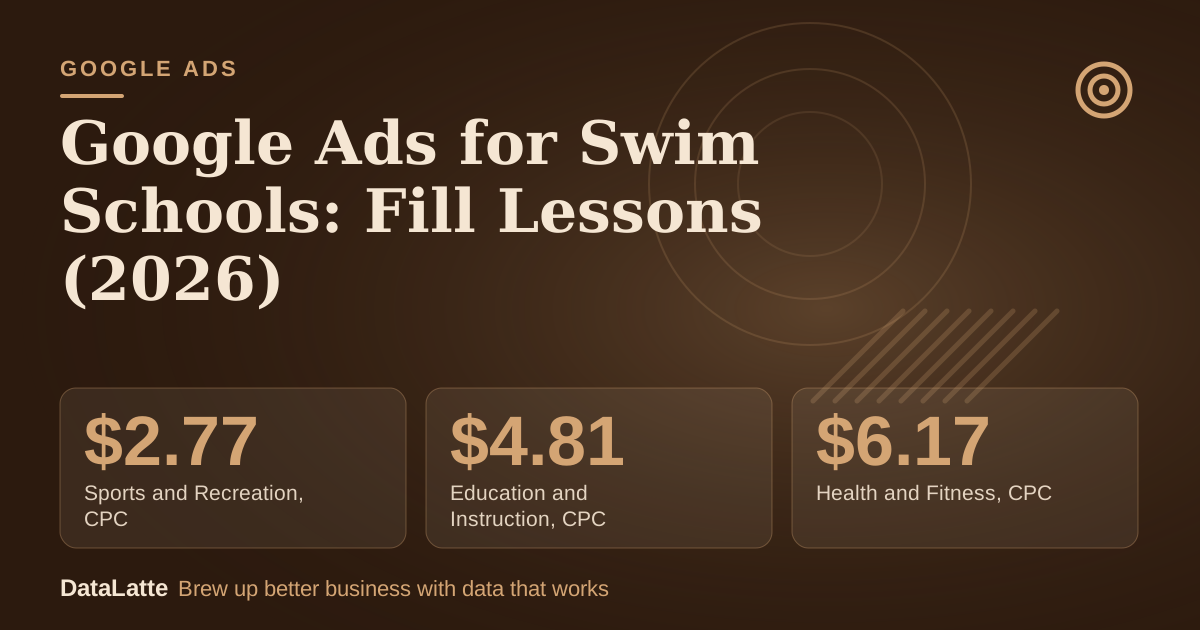
Sports and Recreation, CPC
LocaliQ 2026
Education and Instruction, CPC
LocaliQ 2026
Health and Fitness, CPC
LocaliQ 2026
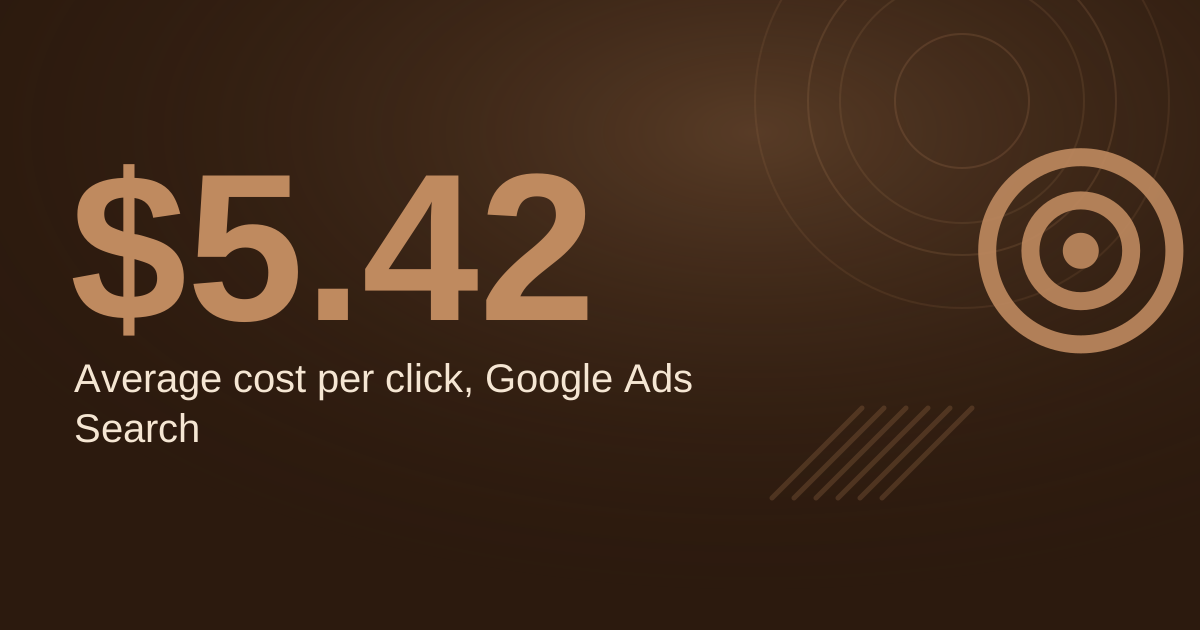
All industries, CPC
LocaliQ 2026
See Sources at the end of the article. Cards marked Assumption are examples, not results.
Education and Instruction has the highest conversion rate among the closest categories, but it is not a swim school figure
Sports and Recreation converts at 7.69% and Health and Fitness at 6.94%; the all-industry Google Ads average is 8.18%.
WordStream by LocaliQ, 2026 search advertising benchmarks, checked 3 November 2026
Average cost per click, closest LocaliQ categories (USD)
LocaliQ 2026 US search advertising benchmarks. No swim school row is published.
Why Does Peak Season Cost More Per Family?
| Off-season, $500 | Peak, same $500 | Peak, $800 | |
|---|---|---|---|
| Cost per click (assumed) | $2.50 | $4.00 | $4.00 |
| Clicks | 200 | 125 | 200 |
| Enquiries (5%) | 10 | 6.25 | 10 |
| Families enrolled (50%) | 5 | 3.1 | 5 |
| Cost per enrolled family | $100 | $160 | $160 |
| Lifetime value of families | $2,800 | $1,750 | $2,800 |
Why Do Google Ads Work for Swim Schools?
How Should You Split Seasonal Campaigns?
- Raise daily budgets a few weeks before demand climbs.
- Target "summer swim lessons", "kids swim classes [city]" and "swim camp".
- Add a bid adjustment for mobile, since parents often search on phones.
- Lower budgets and use tighter keywords: "indoor heated pool swim lessons", "winter swim classes toddlers", "adult swim lessons indoors".
- Lead with winter benefits: warm indoor pool, small classes, year-round enrollment.
- Check when calls and bookings actually arrive (often weekday evenings and weekends for parents) and weight budget toward those windows.
Which Keywords Should a Swim School Use?
| Theme | Keyword ideas |
|---|---|
| General local | swim lessons near me, swim school [city], swimming classes [city] |
| By age | baby swim classes, toddler swim lessons, kids swim lessons, adult swim lessons |
| By level | beginner swim lessons, learn to swim, stroke development |
| By setting | indoor swim lessons, heated pool lessons, private swim lessons |
| Seasonal | summer swim lessons, swim camp, winter swim classes |
Should a Swim School Use Remarketing?
- Install the Google Ads tag on your site, or ask your marketer to.
- Create lists for all visitors and for people who reached your booking page but did not finish.
- Run a small campaign with a clear offer, such as "Still thinking about swim lessons? Book a free trial class this week" (only if you offer one).
- Use frequency capping to avoid ad fatigue.
Which Ad Assets Help Parents Act?
- Call assets: parents want to ask about levels and availability. Make sure someone answers during the hours your ads run.
- Location assets: promote your address so nearby parents can call, visit or find you.
- Sitelinks: link to schedule, pricing, free trial and instructor pages.
- Structured snippets and callouts: indoor pool, small class sizes, certified instructors, age ranges. Only what is true.
What Should the Landing Page and Tracking Include?
- Send clicks to a page that matches the search (a "baby swim classes" page, not the homepage).
- Show age groups, schedule, price, location, safety information and one clear booking or enquiry button.
- Track phone calls (with a minimum call length), form submissions and booking-software enrollments as conversions.
How Do You Size the Budget?
What Should You Do Before You Launch?
- Work out your lifetime value per family: monthly price x months they stay.
- Pull your enquiry and enrollment counts for the last 3 months. That gives you your own two rates.
- Open Keyword Planner and write down the click estimate for "swim lessons near me" and "baby swim classes".
- Build one landing page per age group, with price and level on it.
- Add the 7 negative keywords above before spending a dollar.
- Call your own tracking number once to confirm it rings and is recorded.
- Schedule a review at day 60 and day 90. Do not touch budgets in week one.
What Mistakes Waste Budget?
- One campaign all year. Separate peak and off-season campaigns give you control.
- No negative keywords. Job and informational searches waste budget.
- No call or enrollment tracking. Without it you are guessing.
- A weak landing page. Parents leave when they cannot see levels, price and how to book.
- Judging too early. Give it a few weeks of data before big changes.
FAQ
Sources
- WordStream by LocaliQ: 2026 search advertising benchmarks (industry averages, nearest categories)
- Use Keyword Planner (Google Ads Help)
- Create an audience segment that includes your website visitors (Google Ads Help)
- About assets (Google Ads Help)
Related Articles
- Marketing for Kids' Activities Businesses
- Google Ads for Yoga Studios: Complete 2026 Guide
- Local Marketing Budget Guide
Related guides
- Google Ads for Massage Therapists: Cost Per Client
- Google Ads for Mental Health Professionals: Costs
- Google Ads for Storage Facilities: Budget and Setup
- Google Ads for Pet Insurance: Budget and Compliance
- Google Ads for Pest Control: CPC and Budget Plan
- Google Ads for St. Louis Fitness Studios: 2026 Guide
- Google Ads for Coffee Shops in Phoenix, AZ: 2026 Guide
- Google Ads for Teeth Whitening: Cost and Rules
- How to Choose a Google Ads Agency (Local Business)
Free for local businesses
Want this applied to your business?
I'll review your Google presence, local SEO, and ad accounts — and send you a specific action plan within 48 hours. No pitch, no pressure.
Want hands-on help?
See how DataLatte handles Google Ads Management for local businesses.

Local marketing strategist with 10+ years at global agencies — OMD, Dentsu, GroupM, and BBDO. Now helping small businesses get the same data-driven edge. Based in Europe, working with clients in the US, UK, Australia, and beyond.

Want this applied to your business?
Let's review your current marketing setup together — free, no obligations.
Get Your Free Marketing Audit