Guerrilla marketing for a local business means low-spend promotion that stands out in everyday places: flyers, neighbourhood handouts and short offers people can act on right away. The sources below focus on flyers, because they are the most common low-cost format. Before printing, check six things: message, timing, audience, distribution method, distribution team and targeting. Confirm permission before handing out or hanging anything. Then add a call to action and a way to track responses. The worked example uses assumed inputs so you can test the numbers with your own quotes.
→
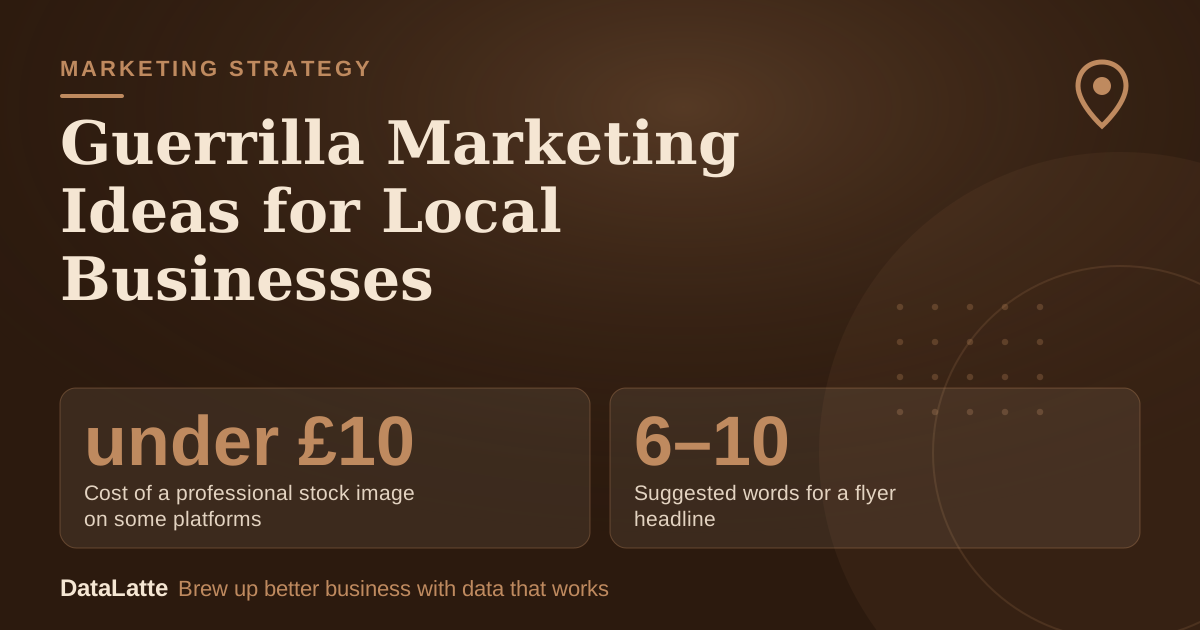
Cost of a professional stock image on some platforms
DoxZoo, 2022 (vendor)
→
Suggested words for a flyer headline
AlphaGraphics, 2024 (vendor)
Assumption→
Cost per new customer, scenario A
Worked example (assumption)
Assumption→
Cost per new customer, scenario B
Worked example (assumption)
See Sources at the end of the article. Cards marked Assumption are examples, not results.
What Is Guerrilla Marketing for a Local Business?
For a local business, guerrilla marketing is a small, creative push aimed at people nearby. Flyers are a common example. AlphaGraphics describes a flyer as a mini-billboard that grabs attention and conveys a message clearly and concisely (
AlphaGraphics). DoxZoo notes that flyers and company brochures remain necessary and popular even in digital times (
DoxZoo).
The practical question is not whether a flyer works in theory. It is whether the flyer reaches the right people, in a place where distribution is allowed, with a clear reason to respond. The sections below cover each of those points in order.
Which Six Checks Come Before You Print?
Marq's distribution guide lists six issues to settle before handing out flyers: message, timing, audience, distribution method, distribution team and targeting (
Marq). Work through them in sequence, because each one changes the size of the print run.
Start with the message. Most flyers are announcements, such as a new service, an opening or an event. Marq points out that once hundreds of copies are printed, there is no going back, so approve the design first. Then check timing. Paper does not last long outdoors, and weather can shorten a flyer's life. Holidays such as Halloween and Christmas also crowd noticeboards with decorations.
Audience comes next. Handing flyers to random passers-by is less useful than handing them to people likely to buy. Marq notes that a flyer aimed at the wrong group may end up in the bin, so define the audience before choosing the location.
How Should a Flyer Look to Get Noticed?
Keep the headline short. AlphaGraphics suggests 6 to 10 words that are easy to read, with strong verbs such as "discover" and "save", and a question where it fits (
AlphaGraphics). Use a colour that stands out. DoxZoo advises against a colour that blends in, and notes that even calm sectors can add a contrasting accent (
DoxZoo).
Size and paper matter as well. DoxZoo describes A5 as a popular format that holds the information well and is less likely to get lost in the post. It also suggests slightly thicker paper, such as postcard stock, to attract more attention (
DoxZoo). Leave whitespace around key details, since empty space draws the eye to them.
Stock images can be inexpensive. DoxZoo notes that professional images on platforms such as Shutterstock and Adobe Stock can cost under £10 (
DoxZoo). Check each licence before use. Proofread on screen and in print, and ask someone else to read the flyer too, because AlphaGraphics notes that one typo can undermine the whole message.
Where Can You Put Flyers Without Trouble?
Permission is the rule most often broken. Marq lists who to ask: parks have maintenance staff, neighbourhoods may have soliciting policies, storefronts and cafés have managers, and schools have approval forms (
Marq). Ask before you start, not after a complaint.
Some places already run a system. Marq points to college campuses and laundromats that have corkboards for flyers and local ads. If other flyers are already displayed in a shop window, the owner may be open to one more. For public property, check your local council or city rules before hanging anything, because the rules differ from place to place.
Distribution method also changes the plan. Marq lists hanging flyers in community areas, handing them out directly, keeping a stack in a high-traffic spot and delivering door-to-door. Each method needs a different number of flyers and a different amount of time. For a small team, a stack at a partner's counter is often easier to manage than door-to-door work. Partnerships work best when each offer is tracked, and the
Australia local marketing guide covers how to adapt local promotions to regional rules.
How Do You Track Whether a Flyer Works?
A flyer without a response path is hard to measure. DoxZoo recommends a clear call to action, such as "Contact us now for your no obligation quote!", and says advertising without one is significantly less effective (
DoxZoo). Include phone, email, website and social media details, so people can reply in the way that suits them.
DoxZoo also suggests QR codes, which link to a page, video or document when scanned (
DoxZoo). Send each QR code or web address to a different landing page or promotion code, so you can see which flyer produced which enquiry. A time-limited offer helps keep responses coming in for a set period (
DoxZoo). If you run follow-up social posts for the offer, a
scheduling tool comparison can help you pick one that suits a small team.
What Does a Flyer Test Cost? A Worked Example
The inputs below are assumptions. Replace them with your own quotes and results.
| Input | Scenario A | Scenario B |
|---|
| Flyers printed (A5) | 500 (assumption) | 500 (assumption) |
| Print cost | $150 (assumption) | $150 (assumption) |
| Owner time to distribute | 10 hours, not costed (assumption) | 10 hours, not costed (assumption) |
| Redemptions with tracked code | 15 (assumption) | 5 (assumption) |
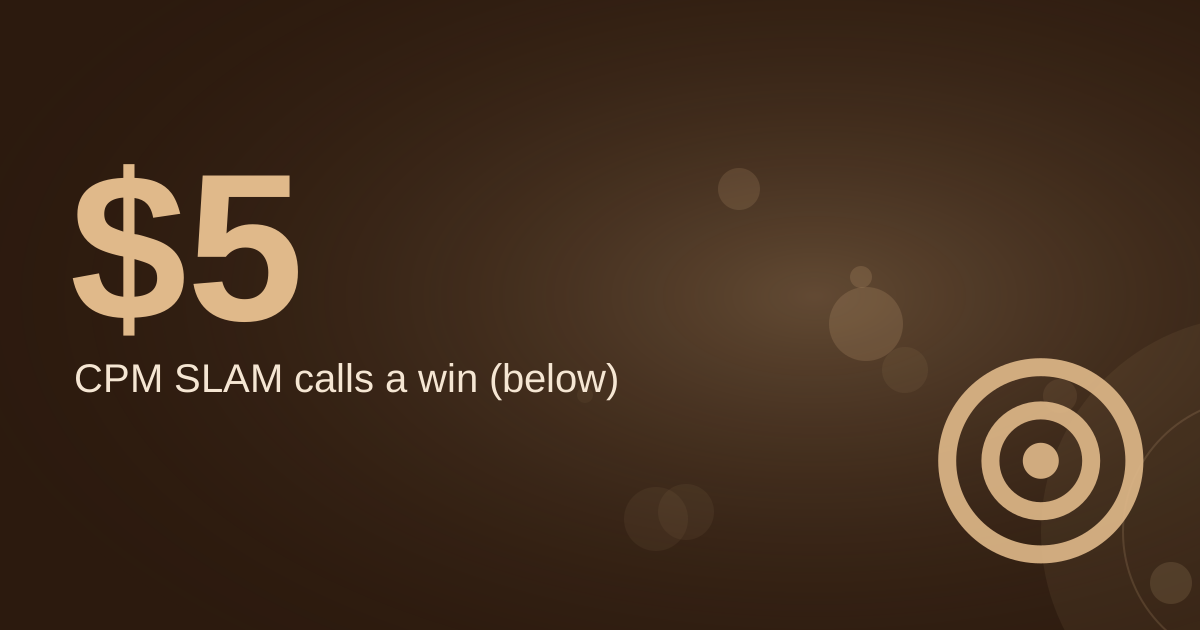
| Cost per new customer | $150 / 15 = $10 | $150 / 5 = $30 |
| Gross profit per new customer | $25 (assumption) | $25 (assumption) |
| Result | Profitable | Loss-making |
Scenario A pays back, because the cost per customer sits well below the assumed profit. Scenario B does not. The difference is the redemption count, which only a tracked code can show. Tracking spend also takes some bookkeeping, so a
comparison of accounting software can help you record each campaign's costs in one place.
A simple checklist before you print:
- Write one headline of 6 to 10 words.
- Add one call to action and one tracked code or QR link.
- Confirm permission for each location, in writing where possible.
- Set an end date for the offer.
- Record the print cost and redemptions in the same sheet.
FAQ
Is guerrilla marketing legal for a local business?
It can be, but permission matters. Marq notes that many public and private places need approval before flyering, including parks, neighbourhoods, shops and schools. Check your local rules before you start.
What size should a flyer be?
DoxZoo describes A5 as a popular format that is large enough for the information and less likely to get lost. It also warns against going so small that the flyer becomes hard to read.
How long should a flyer headline be?
AlphaGraphics suggests 6 to 10 words that are easy to read and understand, with a strong verb where possible.
How do I measure whether a flyer worked?
Use a unique code, a QR code or a separate web address for each flyer, then count redemptions. Compare the total cost with the number of new customers it produced.
Sources
- Design Tips for Eye-Catching Marketing Flyers, AlphaGraphics Cherry Hill (vendor, printer; headline length, colour, whitespace, proofreading)
- 10 tips for effective flyer design, DoxZoo (vendor, printer; published 2022; format, paper, stock image cost, call to action, QR codes, time-limited offers)
- Flyering 101: How to nail flyer distribution, Marq (vendor, design software; six distribution issues, permissions, distribution methods)
For help turning local promotions into a tracked plan, see the
local SEO service or
book a free audit.
Free for local businesses
Want this applied to your business?
I'll review your Google presence, local SEO, and ad accounts — and send you a specific action plan within 48 hours. No pitch, no pressure.