A fitness studio in Cleveland, OH ranks in the Google Maps pack by completing its Google Business Profile, keeping its name, address, and phone number identical across the web, and collecting a steady flow of recent reviews. The Map Pack lists relevant local businesses for searches such as "personal training studios near me" (
S1). Google Business Profile is a free tool for managing your presence across Google Search and Maps (
S5). This guide covers each step, with a worked review budget you can adapt.
↑
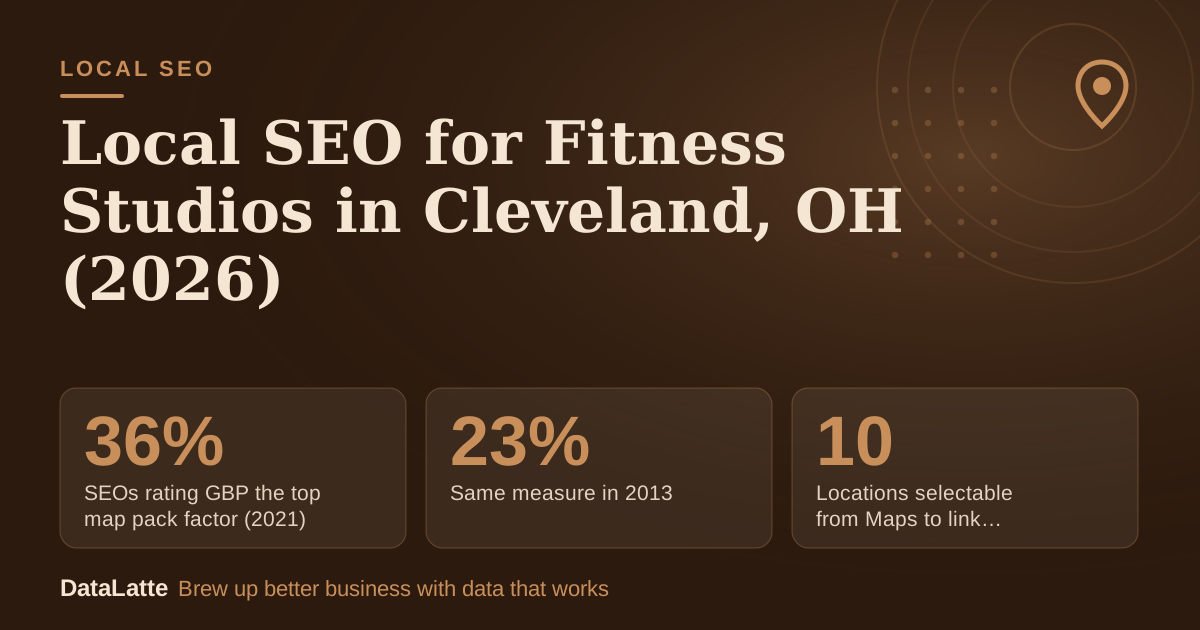
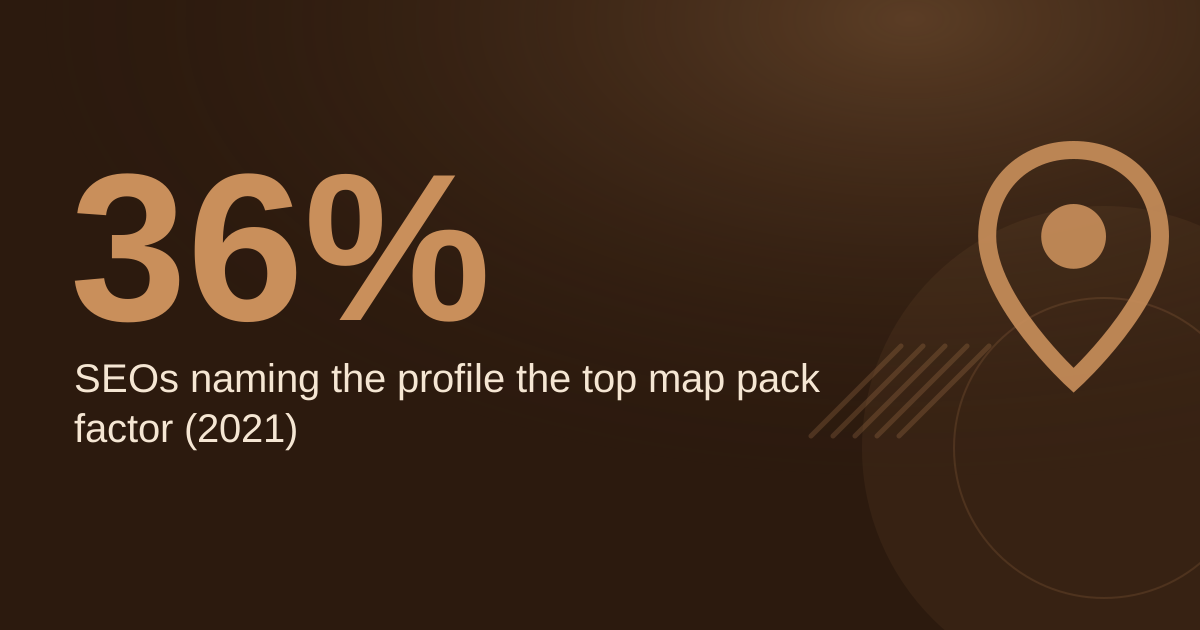
SEOs rating GBP the top map pack factor (2021)
BrightLocal survey via Ahrefs (secondary)
↑
Same measure in 2013
BrightLocal survey via Ahrefs (secondary)
→
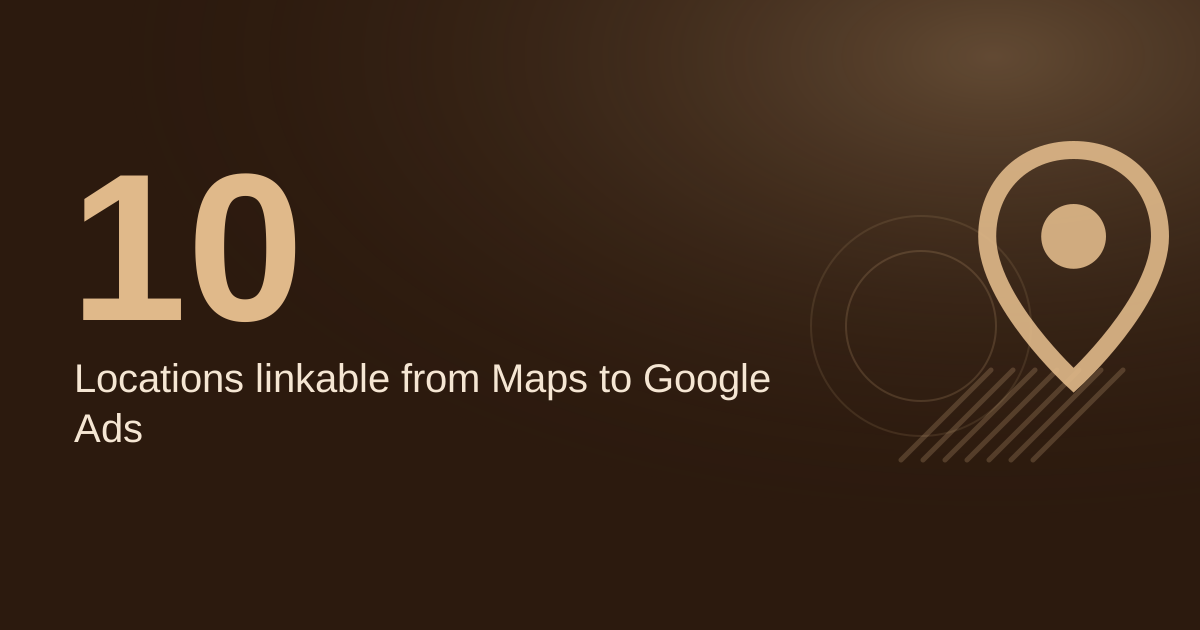
Locations selectable from Maps to link with Google Ads
Google Ads Help (primary)
→
Authentic photos recommended for a GBP
Vertical Impression guide (secondary)
See Sources at the end of the article. Cards marked Assumption are examples, not results.
Why does your Google Business Profile matter most in Cleveland?
Your profile is the part of local search you control most directly. Google displays business hours, phone numbers, addresses, reviews, and photos from it directly in search results (
S1). Google's own Business Profile page describes the listing as free to set up (
S7).
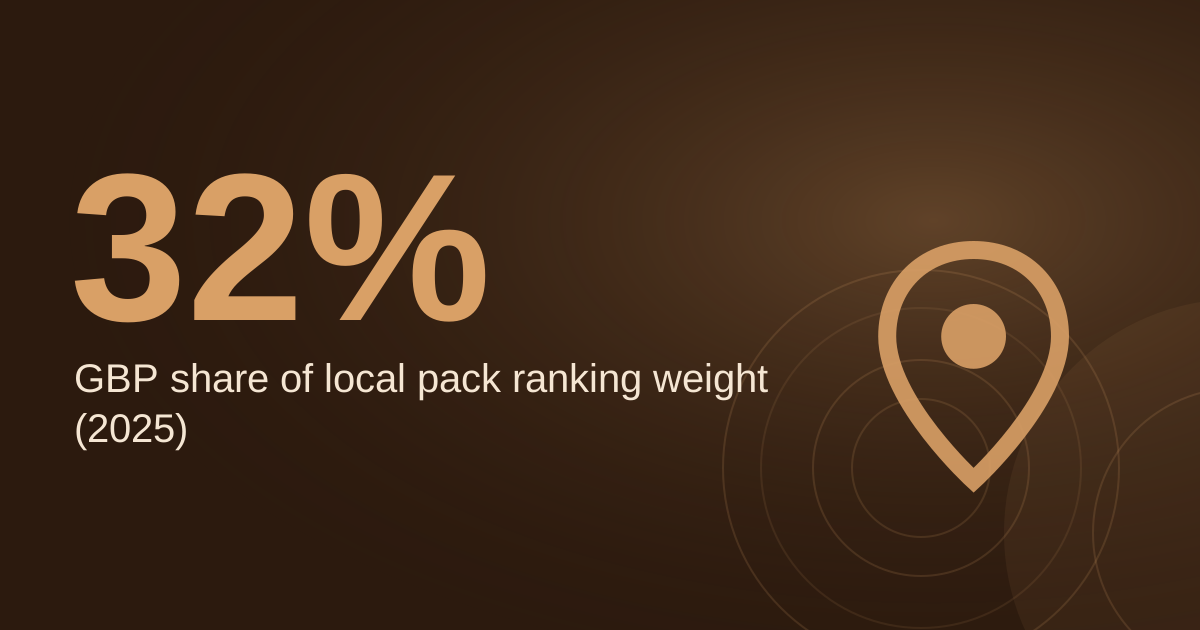
Industry data points the same way. In a BrightLocal survey cited by Ahrefs, 36% of SEOs said the Google Business Profile is the most important ranking factor for the map pack, up from 23% in 2013 (
S2, secondary). That survey dates from 2021, so treat it as direction, not a current measurement.
Reviews also appear beside your profile in Maps and Search (
S8). Every review a Cleveland member leaves is therefore visible to people comparing studios nearby.
What belongs in a Cleveland fitness studio's GBP checklist?
Work through the profile in this order:
- Pick a primary category such as gym or fitness center, then add a secondary category for each modality you run, such as yoga, Pilates, or CrossFit.
- Write a plain-language description that names Cleveland, your core service, and one differentiator. Avoid repeating keywords; the description should read as a sentence a member would say.
- Upload at least 15 authentic photos of the facility, classes in session, and coaches. A vendor guide recommends this minimum (S10, secondary).
- Publish posts each week. A post appears publicly on Search and Maps only when its status is Live; Pending and Not approved posts stay hidden (S4). Check the status after every post.
- Add each class type as a service, so "HIIT," "barre," and "personal training" each have their own listing.
- Seed the Q&A section with questions members actually ask, such as whether there is a free trial or what the parking situation is.
For a deeper walkthrough of profile settings, see
our fitness studio GBP optimization guide.
How do you keep name, address, and phone consistent?
Citations are mentions of your business name, address, and phone number (NAP) on other websites. Consistency matters more than volume. Use the same spelling of your name, the same street abbreviation, and the same phone format everywhere. "St." and "Street" are different strings to a search engine, so pick one and apply it to every listing.
Start with listings you already have. Fix errors on existing directories before you add new ones, because new citations with the wrong details add to the problem. One landscaping firm reported an 18% rise in local pack appearances after cleaning up its NAP data, though that figure comes from an anecdote on a secondary blog (
S3, secondary).
For Cleveland, add the Cleveland Chamber of Commerce member directory, the Ohio business directory, and any neighborhood association listings that fit your location. Use the same NAP you chose for your profile.
If you run paid campaigns too, location data in Google Ads comes directly from Google Maps and Google Business Profile. Corrections you make there flow into linked Ads accounts (
S6). Fixing the profile first therefore fixes both.
How many reviews does a Cleveland studio need?
A secondary guide claims that businesses with over 50 reviews and a 4.7+ average rating dominate top map pack spots, but it cites no source for the claim (
S3, secondary). Treat 50 reviews as a rough internal target, not a proven threshold, and track your own average rating against nearby studios.
Ask for reviews in a way that names the service. A member who writes "great coaches for beginners" gives Google and future readers a clearer signal than "great place." Send the request by text or email shortly after a class, and reply to every review, including the critical ones, with your neighborhood or service type included naturally.
Google's own guidance on gathering reviews focuses on making the request easy and asking consistently (
S8). Consistency matters more than a single burst of requests.
What does a 13-week review program look like in numbers?
The example below uses assumed inputs for a mid-sized Cleveland studio. Replace each one with your own check-in data before you rely on the result.
- Assumption: 180 member check-ins per week.
- Assumption: 1 in 10 check-ins triggers a review request, which is 18 requests per week.
- Assumption: 1 in 6 requests produces a review, which is 3 new reviews per week.
- Over 13 weeks, that is 39 new reviews (assumption-based arithmetic).
- Assumption: replying to each review and checking the profile takes 30 minutes per week, or 6.5 hours over the quarter.
Now apply a revenue assumption. Assume two extra members join in a quarter because of map-driven calls and direction requests, and each pays $150 per month (both assumptions). Over three months, that is 2 × $150 × 3 = $900 per quarter in membership revenue. Compare that with the 6.5 hours of profile work to judge whether the program is worth its time for your studio.
Which search terms should a Cleveland studio target?
Start with the way members search. Examples from the Map Pack guidance include phrases like "personal training studios near me" (
S1). Build your profile and website around that pattern: a class type plus a location term, and a "near me" version for mobile searches.
Neighborhood names often help more than a city-wide term. If most members come from Ohio City, Tremont, or Shaker Heights, use those names in your service pages and your profile description, not just "Cleveland." For paid search terms that complement this, see
our fitness keyword list for 2026.
Avoid stuffing terms into every line. Google's ranking signals reward relevance, and a description that reads naturally will also read better to members.
How should your website support the map listing?
Your website reinforces what the profile says. Use a consistent title format, such as "[Primary Service] in Cleveland, OH | [Studio Name]," and make the H1 lead with the service and city. Each major class type deserves its own page, so "Hot Yoga in Cleveland" and "Personal Training in Cleveland" can each match a distinct search.
Embed your Google Map on your contact or location page. A static address is useful, but an embedded map gives visitors the same location data they see in search. A step-by-step embed guide is available in
our Google Maps embed article.
Keep the NAP in your footer identical to the profile. Any mismatch between the website and the listing undercuts the consistency you built in the citation step.
What should you track each month?
Set up tracking before you change anything, so you can tell what worked. Google Search Console shows impressions and clicks from organic search by page. GBP Insights reports searches, views, and actions such as calls, direction requests, and website visits, which show how the listing performs in Maps.
Track your position for your top five terms using private browsing or a rank-tracking tool. Check weekly, but judge progress over a full quarter, since local rankings move with reviews, posts, and citations rather than a single change.
Log each change you make with its date. Without that record, you cannot connect a ranking shift to a specific action, and the review budget above becomes guesswork.
FAQ
Do I need a Google Business Profile to show in the Map Pack?
The Map Pack lists relevant local businesses for local queries (
S1). Google Business Profile is free to set up (
S7), so there is no cost barrier to creating one.
How many photos should a fitness studio upload?
A vendor guide recommends at least 15 authentic photos of the facility, classes, and staff (
S10, secondary). Use real photos from your own studio rather than stock images.
Will a post on my profile always be visible?
No. Posts show on Search and Maps only when their status is Live. Pending and Not approved posts do not appear publicly (
S4).
Can corrections to Google Maps affect my Google Ads?
Yes. Location data used in Google Ads is sourced from Google Maps and Google Business Profile, so corrections there flow into linked accounts (
S6).
Sources
Need help getting your Cleveland studio into the map pack?
Book a free audit to review your profile, citations, and review flow. Our
local SEO service covers the same work on an ongoing basis.
Free for local businesses
Want this applied to your business?
I'll review your Google presence, local SEO, and ad accounts — and send you a specific action plan within 48 hours. No pitch, no pressure.