Local SEO for a pet groomer in Long Beach, CA comes down to three things: a complete Google Business Profile, reviews that name your services, and business details that match everywhere they appear online. The Google Maps local pack is the top three business listings in local search results, and a groomer needs to be in that block to get the nearby searches that turn into bookings. This guide covers which profile fields matter, realistic review and photo targets, how citations fit in, and what to measure each month.
→
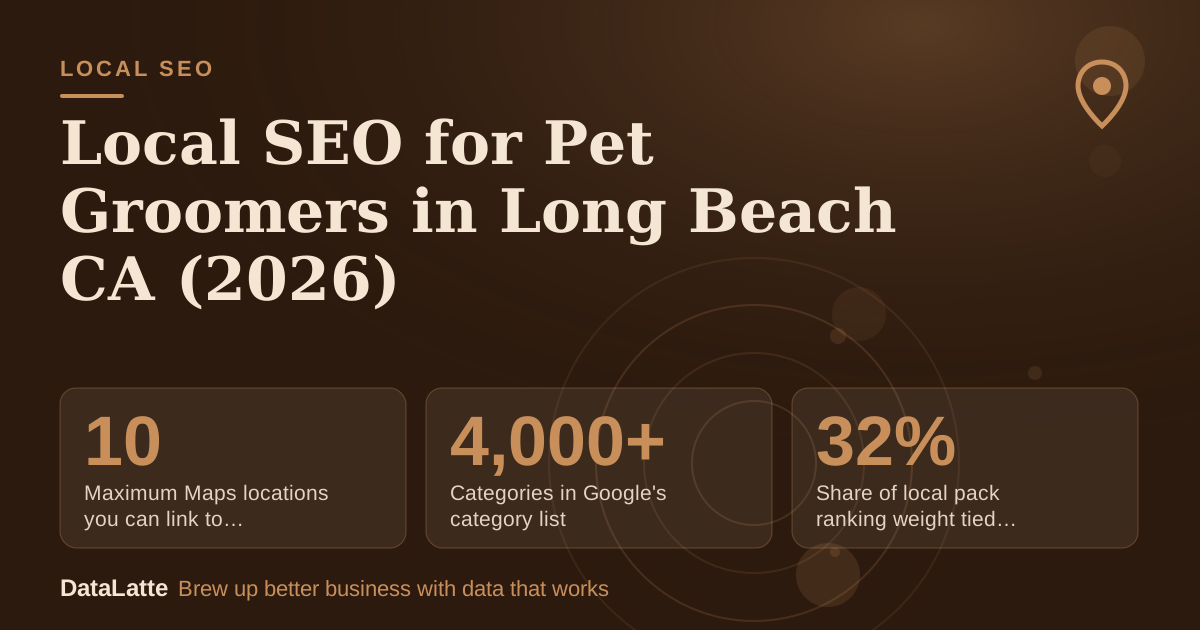
Maximum Maps locations you can link to Google Ads when the Business Profile option fails
Google Ads Help (primary)
↑
Categories in Google's category list
Adwave, describing its category list (secondary)
→
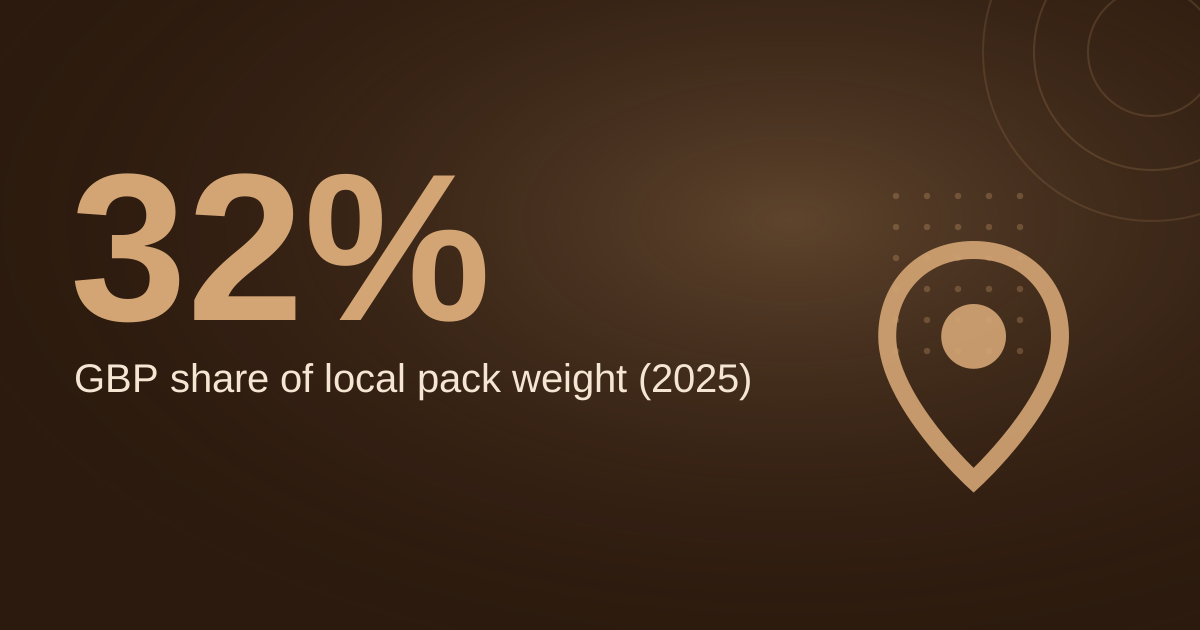
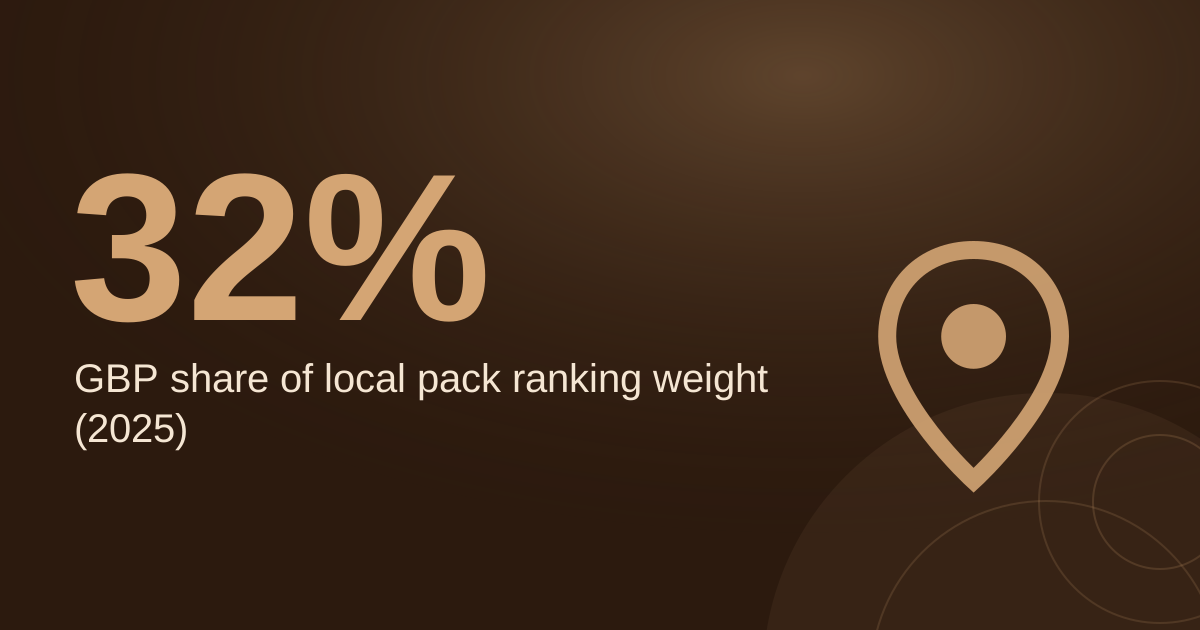
Share of local pack ranking weight tied to Business Profile signals (2025)
Adwave citing a 2025 multi-location benchmark (secondary)
↑
Review count where one analysis found more local pack appearances
Adwave citing a Blogging Wizard analysis (secondary)
See Sources at the end of the article. Cards marked Assumption are examples, not results.
How Does the Google Maps Pack Decide Which Groomers Appear?
Adwave's local SEO audit checklist defines the local pack as the top three business listings in local search results.
Adwave's lawn care guide says those three listings are pulled directly from Google Business Profile records, so the profile is the starting point for pack visibility.
Profile signals carry a large share of the weighting. A 2025 benchmark cited by
Adwave's multi-location audit puts them at 32% of local pack ranking weight (secondary). A BrightLocal survey, summarised by
Ahrefs, found 36% of SEOs ranked the profile as the most important pack factor in 2021 (secondary).
Survey opinion and a single benchmark are direction, not a formula. The practical takeaway for a Long Beach groomer is that the profile should be the most complete and most accurate online presence you manage.
Which Profile Fields Matter Most, and What Are the Limits?
Accuracy comes first.
Adwave's voice search guide and its beginner's guide both stress exact matching, and the profile should state your hours, phone number, and address with no gaps. The
Google Business Profile itself is free to set up.
The table below sets out the field limits and targets that the sources give. Treat the photo figure as a range, since the two Adwave guides disagree.
Use the description to name your services, your Long Beach area, and what sets your grooming apart. Keep it readable. Walk through the full setup in the
Google Business Profile guide for pet groomers.
How Should a Groomer Choose Categories?
Google's category list is now over 4,000 options and changes often, according to
Adwave's category guide (secondary). That same page says analysis of millions of profiles shows the primary category is the top ranking factor for entering the local pack, though it does not name the source of that analysis.
A practical check is to search your main service in Google Maps and review the top three to five businesses in the results. Note which categories they use. Choose a primary category that matches what most of your revenue comes from, then add secondary categories only for services you actually perform.
Avoid stacking categories for keywords you do not serve. Google's category choice should match the business that customers arrive to find. More detail on tuning categories is in the
profile optimization guide for pet groomers.
How Many Photos and Posts Should a Profile Carry?
Adwave's gallery guide recommends at least 15 high-quality photos and says a robust gallery gets far more clicks and calls. Its beginner's guide suggests at least 10 photos, so 10 is a floor and 15 is the stated target. Use shots of finished grooms, the grooming space, and your van if you run a mobile service.
Posts are the second routine task. Adwave describes them as free mini-billboards on your profile in Search and Maps, and advises at least one new post a week. Google only shows a post publicly when its status is Live. Posts that are Pending or Not approved do not appear, so check status after publishing.
How Many Reviews Does a Groomer Need to Target?
Reviews matter for two reasons. Google states that reviews show next to your Business Profile in Maps and Search, so they are visible at the point of choice (
Google Business Profile Help). An analysis of 2 million profile pages, reported by
Adwave's review guide, found businesses with over 200 reviews were significantly more likely to appear in the local pack (secondary).
The 200 figure is a correlation, not a guarantee. To estimate a timeline, assume you have 60 reviews today and collect 3 new ones a week. That is an assumption, not a benchmark. The gap is 140 reviews, and 140 divided by 3 is about 47 weeks. Asking customers to mention their service and breed in reviews can make those reviews more useful for search.
Do Citations and NAP Details Have to Match Exactly?
NAP means name, address, and phone number.
Adwave's voice search guide says the NAP must be exactly the same on your website, your Business Profile, and major directories such as Yelp, Apple Maps, and Bing Places (secondary). Small differences count. The
beginner's guide says the website must match the listing down to punctuation and whether you write "St." or "Street."
Apple is worth a check too.
Adwave's Apple Business Connect article reports that Apple Business Connect has a 7% maps-only share and is growing (secondary). Its Profile Views metric shows how many people saw your card in Apple Maps. If your website shows a map, the
map embed guide explains how to add it without creating a conflicting location.
How Does Google Ads Fit Alongside Local SEO?
Google Ads and local SEO share data.
Google's location assets help states that location data used in Google Ads comes from Google Maps and Google Business Profile, so successful corrections there flow into linked accounts. If the Business Profile option does not work, you can select up to 10 Maps locations to link, but they must be yours.
Paid search can cover the gap while organic visibility builds. A
Marketing 360 case study describes a mobile pet groomer that chose Facebook and Google as its advertising channels (vendor case study). For a setup walkthrough, see the
Google Ads guide for Long Beach pet groomers, and to choose a manager, read
how to find a Google Ads manager for a local business.
What Should a Groomer Measure Each Month?
Adwave's local search intent guide lists six useful metrics: Business Profile impressions, map-pack views, clicks to call, direction requests, website visits from the profile, and branded search lift over time (secondary). Record these monthly in a simple spreadsheet so trends are visible.
Expect a delay before you see movement. Adwave's beginner's guide estimates a new profile may start ranking for its own name a few weeks after verification (vendor estimate, secondary). Judge ranking changes across months, not days, and check your top keywords in private browsing as a periodic spot check.
If you want an outside view of which fields are missing, a
free audit or a
local SEO service review can show the gaps.
FAQ
How many photos should a pet groomer's Business Profile have?
Adwave's gallery guide recommends at least 15 high-quality photos, while its beginner's guide suggests at least 10. Aim for 15 and refresh the set regularly.
Is a Google Business Profile free?
Yes. Google describes its Business Profile as free to set up on Search and Maps.
Do all Google Business Profile posts show publicly?
No. Google shows a post publicly only when its status is Live. Pending and Not approved posts do not appear.
Can Google Ads use my Business Profile locations?
Yes. Location data for Google Ads comes from Google Maps and Google Business Profile, and corrections made there flow into linked accounts.
Sources
Free for local businesses
Want this applied to your business?
I'll review your Google presence, local SEO, and ad accounts — and send you a specific action plan within 48 hours. No pitch, no pressure.