Local SEO for a San Diego pet groomer comes down to one listing: your Google Business Profile (GBP). The local pack is the
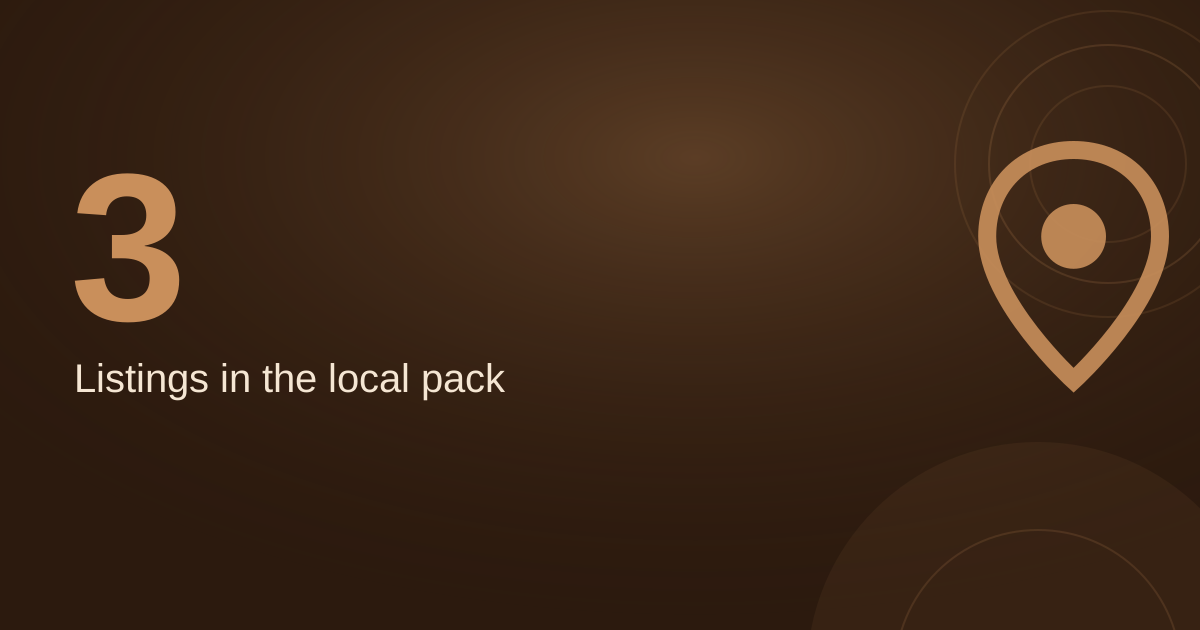
top three business listings in local search results, and a vendor guide states those three are
pulled directly from their GBP listings. A 2025 benchmark cited by
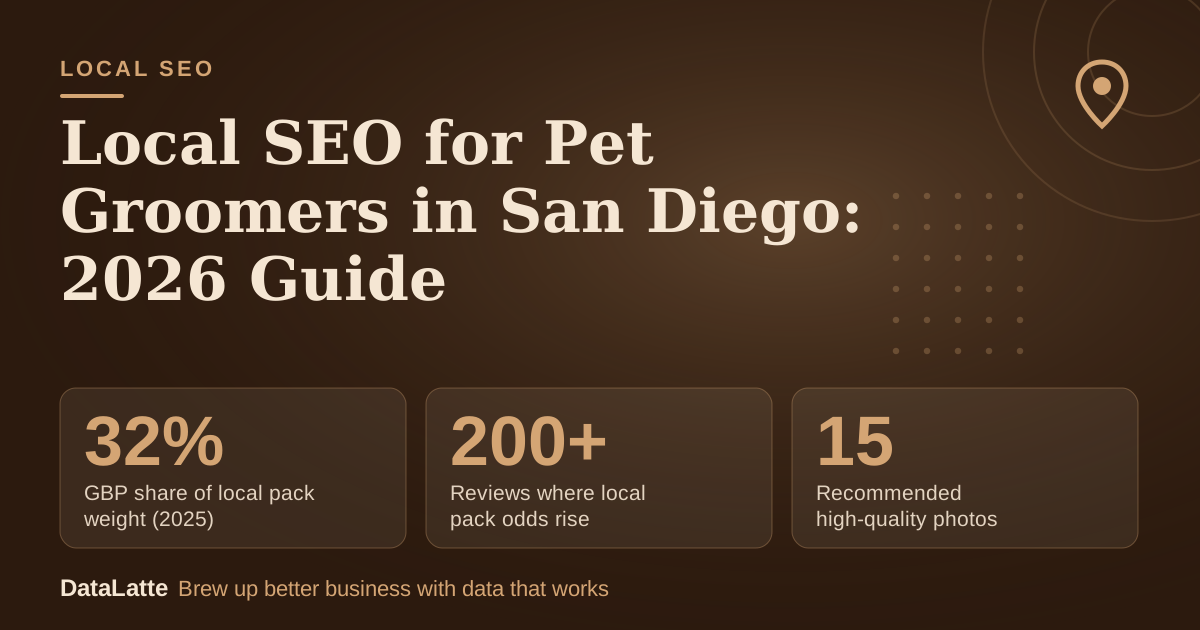
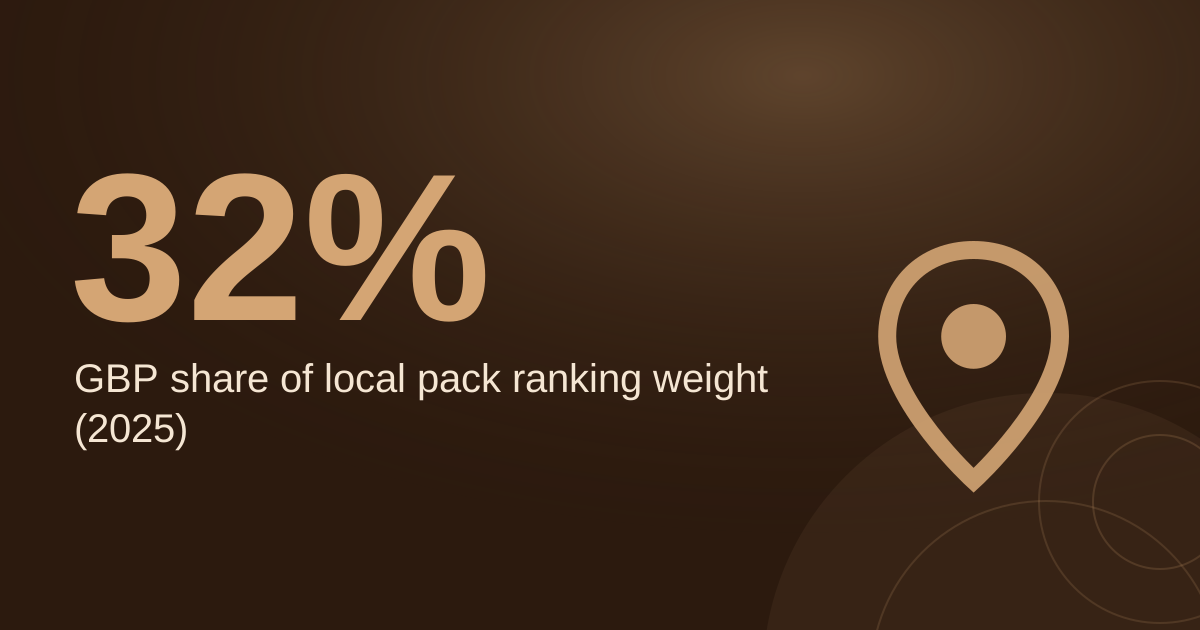
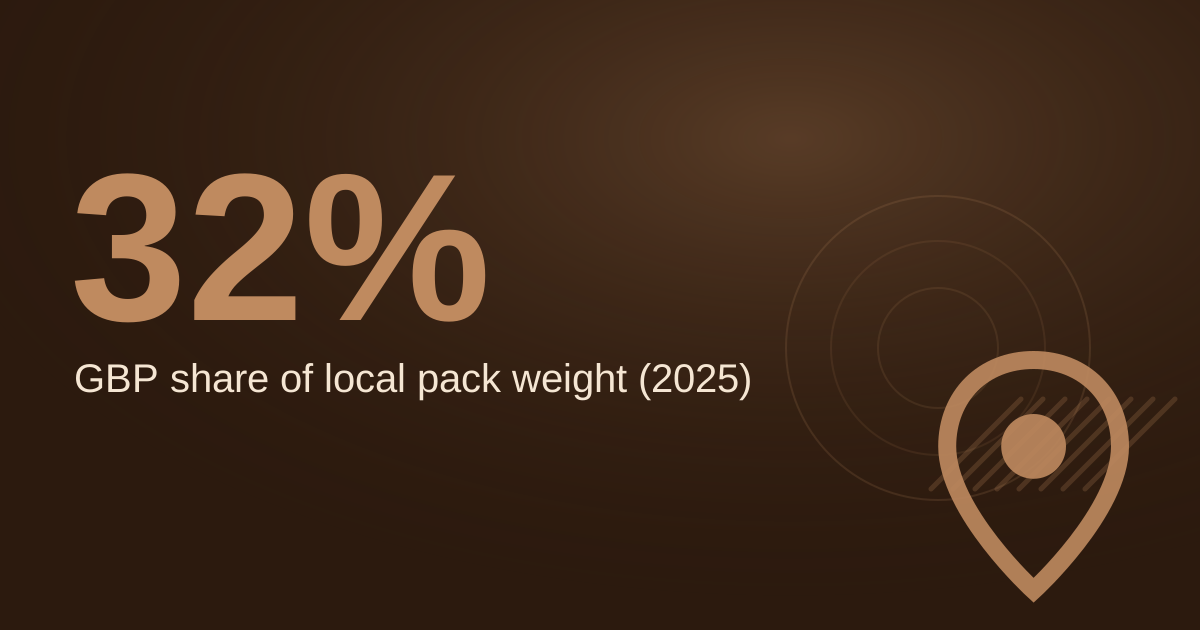
Adwave reports GBP signals at 32% of local pack ranking weight. This guide covers profile fields, categories, reviews, citations, posting, and measurement.
↑
GBP share of local pack weight (2025)
Adwave benchmark, secondary
↑
Reviews where local pack odds rise
Analysis of 2M profiles, secondary
→
Recommended high-quality photos
Adwave recommendation, secondary
→
Characters in GBP business description
Adwave guidance, secondary
See Sources at the end of the article. Cards marked Assumption are examples, not results.
Which Google Business Profile fields should a pet groomer fill in first?
Start with accuracy. Adwave advises making
hours, phone number, and address 100% accurate on the profile. Google's own
free Business Profile covers setup at no cost, so there is no reason to leave fields blank.
The business description allows
750 characters. Use the space to name your service, your San Diego neighborhood, and one real differentiator, such as anxious-dog handling if you offer it.
If you groom from home or travel to clients, the same guide says you can hide your street address and be designated a Service Area Business. Set the service area to the neighborhoods you actually drive to, not the whole county.
Photo counts vary by source. Adwave recommends
at least 15 high-quality photos, while the beginner's guide suggests
at least 10. Aim for 15: post-groom shots taken with owner consent, your grooming station, and the van if you run a mobile service. For a full profile walkthrough, see
Google Business Profile for pet groomers.
How do you choose the right Google category?
Pick the category customers search for, not one that describes your whole business. Adwave suggests reviewing the
top 3-5 businesses in local Google Maps results for a service search and checking which category they use.
The same article states that analysis of millions of profiles shows the primary category is the #1 ranking factor for the local pack. It does not name the analysis source, so treat that as a vendor claim rather than settled fact.
In practice, a pet groomer's primary category should match the core service, with secondary categories used only for services you actually perform. Search the terms your customers use, such as "dog groomer near me" or "mobile dog grooming," and compare the profiles that appear. The deeper optimization steps are in
Google Business Profile optimization for pet groomers.
Why do reviews and citations decide who makes the pack?
Citations are listings of your name, address, and phone number on other sites. Adwave's voice search guide says the NAP must be
exactly the same on your website, your GBP, and directories such as Yelp, Apple Maps, and Bing Places. The beginner's guide goes further: the match must include punctuation and whether you write "St." or "Street."
Apple Business Connect is worth claiming as well. Its
Profile Views metric counts how many people saw your business card in Apple Maps, which gives you a second listing to check.
How often should a pet groomer post, answer questions, and reply to messages?
Post weekly. Adwave advises
at least one new Google Post a week and describes posts as free mini-billboards on your profile in Search and Maps. Google reviews each post, and it appears publicly only when its status is Live.
Pending and Not approved posts do not show, so check the status after publishing.
Q&A is also worth seeding. Google
launched the feature in Maps in 2017, and Adwave notes that Google's AI answers draw on business profile data, website content, and reviews. Write the five questions customers ask most, such as drop-off times, anxious-dog policies, and pricing structure, and answer them in your own words.
Messages can be handled from the desktop dashboard, not only the mobile app, according to
Adwave's messaging guide. For how AI answers use your profile, see
AI for Google Business Profile optimization.
Does your website still matter for map pack visibility?
Yes. The same data sources feed AI-driven answers, so your website should repeat the name, address, and phone number exactly as they appear on your GBP. Adwave's Q&A guide describes AI responses as
sourced from business profile data, website content, and reviews (secondary).
Embed a map on your contact page to show customers where you are. The steps are in
how to embed Google Maps on a local business website.
For paid reach, Google's help page says that
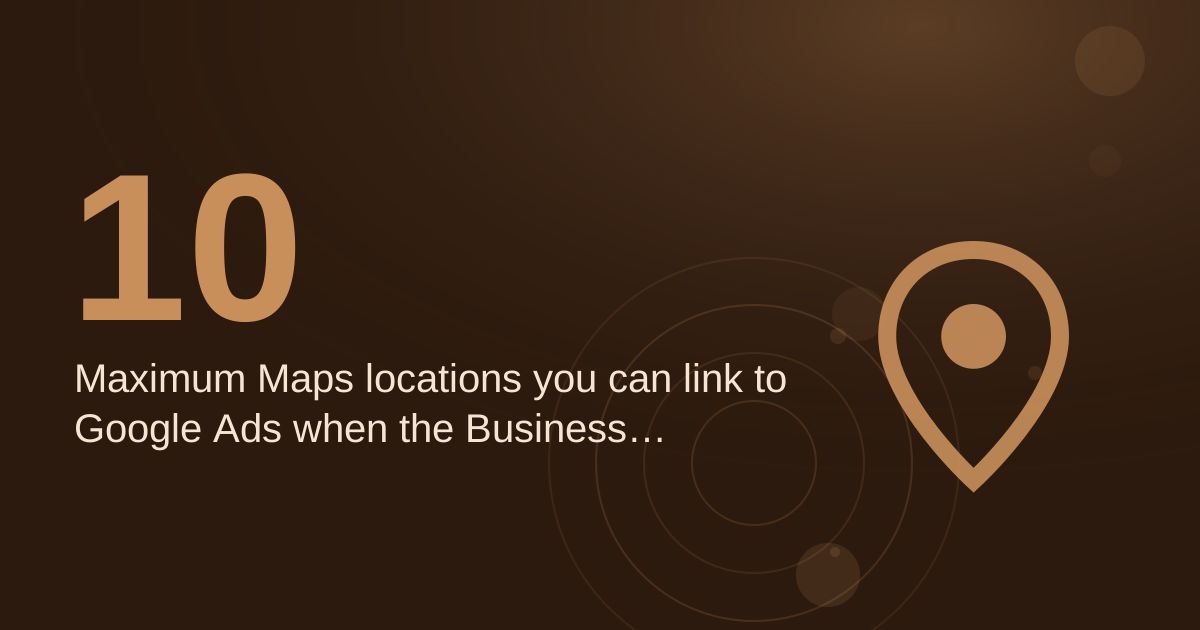
data for location assets in Google Ads is sourced directly from Google Maps and Google Business Profile. A correction made in your profile flows into linked Ads accounts. A
Marketing 360 case study describes a mobile pet groomer that advertised on Facebook and Google (secondary). To compare the two channels, read
Google Ads vs Facebook Ads for local business.
How many reviews can a San Diego groomer collect in a year?
The inputs below are assumptions for illustration, not San Diego data. Replace them with your own booking numbers.
- Assumption: 12 grooms per week
- Assumption: 4.33 weeks per month, so 52 grooms per month
- Assumption: every client receives a review request, and 30% leave a review
Monthly reviews: 52 × 0.30 = 15.6, about 16 per month.
Time to reach 50 reviews from zero: 50 ÷ 15.6 ≈ 3.2 months.
Time to reach 200 reviews from zero: 200 ÷ 15.6 ≈ 12.8 months.
If your pace is slower than this, the bottleneck is usually the request step, not the profile. Google's
review tips cover how to ask. Reply to every review and name the service where it fits naturally.
What should you measure each month?
Adwave lists six local search metrics it considers useful:
GBP impressions, map-pack views, clicks to call, direction requests, website visits from GBP, and branded search lift over time. Record them monthly in GBP Insights, and pair them with Google Search Console for organic page data.
Set expectations for the timeline. Adwave estimates that a business
often starts ranking for its own name in the Map Pack a few weeks after its profile is verified. Check your top five keywords in a private browser window, and log the results so you can see movement over time.
FAQ
Does a Google Business Profile cost anything?
Google describes its Business Profile as
free to set up on Google Search and Maps. The paid part of local marketing, such as ads, is separate.
How many photos should a pet groomer upload?
Adwave recommends
at least 15 high-quality photos, while another guide suggests at least 10. Use 15 as the working target and refresh the gallery seasonally.
Should I show my home address if I groom from home?
Not necessarily. The profile lets you
hide your physical street address and set a service area instead, which is the right setup for home-based or mobile groomers.
Is a review count alone enough to rank?
No. One analysis links
over 200 reviews with a higher chance of appearing in the local pack, but reviews work alongside a complete profile, consistent NAP data, and regular posting. Use the review count as one measure among several.
Sources
Ready to see where your grooming listing stands?
Book a free audit or review
DataLatte's local SEO service.
Free for local businesses
Want this applied to your business?
I'll review your Google presence, local SEO, and ad accounts — and send you a specific action plan within 48 hours. No pitch, no pressure.