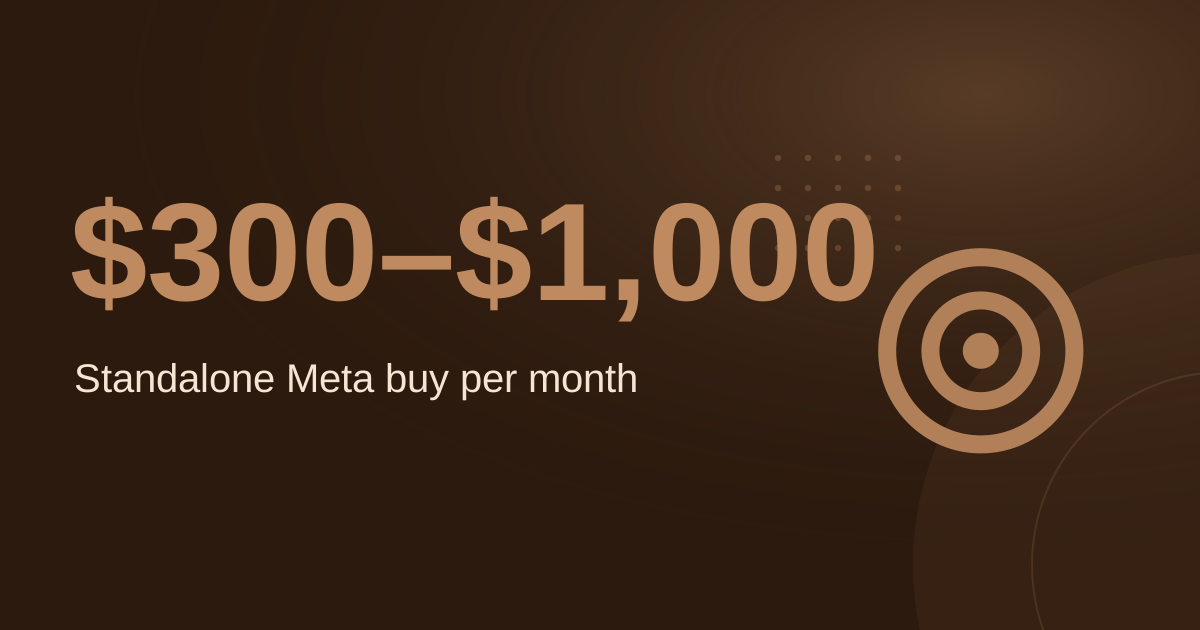
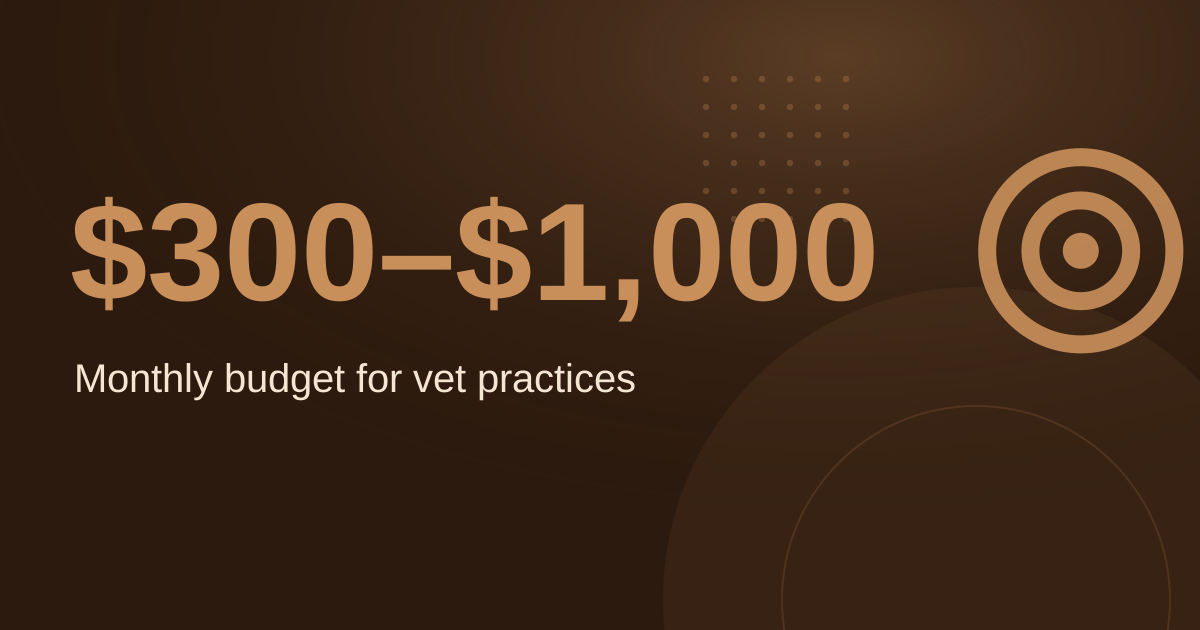
A standalone Meta (Facebook and Instagram) campaign often costs
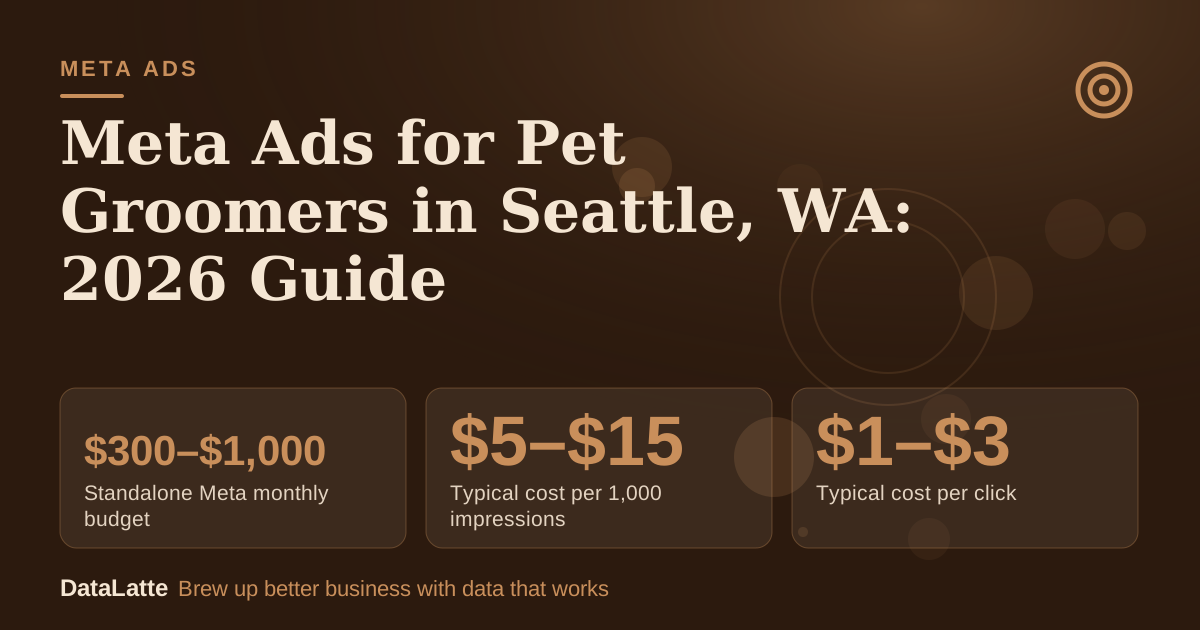
$300 to $1,000 per month for a small business. For pet groomers,
a starting budget of $10 to $20 a day is a common recommendation. Meta results usually take
1 to 4 weeks to show up, so judge a campaign after that window. These are national planning ranges, not Seattle-specific benchmarks, so replace them with your own Ads Manager numbers as they arrive.
→
Standalone Meta monthly budget
Adwave channel table, 2026
→
Typical cost per 1,000 impressions
Adwave, general Meta ads
→
Typical cost per click
Adwave, general Meta ads
↑
Engagement of video vs static images
Meta 2025 report, cited by Adwave
See Sources at the end of the article. Cards marked Assumption are examples, not results.
The vendor's channel table puts a standalone Meta buy at roughly $300 to $1,000 a month. Barklead's guide suggests starting at $10 to $20 per day, which works out to about $300 to $600 over a 30-day month (assumption: 30 billable days). Starting low lets you find the ads that bring bookings before you raise spend.
Typical costs are also listed per impression and per click.
Adwave's marketing guide gives $5 to $15 per thousand impressions and $1 to $3 per click. These are general Meta ranges across industries, not grooming benchmarks, so use them to sanity-check your own dashboard rather than as targets.
Meta Ads Manager is the single place to run ads across
Instagram and Facebook.
Adwave notes that Instagram ads use the same system because Instagram is owned by Meta, and one campaign can run on either platform or both. Compare the two side by side in
this breakdown of Instagram and Facebook ads before choosing.
Video is the format to start with. Adwave cites Meta's 2025 Creative Best Practices report, which says short-form video generates 2.5 times more engagement than static images. Short clips of a finished groom, filmed on your phone, are a practical test. The same reel logic applies to other local service businesses, as shown in this
fitness studio Reels guide.
Barklead suggests targeting pet owners aged 25 to 60 who are likely to have disposable income, within a 10 to 15 mile radius of the salon. Set the radius to the distance your clients actually drive, and check the age range against who books. For organic posts that support the paid ads, the
pet groomers Instagram guide covers the content side.
Custom audiences from past clients are worth building too. Grooming is a repeat service, so a client list gives you people already familiar with your work. Upload the list only where your privacy terms allow it, and exclude recent bookers from acquisition ads so you do not pay twice for the same person.
What does a worked budget look like for a groomer?
The example below uses assumptions, not sourced rates. Monthly budget is $300, the low end of the vendor range. Cost per click is $2, inside the $1 to $3 range. Click-to-booking rate is 5% (assumption). First-visit ticket is $60 (assumption), and the 10% first-visit offer from Barklead's sample copy cuts it to $54.
At $2 per click, $300 buys 150 clicks. At a 5% booking rate, that is 7.5 bookings, rounded down to 7. Seven first visits at $54 gives $378 in first-visit revenue, a return of about 1.26 times spend. Repeat grooms are excluded, and they often matter most for this business. Doubling spend to $600 under the same assumptions gives 15 bookings and $810.
Which ad copy and offers should groomers test?
Barklead's sample ad offers "Book today and get 10% off your first grooming session." That is a clear offer with one action, which is the right shape to test first. Change one element at a time, such as the offer, the photo, or the first line, so you can see which change moved bookings.
Write hooks that name your city and the service, for example: "Freshly groomed dogs, booked in [city] this week." Avoid vague brand lines. Keep the booking link on the first screen so a viewer does not have to hunt for it.
Set up tracking before spending. Work through these steps in order:
- Install the Meta Pixel on your website and confirm it fires on the booking confirmation page.
- Set a Lead or booking event that records when a client books or submits the form.
- Add UTM parameters to every ad URL so your analytics can separate Meta traffic from other sources.
- Review cost per booking weekly, not impressions or reach.
Meta's free
Blueprint courses on Facebook and Instagram advertising, with a certificate on completion, are a low-cost way to learn the platform. The 1 to 4 week results window means early numbers are noisy, so judge trends across several weeks.
FAQ
A standalone Meta buy often costs $300 to $1,000 a month, according to Adwave's channel table. Barklead suggests starting at $10 to $20 a day. Start at the low end and raise spend once you see which ads book clients.
Adwave's channel comparison lists 1 to 4 weeks to results for Meta. Give a campaign at least that long before deciding whether it works.
Should a groomer use Facebook or Instagram ads?
Both run through Meta Ads Manager, and one campaign can run on either or both. Test Instagram Reels and Facebook feed placements side by side and keep whichever books more clients per dollar.
The figures here are national planning ranges, not Seattle-specific benchmarks. Use them as a starting point, then compare them with your own cost per click and cost per booking after a few weeks of data.
Sources
Ready to see where your Meta budget is leaking?
Get a free audit of your ad setup, tracking and booking funnel.
Free for local businesses
Want this applied to your business?
I'll review your Google presence, local SEO, and ad accounts — and send you a specific action plan within 48 hours. No pitch, no pressure.