A vet clinic website should let a worried pet owner find the phone number, opening hours and a booking or request button within seconds on a phone. Put those above the fold, describe services and new-client steps in plain language, and explain what happens out of hours. Load quickly on mobile, and track which bookings and calls the site produces.
Most owners search when a pet is unwell, so the site has to answer three questions fast: is the clinic open, can I book, and what do I do out of hours. The figures below come from adjacent sectors and a 2025 survey of medical appointments, so treat them as directional.
↑
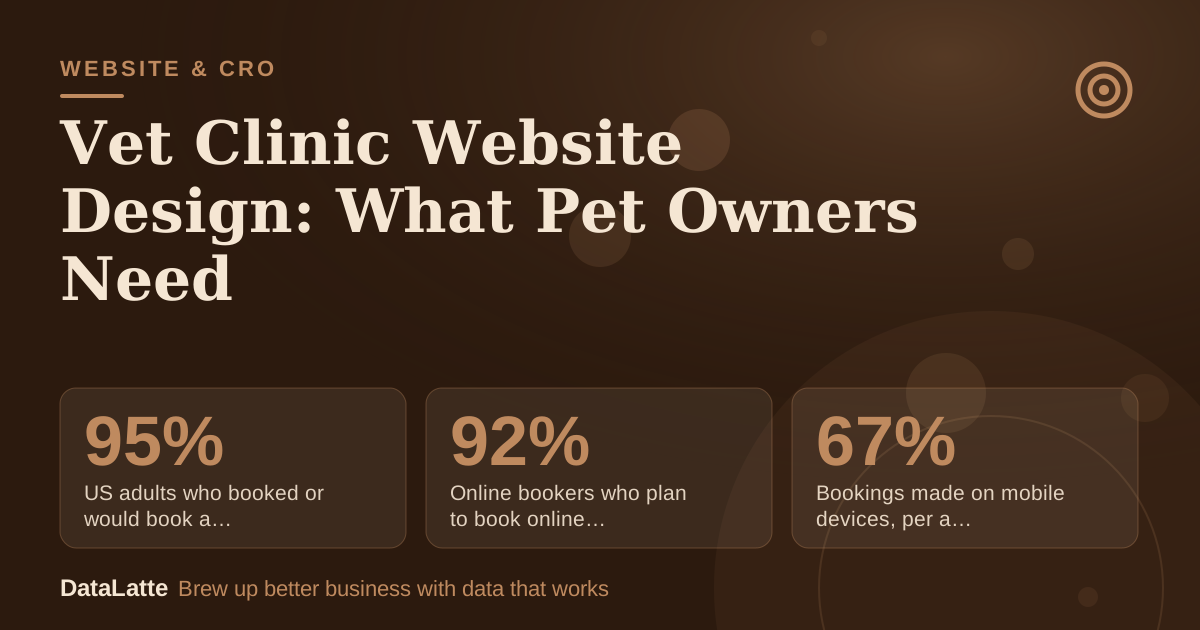
US adults who booked or would book a medical appointment online (2025)
Eliciting Insights, cited by AdWave, secondary
↑
Online bookers who plan to book online again (2025)
Eliciting Insights, cited by AdWave, secondary
→
Bookings made on mobile devices, per a vendor guide
GoConverso Docs, names no source
↑
Conversion lift per second of faster mobile load (SOASTA study)
SOASTA, cited by AdWave in Google playbook, secondary
See Sources at the end of the article. Cards marked Assumption are examples, not results.
What should sit above the fold on a vet clinic home page?
The fold is the part of the page visible without scrolling, and on a phone it is a small area. Use it for the facts an owner needs in the first few seconds. The
above-the-fold design guide covers layout in more depth. For a clinic, the top of the home page should include:
- Clinic name, town and the species you treat
- A phone number that dials when tapped, beside today's opening hours
- One primary button: book, request an appointment or call
- A line on out-of-hours care, naming your emergency arrangement or the referral clinic you use
- A real photo of the team or building
Reviews belong near the button too. Shoppers in one retail study trusted reviews more when they came from a third party, which is covered in the trust section below. Keep the button label specific, such as "Request a visit", so owners know what happens next.
Which pages does a clinic site need?
Most clinic sites need six core pages. Each one answers a single question an owner brings to the site. Keep the navigation short so the phone number and booking button stay visible on every page.
| Page | Purpose |
|---|
| Home | Hours, phone, booking, emergency arrangement |
| Services | Wellness, vaccinations, dental, surgery, diagnostics: one section each |
| New clients | What to bring, how to transfer records, first visit steps |
| Team | Names, roles and photos, which builds trust |
| Contact and location | Map, parking, public transport, hours |
| FAQ | Payment, cancellations, species seen |
Give each service its own section or page if you want to rank for it. The contact page is where an embedded map helps most; the
Google Maps embed guide explains the setup. For checking every page against a list, use the
local business website checklist.
Does online booking change how many clients book?
A 2025 Eliciting Insights survey of 384 US adults who had visited a healthcare provider in the previous year found that 95% had booked a medical appointment online or would do so if the option existed. Among people who had already booked online, 92% planned to use online scheduling again. This is a medical survey, not a veterinary one, so it shows appetite rather than clinic demand.
The 2024 medical practice study cited by AdWave found that 76.8% of online interactions were new bookings, with 13.1% rescheduling requests and 10.1% cancellations. A clinic should expect a mix of request types and plan staff time for all of them. Some scheduling tools take a payment before confirming a booking, which AdWave's
appointment page guide and a
2022 salon technology guide both describe. Whether a clinic takes deposits is a policy choice, so check your own rules first.
Do reviews and trust signals change decisions?
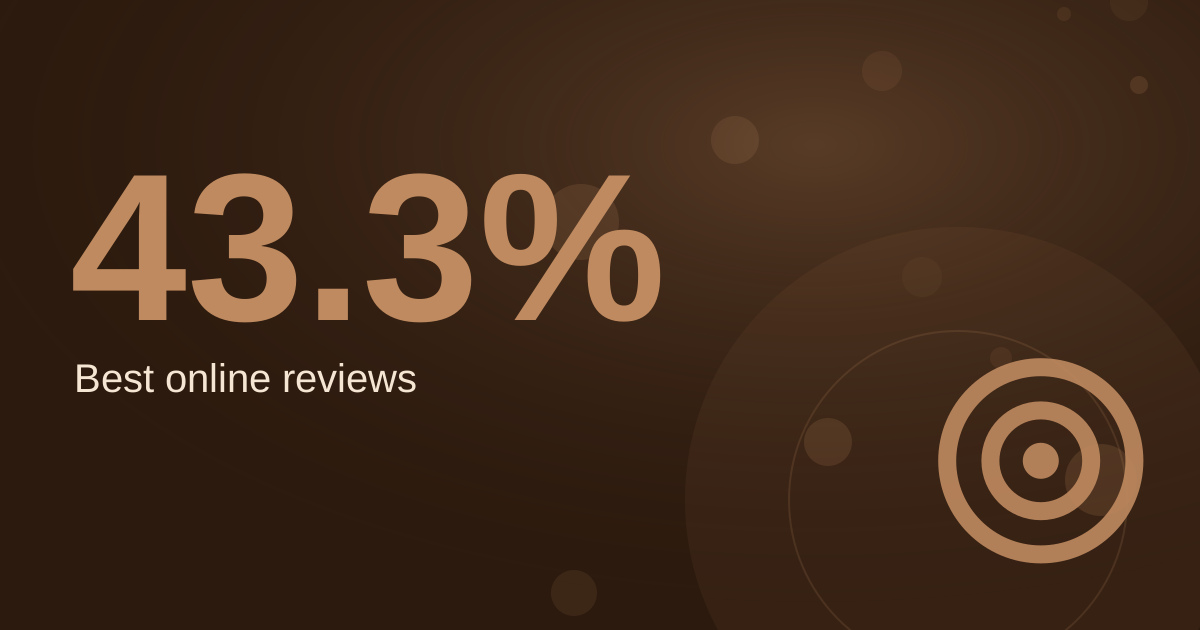
AdWave states that over 85% of consumers trust online reviews as much as personal recommendations. That figure comes from a dental clinic article and is not specific to vets, so use it as a prompt to show reviews rather than as a benchmark.
Two retail findings point the same way. Chatmeter summarizes findings that 50% of online shoppers prefer third-party reviews to reviews on a retailer's own site. Baymard Institute's 2017 checkout study found that 19% of online shoppers had abandoned a checkout in the previous three months because they did not trust the site with card details. Neither figure is about veterinary care, but both suggest that visible reviews and clear contact details reduce hesitation. Test placement with the steps in the
A/B testing guide.
How fast and mobile-friendly should the site be?
Owners often search from a phone in a stressful moment, so mobile speed matters. A SOASTA study cited in Google's mobile playbook found that mobile pages loading one second faster achieved up to a 27% increase in conversion rates. Treat this as a secondary citation of a 2010s study, and check current guidance on Google's own pages before setting targets.
Google offers a free online tool that lets site owners check whether a website is mobile-friendly. Run your home page and booking page through it after every redesign. The GoConverso guide states that 67% of bookings are made on mobile devices, but it names no source, so use it as a vendor claim rather than a measured rate. Confirm the mobile share in your own analytics.
How should a clinic track bookings and calls?
AdWave's conversion checklist recommends one primary conversion per site. It says four action types (calls, form leads, bookings and purchases) cover most local and online businesses. A vet clinic should usually pick booking or calls as the primary conversion and track the rest as secondary signals.
Google Analytics is the platform Google describes as the go-to choice for millions of website owners, though Google gives no exact count. Set up call tracking and booking form submissions as conversions so you can see which pages produce them. Analytics and booking tools use cookies, so review consent rules with the
GDPR compliance guide before you add them.
Worked example: what does online booking add?
All inputs below are assumptions for illustration. Replace them with your own phone logs and booking form data.
| Input (assumption) | Value |
|---|
| Monthly website visitors | 1,200 |
| Visitors who request a visit by phone only | 2% |
| Visitors who request a visit with an online option | 3% |
| Value of a new-client first visit | $150 |
Phone only: 1,200 x 2% = 24 requests, and 24 x $150 = $3,600 a month. With online booking: 1,200 x 3% = 36 requests, and 36 x $150 = $5,400 a month. The difference is $1,800 a month. The one-point lift is an assumption, so test it before relying on it. Check that staff can handle the extra requests.
For a cost comparison, a UK guide to Facebook ads for private clinics and salons assumes 15 bookings a month at a £30 cost per result, or £450 of ad spend (about £15 a day). That is a guide assumption, not a veterinary benchmark. If you want help setting targets for your area, see
local SEO services or
book a free audit.
FAQ
Do I need online booking on a vet clinic site?
It is not required. If you offer it, link it from the home page and the contact page. The survey figures above suggest many adults would use it, but a medical survey is not proof for your clinic.
That is a policy decision. Some tools hold a booking until payment is taken. Check your own rules and local requirements before you set it up.
How do I check that the site works on phones?
Use Google's free mobile-friendly tool on your home page and booking page. Then test the booking flow on a real phone.
Which conversion should I track first?
Pick one primary conversion. For most clinics that means booking requests or calls, with other actions as secondary signals.
Sources
Want a clinic site that fills the appointment book?
Book a free audit or see
local SEO services.
Free for local businesses
Want this applied to your business?
I'll review your Google presence, local SEO, and ad accounts — and send you a specific action plan within 48 hours. No pitch, no pressure.