An AI agent for lead generation is software that watches the channels where enquiries arrive, such as a website form, direct messages, and ad clicks. It replies, asks a few qualifying questions, and records the result. It can run outside opening hours, so an evening inquiry gets a response instead of waiting until morning. It does not replace staff. It handles the first reply and the sorting, so your team spends time on prospects who are ready to book.
What Does an AI Agent for Lead Generation Do?
An AI agent for lead generation has three jobs: capture, qualify, and hand off. Capture means it answers a new inquiry from a form, a direct message, or a booking page within moments instead of hours. Qualification means it asks short questions that separate real prospects from casual browsers. Hand-off means it either books a slot or sends the lead to a person with notes attached.
Vendor material describes lead generation tools as marketing automation tools that find people interested in a business and send them personalized messages (
Encompass, vendor). That definition covers the basics. The valuable part is the sorting step, because it decides which leads get a human's time.
Capture works best when there is one clear next step. A landing page is commonly described as a page built for lead capture that focuses on one action, such as entering an email or registering for a webinar (
Victoria Gibson, secondary). For a local business, that action is usually a booking request or a quote form. Free offers can help people take that step, and the
lead magnet ideas for local business guide covers options that suit a small shop.
Where Do Local Leads Come From?
→
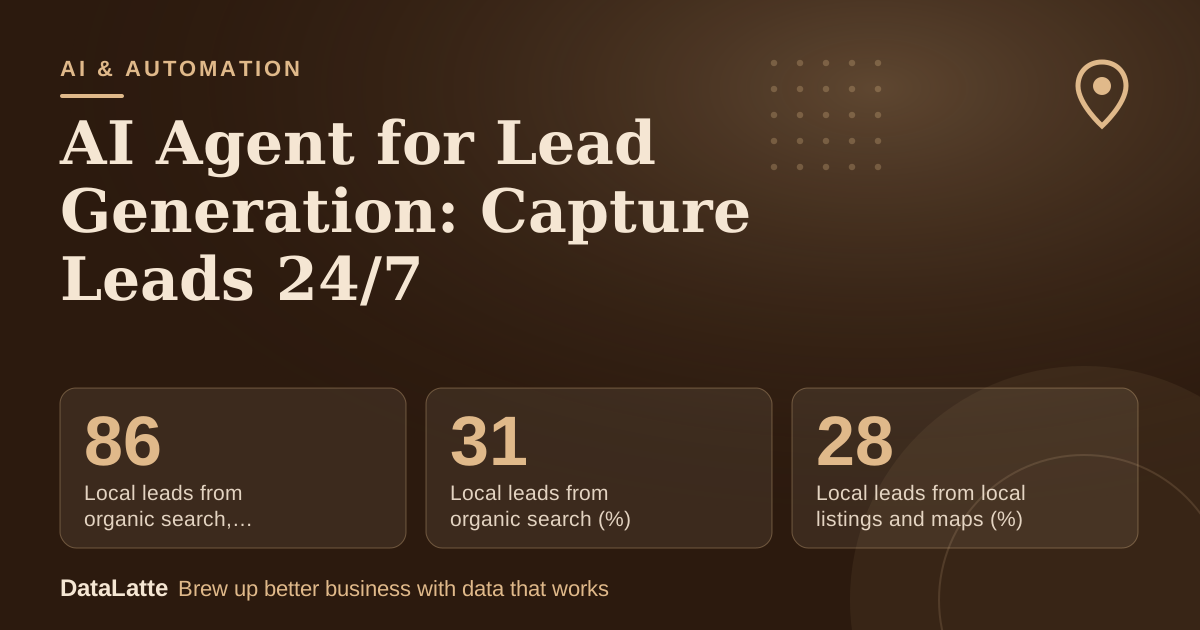
Local leads from organic search, local listings, and paid search combined (%)
Secondary: Neil Patel stats via directory summary
→
Local leads from organic search (%)
Secondary: Neil Patel stats via directory summary
→
Local leads from local listings and maps (%)
Secondary: Neil Patel stats via directory summary
→
Local leads from paid search (%)
Secondary: Neil Patel stats via directory summary
See Sources at the end of the article. Cards marked Assumption are examples, not results.
A channel summary attributed to Neil Patel's marketing stats says organic search, local listings, and paid search together generate 86% of local business leads (
Local SEO AI Tools Directory, secondary). In the same summary, organic search accounts for 31%, local listings and maps for 28%, and paid search for 27%.
Each channel needs a different first reply. Vendor material for gym advertising says search ads capture immediate interest from users actively searching for services, while display and video ads build awareness and engagement (
Selworthy, vendor). Someone who searched for a service nearby should get a reply that confirms the service and offers a slot, not a newsletter signup.
Social enquiries behave differently. If most of your leads arrive as messages, the
Instagram DM automation guide shows how the same qualification steps can run in direct messages. Home-service marketplaces split leads too. HomeAdvisor's Market Match leads are shared with other service providers in the area, while Exact Match leads are exclusive to the company (
OnlineVisibilityPros, secondary). An agent should know which type it is handling, because a shared lead rewards speed more than a long questionnaire.
How Does Qualification Work Step by Step?
Good qualification is short. Each question should change what happens next. A workable sequence for a local business looks like this:
- Confirm the service and the town or suburb, so out-of-area enquiries get a polite decline.
- Ask one timing question, such as when the customer needs the job done.
- Ask the single detail that changes price or slot length, such as pet size for a grooming business or the class package for a studio.
- Offer an open booking slot, or a callback if the lead wants a quote first.
- Record the outcome with a status label, so the owner can see what happened.
Appointment-based businesses can connect the booking step to a calendar. The
appointment booking agent guide covers that setup in more detail.
Follow-up matters as much as the first reply. A Forrester study cited by Gleantap says businesses that excel at lead nurturing generate 50% more sales-ready leads at 33% lower cost (
Gleantap, secondary). The agent can send one or two follow-ups to leads who did not book, without adding staff hours.
What Does It Cost, and Does It Pay Off?
The cost depends on features and integrations, so no single price applies to every business. A simple worked example lets you test any quote. The inputs below are assumptions, not market data. Replace them with your own numbers.
- Monthly agent cost: $250 (assumption)
- Booked jobs per month from after-hours or overflow enquiries: 15 (assumption)
- Average ticket per booked job: $80 (assumption)
Revenue from booked jobs is 15 × $80 = $1,200. The revenue-to-cost ratio is $1,200 ÷ $250 = 4.8. The cost per booking is $250 ÷ 15 ≈ $16.67. Break-even sits at $250 ÷ $80 ≈ 3.1 bookings, so about four booked jobs a month cover the fee before other costs.
Revenue is not profit. Subtract materials, labor, and fees before deciding. Tool choice also changes the bill. Encompass describes Mautic, which it uses for lead capture and email, as free (
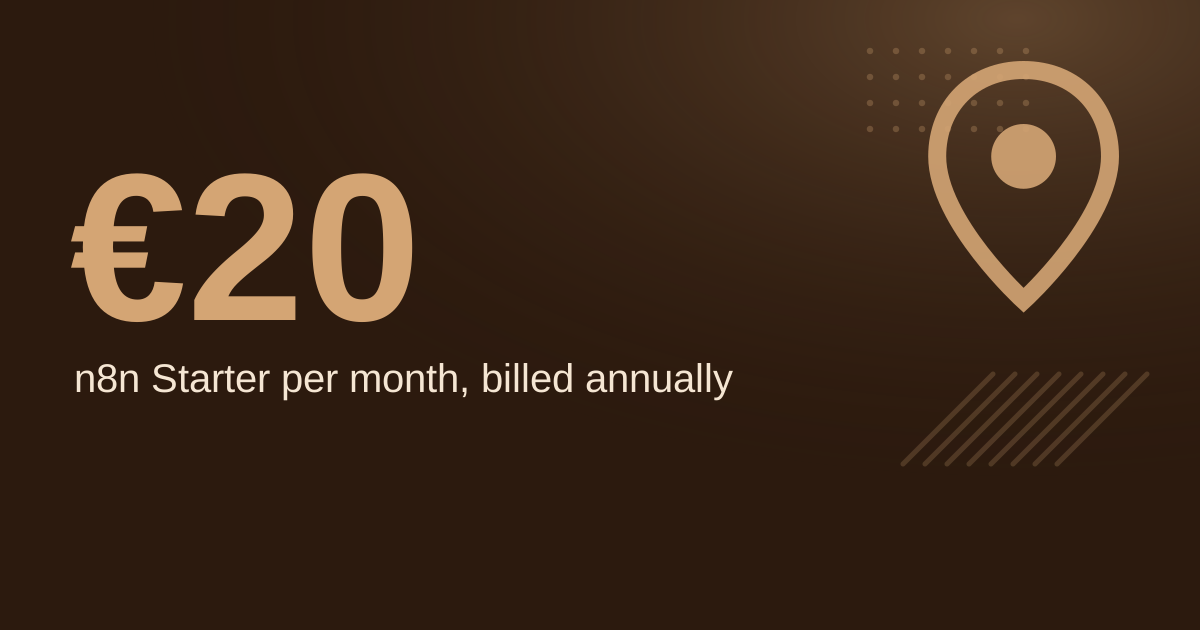
Encompass, vendor). A free tool lowers license cost but still takes setup time.
Which Leads Should Go to a Person?
Automation should not answer everything. The table below sets a hand-off rule for each lead type. Owners should set the actual timings, and the ones shown are starting points.
| Lead type | Agent action | Hand-off rule |
|---|
| Standard booking request | Offer open slots and confirm | Human review only if no slot fits |
| Custom quote or large job | Collect scope, location, and timing | Callback on the next business day |
| Complaint or urgent problem | Acknowledge and do not quote | Immediate alert to the owner |
| Question the agent cannot answer | Say it will check and pass it on | Owner reviews at opening time |
The customer service side of this split is covered in the
customer service agent guide. Keep hand-offs visible. A lead that disappears into an unchecked inbox costs more than a slow reply, so design the alert before anything else.
How Do You Track Whether It Works?
Google's recommended events include lead-stage events: generate_lead, qualify_lead, disqualify_lead, working_lead, close_convert_lead, and close_unconvert_lead. Google recommends them for business-to-business, automotive, and insurance sales, or generally when conversions happen offline, and they populate the Lead acquisition report (
Google Analytics Help, primary). A local business that books by phone or closes in person fits the offline case, so the same stages can track a booking that started online.
Check the platform's live help page for current event names before you set these up. For most small businesses, a spreadsheet with three columns is enough: cost per lead, cost per booking, and average response time. Use the worked example above to set a target before the first month ends.
Building the agent takes more planning than technical skill. The
no-code build guide walks through a basic setup. If you want an outside check on your current lead flow first,
book a free audit and bring your ad spend and booking numbers.
FAQ
Will an AI agent sound robotic to customers?
It can, if it runs on generic scripts. An agent loaded with your own menu, prices, service list, and FAQs answers much closer to how your staff would. Test it on a set of real customer questions before you go live.
Does an AI agent replace my staff?
No. It covers the gap: after-hours messages, overflow when staff are serving customers in person, and first replies. Staff keep the service, the relationships, and the decisions that need judgment.
What if the agent cannot answer a question?
It should say it does not know, promise a follow-up, and pass the question to a person. Guessing risks losing the lead. Set an alert so unanswered questions get checked at opening time.
How do I know if it is paying off?
Track cost per lead, cost per booking, and response time, and compare booked jobs against the agent's monthly fee. The worked example above gives a simple break-even number to test against your own figures.
Sources
- [Recommended events - Analytics Help](
Free for local businesses
Want this applied to your business?
I'll review your Google presence, local SEO, and ad accounts — and send you a specific action plan within 48 hours. No pitch, no pressure.