An independent restaurant should bid on searches where the guest is ready to eat or book: cuisine plus area, table and reservation phrases, private dining and catering. Popular searches cost the most, so start with narrower phrases. Google Ads needs an account with a payment card attached before any search ad can run. A Google Business Profile costs nothing to set up and matters whether or not you pay for ads. The figures below come from the sources at the end, and the budget example is labelled as an assumption.
→
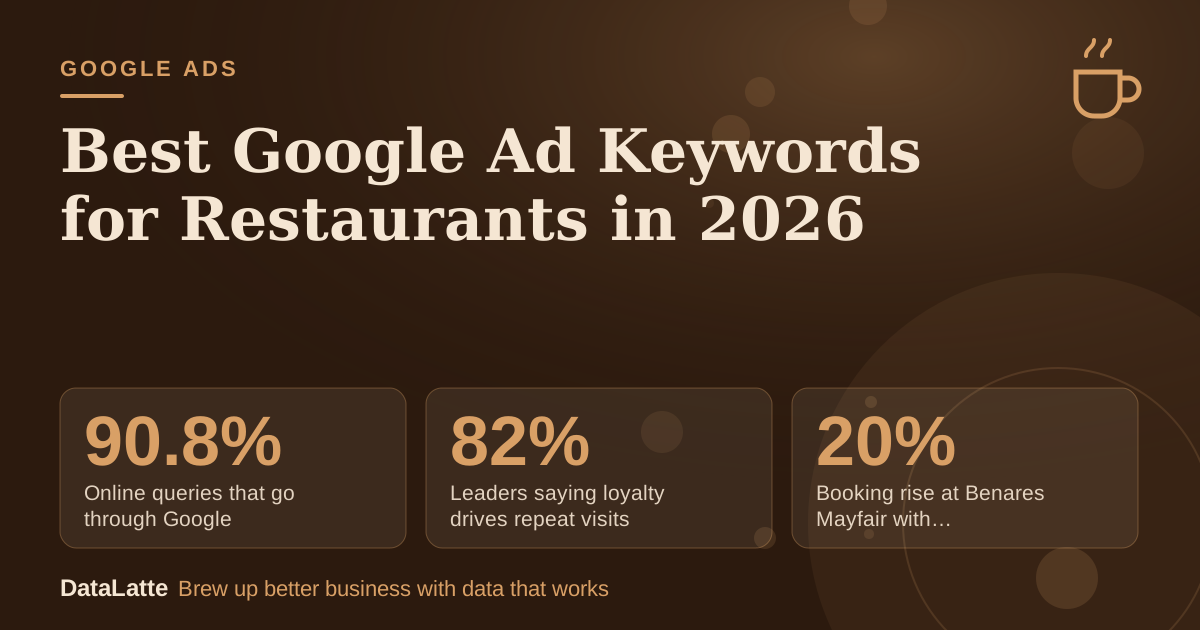
Online queries that go through Google
Oberlo via Grubhub (secondary)
↑
Leaders saying loyalty drives repeat visits
Square Future of Restaurants 2025
↑
Booking rise at Benares Mayfair with TheFork Festival
TheFork blog (vendor claim)
→
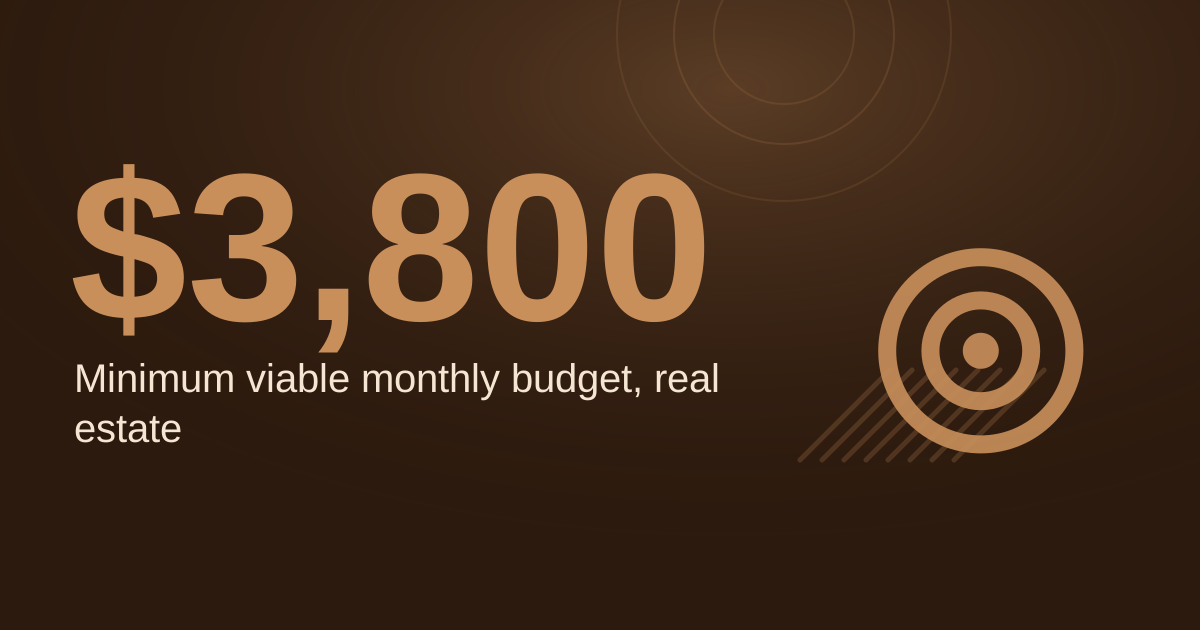
Suggested daily spend, small restaurant
Taller Digital guide 2025 (secondary)
See Sources at the end of the article. Cards marked Assumption are examples, not results.
Which Keywords Should a Restaurant Bid On?
Start with searches where the person wants to sit down, reserve or order. Group them by what the guest is trying to do, because each group needs its own ad text and landing page. A single ad aimed at "restaurant" will attract browsers who are not ready to visit.
| Intent | Example keyword pattern | Send them to |
|---|
| Find a table now | "[cuisine] restaurant near me", "[cuisine] [neighbourhood]" | Page with hours, map and booking button |
| Reserve | "restaurant reservations [city]", "book table [cuisine]" | Booking page |
| Occasion | "private dining [city]", "birthday dinner [city]", "brunch [neighbourhood]" | Event or brunch page |
| Catering | "catering [city]", "office lunch catering" | Catering enquiry form |
These are starting patterns, not measured winners. Confirm each one in Keyword Planner for your own area before you raise bids. Catering searches often need a different page entirely, so compare with the
caterers keyword guide when you split those terms out.
Why Do the Most Popular Keywords Cost So Much?
The most popular restaurant search terms are also the most expensive, according to
TheFork's guide to paid ads for restaurants. Broad terms such as "restaurant" or "food" draw many competitors and many non-buyers at once.
For a small budget, combine a cuisine with a neighbourhood or a booking action. These phrases have fewer bidders and a clearer purpose. The cost per click will still vary by city, so treat any single figure as a local test, not a fixed price.
Which Negative Keywords Stop Wasted Clicks?
Negative keywords block your ad on searches that signal the wrong intent. Review the search terms report every week for the first month, then monthly. Add any query that does not describe a guest.
Common negatives for a restaurant include:
- Job intent: jobs, hiring, salary, careers
- Cooking intent: recipe, how to make, ingredients
- Free intent: free, coupon, if you do not run offers
- Other-business intent: franchise, supplier, wholesale, equipment
Plurals and synonyms are not caught automatically, so add the singular and plural forms of each negative yourself. A short list of well-chosen negatives usually does more than a long list of guessed ones.
Where Should the Ad Appear: Search, Maps or Both?
TheFork's guide notes that selecting Performance Max as the campaign type serves ads to users browsing Google Maps for their next meal, as well as on other Google surfaces. For a restaurant, that can reach people who are already choosing a place nearby. Check that your Google Business Profile has accurate hours and photos first, because those details are what those users see.
Search campaigns with the keyword groups above give more control over the message. Many restaurants run a search campaign for reservations and test a Maps-focused campaign separately, so the results can be compared.
What Does a Restaurant Budget Buy?
The inputs below are assumptions, not benchmarks. The UK guide linked in the stat row suggests £5 to £10 a day for small restaurants, so the example starts at £10 a day. A conversion here means a booking, call or direction request, not a seated party.
| Input or result | Value |
|---|
| Daily budget (assumption, within the £5–£10 range cited) | £10 |
| Days in the month (assumption) | 30 |
| Monthly spend | £300 |
| Average cost per click (assumption) | £1.50 |
| Clicks | 200 |
| Booking or call rate (assumption) | 5% |
| Bookings or calls | 10 |
| Share of bookings that become a seated party (assumption) | 40% |
| Seated parties | 4 |
| Cost per seated party | £75 |
| Average spend per party (assumption) | £60 |
| Revenue from those parties | £240 |
At these inputs, the campaign does not cover its cost on the first visit, because each party must spend £75 to break even. Now change one input. If the booking rate rises to 10% (assumption), the example gives 20 bookings, 8 seated parties at £37.50 each, and £480 of revenue at £60 per party. That is more than the £300 spend. Test the booking rate first, since it moves the result most.
How Do Reviews and Listings Support Paid Ads?
Paid clicks are one part of local visibility. Grubhub advises restaurants to include as much information as possible in their Google Business Profile, including an address, phone number, website URL, operating hours and photos, as described in its
restaurant SEO guide. Its article also notes that a mobile-friendly website can help a page appear higher in local results, since Google evaluates the mobile version of a site.
An agency's
restaurant SEO guide states that more than half of visitors to restaurant websites arrive through organic search, and names Yelp and TripAdvisor as places where customers leave reviews. Paid and free channels reinforce each other, so a clear listing helps the ad click convert.
Loyalty is the other lever.
Square's 2025 report says 82% of restaurant leaders find their loyalty program drives repeat visits, and 83% say it boosts order size. A booking form that captures an email address lets you reach those guests again without buying another click. For a parallel list of food-service terms, see the
coffee shop keyword guide and the
bakeries keyword guide.
FAQ
Which keyword groups should a restaurant start with?
Start with table and reservation searches, because those guests are closest to a visit. Add occasion and catering groups once you can track which phrases produce bookings.
Do I need a Google Ads account before I can research keywords?
To place search ads, you need a Google Ads Manager account with a debit or credit card attached, as
TheFork's guide explains. Check Keyword Planner's current access rules in your account.
Do restaurants need a Google Business Profile?
It costs nothing to set up, and TheFork's guide calls it a good idea whether or not you run paid ads. Keep the hours, address, phone number and photos current.
How much should a small restaurant spend per day?
A UK guide suggests £5 to £10 per day for small restaurants, and £20 to £50 per day for mid-sized restaurants in higher competition areas. Start at the low end and judge results on bookings, not clicks.
Sources
Want the account set up and monitored for you? See the
Google Ads service or
book a free audit.
Free for local businesses
Want this applied to your business?
I'll review your Google presence, local SEO, and ad accounts — and send you a specific action plan within 48 hours. No pitch, no pressure.