CTV Advertising Oklahoma City, OK: Local Guide 2026
July 6, 2026·Nataliia Rumiantsewa· 7 min read All posts
CTV advertising in Oklahoma City, OK lets local businesses run full-screen video ads on streaming services such as Hulu, Peacock and Tubi, targeted by ZIP code. The sources checked for this 2026 update do not publish Oklahoma City CTV rates, CPMs or platform minimums, so this guide leaves those figures out rather than estimate them. The sources do support Google's Display Network reach and benchmark ranges that help frame a test budget. Confirm current rates with each platform before committing money.
Which CTV platforms can an Oklahoma City business buy?
The platforms most often named in local planning are Hulu, Peacock, Tubi and Amazon Prime Video. Each handles ad sales differently. Some offer a self-serve ad manager, while others route buyers through a programmatic demand-side platform that connects to several streaming services at once.
Published terms were not available in the sources for this guide, so treat any minimum spend as unknown until it appears on the platform's own sign-up page. Ask three questions before choosing: Is self-serve available? What is the minimum commitment? Can you target by ZIP code directly, or only by a wider geography?
Platform choice matters less than targeting and creative quality at this stage. A test on one platform with a tight ZIP list teaches more than a broad buy across four platforms with unclear measurement. The Bing Ads guide for local businesses covers another paid channel that local firms often compare at the same planning stage.
How does ZIP-code targeting work for a local business?
ZIP-code targeting is the main reason CTV suits a neighbourhood business. It aims the ad at households in the areas where customers actually live, rather than at anyone watching a streaming service in the metro area.
Start with existing customer data. Pull the ZIP codes of recent purchasers from a point-of-sale or booking system, then rank them by how often they appear. Target the top group first. Adding distant ZIP codes raises spend without adding likely customers.
Demographic layers such as age or household composition can narrow the audience further. Use them only where the data supports it. A salon with most repeat clients from two postcodes gains little from a broad demographic overlay.
How should you read Google's Display and search benchmarks?
CTV is a separate channel from Google Ads, but Google's own figures give useful context for reach and cost. Google states that Display campaigns can reach people across 35 million websites and apps, plus Google-owned properties such as YouTube and Gmail, according to Google's Display Network help page.
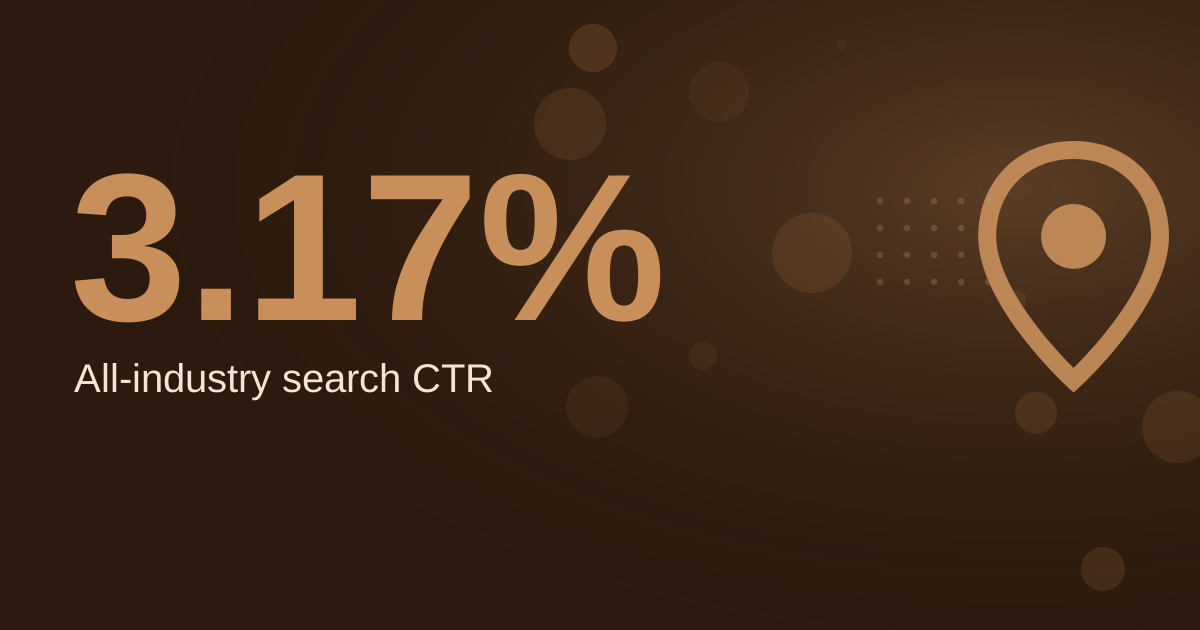
Benchmark data from WordStream, a vendor, puts the average search click-through rate across all industries at 3.17% and the average Display click-through rate at 0.46%. Average search cost per click is $2.69 and Display cost per click is $0.63, per WordStream's industry benchmarks (secondary source; check the current report before relying on it).
These figures measure clicks, which CTV does not generate in the same way. Use them to compare costs across channels, not to predict CTV results.
What does a 90-day CTV budget look like?
The example below uses assumption-labelled inputs. None of the numbers are sourced CTV rates. Replace them with the figures each platform quotes.
For comparison, the same $600 at WordStream's average search cost per click of $2.69 buys roughly 223 clicks ($600 ÷ $2.69). The two numbers measure different things. Clicks show direct response; impressions show whether the business name reaches the right households. Judge CTV on awareness signals, not click counts.
If the quoted CPM is higher than $25, the same budget buys fewer impressions. Recalculate before approving a longer flight.
How do you set up a CTV campaign step by step?
The checklist below follows a sequence that keeps spend controlled from the first week.
Step
Action
Check before moving on
1
Pull top ZIP codes from recent customers
List has 5 to 10 ZIPs (assumption)
2
Pick one platform for the first test
Self-serve access and minimum confirmed
3
Build a 15-second, 16:9 video (assumption)
Logo, benefit and call to action all visible
4
Set a frequency cap
Cap is written down and applied in the ad manager
5
Run a 4-week test (assumption)
Impressions delivered match the quoted plan
6
Review signals against a baseline
Baseline captured before launch
7
Scale only if signals move
Decision logged with the data used
Step 3 is a working assumption about format and length rather than a platform requirement. Confirm file specifications with the chosen platform before production.
How do you measure whether CTV is working?
CTV builds familiarity, which shows up slowly. Track signals against a baseline recorded before the campaign starts. Useful signals include direct searches for the business name, branded search clicks if Google Ads is running, and direct website visits during flight dates.
Ask new customers how they heard about the business, and record the answers consistently. Simple tallies over several weeks are more useful than a single survey.
Allow at least 60 to 90 days before judging the channel. Short tests can show whether delivery and targeting work, but they rarely show lasting brand effects. A Google Ads service can connect branded search tracking to a CTV test.
Should CTV run alongside Google Ads?
Running both channels can help, because CTV builds awareness and search captures people who look for the business afterwards. The sources reviewed here do not quantify that combined effect for Oklahoma City, so treat it as a hypothesis to test with a holdout ZIP group or a before-and-after comparison.
If search ads already run, check whether branded keyword volume moves during a CTV flight. Businesses that want a broader view of their channel mix can also compare the approaches in the Minneapolis CTV guide and the Detroit CTV guide.
FAQ
Is CTV advertising worth it for a small business in Oklahoma City?
It can be, if customers live within a reachable ZIP group and the business can test with a limited budget. Judge it on awareness and branded search signals over 60 to 90 days, not on immediate clicks.
What is the minimum budget for a CTV test?
The minimum depends on the platform and the buying route, and the sources for this guide did not confirm it. Check the sign-up page or ad manager of each platform under consideration.
Can I target only my own ZIP codes?
Some platforms support ZIP-code targeting directly, while others offer wider geographic options. Confirm the targeting controls in the platform's ad manager before building a ZIP list.
How is CTV different from Google Display ads?
CTV runs video on streaming services on TV screens. Google Display runs banner and responsive ads across websites, apps and Google-owned properties, as described in Google's help documentation. The two channels are measured differently and suit different goals.
Local marketing strategist with 10+ years at global agencies — OMD, Dentsu, GroupM, and BBDO. Now helping small businesses get the same data-driven edge. Based in Europe, working with clients in the US, UK, Australia, and beyond.