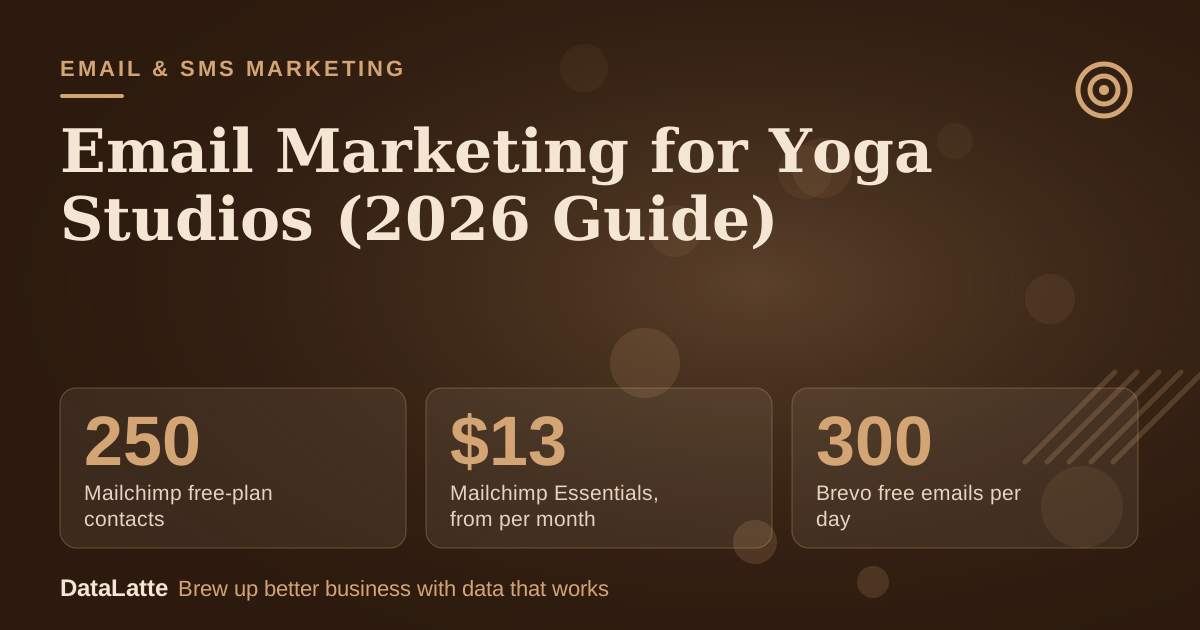
A yoga studio needs three emails before it needs a newsletter: a welcome for new students, a reminder before a booked class, and a win-back for students missing for 60 days. On vendor pricing checked in November 2026, those run free at very small lists and from $13 a month at 500 contacts on Mailchimp Essentials.
→
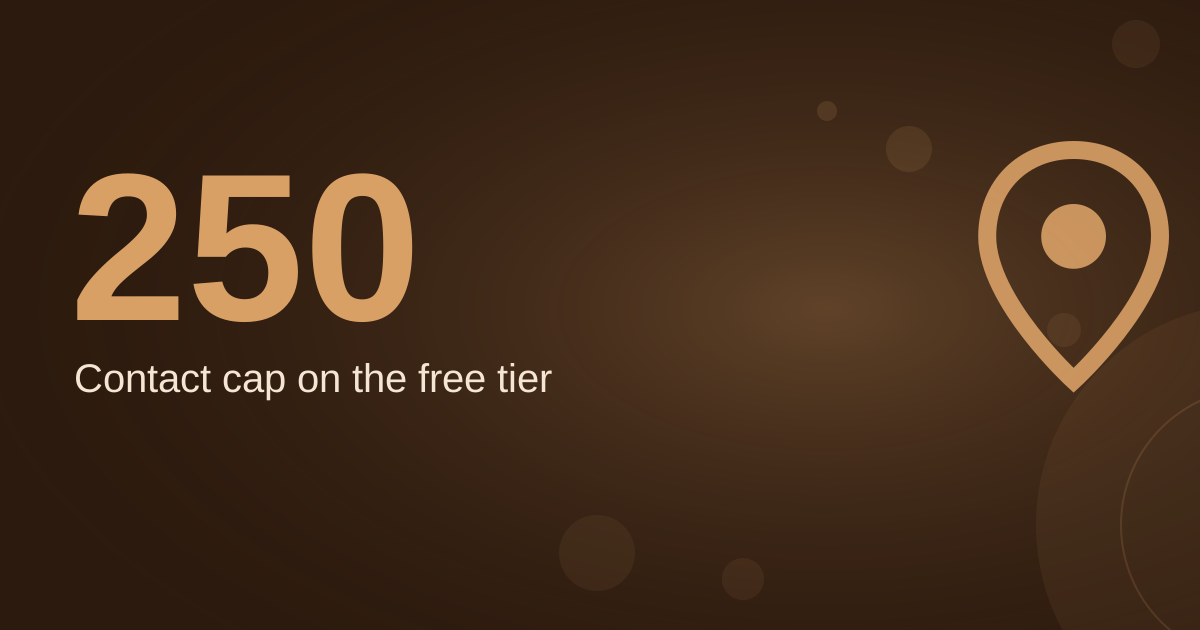
Mailchimp free-plan contacts
Mailchimp pricing, Nov 2026
→
Mailchimp Essentials, from per month
Mailchimp pricing, Nov 2026
→
Brevo free emails per day
Brevo pricing, Nov 2026
→
Brevo Starter, from per month
Brevo pricing, Nov 2026
See Sources at the end of the article. Cards marked Assumption are examples, not results.
Class schedules change weekly, so studio email fails when it announces a timetable that no longer exists. Link every send to the live booking page instead of pasting times into the message. The email sells the habit; the booking page carries the facts.
Which emails should a yoga studio send first?
Send the welcome within an hour of the first signup. It carries the studio address, parking or entry details, what to bring, and one beginner-friendly class to try. New students deciding between two studios usually pick the one that removed the most uncertainty.
Send reminders from the booking system, not by hand. A reminder 24 hours before class, with a one-tap reschedule link, protects attendance better than a monthly newsletter. Studios using
AI-powered email tools can draft these, but trigger times should come from real bookings.
Send the win-back at 60 days of absence. One message, one gentle offer, no guilt copy. Students lapse because of work, travel and injury more often than dislike, so the tone should assume a welcome return rather than a lost sale.
What should a studio newsletter contain?
Keep it monthly and short: one schedule change, one workshop or event, one useful practice note, and one clear booking link. Four blocks, readable in a minute. Long wellness essays compete with every other inbox; a studio newsletter wins on usefulness, not depth.
Segment by behaviour, not demographics. Intro-offer buyers need a path to a second class. Members need timetable and community news. Lapsed students need the win-back, not the newsletter. The platform comparisons in
marketing automation for small business show which entry tiers include that segmentation.
Assumption example. Assume a studio sends a win-back to 200 lapsed students and 5% return for one $25 class each. That is $250 from one send. If segmentation and drafting take 2 hours valued at $30 an hour, the send clears its $60 labour cost. Every input here is an assumption; substitute real list size, price and return rate.
Under 250 contacts, Mailchimp's free plan or Brevo's free tier covers a welcome and reminders, on vendor pricing checked in November 2026. Brevo allows 300 emails a day free, which suits small daily booking messages better than a monthly send cap.
Between 500 and 2,000 contacts, entry paid tiers from $9 to $13 a month add the automation depth a studio actually uses. Pay for multi-step sequences and list segmentation, not for design templates. The studio's own photos outperform stock wellness imagery in every inbox.
Studios selling memberships alongside classes should read
Best AI tools for small business marketing before adding writing tools. Drafting help only pays once the three core sends run on schedule.
FAQ
How often should a yoga studio email its list?
Three automated sends (welcome, reminder, win-back) plus one monthly newsletter is enough for most studios. More frequent newsletters usually repeat the timetable and train students to ignore the inbox. Event weeks justify an extra send; quiet weeks do not need filling.
At under 250 contacts, a free plan from Mailchimp or Brevo runs the core sends at no cost, on November 2026 vendor pricing. Brevo's 300 free emails a day suits daily reminders. Studios passing 500 contacts should compare entry tiers on automation steps and segmentation, not templates.
Should class reminders come from email or the booking app?
Both, with different jobs. The booking system owns the transactional reminder because it knows the real booking. Email owns the welcome, the newsletter and the win-back because those need writing, not just a timestamp. Splitting them keeps cancellations accurate and marketing readable.
How does a studio grow its email list legally?
Ask at booking, at the desk and on the website, with an explicit opt-in. Never import a booking system's full history into a marketing list without consent; those addresses did not agree to newsletters. A short signup incentive, such as a first-class guide, converts better than a discount pop-up.
Sources
- Mailchimp pricing (free plan 250 contacts; Essentials from $13/month at 500 contacts; checked November 2026)
- Brevo pricing (free plan 300 emails/day; Starter from $9/month; checked November 2026)
Setup help is on the
Email and SMS service page. A send calendar for a specific studio is available through the
free audit.
Free for local businesses
Want this applied to your business?
I'll review your Google presence, local SEO, and ad accounts — and send you a specific action plan within 48 hours. No pitch, no pressure.