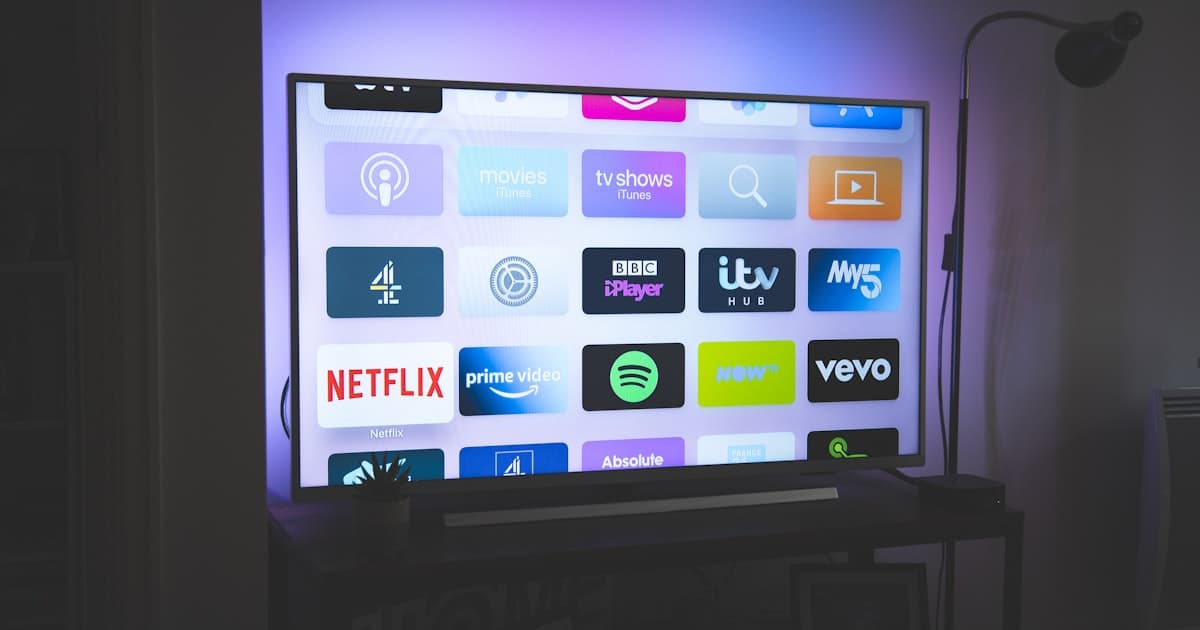
European Connected TV advertising is growing faster than any other digital channel on the continent — yet most small businesses haven't touched it. While the European CTV market has historically been fragmented across languages and platforms, 2025 and 2026 have brought consolidation, self-serve ad tools, and GDPR-compliant targeting that finally makes local CTV campaigns viable for businesses spending under €2,000 per month.
Whether you run a hair salon in Amsterdam, a café in Berlin, or a fitness studio in Milan, this guide explains how European CTV works, what it costs in euros, and how to navigate the regulatory landscape without getting tangled in compliance issues.
Average cost per thousand impressions across key EU markets
62%↑
EU CTV Viewers
Europeans using at least one ad-supported streaming service
2.1hrs↑
EU CTV Viewers
Average daily CTV viewing time per European adult
Estimates for illustration; actual numbers vary.
The European CTV Landscape in 2026
Europe's streaming market is genuinely fragmented — and that's both a challenge and an opportunity. Less advertiser competition per platform means lower CPMs in many markets compared to the US or UK. The key is understanding which platforms dominate which countries.
RTL+ (Germany) is Germany's largest ad-supported streaming platform, operated by Bertelsmann. With over 6 million active users and strong reality TV and news content, RTL+ CPMs range from €18–€28. It offers postcode-level targeting in Germany and Austria. Joyn (formerly Joyn Plus+) is a competing AVOD platform reaching 10 million German households and is particularly accessible for smaller advertisers with CPMs of €14–€22.
CANAL+ (France) dominates French premium streaming, but its ad inventory is limited and primarily sold through agencies. For smaller French advertisers, TF1+ and M6+ (France's major free-to-air broadcaster VOD platforms) are more accessible, with CPMs of €16–€24. France Télévisions Slash targets younger French audiences with CPMs around €14–€20.
Mediaset (Italy) operates Mediaset Infinity, Italy's largest free streaming platform with 8 million monthly users. CPMs run €14–€22. RAI Play (Italy's public broadcaster) offers ad inventory at €12–€18 CPM and reaches an older, more traditional Italian audience.
Videoland (Netherlands) is RTL's Dutch streaming platform with 1 million subscribers. The Netherlands also has strong penetration of Kijk.nl (Talpa Network) which is free and ad-supported — CPMs range from €16–€24. The Dutch market is unusually advanced in programmatic CTV buying, with DPG Media offering self-serve options for smaller Dutch advertisers.
Atresplayer and Mitele (Spain) are the streaming arms of Atresmedia and Mediaset España respectively. Combined, they reach over 14 million Spanish streaming viewers. CPMs are among Europe's lowest at €11–€18, reflecting lower advertiser competition in the Spanish market despite its population size.
Pluto TV operates across all major European markets (Germany, France, Spain, Italy, UK) and is the most accessible pan-European FAST platform for smaller advertisers. CPMs range from €8–€15 across markets, and campaigns can be activated in multiple countries simultaneously from a single DSP seat.
Amazon Prime Video and Netflix ad tiers operate across Europe but restrict local SMB buying to programmatic channels — accessible via DSPs like The Trade Desk, Xandr, or StackAdapt with EU inventory integrations.
Top Performing European Markets for Local Business CTV
Germany (DE) is Europe's largest CTV market by ad spend and the most mature programmatically. German consumers are heavy CTV users — 42% of German households now have a Smart TV as their primary viewing device. The German market has strict content standards and strong audience data infrastructure. For local businesses in Germany, RTL+ and Joyn offer the best combination of reach and local targeting. CPMs in Munich and Hamburg run 20–30% above the national average; eastern German cities offer CPMs 15% below average.
France (FR) has the most engaged streaming audience in Western Europe (2.4 hours daily average). French viewers are loyal to domestic content, which means national broadcaster VOD platforms (TF1+, M6+, France.tv) command strong engagement. Local targeting in France operates at the département level — not quite as granular as German postcode targeting, but effective for city-specific campaigns. A hair salon in Lyon can target the Rhône département; a café in Paris can target the Île-de-France region.
Italy (IT) is the highest-growth CTV market in Europe in 2026, with streaming adoption accelerating rapidly. Italy's CTV CPMs remain 25–30% below Germany's, making it one of Europe's best value markets for small business advertisers. Local targeting via Mediaset Infinity operates at the regional (regione) level — sufficient for a fitness studio in Milan targeting all of Lombardy, but less granular than northern European markets.
Netherlands (NL) punches above its weight for CTV advertising quality. The Netherlands has Europe's highest household broadband penetration (96%) and strong digital advertising infrastructure. Dutch programmatic CTV buying is accessible to businesses spending as little as €500/month. CPMs in Amsterdam and Rotterdam run €20–€28.
Spain (ES) represents Europe's best CTV value proposition: large population, low advertiser competition, and falling CPMs. A fitness studio in Madrid or Barcelona can reach local streaming audiences for €10–€15 CPM on Atresplayer or Mitele — roughly half the cost of equivalent German inventory.
GDPR: What Small Business CTV Advertisers Need to Know
GDPR is the most significant compliance consideration for European CTV advertising, and it has genuinely changed what targeting is possible — but it hasn't eliminated effective local targeting.
What still works under GDPR:
Geographic targeting (city, region, postcode) — this is contextual and doesn't require personal data consent
Contextual targeting (content category adjacency — placing ads next to fitness content, food content, etc.)
First-party data from platforms (registered user segments where users have explicitly consented to ad personalisation)
Broad demographic targeting using aggregated, anonymised data
What requires explicit consent (and is increasingly restricted):
Cross-site tracking and third-party cookie-based targeting
Household-level purchase data targeting
Granular interest profiling from third-party data brokers
Practical guidance: For most small businesses, GDPR's impact is minimal if you use geographic and contextual targeting rather than behavioural targeting. Running an ad for a café in Frankfurt targeting all streaming viewers in a 5 km radius is fully GDPR-compliant and doesn't require any special consent framework. The complexity arises when you want to target "coffee-lover households" using cross-platform behavioural data — that requires consent under GDPR and most platforms now restrict it.
IAB Europe's Transparency and Consent Framework (TCF) is the standard consent mechanism used by programmatic CTV platforms in Europe. When you buy through a DSP, they handle TCF compliance on your behalf — you don't need to build consent infrastructure yourself.
Which Local Businesses Benefit Most
Coffee shops and cafés thrive in European CTV because café culture is foundational to European urban life. Morning viewing slots (7–9am) and weekend afternoon streaming (1–4pm) are peak intent windows. A café in Berlin targeting a 3 km radius on Joyn during Saturday afternoon streaming can generate strong foot traffic correlation. European café audiences respond to authenticity — artisan coffee, local sourcing, and neighbourhood identity themes outperform generic messaging.
Hair salons and beauty businesses in European cities face less CTV competition than their US or UK counterparts, meaning CPMs are more affordable and share of voice is higher. French and Italian audiences particularly respond to beauty and self-care advertising in premium streaming environments — the alignment between aspirational content and beauty services creates strong contextual fit on CANAL+ and Mediaset.
Pet groomers benefit from Europe's growing pet ownership trend — pet ownership increased 18% across the EU between 2020 and 2025. Germany's pet care market is particularly robust. Targeting "pet owner" interest segments on German programmatic CTV platforms delivers efficient reach to an audience with clear recurring service needs.
Fitness studios and gyms should align campaigns with European seasonal rhythms: January (new year), September (post-holiday restart), and the spring pre-season (March–April in northern Europe). Germany's Joyn and the Netherlands' Kijk.nl both offer sports content adjacency targeting that reaches fitness-oriented audiences.
Budget Guidance for European Markets
Single-city trial: €500–€800/month. Targets one city radius (5–10 km) on one platform. Delivers 25,000–45,000 impressions.
Regional campaign: €1,500–€3,000/month. Covers a full metropolitan region (e.g., Greater Paris, Munich metro area) with frequency capping.
Multi-market campaign: €5,000–€12,000/month. Simultaneous campaigns in two or three European markets with localised creative.
For businesses operating in a single country, direct platform buying (RTL+, Joyn, TF1+) is often cheaper than DSP fees. For cross-border campaigns, a DSP (The Trade Desk, Xandr, or StackAdapt) is more efficient.
Common Mistakes in European CTV
Assuming one campaign works across Europe: A German coffee shop audience and a Spanish coffee shop audience have different viewing habits, platform preferences, and messaging sensibilities. Always localise creative per market.
Ignoring language: Running a German-language ad to a French-language audience (or vice versa) in border regions (Alsace, South Tyrol) damages brand perception. Geo-fence tightly to language regions.
Under-budgeting for creative translation: If you expand to a new European market, budget €500–€1,500 for professional translation and voiceover adaptation of your video creative. Machine translation quality is not sufficient for broadcast-adjacent placements.
Conflating GDPR compliance with "no targeting possible": Too many European small business owners hear "GDPR" and assume targeting is impossible. Geographic and contextual targeting is fully GDPR-compliant and highly effective.
Using US-market CPM benchmarks: European CPMs are generally 20–40% lower than US equivalents. Don't assume your US campaign performance data applies to European markets.
Frequently Asked Questions
Do I need a European legal entity to buy CTV advertising in the EU?
No. Many DSPs allow non-EU businesses to buy EU inventory. You do need to ensure your campaign complies with GDPR, but the technical compliance is managed by the platform and DSP on your behalf.
Which European market should I start with as a non-European business?
Germany is the largest and most programmatically advanced market. The Netherlands is the easiest entry point due to English-language business infrastructure and self-serve platform tools. Spain offers the best CPM value for testing.
How granular is geographic targeting in European CTV?
It varies by market. Germany and the Netherlands support postcode-level targeting. France supports département-level (roughly 500,000 population units). Italy and Spain typically support region-level targeting. All markets support city-level targeting.
What creative specs do European CTV platforms require?
Standard specifications: 1920x1080 pixels (16:9), MP4 or MOV format, H.264 codec, stereo audio, 15 or 30 seconds duration. Most European platforms require ads be non-skippable and meet minimum audio loudness standards (EBU R128 normalisation, which is -23 LUFS). Your video production team should be familiar with these specs.
Local marketing strategist with 10+ years at global agencies — OMD, Dentsu, GroupM, and BBDO. Now helping small businesses get the same data-driven edge. Based in Europe, working with clients in the US, UK, Australia, and beyond.