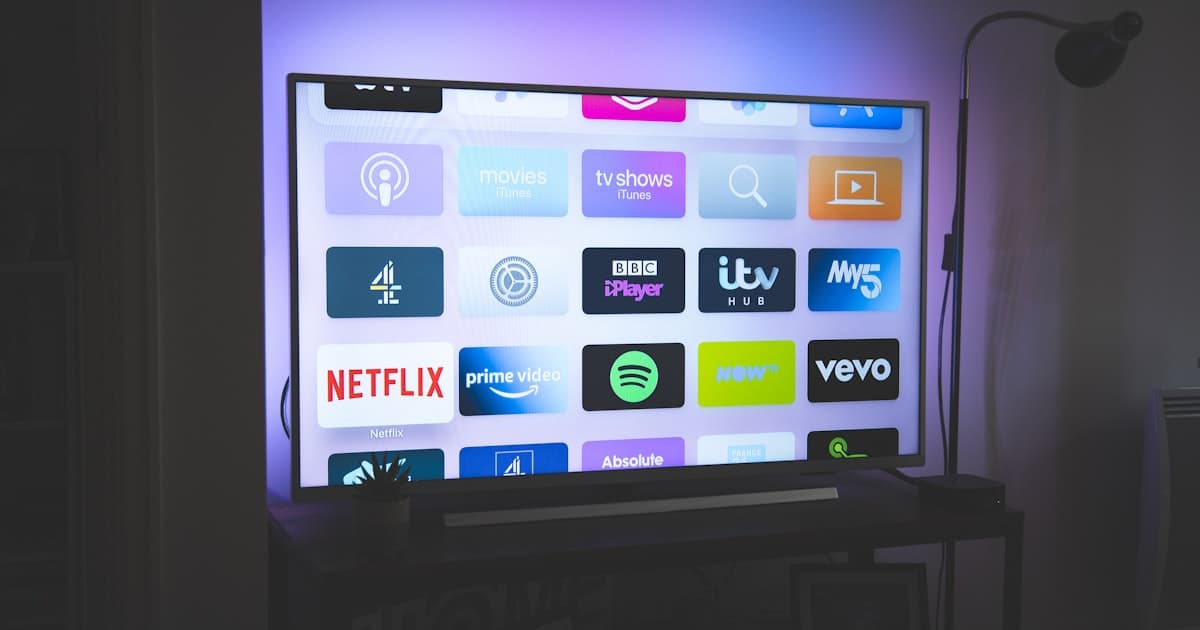
The UK is one of the most mature and accessible CTV advertising markets in the world for small businesses. Britain's long tradition of commercial broadcast television has produced streaming platforms with professional ad infrastructure, robust local targeting tools, and — crucially — a cultural expectation of TV advertising that makes consumers receptive to video ads in a streaming environment. A hair salon in Manchester, a fitness studio in Edinburgh, or a café in Bristol can now run TV-quality video ads targeting their exact postcode radius for as little as £500 per month.
This guide covers everything a UK small business needs to know about CTV advertising in 2026, from platform selection to Clearcast compliance.
47M↑
UK Streaming Viewers
UK adults watching streaming content at least weekly
£20→
UK Streaming Viewers
Average cost per thousand impressions across major UK BVOD platforms
68%↑
UK Streaming Viewers
UK adults reached by broadcaster VOD platforms monthly
3.1hrs↑
UK Streaming Viewers
Average daily TV and streaming viewing time per UK adult
Estimates for illustration; actual numbers vary.
The UK Streaming Landscape in 2026
The UK has a distinctive CTV ecosystem built around its public and commercial broadcaster streaming services — collectively called BVOD (Broadcaster Video on Demand). These platforms are the most important entry points for small business CTV advertising.
ITVX is the UK's most-used free streaming service, with 37 million registered users as of early 2026. ITVX carries ITV's full content catalogue including Coronation Street, Love Island, and major sports. It is free to access with ads, making it the largest premium AVOD platform in the UK. ITVX CPMs range from £18–£32, with regional targeting available at the ITV region level (13 regions covering England, Wales, and Scotland) and, for programmatic buyers, down to postcode level. ITVX's Planet V platform provides self-serve programmatic access for smaller advertisers.
Channel 4 Streaming (formerly All 4) reaches 30 million registered users and skews younger and more urban than ITVX. Channel 4's audience is particularly strong in cities — London, Birmingham, Leeds, Bristol — and among 16–34 year olds. Channel 4 has been particularly supportive of small business advertisers through its "4Sales" unit, which has packages designed for businesses spending from £5,000 upward. CPMs range from £20–£35 on Channel 4.
Channel 5 (My5) is the smallest of the main commercial BVOD platforms but has a loyal audience for reality TV and US drama. CPMs are £14–£22 — the most affordable major BVOD option for UK small businesses. My5 is underutilised by local advertisers, creating a lower-competition environment.
Sky Glass and Sky Go (Sky UK / Comcast) offer premium sports, movies, and drama content. Sky's addressable TV product — AdSmart — is one of the most sophisticated local TV targeting tools available to UK small businesses. AdSmart allows postcode-level targeting on Sky channels and Sky Originals content, with campaigns starting from as little as £3,000 in total spend. CPMs vary by audience segment but typically fall between £25–£45.
Amazon Prime Video UK introduced its ad-supported tier in 2024 and has strong CPMs (£20–£30) backed by Amazon's purchase data for interest and income targeting. It's particularly effective for businesses targeting higher-income households.
Netflix UK and Disney+ UK offer ad tiers but are primarily accessible for local businesses through programmatic DSPs — direct booking requires agency relationships and higher minimum commitments.
Pluto TV operates in the UK with a broad FAST channel offering. CPMs are the most affordable in the market at £10–£16, making it an ideal testing ground for small businesses with limited video advertising experience.
Clearcast Compliance: What UK CTV Advertisers Must Know
Clearcast is the UK industry body that reviews and approves TV advertisements before broadcast. This is the most important regulatory consideration for UK CTV advertising.
Which platforms require Clearcast clearance?
ITVX, Channel 4, Channel 5 (My5), and Sky AdSmart all require Clearcast clearance for video ads, as they are extensions of regulated broadcast services under OFCOM's oversight. If you want to advertise on these platforms, your video ad must be submitted to Clearcast and receive a Clock Number before it can run.
What does Clearcast review?
Clearcast checks that your ad complies with the BCAP (Broadcast Committee of Advertising Practice) Code. For local service businesses, the most common issues are:
Unsubstantiated claims ("best coffee in London" requires evidence or qualification)
Price claims that must include VAT
Before/after imagery for beauty treatments (requires careful framing)
Testimonials and reviews (must be genuine and verifiable)
How long does Clearcast take?
Standard clearance takes 3–5 business days. Rush clearance is available for an additional fee. Build this into your campaign planning timeline — do not submit creative the week you want to launch.
What doesn't need Clearcast clearance?
Amazon Prime Video, Netflix UK, and Pluto TV are not regulated broadcast services and do not require Clearcast clearance. Programmatic CTV inventory served through non-BVOD streaming apps also typically bypasses Clearcast requirements, though individual apps may have their own content standards.
Practical advice: For most small businesses, producing a Clearcast-ready ad isn't dramatically different from producing a standard video ad. Avoid superlatives without evidence, include VAT in any prices shown, and use professional-quality production. If you work with a video production agency in the UK, they'll be familiar with the requirements.
Regional UK Targeting: London vs Manchester vs Scotland
UK CTV platforms offer some of the best regional targeting infrastructure of any market globally, built on decades of ITV regional broadcasting.
London (ITV London region) is the UK's highest-CPM CTV market, with intense advertiser competition. CPMs in the London region run 25–35% above the UK national average on ITVX and Channel 4. The advantage for London small businesses is extreme audience density — a 3 km radius in Zone 2 can contain more potential customers than a 20 km radius in rural England. Sky AdSmart postcode targeting is particularly precise in London.
Greater Manchester is the UK's second-largest city region and a strong CTV market for local businesses. The ITV Granada region covers Manchester, Liverpool, Leeds, and the North West — a combined population of 8 million. Manchester CPMs are 5–10% below London, with similarly dense urban audiences. Channel 4 over-indexes in Manchester, Sheffield, and Leeds compared to the UK average, reflecting its strong northern UK audience.
Scotland is served by STV Player (the Scottish affiliate of ITV) as well as UK-wide BVOD platforms. STV Player has 3.5 million registered Scottish users and offers Scotland-specific targeting unavailable through ITVX. For businesses in Glasgow, Edinburgh, Aberdeen, or Inverness, STV Player often outperforms ITVX for local reach. STV Player CPMs are £16–£26. BBC iPlayer Scotland (the BBC's streaming service with geo-targeted Scottish content) is not an ad-supported platform, but the presence of BBC Scotland content means Scottish audiences are fragmented across multiple platforms.
Wales is similarly served by S4C (Welsh-language content) and the Welsh-English mainstream platforms. For Welsh businesses, ITVX (ITV Wales region) and Channel 4's significant Cardiff operations make both platforms strong choices.
Midlands and the South West are often overlooked by advertisers who focus on London. ITVX's Central and West Country regions offer CPMs 15–20% below London rates with strong viewer engagement among the 35–65 demographic that dominates these areas.
Which Local Businesses Benefit Most
Coffee shops and cafés are natural CTV advertisers in the UK, where tea and coffee culture permeates daily life and routine. The UK's pub closure crisis has elevated café culture as a social anchor — and targeting streaming viewers within walking distance of your café during breakfast and evening viewing slots can drive meaningful foot traffic. A 15-second ad on ITVX targeting a Manchester city centre postcode radius costs approximately £800–£1,200 per week for meaningful frequency.
Hair salons and barbershops benefit enormously from Channel 4's 16–34 skew and its fashion and lifestyle content adjacency. The UK beauty market is among the most competitive in Europe, and CTV allows salons to reach a local audience in a premium, non-cluttered environment. Running a 15-second spot before a fashion show stream or a reality TV episode targets exactly the mindset of a potential salon client.
Pet groomers are ideal CTV advertisers in the UK, where the "pet humanisation" trend has dramatically elevated spending on pet services. The UK has 34 million pets (including 13 million dogs). ITV Wales and ITV Central regions over-index for pet ownership versus London, giving groomers in these regions particularly cost-efficient access to their target audience. Targeting "pet owner" programmatic segments on ITVX's Planet V platform delivers strong audience alignment.
Fitness studios and gyms should time UK CTV campaigns to three key windows: January (new year fitness resolutions), September (back-to-routine post-summer), and pre-summer (April–May, when body confidence motivation peaks). Sky AdSmart is particularly effective for premium fitness studios targeting high-income households — the ability to reach specific postcodes (e.g., targeting affluent SW London postcodes for a Clapham yoga studio) makes it one of the most precise local advertising tools available in the UK.
Budget Guidance for UK Small Businesses
Testing campaign: £500–£900/month. Runs on My5 or Pluto TV, targeting a postcode cluster. Delivers 25,000–50,000 impressions.
Core local campaign: £1,500–£3,000/month. Covers ITVX or Channel 4 Streaming with postcode/ITV region targeting and frequency capping of 2–3 views per household per week.
Sky AdSmart campaign: Minimum £3,000 in total spend. Postcode-level precision on Sky's premium inventory. Best for businesses targeting high-income households.
Seasonal burst: £3,000–£6,000 for a 4–6 week campaign at peak periods (January, pre-summer, Christmas).
For businesses new to CTV, ITVX's Planet V self-serve platform is the recommended entry point. It provides access to ITVX's 37 million registered users, supports postcode targeting, and has a self-serve interface designed for non-specialist advertisers.
UK Seasonality
UK CTV viewing peaks strongly in autumn and winter, driven by longer dark evenings and the cultural habit of settling in to watch TV from October through February. The Christmas advertising window (November–December) is the most competitive and expensive. January is the highest-value acquisition window for fitness, beauty, and wellness businesses. Summer (June–August) sees reduced CTV viewership — partially offset by major sports events (Wimbledon, Euro football, cricket) that drive Kayo-equivalent sports streaming on Sky and ITV.
Common Mistakes in the UK Market
Not budgeting for Clearcast clearance time: UK businesses routinely delay campaigns because they didn't account for the 3–5 day Clearcast review process. Submit creative two weeks before your launch date.
Treating the UK as one region: London advertising strategy doesn't apply to Manchester, Edinburgh, or Bristol. Regional CPMs, audience demographics, and platform preferences vary significantly.
Overlooking STV Player for Scottish campaigns: Businesses in Scotland who run ITVX-only campaigns miss the Scotland-specific targeting and lower CPMs available on STV Player.
Running 30-second ads only: The UK streaming environment favours 15-second non-skippable ads for local businesses. Longer formats work for complex offers but most local service businesses communicate their value proposition in 15 seconds more effectively and at lower cost.
Confusing VOD with linear TV buying: UK linear TV requires significantly higher minimum spends (typically £20,000+) and agency relationships. BVOD and programmatic CTV have entirely different buying processes that are accessible at much lower budgets.
Frequently Asked Questions
Do all UK CTV platforms require Clearcast approval?
No. Clearcast is required for ITVX, Channel 4, Channel 5 (My5), and Sky content (as broadcast extensions). Amazon Prime Video, Netflix UK, and Pluto TV do not require Clearcast clearance, making them faster to launch with but slightly lower in brand-safety prestige.
How does Sky AdSmart work for a small local business?
Sky AdSmart delivers addressable TV ads to Sky households based on postcode, demographic, and interest data. You upload your creative, set your target postcodes (as granular as individual streets in some areas), set your budget, and Sky delivers the ad during normal Sky channels to only the targeted households. The minimum effective spend is approximately £3,000, which makes it best suited for established local businesses rather than very early-stage advertisers.
Can I run the same video creative on CTV that I use for Facebook or YouTube?
Technically yes for non-Clearcast platforms, but it's not recommended. Facebook and YouTube creative is often formatted for mobile (vertical or square), includes text overlays (because mobile users often watch without sound), and is designed for a skip-ready environment. CTV creative should be 16:9 horizontal, audio-first (viewers expect to hear ads on TV), and designed to communicate the call-to-action verbally since viewers aren't clicking on a CTV screen.
Is CTV more effective than Google Ads for UK local businesses?
They serve different roles. Google Ads captures demand (people actively searching for your service). CTV builds demand (reaching people who don't know you yet but are in your target audience). The most effective local marketing strategy uses both: CTV to build brand awareness in your radius, and Google Ads to capture the search intent it generates. CTV-first then Google Ads is a proven funnel for local service businesses with budgets above £2,000/month combined.
Local marketing strategist with 10+ years at global agencies — OMD, Dentsu, GroupM, and BBDO. Now helping small businesses get the same data-driven edge. Based in Europe, working with clients in the US, UK, Australia, and beyond.