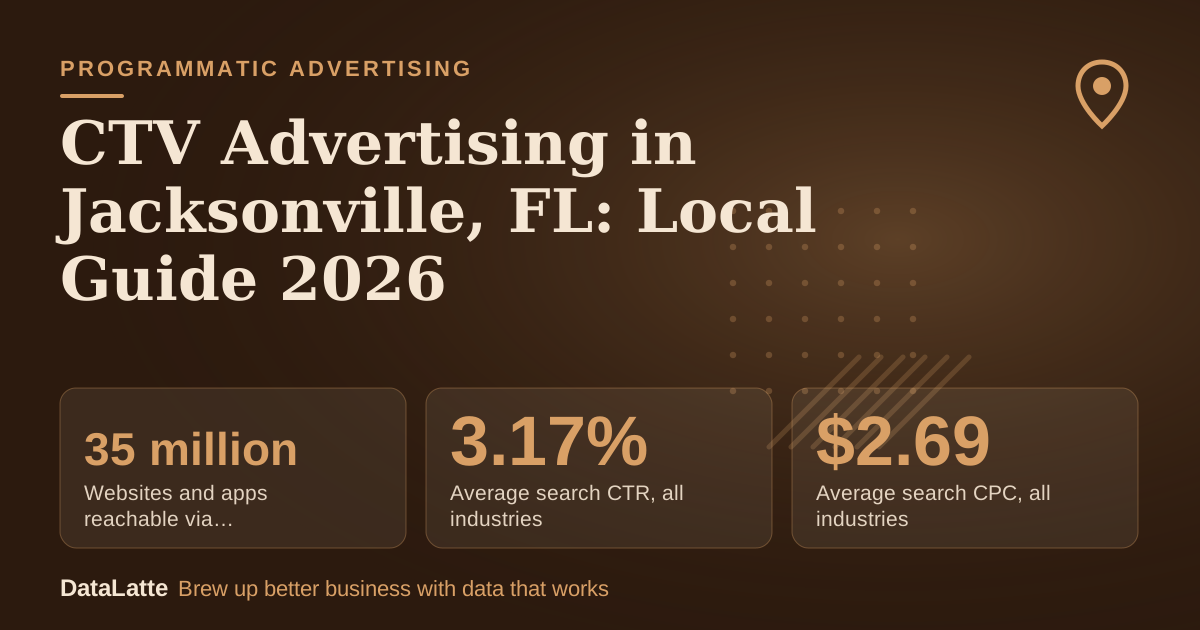
CTV Advertising in Jacksonville, FL: Local Guide 2026
July 6, 2026·Nataliia Rumiantsewa· 7 min read All posts
Connected TV (CTV) advertising lets a Jacksonville, FL business place short video ads in front of households streaming shows on platforms such as Hulu and Peacock. Targeting can be narrowed by ZIP code and demographics. The practical approach is a small, time-limited test with a fixed budget, followed by a review of results after 60 to 90 days. This guide covers how the channel works, how it compares with search and display using published benchmarks, a worked budget example, and how to measure whether it is working.
What Is CTV Advertising for a Jacksonville Business?
CTV ads run on the television screen through streaming services, so they reach households rather than individual phones. A viewer sees a video ad in a TV-style environment, which is a different experience from a search result or a social feed. The format is built for brand familiarity rather than immediate clicks.
That difference affects how the spend should be judged. Search ads capture people who already want what a business sells, while CTV builds recognition before that need appears. Measure it on that basis, not on click volume.
How Do CTV, Display, and Search Compare?
The table below separates the three channels by what they reach and how they should be measured. Rows for Google Display and Google Search use published figures. The CTV row lists no rate because the sources reviewed here do not publish CTV rates or minimums.
Channel
Who it reaches
Main targeting control
Published benchmark
Measure first
CTV (streaming TV)
Households watching streamed video
ZIP code radius, demographics
None in these sources; use the platform rate card
Branded search, direct traffic
Google Display
Users across 35 million websites and apps, plus YouTube and Gmail (Google Ads Help)
Use the table to decide which channel fits the goal. CTV suits brand building in a defined area, search suits capturing existing demand, and display sits between them for broad reach.
How Do Local Businesses Target CTV Audiences?
Most local CTV buys start with geography. A business can enter its address and choose a radius, or pick specific ZIP codes where its customers live. Demographic filters such as age, income, or household composition can narrow the audience further, but each filter reduces reach and usually raises cost. Add them one at a time so the effect of each is visible.
Frequency is the second setting to control. Too many exposures to the same household wear out the message, and too few may not register. Set a cap in the platform and review it weekly during the first month.
Google's own display product follows a similar logic of broad reach with targeting controls. According to Google's Display campaign help page, Display campaigns can reach people across 35 million websites and apps, including YouTube and Gmail. That is a different channel from CTV, but it shows how a platform can extend reach beyond search.
What Do Published Benchmarks Say About Search and Display Costs?
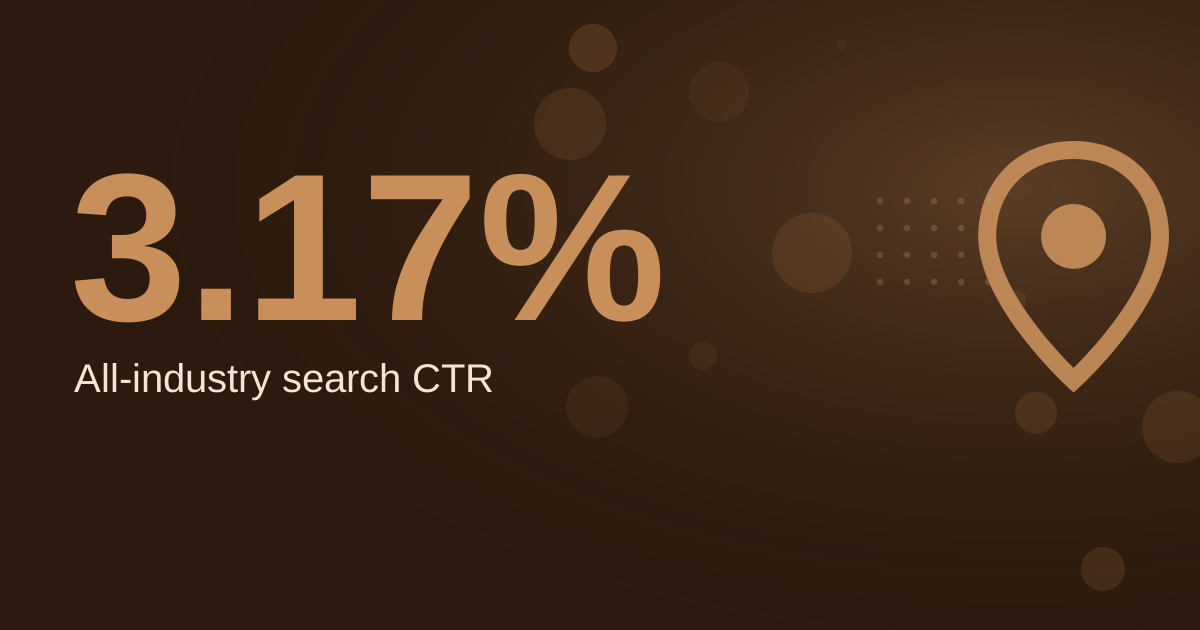
Benchmarks help set expectations before spending begins. WordStream's published Google Ads averages across all industries give a search click-through rate of 3.17% and a display click-through rate of 0.46%. The average search cost per click is $2.69 and the display cost per click is $0.63 (WordStream, secondary).
These figures are averages across many advertisers, not local businesses in Jacksonville specifically. Use them as a sanity check rather than a forecast. If search metrics sit far from these averages, investigate the cause before adding budget to any channel.
How Much Should a Jacksonville Business Budget for a CTV Test?
The sources used for this guide do not publish current CTV rates, CPMs, or platform minimums for Hulu, Peacock, or other services. Check each platform's rate card before committing, and use the calculation below to test different budgets against the quoted numbers.
The worked example for a 4-week test uses the following inputs, all labelled as assumptions for illustration:
Test budget: $500 over 4 weeks (assumption)
Cost per thousand impressions (CPM): $25 (assumption)
Target frequency: 4 impressions per household per month (assumption)
Cost per household reached = $500 ÷ 5,000 = $0.10.
If the platform's real CPM is higher, the same budget reaches fewer households, so rerun the numbers with the quoted CPM before launch. A test that reaches only a few thousand households is still useful for checking creative and response, but it will not show a large brand effect.
How Should You Measure a CTV Campaign?
Track signals that CTV can plausibly move. Direct searches for the business name, branded search clicks if search ads run, and website direct traffic are the usual starting points. Compare these during the flight with the weeks before it, and keep the same tracking settings throughout.
Add a simple question to every new-customer intake: how did you hear about us? Record the answers weekly. Self-reported attribution is imperfect, but it offers a view that platform reporting cannot provide.
Allow 60 to 90 days before judging the channel. A four-week test can show whether creative and targeting work, but brand effects take longer to appear in search and direct traffic.
Should CTV Run Alongside Search Ads?
Often yes, because the two channels do different jobs. CTV introduces the business, and search captures people who look for it later. Businesses that already run search campaigns can review the Bing Ads guide for local businesses to decide whether a second search platform is worth the setup time.
Keep one change per test. Changing CTV targeting and search bids in the same month makes it impossible to tell which change moved the numbers. For planning ideas in other metros, the Detroit CTV guide and the Phoenix CTV guide cover similar steps. Retail businesses with product catalogs may also compare CTV with the Amazon Ads guide for local business.
FAQ
Is CTV advertising worth it for a small local business?
It can be, if the goal is brand recognition in a defined area and slower results are acceptable. Start with a small test budget, define a measurement plan before launch, and review after 60 to 90 days. If the test shows no lift in direct or branded search, stop or change the approach.
How is CTV different from Google Display ads?
CTV runs video on streaming services on the TV screen. Google Display ads appear across websites, apps, YouTube, and Gmail. Google's help page describes Display reach across 35 million websites and apps (Google Ads Help). Formats, targeting options, and cost structures differ, so compare them with separate tests.
What ZIP-code radius should a local CTV campaign use?
The sources reviewed here do not name a correct radius. Start with the areas where current customers live, which can usually be seen in customer records or intake data. Expand only after the first test shows which areas respond.
Which metrics should be trusted most for CTV?
Trends over time matter more than single-week spikes. Compare branded search and direct website traffic against the same weeks before the campaign, and record new-customer answers consistently. Platform-reported views show delivery, not business impact.
DataLatte provides Google Ads services for tracking and test planning, and a free audit can review current paid channels before any CTV budget is committed.
35 million→
Websites and apps reachable via Google Display
Google Ads Help, primary
3.17%→
Average search CTR, all industries
WordStream benchmarks, secondary
$2.69→
Average search CPC, all industries
WordStream benchmarks, secondary
$0.63→
Average display CPC, all industries
WordStream benchmarks, secondary
See Sources at the end of the article. Cards marked Assumption are examples, not results.
Free for local businesses
Want this applied to your business?
I'll review your Google presence, local SEO, and ad accounts — and send you a specific action plan within 48 hours. No pitch, no pressure.
Local marketing strategist with 10+ years at global agencies — OMD, Dentsu, GroupM, and BBDO. Now helping small businesses get the same data-driven edge. Based in Europe, working with clients in the US, UK, Australia, and beyond.