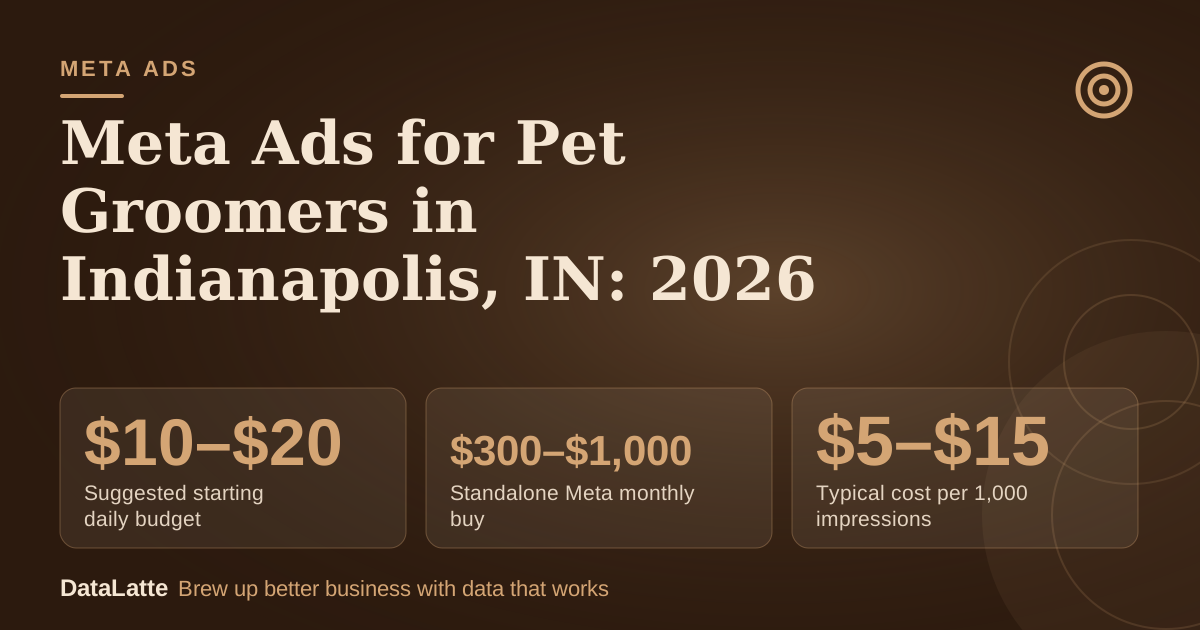
Meta ads on Facebook and Instagram let Indianapolis pet groomers reach dog and cat owners nearby, and both platforms are bought through one system. Campaigns run in Meta Ads Manager, where one campaign can serve Instagram, Facebook, or both. Start with a test budget of $10 to $20 a day, target pet owners aged 25 to 60 within 10 to 15 miles, lead with short video, and confirm bookings are tracked before increasing spend.
→
Suggested starting daily budget
Barklead groomer guide (secondary)
→
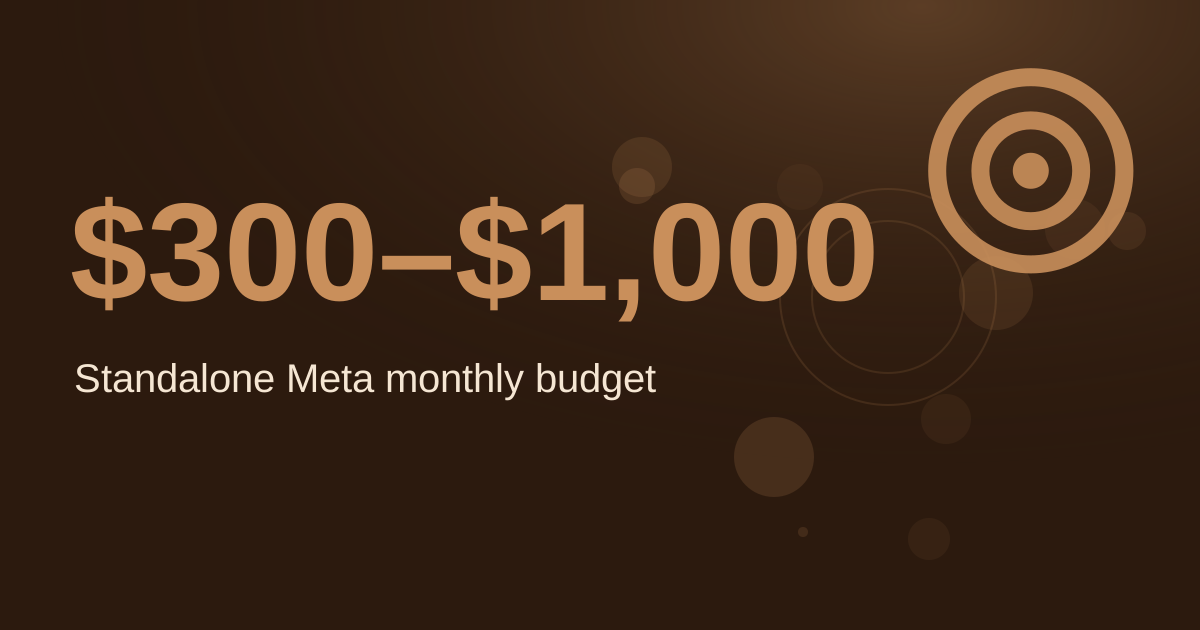
Standalone Meta monthly buy
Adwave channel table (primary vendor)
→
Typical cost per 1,000 impressions
Adwave small business guide (primary vendor)
→
Facebook active users
Barklead groomer guide (secondary)
See Sources at the end of the article. Cards marked Assumption are examples, not results.
Meta runs ads across several apps. Adwave reports that Meta's apps reach an average of 3.56 billion daily active people, which means reach is rarely the constraint for a local business. The real question is who nearby sees the ad.
Adwave's Instagram guide for local business explains that Instagram ads run through the same system as Facebook ads, Meta Ads Manager, and one campaign can run on Instagram, Facebook, or both.
Adobe Express describes Ads Manager as a central place to run ads across both platforms (secondary). Campaign goals can be set for traffic or bookings, as a restaurant guide from The Fork Manager notes for its own sector (secondary). For a groomer, a traffic goal that sends people to a booking page is the simplest starting point.
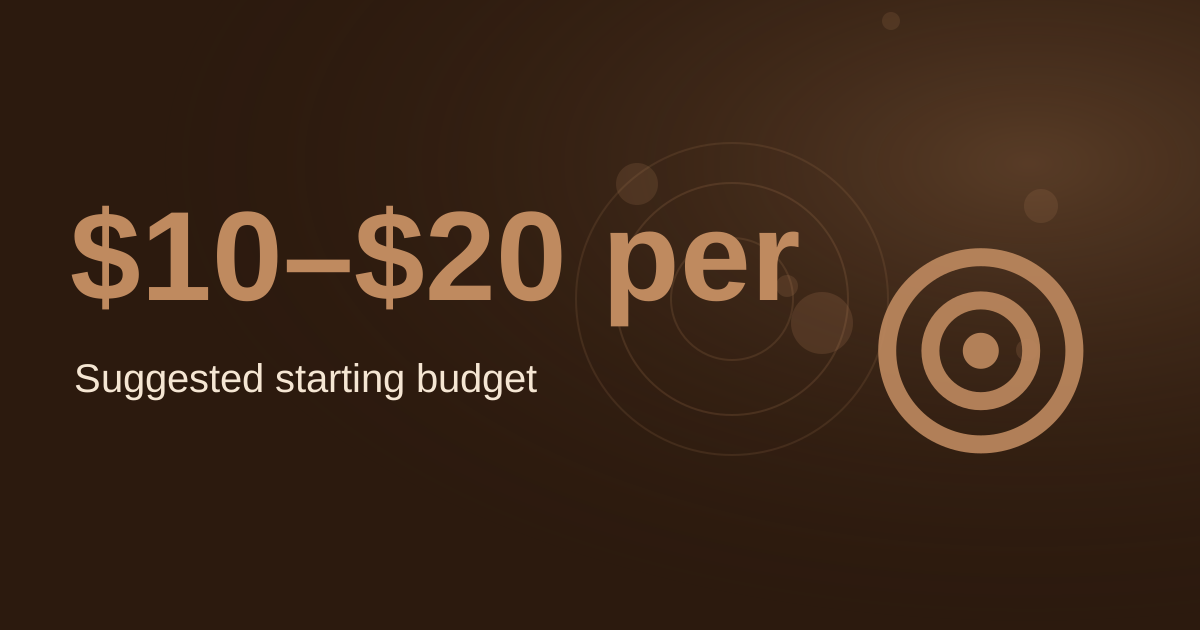
Barklead's groomer guide recommends starting with a daily budget of $10 to $20 and increasing spend once high-performing ads are identified (secondary). At $10 a day for 30 days, that is $300. At $20 a day, it is $600.
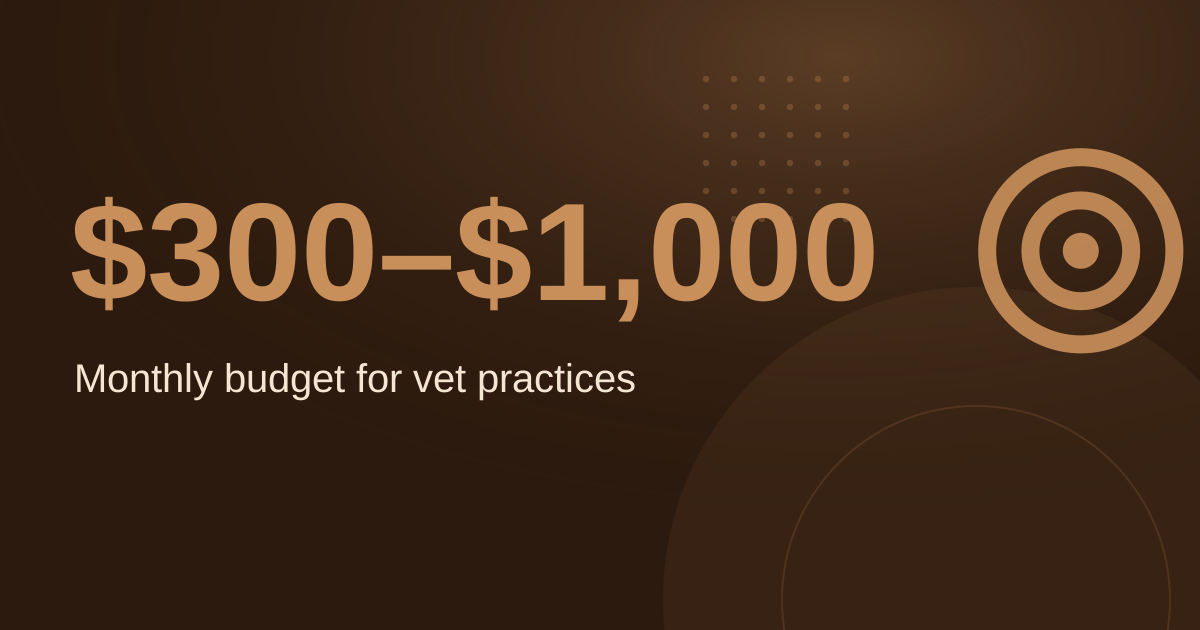
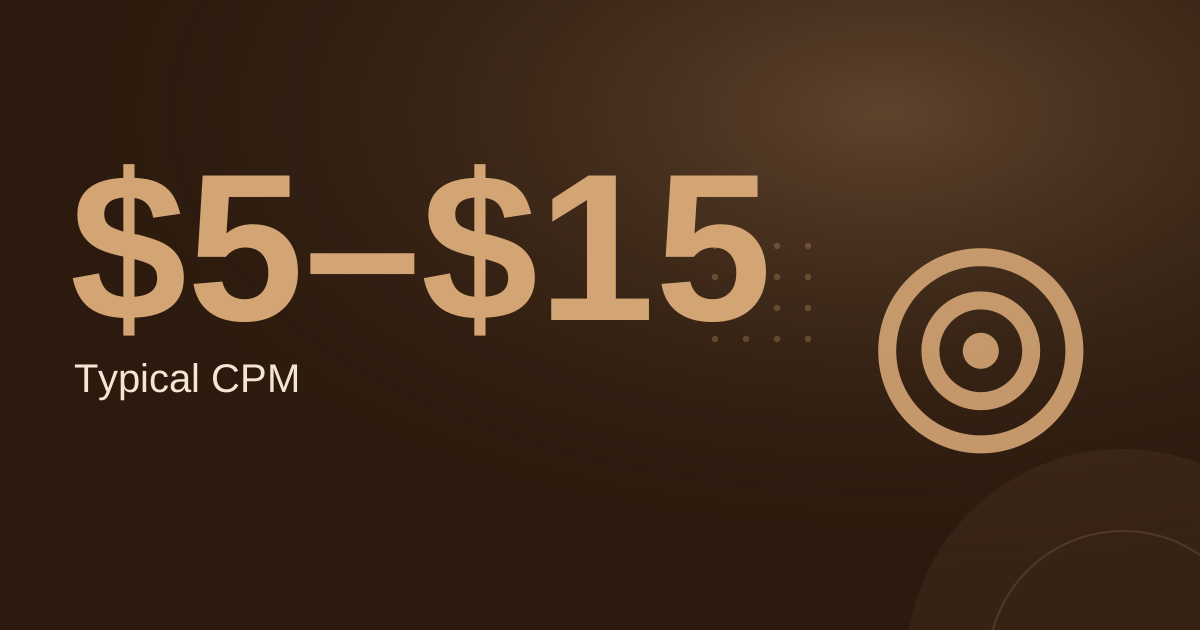
Adwave's own channel table puts a standalone Meta buy at often $300 to $1,000 per month. Its veterinary guide says most practices can run effective Meta campaigns for $300 to $1,000 per month, which is a closer comparison for pet care. Adwave also gives typical Meta costs of $5 to $15 per thousand impressions and $1 to $3 per click.
Local costs shift with season and audience, so check estimated delivery in your own Ads Manager before fixing a monthly number.
The table below uses sourced cost ranges and three inputs marked as assumptions. It is an illustration, not an Indianapolis benchmark.
Inputs:
- Budget: $20 a day for 30 days, or $600 a month (assumption: a starting budget within the $10 to $20 range).
- Click-to-booking rate: 2% (assumption).
- Average booking value: $75 (assumption, for a basic groom).
- Cost per 1,000 impressions: $5 to $15, and cost per click: $1 to $3 (sourced from Adwave's small business guide).
| Step | Pessimistic case (CPM $15, CPC $3) | Optimistic case (CPM $5, CPC $1) |
|---|
| Impressions ($600 ÷ CPM × 1,000) | 40,000 | 120,000 |
| Clicks ($600 ÷ CPC) | 200 | 600 |
| Bookings at 2% (assumption) | 4 | 12 |
| Booking revenue at $75 (assumption) | $300 | $900 |
At these inputs, the campaign breaks even at 8 bookings, which needs 400 clicks at a 2% rate. The pessimistic case falls short of spend, and the optimistic case returns about 1.5 times the budget. If your average booking is higher, the break-even point drops.
Barklead suggests targeting pet owners aged 25 to 60 who are likely to have disposable income, within a 10 to 15 mile radius of the groomer (secondary). A mobile groomer can use most of that radius. A fixed salon in a dense area may test a smaller radius and keep whichever performs better.
Past clients are a separate audience. Adwave lists a typical Meta retargeting CPM of $5 to $15 (see its
retargeting guide). Upload your client list as a custom audience and show repeat-booking offers to people who have already been groomed. For a broader view of the organic side, the
pet groomer's Instagram guide covers the content that supports paid campaigns.
Meta's 2025 Creative Best Practices report, as cited by Adwave, says short-form video generates 2.5 times more engagement than static images on Facebook and Instagram (secondary). That makes video the default format to test first.
Before-and-after footage of a finished groom is an obvious creative idea. Run it against a static photo of the same dog, so the result comes from your own audience rather than from the format alone. For a side-by-side look at placement differences, read
Instagram ads versus Facebook ads.
What Offers and Ad Copy Work for Grooming Businesses?
Barklead's sample ad copy offers a discount on a first visit: "Book today and get 10% off your first grooming session" (secondary). It is a useful template because the offer is clear and tied to a booking action.
Before using any discount, calculate what it costs against your margin on a basic groom. A 10% discount on a $75 booking, for example, is $7.50 per client. Keep copy short, name the service and the offer, and send the click to a page where booking takes one step.
Before spending, check three things. First, the Meta Pixel should be installed on your website and firing on the booking confirmation and contact form pages. Second, a conversion event such as "Lead" should fire when someone submits a booking form, so Ads Manager can optimize for bookings rather than clicks. Third, UTM parameters should be on every ad URL so Google Analytics records Meta traffic separately.
Without this setup, impressions and reach look healthy while bookings stay unclear. Judge campaigns on booked appointments and repeat clients, not on the number of people who saw the ad.
A 2023 case study from Marketing 360 describes a mobile pet groomer that chose to advertise on Facebook and Google, using channel selection to focus its budget (secondary). Meta is strongest for visual and demand-building ads, while Google captures people already searching for a groomer.
If you run both, keep the offers consistent and track each channel separately. The
Google Ads guide for pet groomers in Indianapolis covers the search side in more detail.
FAQ
Is $10 a day enough for a pet groomer?
Barklead suggests starting with $10 to $20 a day and increasing spend once you find ads that perform (secondary). A lower budget gives less data per week, so judge results over several weeks rather than a few days.
Adwave describes Meta as building local reach quickly at a monthly budget, while taking weeks to optimize (primary vendor). Plan for an initial learning period before comparing cost per booking.
What radius should a groomer target?
Barklead suggests a 10 to 15 mile radius (secondary). A mobile groomer can use most of that range. A fixed salon can test a smaller radius and let results decide.
Do Facebook and Instagram ads need separate accounts?
No. Adwave explains that Instagram ads run through Meta Ads Manager, the same system as Facebook ads, and one campaign can run on both platforms (primary vendor).
Sources
Free for local businesses
Want this applied to your business?
I'll review your Google presence, local SEO, and ad accounts — and send you a specific action plan within 48 hours. No pitch, no pressure.