July 6, 2026·Nataliia Rumiantsewa· 8 min read All posts
To advertise on connected TV (CTV) in San Antonio, define the audience by ZIP code rather than by city, then run a small test with a fixed budget and a written break-even target. Google's Display Network reaches people across 35 million websites and apps, and its campaigns let you set targeting and budget before spending. Platform minimums, geo options and audience data change, so confirm each one inside the account before committing money. The benchmarks and worked budget below show how to size a first test and judge whether it is working.
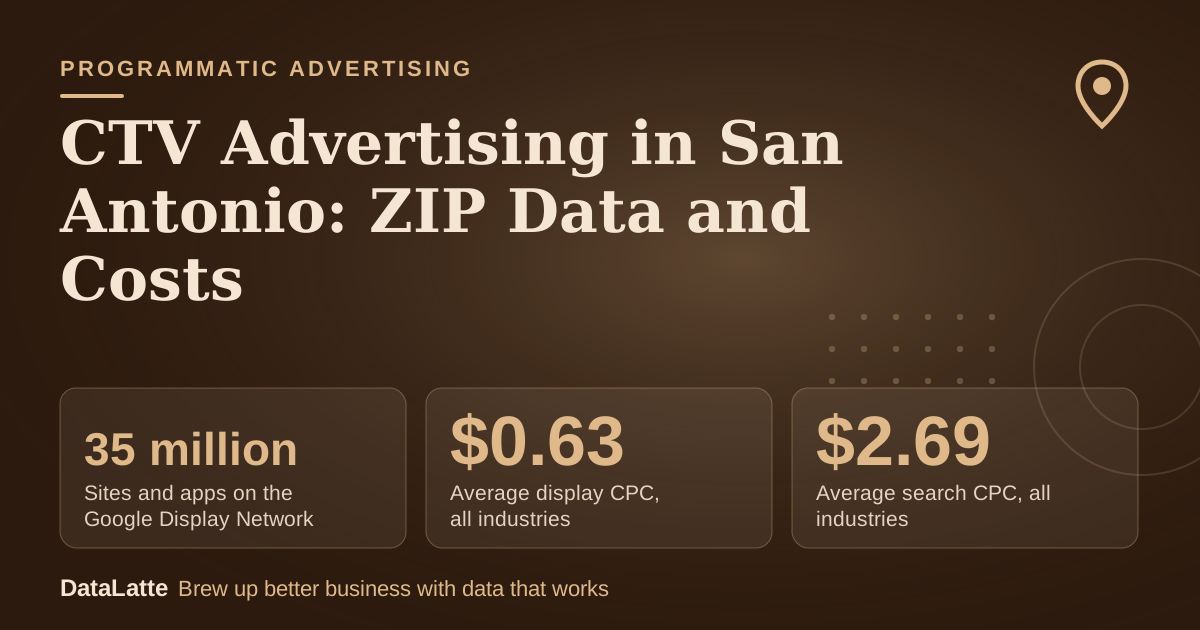
35 million→
Sites and apps on the Google Display Network
Google Ads Help (primary)
$0.63→
Average display CPC, all industries
WordStream benchmarks (secondary)
$2.69→
Average search CPC, all industries
WordStream benchmarks (secondary)
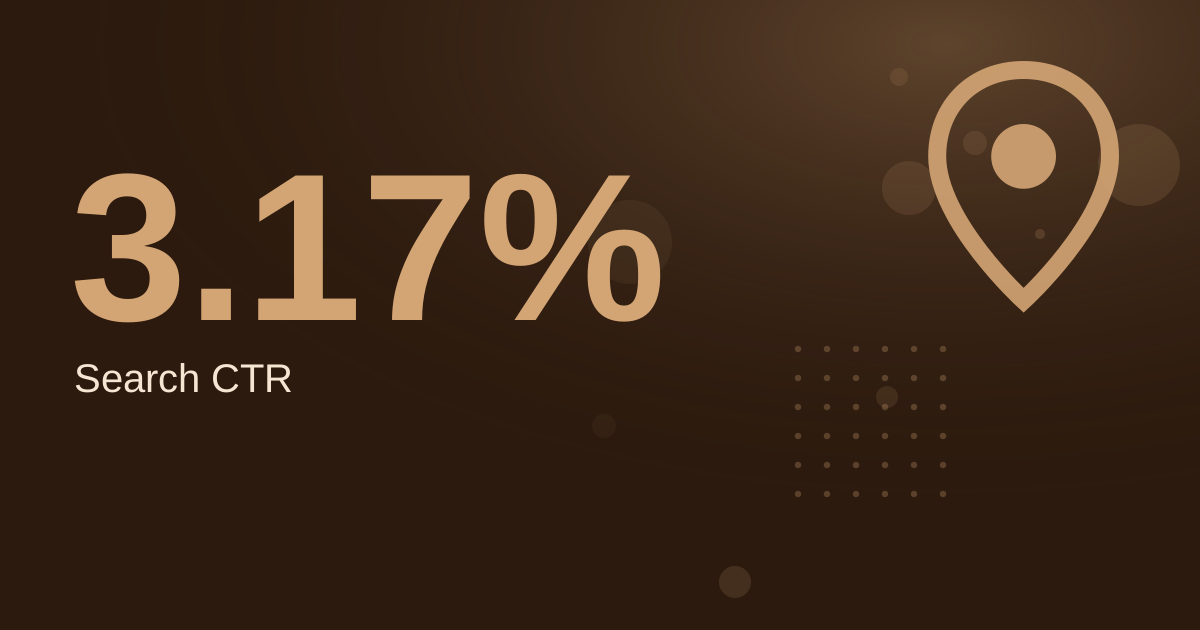
3.17%→
Average search CTR, all industries
WordStream benchmarks (secondary)
See Sources at the end of the article. Cards marked Assumption are examples, not results.
Why buy CTV by ZIP code instead of by city?
A city boundary is too broad for most local businesses. A barber on the south side and a dental practice on the north side have different drive times, so a city-wide buy spreads spend across households that cannot easily reach either one. ZIP-level targeting, where a platform offers it, limits delivery to the neighborhoods the business can actually serve.
Targeting is only half the decision. Google's display guidance describes optimized targeting as the default, which "uses information such as keywords on your landing page" to find audiences likely to convert. The audience in a report may therefore differ from the one you chose. Narrow or switch off any automated setting you do not understand, and check the geography setting on every campaign before launch.
Start with your own customer list. Exporting the ZIP codes of the last 100 or so customers shows where demand already exists. Public demographic tables can help compare areas, but booking history is the stronger signal.
What do the Google Display benchmarks tell you?
WordStream's industry benchmark table puts the all-industry search click-through rate at 3.17% and the display rate at 0.46%. The average cost per click is $2.69 for search and $0.63 for display. The article was first published in 2016 and is updated regularly, so treat these figures as orientation rather than targets for your account.
These are not CTV figures. Streaming TV is typically bought on a cost-per-thousand-impressions basis, and CTV inventory is priced separately from display. The display numbers still show a useful pattern: display clicks are cheap but rare, while search clicks cost more and come from people already looking for a service. For a local business, that is a reason to keep search and the Business Profile funded while testing broader reach.
Benchmarks also vary by industry. WordStream's table places legal and consumer services at the high end of search cost per click, so category matters as much as location. Compare results with your own history first and an industry benchmark second.
How much could a $1,500 test buy?
This worked example uses assumptions where marked. The $1,500 budget, the $150 gross profit per new customer and the 10-customer break-even target are assumptions, not market data.
At WordStream's average display CPC of $0.63, $1,500 buys about 2,381 clicks. At the average display CTR of 0.46%, that implies roughly 517,600 impressions, or about $2.90 per thousand. Streaming TV is not sold at that rate, so use this only to see how the arithmetic works, not as a CTV price.
Input or result
Value
Basis
Test budget
$1,500
Assumption
Average display CPC
$0.63
WordStream (secondary)
Clicks bought
About 2,381
$1,500 divided by $0.63
Average display CTR
0.46%
WordStream (secondary)
Implied impressions
About 517,600
2,381 divided by 0.46%
Gross profit per new customer
$150
Assumption
Customers to break even
10
$1,500 divided by $150
The break-even figure matters most. If the test produces fewer than 10 new customers within its window, it has not paid back at these assumptions. Replace the $150 with the first-visit gross profit for your own services before deciding anything.
Which Google route should a small business test first?
Google's Display campaign documentation explains that Display campaigns now combine the flexibility of standard Display with the AI features previously found in Smart Display campaigns. Existing Smart Display campaigns migrated without any action required. For other automated campaign types, Google points advertisers to Performance Max or Search campaigns.
For a San Antonio test, that suggests a sequence. Search captures people already looking for the service, so fund it first, then add broader reach once search and the Business Profile are performing. A second search channel is covered in the Bing Ads guide for local businesses.
Keep the test narrow: one campaign, one offer, a fixed budget and a defined end date. Write the break-even target before launch so it cannot move later.
How do you measure a CTV test without clicks?
CTV rarely sends viewers straight to a link, so measurement relies on indirect signals. Track branded search volume in Google Search Console, calls and direction requests in the Google Business Profile, bookings or forms that include a "how did you hear about us" question, and promo codes used only in the ad.
Set the measurement window before the flight starts. As an assumption, 8 to 12 weeks suits a small local test because people often research before booking. Compare results with the same weeks in the previous year or with a ZIP group that received no spend. A lift in branded searches is directional evidence, not proof of cause, so treat it as a reason to test again rather than a final verdict.
Keep a simple log with the date, ZIP groups, spend, calls, bookings and seasonal notes. Over two or three tests, the log will reveal more than any single platform report.
How should the creative change for a San Antonio audience?
Google's Display ads are responsive by default. Advertisers upload several headlines, descriptions, images and logos, and the system selects combinations that fit each placement. Testing is easier this way, but the platform chooses the combinations, so review asset performance before deciding what works.
For a bilingual area, run a controlled test rather than guess. Keep the offer, length and call to action identical, change only the language, and show each version to comparable ZIP groups in the same weeks. Judge by bookings or calls, not by which version feels stronger on review.
Place the business name and neighborhood early in the message, one clear benefit in the middle, and one action at the end, such as a phone number, a short web address or a QR code. These are suggested structures, not platform rules, so test them against your own results. Guides for other markets, such as the Phoenix CTV guide, show how the same test logic applies in a different city.
FAQ
How much does CTV advertising cost in San Antonio?
There is no San Antonio rate card in the sources reviewed for this guide. Use a fixed test budget, such as the $1,500 in the worked example, and confirm minimums and pricing inside each platform before committing.
Should I start with CTV or search?
For most local businesses, search and the Google Business Profile come first because they capture people who already want the service. Add CTV or broader display once those channels work and a measurement method is in place.
Is ZIP-level targeting available on every platform?
No. Check the geography options in each account. Where ZIP-level targeting is unavailable, use the closest geographic control the platform offers and record the limitation in the test log.
How long should a CTV test run?
As an assumption, 8 to 12 weeks is a reasonable first window, with start and end dates written down before launch.
Local marketing strategist with 10+ years at global agencies — OMD, Dentsu, GroupM, and BBDO. Now helping small businesses get the same data-driven edge. Based in Europe, working with clients in the US, UK, Australia, and beyond.